
A BSc Artificial Intelligence and Machine Learning program is what used to be a specialization tucked inside a computer science degree, now standing on its own as a standalone undergraduate program at several Indian colleges. That shift matters more than it sounds. It means a student can now study AI and ML directly from year one, instead of picking it up as an elective buried inside a broader CS syllabus.
This piece breaks down what the aiml full form actually stands for in an academic context, what a BSc in this field covers, how it differs from a regular computer science degree with an AI tilt, and what the career and salary picture genuinely looks like once you graduate.
Why BSc Artificial Intelligence and Machine Learning Is Now Its Own Degree
Artificial intelligence is the broader concept of building systems capable of performing tasks that typically require human judgment. Machine learning is one of the main tools used to get there, allowing a system to improve at a task by learning from data rather than being explicitly programmed for every scenario. Once you know the AIML full form, the more useful question is why colleges are now teaching it as a dedicated degree rather than a side elective.
Until recently, most colleges treated this as a few electives inside a computer science degree.
That’s changed. A BSc in Artificial Intelligence and Machine Learning is now a full three-year undergraduate program in its own right, built around this exact combination from the first semester onward, not something a student stumbles into in their final year.
What This Program Actually Covers
A BSc artificial intelligence and machine learning program isn’t just programming with an AI label attached. The core of it includes Python and data structures using python , web services using python , advanced database technologies , advanced networking concepts early on, then moves into statistics, linear algebra, and probability, since those three subjects are what machine learning is actually built on underneath the buzzwords.
From there, the syllabus typically covers supervised and unsupervised learning, neural networks, natural language processing, and, increasingly, generative AI and large language models, given how quickly that part of the field has advanced.
Labs and project work run alongside the theory, so a student isn’t just reading about a model; they’re building and training one on real datasets before they graduate.
Eligibility is usually straightforward: a Higher Secondary Certificate (10+2) in the Science stream, or an equivalent three-year diploma after Class 10, is the standard entry requirement for most colleges.
BSc Computer Science with Artificial Intelligence: Is That the Same Thing?
This is where a lot of students genuinely get confused, and it’s worth clearing up directly. BSc computer science with artificial intelligence usually means a standard computer science degree with AI and ML woven in as a specialized track or a set of electives layered on top of the core CS syllabus.
A dedicated BSc in artificial intelligence is structured the other way around: AI and ML sit at the center of the curriculum from day one, with general computer science fundamentals supporting that focus rather than the other way round.
Neither option is objectively better. If you want a broader computer science foundation with AI as a strong specialization, the CS-with-AI route makes sense. If you already know AI and ML is the direction you want, this dedicated degree gets you there with less general-purpose coursework in between.
Career Scope and Salary After a BSc in AI/ML
The honest picture first: most of the eye-catching AI/ML salary figures floating around online describe experienced engineers, often with a B.Tech or a master’s degree, not a fresh three-year BSc graduate.
A realistic starting range for a BSc AI/ML graduate in India currently sits around ₹4-8 LPA, rising to ₹8-15 LPA within a couple of years for those who keep building real project experience, and ₹15-25 LPA or more at the mid-to-senior level, particularly for anyone who specialises further in areas like generative AI or MLOps.
Demand is the part that’s genuinely not exaggerated. AI-linked job postings in India crossed 290,000 in 2025 and are projected to grow by roughly 32% through 2026, according to hiring data reported by found it and covered by IIT Kharagpur’s own analysis. That kind of growth is exactly why this kind of dedicated degree has become a serious option rather than a niche one.
Why Choose PCCCS for a BSc Artificial Intelligence and Machine Learning Program
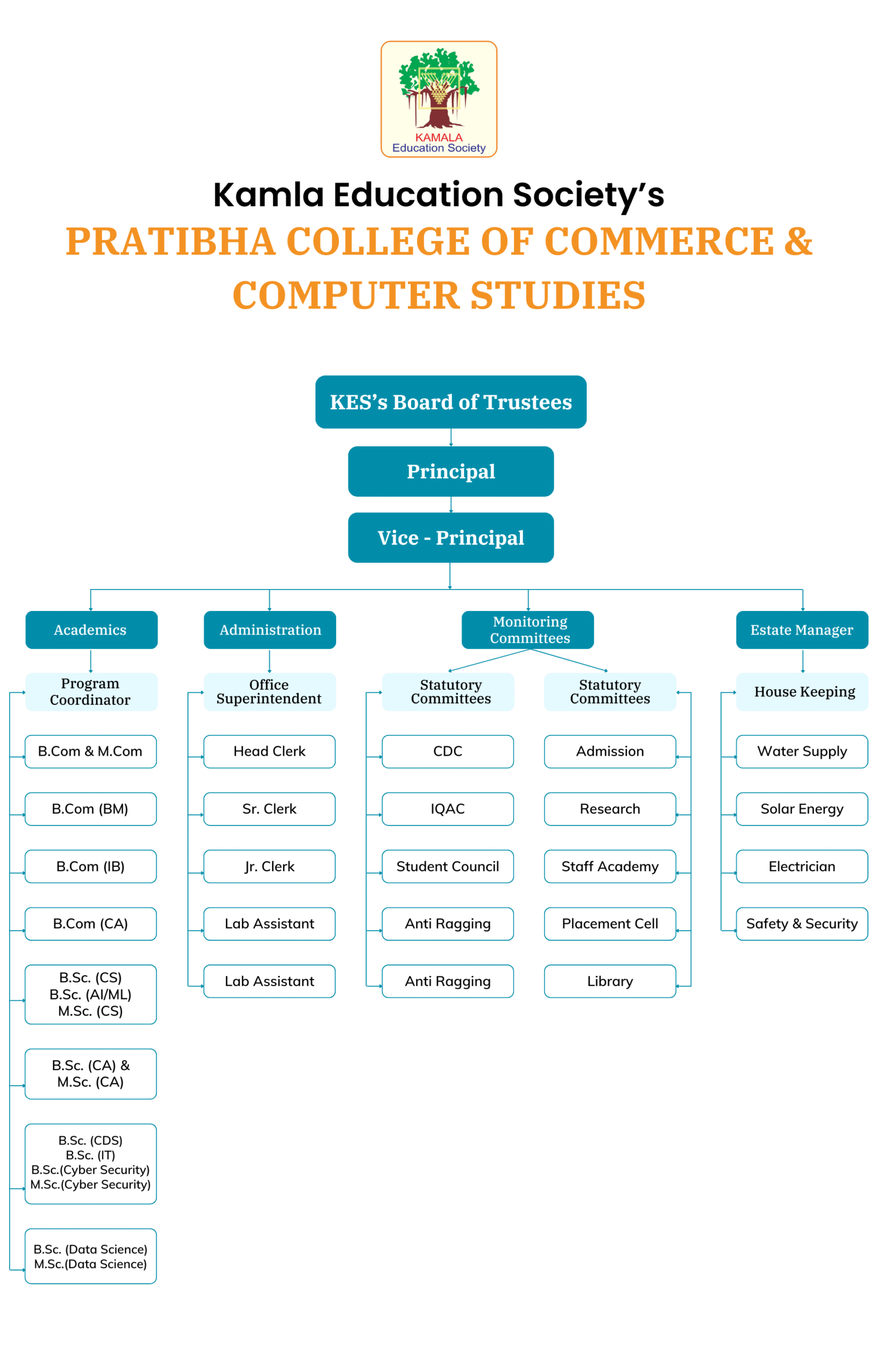
At Pratibha College of Commerce & Computer Studies, the BSc AI/ML program sits inside the Science and Technology department, alongside BSc Computer Science, BSc IT, BSc Cyber Security, and BSc Data Science, so a student who’s still weighing which of these fits best doesn’t need to switch colleges to explore that.
The course structure relies on lab work, assignments, and project-based learning, so students apply what they learn to real-world scenarios rather than just reading theory before an exam.
PCCCS is affiliated with Savitribai Phule Pune University and holds an NAAC ‘A’ Grade accreditation. The Science and Technology department runs regular student activities, hackathons, and industry-linked events alongside the core coursework.
Conclusion
A BSc artificial intelligence and machine learning program now represents a genuine standalone degree path, not just a buzzword layered onto computer science.
Whether you choose this dedicated route or a BSc in computer science with a specialization in artificial intelligence, the deciding factor should be how early you want to commit to this direction, not which name sounds more impressive on a certificate.
Frequently Asked Questions (FAQs)
1. What is the ai ml full form?
Artificial Intelligence and Machine Learning. It refers to the combined field of building systems capable of performing intelligent tasks, with machine learning as the primary technique used to achieve this.
2. What is the difference between BSc AI/ML and BSc CS with AI?
A dedicated BSc AI/ML places artificial intelligence and machine learning at the center of the curriculum from the start. A BSc computer science with artificial intelligence is a general CS degree with AI and ML added as a specialized track or set of electives.
3. What is the eligibility for a BSc in artificial intelligence and machine learning?
Most colleges require a Higher Secondary Certificate (10+2) in the Science stream, or an equivalent three-year diploma completed after Class 10.
4. What can I realistically earn as a fresher after a BSc in AI/ML?
Most fresh graduates start in the ₹4-8 LPA range in India, rather than the much higher figures often quoted for experienced AI engineers with postgraduate degrees. Building real project experience during the degree makes a noticeable difference to that starting number.
5. Is a BSc artificial intelligence and machine learning degree worth it compared to a regular BSc computer science?
If you’re confident AI and ML is the direction you want, yes, since it gets you there with a more focused curriculum. If you’re still unsure, a general BSc computer science with AI electives keeps your options broader for longer.