
A BSc IT degree doesn’t lock you into one job title. It opens up several genuinely different paths, and picking the right one comes down to what kind of work you actually enjoy, not just which field pays the most.
This guide walks through the real BSc IT career options available after graduation in India, the jobs you can apply for straight away, and what you can realistically expect to earn at each stage.
What Does a BSc IT Degree Actually Teach You?
A BSc IT program covers programming including different career paths like (Cloud Computing and Networking with Software Development, Web application development, database management. The point isn’t just to learn these subjects individually. It’s to be comfortable enough with all of them that you can pick a specialization later without starting from zero.
This is exactly why the BSc IT career options list is so broad. The degree gives you a working foundation in several areas, and your first job usually decides which one you build on.
BSc IT Career Options After Graduation
Here are the paths that currently employ the most BSc IT graduates in India.
Software Development:
Writing, testing, and maintaining applications for businesses. This is where most graduates start, since their degrees already cover the core programming languages employers look for.
Data Analytics:
Turning raw business data into decisions, using tools like SQL, Excel, Power BI, and Python libraries such as pandas. Every industry from banking to retail hires for this now.
Cybersecurity:
Protecting systems and data from attacks. Demand here has grown sharply as more businesses move online, and it tends to pay a premium over other entry-level IT roles.
Cloud Computing and Networking:
Managing the infrastructure that businesses run on, across platforms like AWS, Azure, and Google Cloud. Certifications matter a lot more here than in most other IT paths.
AI and Machine Learning:
Building and training models that automate decisions or predictions. This is the newest of the BSc IT career options and currently one of the fastest-growing, though it usually requires additional upskilling beyond the core degree.
Government and PSU Roles:
Positions in public sector banks, railways, and government IT departments are usually filled through exams conducted by SSC, UPSC, or individual PSUs. These offer more stability and structured growth than private roles, in exchange for a slower pace of promotion.
BSc IT Jobs You Can Apply For Right After Graduation
Job Role | What the Work Involves | Where You Typically Start |
Software Developer | Writing and testing code for applications | Software product or service companies |
Web Developer | Building and maintaining websites | Agencies, startups, in-house tech teams |
Data Analyst | Cleaning and interpreting business data | Any data-driven company, especially finance and retail |
Network Administrator | Maintaining an organisation’s IT infrastructure | Corporate IT departments |
Junior Cybersecurity Analyst | Monitoring systems for security threats | IT services firms, cybersecurity consultancies |
Technical Support Engineer | Solving technical issues for clients or internal teams | IT services and product companies |
These BSc IT jobs don’t require an additional degree to get started. What actually moves the needle at the interview stage is a couple of real projects and, ideally, an internship, since a BSc IT syllabus alone rarely goes deep enough for a company to skip that check.
BSc IT Scope and Salary in India
The BSc’s scope and salary picture in India right now are genuinely strong, and it’s not just optimistic marketing. According to NASSCOM’s Annual Strategic Review 2026, India’s technology industry is projected to cross $315 billion in revenue in FY26, growing 6.1% year-on-year, with AI-driven roles alone adding billions in new revenue.
That scale of growth is exactly why demand for entry-level IT talent, including BSc IT graduates, hasn’t slowed down even as the industry becomes more selective about skills.
The catch is that scope and salary aren’t evenly spread. A graduate who picks up SQL, Python, or a cloud certification alongside the degree opens up a meaningfully better BSc IT scope and salary outcomes than one who relies on the syllabus alone.
Location matters too. Pune, Bengaluru, and Hyderabad consistently offer higher starting packages than smaller cities, simply because more IT employers are based there.
BSc IT Salary: What to Realistically Expect
Career Stage | Typical Roles | BSc IT Salary Range (Annual) |
Fresher (0-1 years) | Software Developer, Data Analyst, Technical Support | ₹2.5-4 LPA |
Early Career (1-3 years) | Software Engineer, Network Administrator, Junior Analyst | ₹4-7 LPA |
Mid-Level (3-6 years) | Senior Developer, Cloud Engineer, Cybersecurity Analyst | ₹7-12 LPA |
Specialised/Senior (6+ years) | Data Scientist, Cloud Architect, Security Lead | ₹12-20 LPA |
Salary figures for this degree vary depending on which source you check, so here’s a realistic range based on multiple placement and salary-tracking platforms rather than a single number.
The fresher end of the BSc salary range typically sits around ₹2.5-4 LPA, with product companies and roles that specifically need coding skills paying toward the higher end of that band.
What changes the trajectory after that isn’t just years of experience. It’s whether you keep building skills in a specific direction, cloud, security, or data, instead of staying a generalist.
Why Study BSc IT at PCCCS
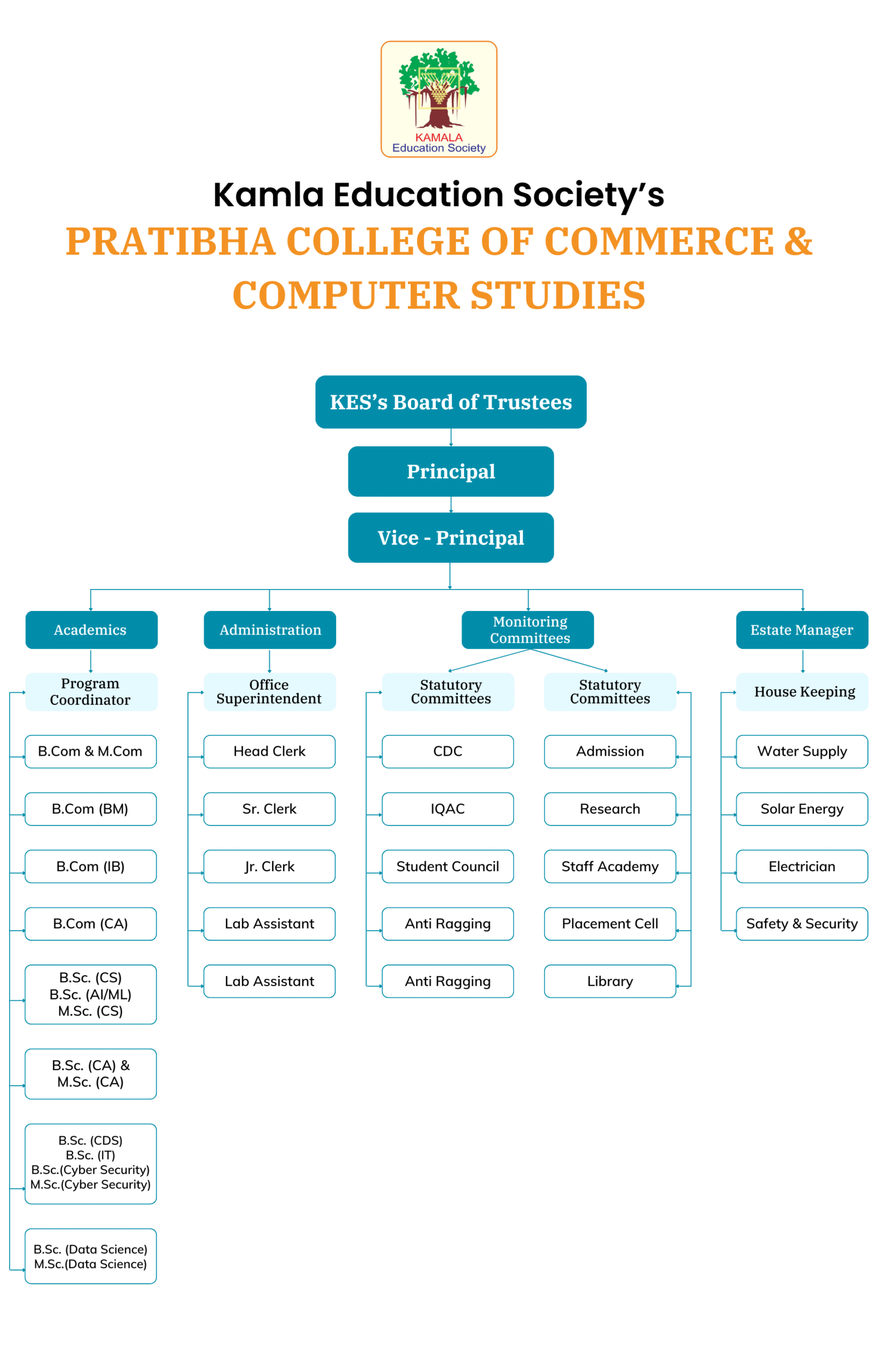
At Pratibha College of Commerce & Computer Studies (PCCCS), the B.Sc. (IT) program is one of several specialized science and technology courses on offer, alongside B.Sc. in Computer Science, AI/ML, Cyber Security, and Data Science. The college is affiliated with Savitribai Phule Pune University and holds an NAAC ‘A’ Grade accreditation.
PCCCS runs regular campus placement drives, corporate outreach activities, and industry expert sessions specifically to help students move from coursework to a real job offer, not just to complete the syllabus.
Conclusion
Understanding the full range of BSc IT career options matters more than picking the first job title you recognize. The BSc IT career options available today go well beyond a single “IT job” idea.
Software development, data analytics, cybersecurity, cloud computing, and even public sector roles are all realistic paths from the same degree. What decides your salary and growth isn’t the degree title alone; it’s the specific skills you add on top of it, and how early you start adding them.
Frequently Asked Questions (FAQs)
1. What are the best career options after a BSc in IT?
Software development, data analytics, cybersecurity, and cloud computing currently offer the strongest combination of job availability and salary growth for BSc IT graduates in India.
2. What kind of jobs can a BSc fresher realistically get?
Software Developer, Web Developer, Data Analyst, Network Administrator, and Technical Support roles are the most common entry points, and none of them require a postgraduate degree to apply.
3. What is the average BSc IT salary for a fresher in India?
Most sources place it between ₹ 2.5 and 4 LPA, though roles at product-based companies or ones requiring specific coding skills can start higher.
4. Is a BSc IT still a good degree given how fast technology changes?
Yes, largely because the degree teaches foundational skills, programming, databases, and networking that stay relevant even as specific tools and frameworks change.
The BSc’s scope and salary outlook depend more on what you add to that foundation than on the degree becoming outdated.
5. Do I need certifications on top of a BSc IT degree to get a good job?
Not strictly, but they help significantly in cloud computing, cybersecurity, and data roles specifically, where employers often use certifications as a quick way to filter candidates.