
Edit Content
Follow us on our Socials:
Edit Content
Follow us on our Socials:
B.Sc(CA) (Old. – BCA (Sci))
B.Sc. (Reg)
B.Sc. (CS)
B.Sc. (CDS)
B.Sc. (IT)
B.Sc. ( AI/ML )
BSc(Cyber Security)
BSc(Data Science)
B.Sc(CA) (Old. – BCA (Sci))
Course Overview
Introduction about the Course
The B.Sc. CA (Computer Application) course started in 2019 with 80 students and was earlier known as BCA (Science). It now runs in two patterns – the 2019 pattern and the 2024 NEP pattern.
Year of Establishment 2019
Affiliated to Savitribai Pune Phule university
Intake: First Year 240
Eligibility
Any candidate who has passed the XII standard examination in Science stream from Maharashtra State Board of Higher Secondary Education or equivalent board of examination is eligible for admission to the FY BSc (CA) or passed the diploma course approved by the DTE, Maharashtra State or its equivalent authority.
Duration of the Course
3 years as per NEP guidelines
Course Structure
Enrollment Summary
| Year | Term I | Term II | Total |
|---|---|---|---|
| FY BSc(CA) | 22 | 22 | 44 |
| SY BSc(CA) | 22 | 22 | 44 |
| TYBCA(Sci.) | 22 | 22 | 44 |
FY BSc (CA) — Semester I
| Semester | Course Type | Course Name / Course Title | Total Credits |
|---|---|---|---|
| I | Theory | CA101 – T Problem Solving and Programming in C | 02 |
| I | Practical | CA102 – P Lab course on CA101 – T | 02 |
| I | Theory | CA103 – T Computer Organization & Architecture | 02 |
| I | Practical | CA104 – P Lab course on CA103 – T | 02 |
| I | Theory | CA105 – T Discrete Mathematics and Statistics | 02 |
| I | Practical | CA106 – P Laboratory course on CA-105 – T | 02 |
| I | Theory | OE101- CA Financial Literacy -I | 02 |
| I | Practical | SEC101- CA HTML and Web Page Designing | 02 |
| I | Theory | IKS – 100 – T Indian Knowledge System | 02 |
| I | Theory | AEC – 101 – ENG English | 02 |
| I | Theory | VEC – 101 – ENV Environment Education-I | 02 |
| Total Credits: | 22 | ||
FY BSc (CA) — Semester II
| Semester | Course Type | Course Name / Course Title | Total Credits |
|---|---|---|---|
| II | Theory | CA151 – T Advanced C Programming | 02 |
| II | Practical | CA152 – P Lab course on CA151 – T | 02 |
| II | Theory | CA153 – T Introduction to Microcontrollers | 02 |
| II | Practical | CA154 – P Lab course on CA153 – T | 02 |
| II | Theory | CA155 – T Linear Algebra | 02 |
| II | Practical | CA156 – P Laboratory course on CA-155 – T | 02 |
| II | Theory | OE151- CA Financial Literacy -II | 02 |
| II | Practical | SEC151- CA Software Tools for Business Communications | 02 |
| II | Theory | AEC151- ENG English | 02 |
| II | Theory | VEC – 151 – ENV Environment Education-II | 02 |
| II | Theory / Practical | CC – 151 – PE Sports and Fitness | 02 |
| Total Credits: | 22 | ||
SY BSc (CA) — Semester III
| Semester | Course Type | Course Name / Course Title | Total Credits |
|---|---|---|---|
| III | Theory | CA-201- MJ Data Structures | 04 |
| III | Practical | CA-202- MJP Lab course on CA201 -MJ | 02 |
| III | Practical | CA-221 – VSC C++ Programming | 02 |
| III | Practical | CA-231- FP Field Project | 02 |
| III | Theory | ELS241-MN Data Communications | 02 |
| III | Practical | ELS242- MNP Lab Course on CA – 241 –MN | 02 |
| III | Theory | OE AI | 02 |
| III | Theory | CA-200 -IKS Indian Knowledge System for Computing | 02 |
| III | Theory | AEC Marathi / Hindi | 02 |
| III | Theory / Practical | CC Health and Nutrition | 02 |
| Total Credits: | 22 | ||
SY BSc (CA) — Semester IV
| Semester | Course Type | Course Name / Course Title | Total Credits |
|---|---|---|---|
| IV | Theory | CA251-MJ Database Management Systems | 04 |
| IV | Practical | CA252- MJP Lab course on CA-251 –MJ | 02 |
| IV | Theory | CA271- VSC Python Programming | 02 |
| IV | Practical | CA-281 CEP Community Services | 02 |
| IV | Theory | ELS291 – MN Communication Networks | 02 |
| IV | Practical | ELS292 – MNP Lab course on CA -291 –MN | 02 |
| IV | Theory | OE | 02 |
| IV | Practical | SEC251-CA SEC Spreadsheet Applications | 02 |
| IV | Theory | AEC | 02 |
| IV | Theory / Practical | CC | 02 |
| Total Credits: | 22 | ||
TY BCA (Sci.) — Semester V
| Semester | Course Type | Course Name / Course Title | Total Credits |
|---|---|---|---|
| V | Theory | BCA351 DSE I (Programming in Java) | 04 |
| V | Theory | BCA352 DSE II (Data Mining and Data Science) | 04 |
| V | Theory | BCA353 DSE III (Principles of Operating Systems) | 04 |
| V | Theory | BCA354 SEC I (Artificial Intelligence) | 02 |
| V | Theory | BCA355 SEC II (Cloud Computing) | 02 |
| V | Practical | BCA356 DSE I Lab (Programming in Java) | 02 |
| V | Practical | BCA357 DSE II Lab (Data Mining) | 02 |
| V | Practical | BCA358 DSE III Lab (Operating Systems and AI) | 02 |
| Total Credits: | 22 | ||
TY BCA (Sci.) — Semester VI
| Semester | Course Type | Course Name / Course Title | Total Credits |
|---|---|---|---|
| VI | Theory | BCA361 DSE IV Android Programming | 04 |
| VI | Theory | BCA362 DSE V Programming in GO | 04 |
| VI | Theory | BCA363 DSE VI Software Project Management | 04 |
| VI | Theory | BCA364 SEC III Management Information Systems | 02 |
| VI | Theory | BCA365 SEC IV Internet of Things (IoT) | 02 |
| VI | Practical | BCA366 DSE IV Lab (Android Programming) | 02 |
| VI | Practical | BCA367 DSE V Lab (Programming in GO and IoT) | 02 |
| VI | Practical | DSE VI Project Lab | 02 |
| Total Credits: | 22 | ||
Career Prospects
- Participation in coding events and hackathons
- Resume and portfolio development
- Campus drives and tech career fairs
Program Outcomes
Program Outcomes — B.Sc. (C.A.)
After successful completion of B.Sc.(C.A.) Programme students will be able to:
| PO No. | Outcomes |
|---|---|
| PO 1 | Demonstrate Understanding of Fundamental Concepts in the Field of Computing Apply the knowledge of computer science fundamentals, and a specialization to the solution of complex science problems in emerging areas. |
| PO 2 | Design and Develop Computer-Based Applications Design solutions for computer science applications and design system components that meet the specified needs with appropriate consideration for public health and safety and cultural, societal, and environmental considerations. |
| PO 3 | Analyze Existing Research Reported in the Literature Use research-based knowledge and research methods including design of experiments, analysis and interpretation of data, and synthesis of the information to provide valid conclusions. |
| PO 4 | Propose Alternate Solutions by Undertaking Research Work To analyze the research papers, literature review. |
| PO 5 | Create Efficient, Reliable, Readable and Maintainable Code Understand the impact of the professional IT solutions in societal and environmental contexts, and demonstrate the knowledge of, and need for sustainable development. |
| PO 6 | Demonstrate a Deeper Understanding of the Chosen Domain Demonstrate the different live examples, videos for getting deeper knowledge about the selected domain. |
| PO 7 | Select Appropriate Method to Solve the Given Problem Apply basic understanding of operative systems and working knowledge of problem. |
| PO 8 | Demonstrate Ability to Collaborate Effectively with Team Members, Understand Different Perspectives, and Contribute Productively to Become Successful Professional Develop hard skills and soft skills through various tools, case studies. Ability to express thoughts and ideas effectively in writing and orally; communicate with others using appropriate media; confidently share the views and express herself/himself; demonstrate the ability to listen carefully, read and write analytically, and present complex information in a clear and concise manner to different groups. |
| PO 9 | Explain Complex Technical Concepts Clearly and Effectively, Both in Written and Oral Forms Take more and more practice of the complex concepts in written and oral aspects. |
| PO 10 | Demonstrate Ability to Work with Integrity and a Sense of Social Responsibility Ability to acquire knowledge and skills, including learning how to learn that are necessary for participating in learning activities throughout life. Develop technical knowledge for immediate employment and for life-long learning in advanced areas of computer science and related fields. |
| PO 11 | Demonstrate Self and Life-Long Learning Skills Identify, analyze, formulate, Design and develop the real-world requirements by critical thinking for complex problems in IT enabled services. |
| PO 12 | Solve Computational Problems Innovatively Computational problem can be solved innovatively using different methods. |
| PO 13 | Apply Knowledge Gained and Critical Thinking to Develop Real-World Applications You can practice critical thinking in many areas of your life, such as: Analyzing news articles, making decisions at work, planning personal projects, and deciding how you use your time. |
Program Outcomes — BCA (Science)
After successful completion of BCA(Science) Programme students will be able to:
| PO No. | Outcomes |
|---|---|
| PO 1 | Science Knowledge Apply the knowledge of mathematics, science, electronics, computers science fundamentals, and a specialization to the solution of complex science problems. |
| PO 2 | Describe / Design / Development of Solutions Design solutions for complex computer science problems and design system components or processes or programs that meet the specified needs with appropriate consideration for public health and safety and cultural, societal, and environmental considerations. |
| PO 3 | Conduct Investigations of Complex Problems Use research-based knowledge and research methods including design of experiments, analysis and interpretation of data, and synthesis of the information to provide valid conclusions. |
| PO 4 | Modern Tools / Software / Programming Language Usage Create, select, and apply appropriate techniques, resources, and modern IT tools, including prediction and modeling to complex activities, with an understanding of the limitations. |
| PO 5 | Environment and Sustainability Understand the impact of the professional IT solutions in societal and environmental contexts, and demonstrate the knowledge of, and need for sustainable development. |
| PO 6 | Professional Skills Develop hard skills and soft skills through various tools, case studies. Ability to express thoughts and ideas effectively in writing and orally; communicate with others using appropriate media; confidently share views and express herself/himself. |
| PO 7 | Practical Implementation Apply computer literacy of students and basic understanding of operative systems and working knowledge of software commonly used in academic and professional environments. |
| PO 8 | Cooperation and Teamwork Ability to work effectively and respectfully with diverse teams; facilitate cooperative or coordinated effort on the part of a group, and act together as a group or a team in the interests of a common cause. |
| PO 9 | Entrepreneurial Development Impart knowledge required for planning, designing, and building complex software applications, automated systems. Develop business expertise, analytical skills, and financial literacy necessary in the IT industry. |
| PO 10 | Goal Oriented and Lifelong Learning Ability to acquire knowledge and skills, including learning how to learn that are necessary for participating in learning activities throughout life. Develop technical knowledge for immediate employment and for life-long learning in advanced areas of computer science and related fields. |
| PO 11 | Critical Thinking for Problem Solving Identify, analyze, formulate, Design and develop the real-world requirements by critical thinking for complex problems in IT enabled services. |
Course Outcomes — B.Sc. (C.A.)
F.Y. B.Sc.(C.A.) — Semester I
CA-101-T: Problem Solving and Programming in C
| CO No. | Course Outcome |
|---|---|
| CO 1 | Define algorithms and explain their characteristics |
| CO 2 | Formulate algorithm and draw flow chart to solve a given problem |
| CO 3 | Explain use of appropriate data types, control statements |
| CO 4 | Demonstrate ability to use top-down program design |
CA-102-P: Lab Course on CA-101-T
| CO No. | Course Outcome |
|---|---|
| CO 1 | Formulate an algorithm and draw flowchart for the given problem |
| CO 2 | Implement the given algorithm in C |
| CO 3 | Write programs using appropriate data types and control structures in C |
CA-103-T: Computer Organization and Architecture
| CO No. | Course Outcome |
|---|---|
| CO 1 | Design of combinational circuits |
| CO 2 | Design of sequential circuits |
| CO 3 | Describe block diagram of CPU, Memory and types of I/O transfers |
CA-104-P: Lab Course on CA-103-T
| CO No. | Course Outcome |
|---|---|
| CO 1 | Design of combinational circuits |
| CO 2 | Design of sequential circuits |
| CO 3 | Describe block diagram of CPU, Memory and types of I/O transfers |
CA-105-T: Discrete Mathematics and Statistics
| CO No. | Course Outcome |
|---|---|
| CO 1 | Relate and apply techniques for constructing mathematical proofs and make use of appropriate set operations, propositional logic to solve problems |
| CO 2 | Use function or relation models to interpret associated relationships |
| CO 3 | Apply basic counting techniques and use principles of probability |
| CO 4 | Given a data, compute various statistical measures of central tendency |
| CO 5 | Use appropriate Sampling techniques |
CA-106-P: Laboratory Course Based on CA-105-T
| CO No. | Course Outcome |
|---|---|
| CO 1 | Demonstrate understanding of fundamental mathematical concepts |
| CO 2 | Apply mathematical and statistical concepts to solve problems |
| CO 3 | Use R software to perform statistical operations and data visualization |
SEC-101-CA: HTML and Webpage Designing
| CO No. | Course Outcome |
|---|---|
| CO 1 | Enlist various HTML elements and tags |
| CO 2 | Use HTML elements and tags |
| CO 3 | Apply CSS and JavaScript features |
| CO 4 | Design a website using HTML, CSS and JavaScript |
F.Y. B.Sc.(C.A.) — Semester II
CA-151-T: Advanced C Programming
| CO No. | Course Outcome |
|---|---|
| CO 1 | Write programs using pointers and structures |
| CO 2 | Use Pre-processor directives |
| CO 3 | Manipulate strings using library functions |
| CO 4 | Write programs to perform operations on Files |
CA-152-P: Lab Course on CA-151-T
| CO No. | Course Outcome |
|---|---|
| CO 1 | Write programs using pointers and structures |
| CO 2 | Use Pre-processor directives |
| CO 3 | Manipulate strings using library functions |
| CO 4 | Write programs to perform operations on Files |
CA-153-T: Introduction to Microcontrollers
| CO No. | Course Outcome |
|---|---|
| CO 1 | Write programs using instruction set of 8051 microcontroller |
| CO 2 | Interface I/O peripherals to 8051 microcontroller |
| CO 3 | Design simple microcontroller-based applications |
CA-154-P: Lab Course on CA-153-T
| CO No. | Course Outcome |
|---|---|
| CO 1 | Write programs using instruction set of 8051 microcontroller |
| CO 2 | Interface I/O peripherals to 8051 microcontroller |
| CO 3 | Design simple microcontroller-based applications |
CA-155-T: Linear Algebra
| CO No. | Course Outcome |
|---|---|
| CO 1 | Appreciate the relevance and applications of Linear Algebra in the field of Computer Science |
| CO 2 | Instill a computational thinking while learning linear algebra |
| CO 3 | Express clear understanding of the concept of a solution to a system of equations |
| CO 4 | Find eigenvalues and corresponding eigenvectors for a square matrix |
| CO 5 | Represent linear transformations using matrices |
CA-156-P: Laboratory Course Based on CA-155-T
| CO No. | Course Outcome |
|---|---|
| CO 1 | Demonstrate understanding of fundamental mathematical concepts |
| CO 2 | Apply mathematical and statistical concepts to solve problems |
| CO 3 | Use R software to perform statistical operations and data visualization |
SEC-151: Software Tools for Business Communication
| CO No. | Course Outcome |
|---|---|
| CO 1 | Perform various word processing tasks |
| CO 2 | Prepare spreadsheets and presentations |
| CO 3 | Collect feedbacks and make surveys |
| CO 4 | Communicate and collaborate through electronic communications |
S.Y. B.Sc.(C.A.) — Semester III
CA-201-MJ: Data Structures
| CO No. | Course Outcome |
|---|---|
| CO 1 | Define various data structures and notations for algorithm analysis |
| CO 2 | Design algorithms using suitable data structure(s) |
| CO 3 | Compare various representations of a stack, queue, tree and graph |
| CO 4 | List real world applications of stacks, queues, trees and graphs |
| CO 5 | Apply appropriate data structure(s) to solve a given problem |
| CO 6 | Evaluate the time and space complexity of the given algorithm/program |
CA-202-MJP: Lab Course on CA-201-MJ
| CO No. | Course Outcome |
|---|---|
| CO 1 | Apply appropriate data structures to solve the given problem |
| CO 2 | Design an efficient algorithm for the given problem and implement |
| CO 3 | Determine the time and space complexity of a given algorithm |
CA-221-VSC: C++ Programming
| CO No. | Course Outcome |
|---|---|
| CO 1 | Compare the procedural and object-oriented paradigms |
| CO 2 | Use Classes, Objects, constructors, destructors etc. |
| CO 3 | Illustrate the concept of function overloading, operator overloading, inheritance, virtual functions and polymorphism |
| CO 4 | Apply exception handling |
| CO 5 | Demonstrate use of various OOPs concepts with the help of programs |
CA-231-FP: Field Work
| CO No. | Course Outcome |
|---|---|
| CO 1 | Apply methodology to perform field work |
| CO 2 | Identify and define real-world issues or problems |
| CO 3 | Analyze the data collected and propose solution to solve real-world problem |
CA-200-IKS: Indian Knowledge System for Computing
| CO No. | Course Outcome |
|---|---|
| CO 1 | List India’s contributions to Computing |
| CO 2 | Apply Ancient Indian Mathematical concepts in Computing |
| CO 3 | Utilize Linguistic and Computational aspects of Sanskrit from IKS in Modern Computing |
| CO 4 | Describe Cryptographic techniques from IKS |
| CO 5 | Make use of Cybersecurity techniques from IKS |
| CO 6 | Illustrate the Role of IKS in Emerging Technologies |
S.Y. B.Sc.(C.A.) — Semester IV
CA-251-MJ: Database Management Systems
| CO No. | Course Outcome |
|---|---|
| CO 1 | Solve real world problems using appropriate relational data model |
| CO 2 | Construct E-R Model for given requirements and convert it into database tables |
| CO 3 | Write efficient SQL queries and use PL/SQL |
| CO 4 | Apply database management operations |
| CO 5 | Describe mechanisms for transaction management |
| CO 6 | Demonstrate understanding of database security |
CA-252-MJP: Lab Course on CA-251-MJ
| CO No. | Course Outcome |
|---|---|
| CO 1 | Design E-R Model for given requirements and convert the same into database tables |
| CO 2 | Design and create relational database systems |
| CO 3 | Use SQL DDL and DML commands |
| CO 4 | Apply constructs in PL/PGSQL |
CA-271-VSC: Python Programming
| CO No. | Course Outcome |
|---|---|
| CO 1 | Write Python programs to solve a given problem |
| CO 2 | Choose appropriate data structures such as lists, dictionaries, tuples, and sets |
| CO 3 | Develop Python programs to implement the given small applications |
CA-251-SEC: Spreadsheet Applications
| CO No. | Course Outcome |
|---|---|
| CO 1 | Navigate and utilize spreadsheet applications effectively for data organization and management |
| CO 2 | Apply formulas, functions and logical operations to automate tasks |
| CO 3 | Analyze and visualize data using charts, pivot tables and conditional formatting |
| CO 4 | Implement data validation, sorting and filtering for efficient data handling |
| CO 5 | Develop practical spreadsheet solutions for business scenarios like financial planning, inventory management and project management |
Course Outcomes — TY BCA (Science)
T.Y. BCA(Science) — Semester V
BCA 351: DSE I — Programming in Java
| CO No. | Course Outcome |
|---|---|
| CO 1 | Learn implementation of object-oriented concepts with Java |
| CO 2 | Understand collection classes and interfaces |
| CO 3 | Know the process of application development using Graphical User Interface (GUI) |
| CO 4 | Acquire knowledge about handling databases using Java |
| CO 5 | Study web components for developing web applications |
BCA 352: DSE II — Data Mining and Data Science
| CO No. | Course Outcome |
|---|---|
| CO 1 | Identify the key processes of data mining, data warehousing and knowledge discovery |
| CO 2 | Design data warehouse with dimensional modeling and apply OLAP operations |
| CO 3 | Identify appropriate data mining algorithms to solve real world problems |
| CO 4 | Compare and evaluate different data mining techniques like classification, prediction, clustering and association rule mining |
| CO 5 | Choose an appropriate method to perform exploratory analysis |
| CO 6 | Interpret results by carrying out data visualization and formal inference procedures |
BCA 353: DSE III — Principles of Operating Systems
| CO No. | Course Outcome |
|---|---|
| CO 1 | Describe algorithms for process, memory, and disk scheduling |
| CO 2 | Apply technique for inter-process communication and Multithreading |
| CO 3 | Implement concept of critical-section |
| CO 4 | Compare and contrast deadlock avoidance and prevention |
| CO 5 | Use functions for file system management |
BCA 354: SEC I — Artificial Intelligence
| CO No. | Course Outcome |
|---|---|
| CO 1 | Apply the suitable algorithms to solve AI problems |
| CO 2 | Identify and apply suitable Intelligent agents for various AI applications |
| CO 3 | Build smart system using different informed search / uninformed search or heuristic approaches |
| CO 4 | Represent complex problems with expressive language of representation |
BCA 355: SEC II — Cloud Computing
| CO No. | Course Outcome |
|---|---|
| CO 1 | Explain the core issues in cloud computing such as security, privacy, and interoperability |
| CO 2 | Choose the appropriate technologies, algorithms, and approaches for the given application |
| CO 3 | Compare and contrast various cloud services |
BCA 356: DSE I Laboratory — Programming in Java
| CO No. | Course Outcome |
|---|---|
| CO 1 | Identify classes, objects, class members and relationships for a given problem |
| CO 2 | Design end to end applications using object-oriented constructs |
| CO 3 | Apply collection classes for storing java objects |
| CO 4 | Use Java APIs for program development |
| CO 5 | Handle abnormal termination of a program using exception handling |
BCA 357: DSE II Laboratory — Data Mining
| CO No. | Course Outcome |
|---|---|
| CO 1 | Implement data mining tasks using R |
| CO 2 | Use the python packages to carry out data mining tasks |
| CO 3 | Perform data analysis and data visualization using python packages |
BCA 358: DSE III Laboratory — Operating Systems and AI
| CO No. | Course Outcome |
|---|---|
| CO 1 | Implement algorithms for Process scheduling and Memory management |
| CO 2 | Describe process synchronization and multithreading |
| CO 3 | Compare and contrast the algorithms for memory management and its allocation policies |
| CO 4 | Use searching algorithms |
| CO 5 | Design a simple Expert system |
T.Y. BCA(Science) — Semester VI
BCA 361: Android Programming
| CO No. | Course Outcome |
|---|---|
| CO 1 | Describe the process of developing mobile applications |
| CO 2 | Create mobile applications on the Android Platform |
| CO 3 | Design and implement mobile applications involving data storage in SQLite database |
| CO 4 | Use location-based services while developing applications |
BCA 362: DSE-V — Programming in Go
| CO No. | Course Outcome |
|---|---|
| CO 1 | Describe the core features and concepts in Go |
| CO 2 | Write simple Go programs using functions |
| CO 3 | Apply defining methods and Go Interfaces |
| CO 4 | Use Goroutines and Channels |
| CO 5 | Explore Go Packages |
BCA 363: DSE VI — Software Project Management
| CO No. | Course Outcome |
|---|---|
| CO 1 | Comprehend Software Project Management Concepts |
| CO 2 | Use various tools for Software Project Management; schedule various activities in software projects |
| CO 3 | Track a project and manage changes |
| CO 4 | Apply Agile Project Management concepts |
| CO 5 | Analyze staffing process for team building and decision making |
BCA 364: SEC III — Management Information System
| CO No. | Course Outcome |
|---|---|
| CO 1 | Describe MIS, BPR, EMS |
| CO 2 | Compare MIS with BPR, DSS and EMS |
| CO 3 | Identify various ERP modules for a given application |
| CO 4 | List the applications of MIS in Manufacturing and service sectors |
BCA 365: SEC IV — Internet of Things (IoT)
| CO No. | Course Outcome |
|---|---|
| CO 1 | Define Embedded Systems and the Internet of Things |
| CO 2 | Apply enabling technologies for developing IoT systems |
| CO 3 | Design simple IoT applications; analyze protocols for communication among IoT devices |
| CO 4 | Describe cloud-based IoT systems; comprehend security issues in IoT applications |
BCA 366: DSE IV Laboratory — Android Programming
| CO No. | Course Outcome |
|---|---|
| CO 1 | Describe the process of developing mobile applications |
| CO 2 | Create mobile applications on the Android Platform |
| CO 3 | Design and implement mobile applications involving data storage in SQLite database |
| CO 4 | Use location-based services while developing applications |
BCA 367: DSE V Laboratory — Programming in GO and IoT
| CO No. | Course Outcome |
|---|---|
| CO 1 | Write programs using features supported in GO |
| CO 2 | Handle errors and utilize Goroutines and Channels |
| CO 3 | Write programs on File handling |
| CO 4 | Compare and contrast features of GO with another object oriented languages |
| CO 5 | Design Simple IoT application |
BCA 368: DSE VI — Project Laboratory
| CO No. | Course Outcome |
|---|---|
| CO 1 | Demonstrate a sound technical knowledge of selected project topic |
| CO 2 | Apply techniques for project management |
| CO 3 | Create various documents used during the development of the project and a project report |
Faculty/Staff
Ms.Suvarna Gogate
Program Co-ordinator
B.Sc.(CS), MCA, Ph.D. pursuing
Ms. Rutuja Chavan
Assistant Professor
B.Sc, MCA, MCM, Ph.D.Pursuing
Ms. Jayshree Kamble
Assistant Professor
B.Sc.(CS), M.Sc.(C.S.), Ph.D. pursuing
Ms. Madhuri Gandhi
Assistant Professor
BCA, MCA,Ph.D. pursuing
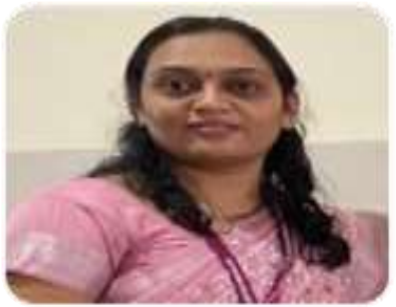
Ms. Varsha Thakare
Assistant Professor
B.Sc.(CS), M.Sc.(C.S.)
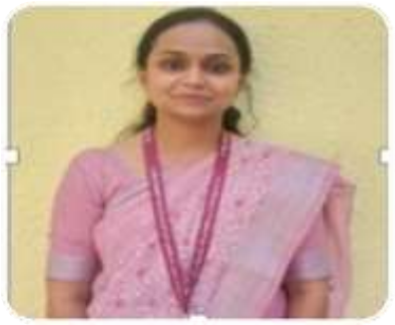
Ms. Nikita Bhamare
Assistant Professor
B.Sc.(CS), M.Sc.(C.S.)
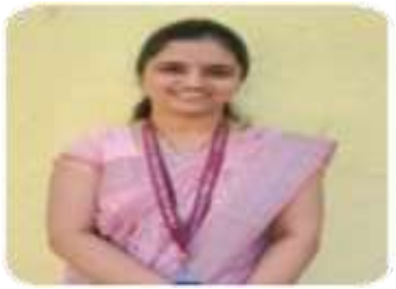
Ms. Snehal Mohite
Assistant Professor
B.E(Comp Sci), MBA Pursuing
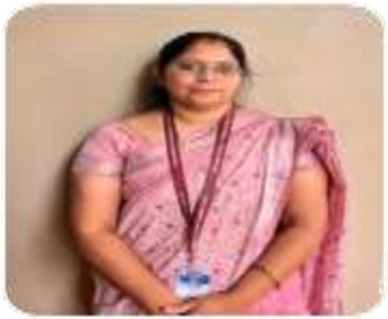
Ms. Priti Karajkhede
Assistant Professor
BCA, MCA, SET
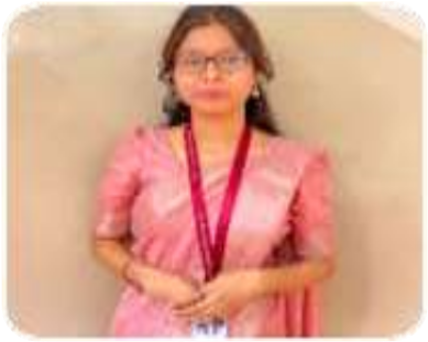
Miss. Mokshada Yadav
Assistant Professor
BSc.(CS), MCA
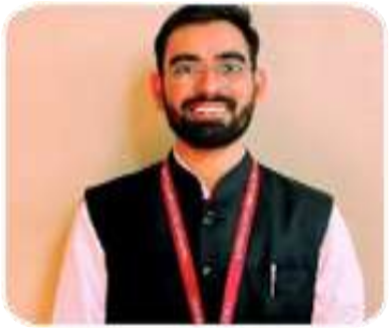
Mr.Rahul Rathod
Assistant Professor
BSc.(CS) and MCA

Miss. Harsha Harkut
Assistant Professor
BCA, MCA
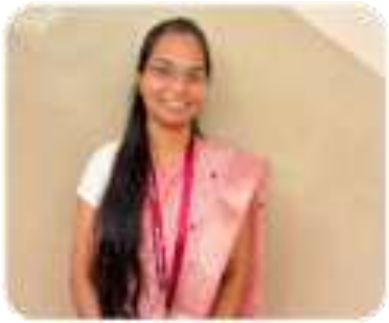
Ms. Trupti Ganorkar
Assistant Professor
B.Sc.(CS), MCA
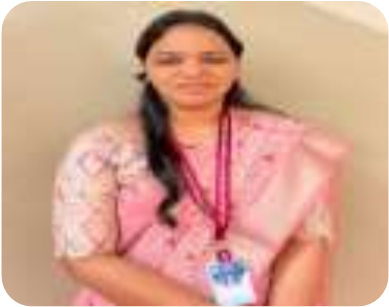
Mrs. Dipali More
Assistant Professor
BSc(CS), MSc(CS)
Miss. Kanyakumari Waghmare
Assistant Professor
BSc(CS), MSc(CS)
Syllabus
Departmental Activities
Academic Year 2025-26
| SN | Name of Activity | Academic Year |
|---|---|---|
| 1. | CSR Activity under Pratibha Finishing School | 2025-26 |
| 2. | Day Celebration on Birth anniversary of Sir John McCarthy (Father of AI): Prompt Challenge Competition to create AI generated Videos | |
| 3. | Guest Lecture: (A) Career Guidance for Database Developer by Mr. Shahid Sayyed (Sr. Specialist at Synechron) (B) Hands on Training on Machine Learning Concept by Mr. Piyush Pundpal (Data Scientist at One Network Enterprises) (C) Java + MERN Stack Live hands on training workshop by Trainer: Pankaj Arora | |
| 4. | Screening Test for Entry level Students (FY BSc (CA)): A short screening to evaluate foundational knowledge and prepare you for upcoming subjects. | |
| 5. | SEBI Lecture by Mr. Amol Marekar (SEBI-Securities Market Trainer, NISM Certified, Investment Education Advocate): An insightful session introducing students to SEBI’s role in ensuring fair and transparent financial markets. | |
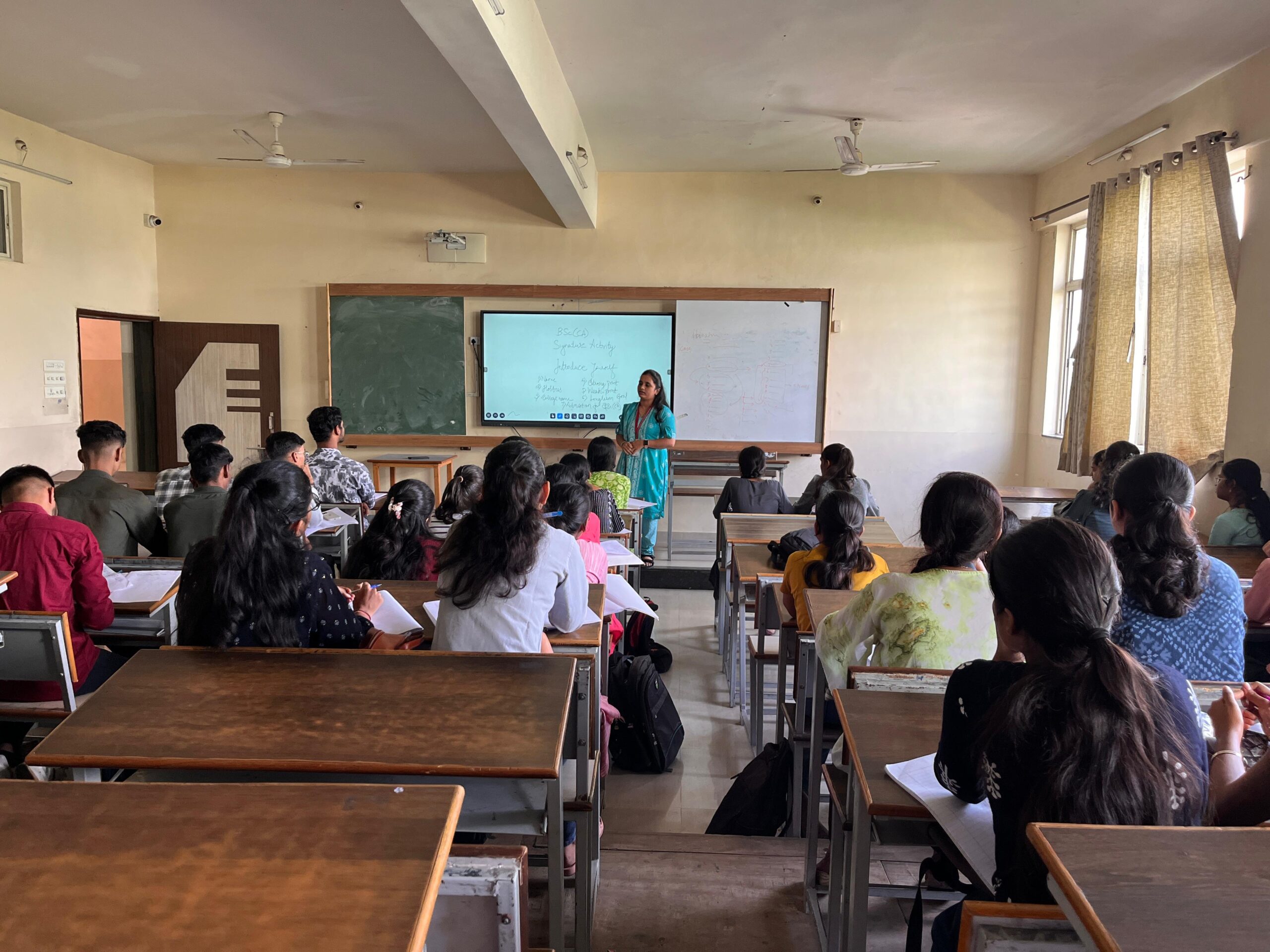
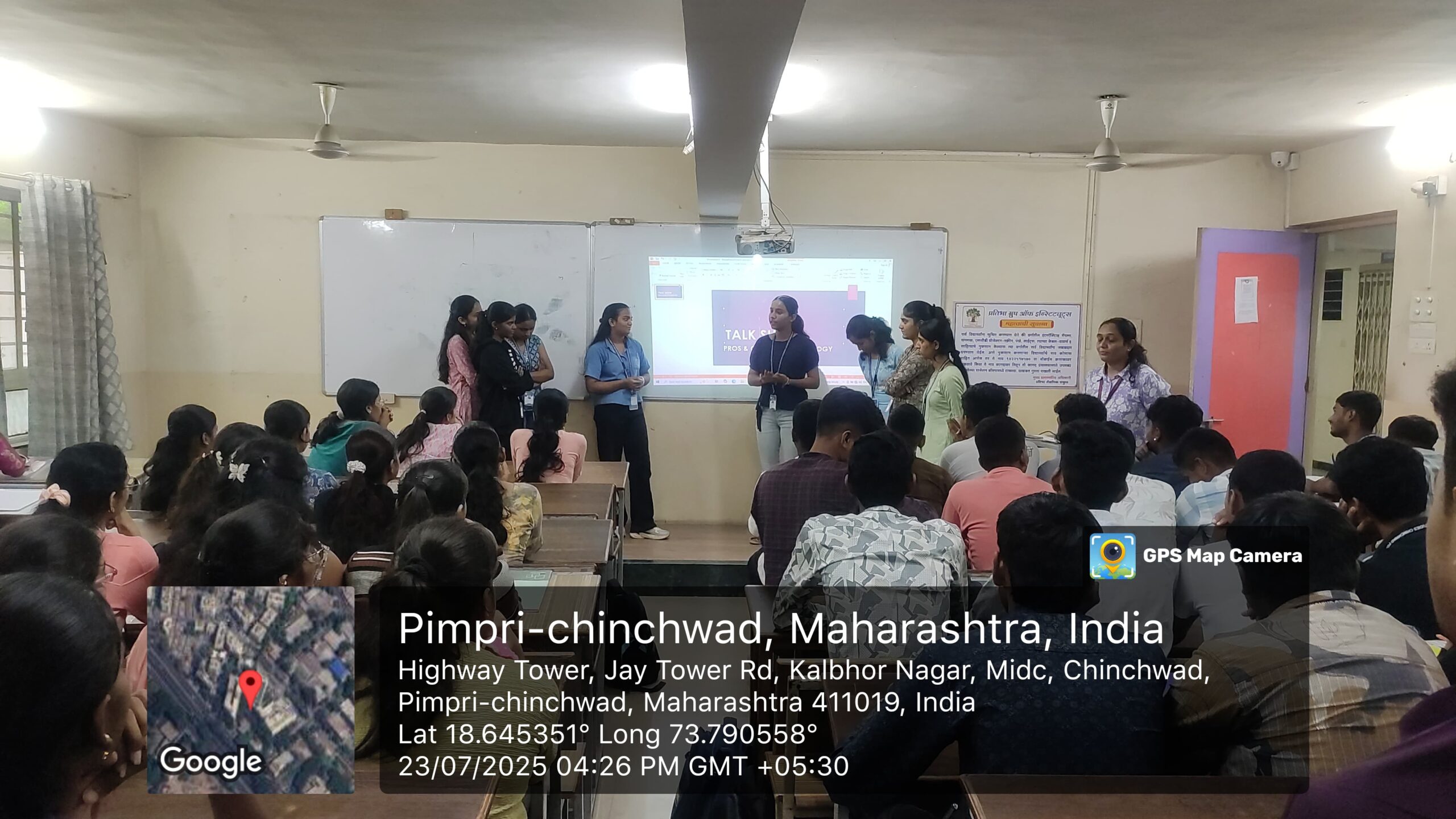
| 6. | Ticket to IT Activity (Rapid Chain Story, Talk Show, Open Mike, Tech Charades: Damm Sheras, Memory Stack, Introduce Yourself: Confidence Grooming): A dynamic ice-breaking activity series aimed at enhancing communication, memory, and personality development for IT beginners. | |
| 7. | Outdoor Management Training: Industrial Visit for PG Students to Khandi (Explored outdoor activities & gained the adventurous knowledge by Mr. Rajesh Kapade) |
Academic Year 2024-25
| SN | Name of Activity | Academic Year |
|---|---|---|
| 1. | Seminar: Current Trends in Computer Technologies: “Agile and DevOps” by Mr. Manjul Solanke (Lead DevOps Engineer) & Mr. Rajesh Patankar (Automation Lead & Scrum Master (Agile Coach)) | 2024-25 |
| 2. | F.Y. B.Sc.(Computer Application) Orientation Program — Induction Program for U.G and P.G. Students (A structured induction to help students understand the course, campus culture, and opportunities ahead.) | |
| 3. | Alumni Lecture: (A) “Career Guidance” by Mr. Akash Murhe (Web Developer at Applot Solution Private Ltd.) (B) Alumni Lecture on “HyperAutomation” by Nikita Jain (Sr. Consultant at Protiviti Global Consulting Firm) | |
| 4. | Guest Lecture: (A) “Data Structures: Understanding the Algorithmic Power” by Mr. Sandesh Dumbre (Sr. Software Eng. at Telstra) (B) “Career Awareness about Study Abroad” by Mr. Aman Sayyed (Eyebright Global Services) (C) Career counselling session on Career after under graduation by Manish Patankar (Program Coordinator of MCA at PIBM) (D) Career in Startups by Mr. Rahul Bankar | |
| 5. | Parent Teacher’s Meet Regarding Student’s Progress — A collaborative meeting to discuss students’ academic progress and overall development. | |
| 6. | Builders of Modern Society Celebration: (A) Birth Anniversary of Sir C. D. Deshmukh (First Indian Governor of RBI & Ex. Finance Minister) (B) Birth Anniversary of Mr. Osamu Suzuki (Padma Vibhushan Awardee) | |
| 7. | Signature Activity 1: General Aptitude Test (“A quick test designed to measure core aptitude and analytical thinking.”) | |
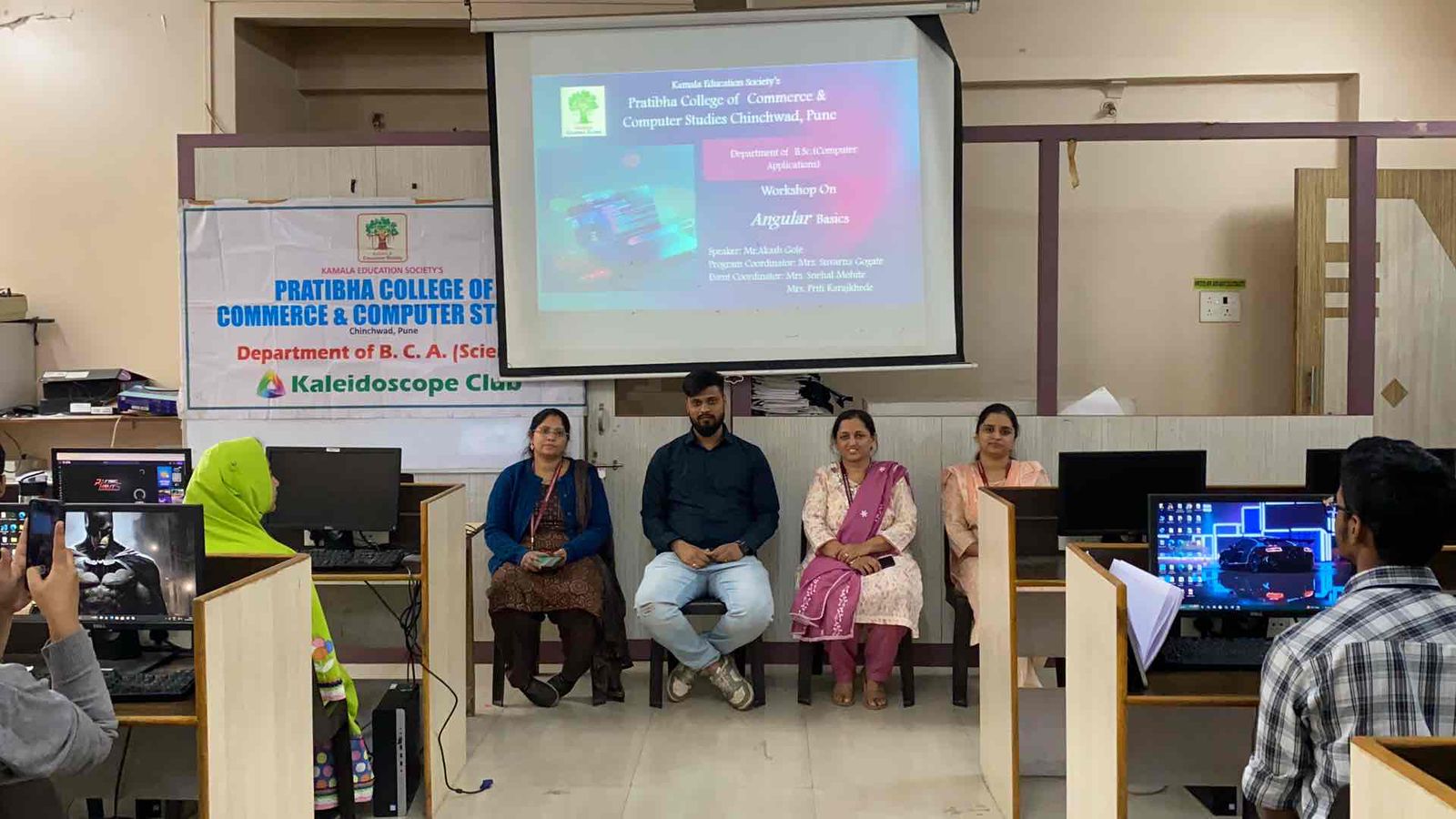
| 8. | Signature Activity 2: (A) Workshop on Python & Angular JS by Mr. Akash Gole (Lead Frontend Developer at Dynasty Gaming and Media) (B) Workshop on “Dive in Web Technology via Frameworks (Python, Tkinter, and Databases)” by Ms. Asmita Gorse (Technical Trainer at GTT Barclays, Pune) | |
| 9. | Outdoor Management Training: Industrial Visit to Khandi for PG Students (Explored outdoor activities) | |
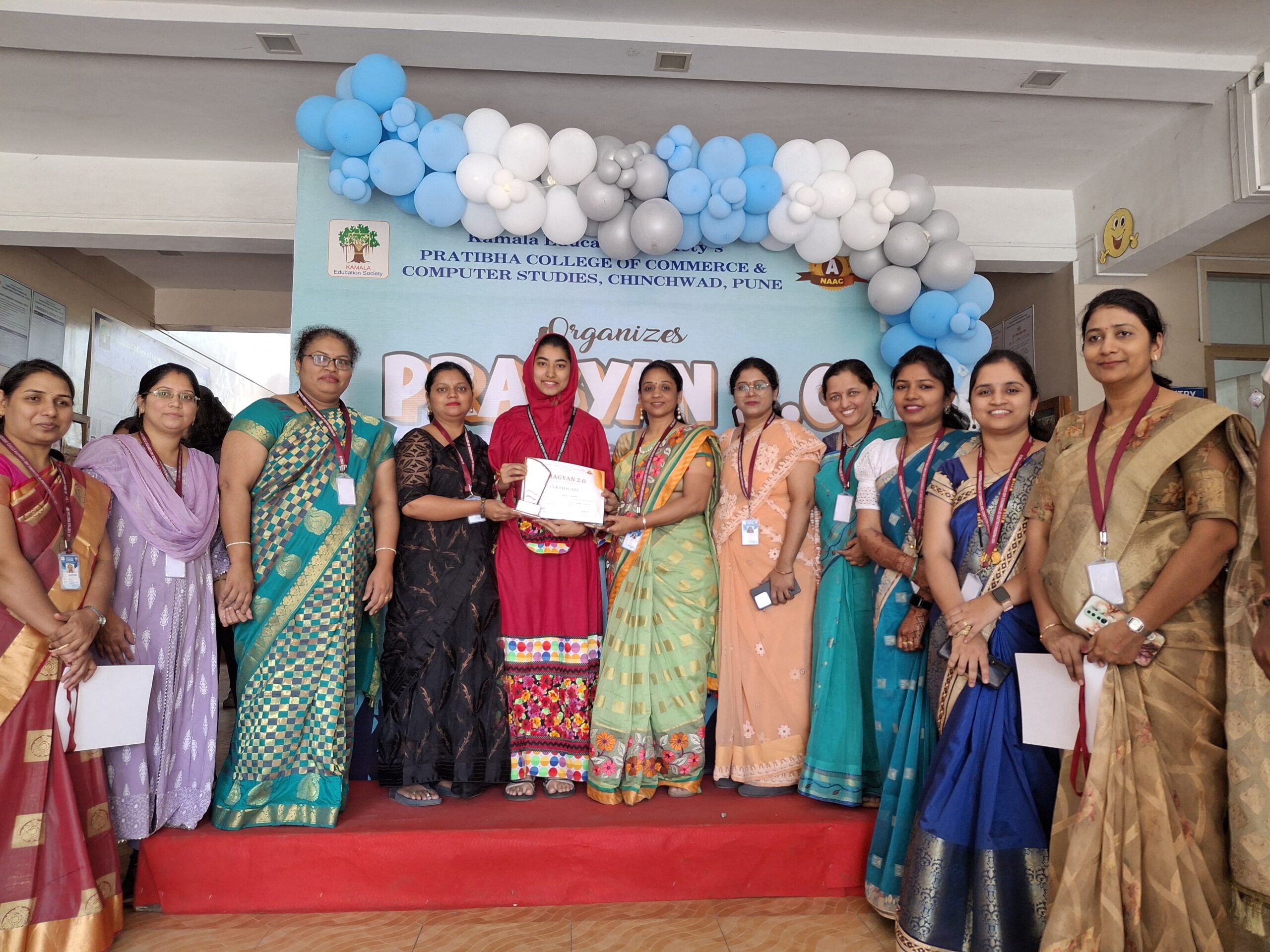
| 10. | Pragyan 2.0 — Pulse Pixel Competition: Pulse Pixel Video Making Competition | |
| 11. | Pragyan 2.0 — Groove on The Go Competition: E-Flyer Making Competition | |
| 12. | Pragyan 2.0 — Play with Clay Competition: Model Making Competition | |
| 13. | Pragyan 2.0 — Freeze The Moment Competition: Freeze The Moment Quiz Competition | |
| 14. | Vigyaan 2.0 Competition: Animation Movie Making Competition |
Academic Year 2023-24
| SN | Name of Activity | Academic Year |
|---|---|---|
| 1. | Industrial Visit: (A) ISRO (“Our students had the opportunity to visit ISRO’s main laboratory, gaining inspiring exposure to India’s premier space research facility.”) (B) Barclays IT MNC (Educational Visit to give students major exposure to real working environment for women) | |
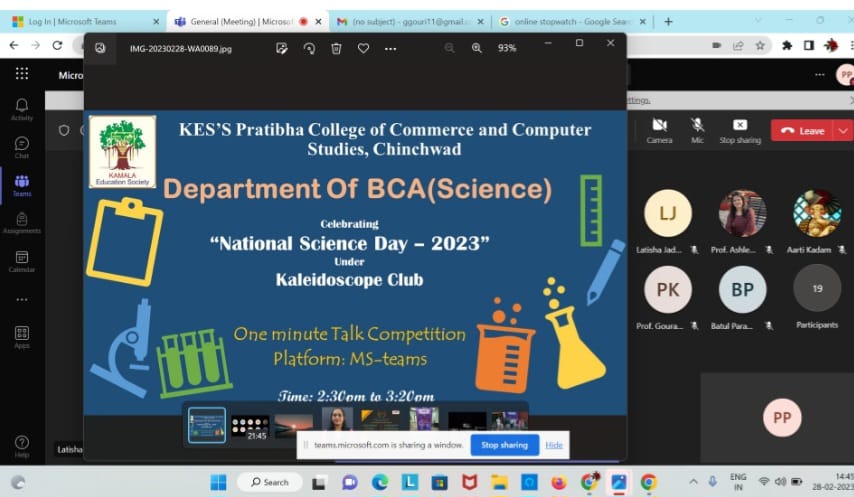
| 2. | Day Celebration Activity: (A) Ramdhari Singh Dinkar Birthday Celebration (Padma Bhushan and Sahitya Akademi Awardee) (B) Tribute to Mr. Karpoori Thakur (Bihar’s 11th Chief Minister, Bharat Ratna Awardee) (C) Bihar Diwas: Yuva Shakti Bihar ki Pragati (one minute talk activity) | 2023-24 |
| 3. | Guest Lecture: (A) Domains in Computer Networking and Ethical Hacking by Mr. Tejas Palaspagar (Testing Expert at Jetking Education Skill Institute) (B) Java Database Connectivity by Mr. Hitesh Wankhede (Prof. at CJC Classes, Akurdi) | |
| 4. | Alumni Lecture: Knowledge Impart Program on DevOps by Mr. Kiran Pyati (Project Manager at Infobeans Technologies) | |
| 5. | Add On Course: Add on Course on Mobile Application Development (“An add-on course designed to build practical skills in Mobile Application Development for real-world use.”) | |
| 6. | Pragyan — Pulse Pixel Competition: Pulse Pixel Video Making Competition | |
| 7. | Pragyan — Groove on The Go Competition: E-Flyer Making Competition | |
| 8. | Pragyan — Play with Clay Competition: Model Making Competition | |
| 9. | Vigyaan Competition: Rangoli Making Competition |
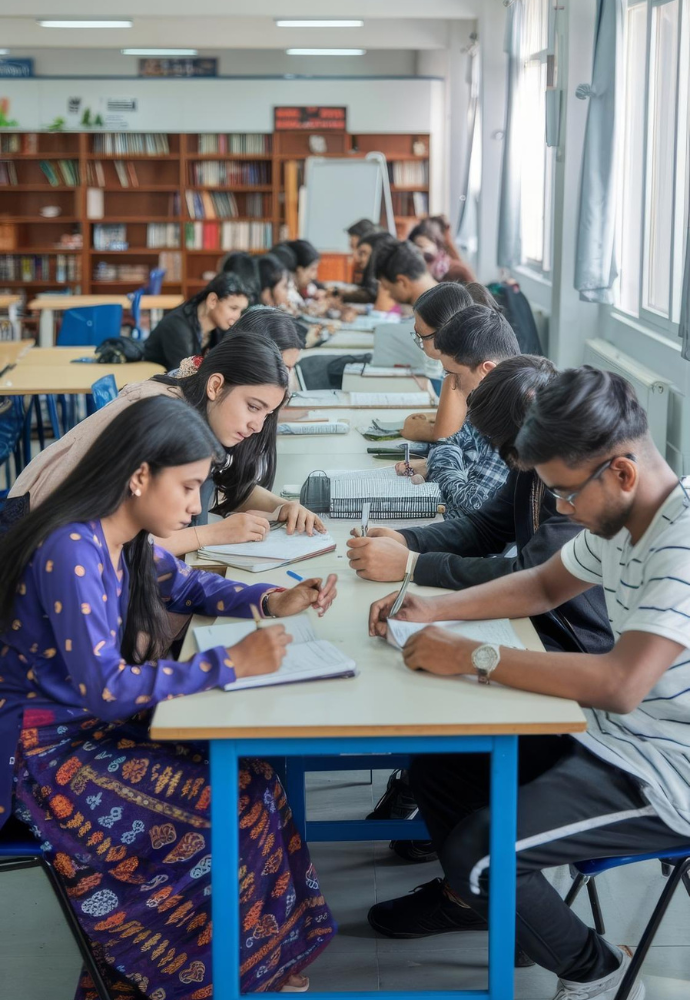
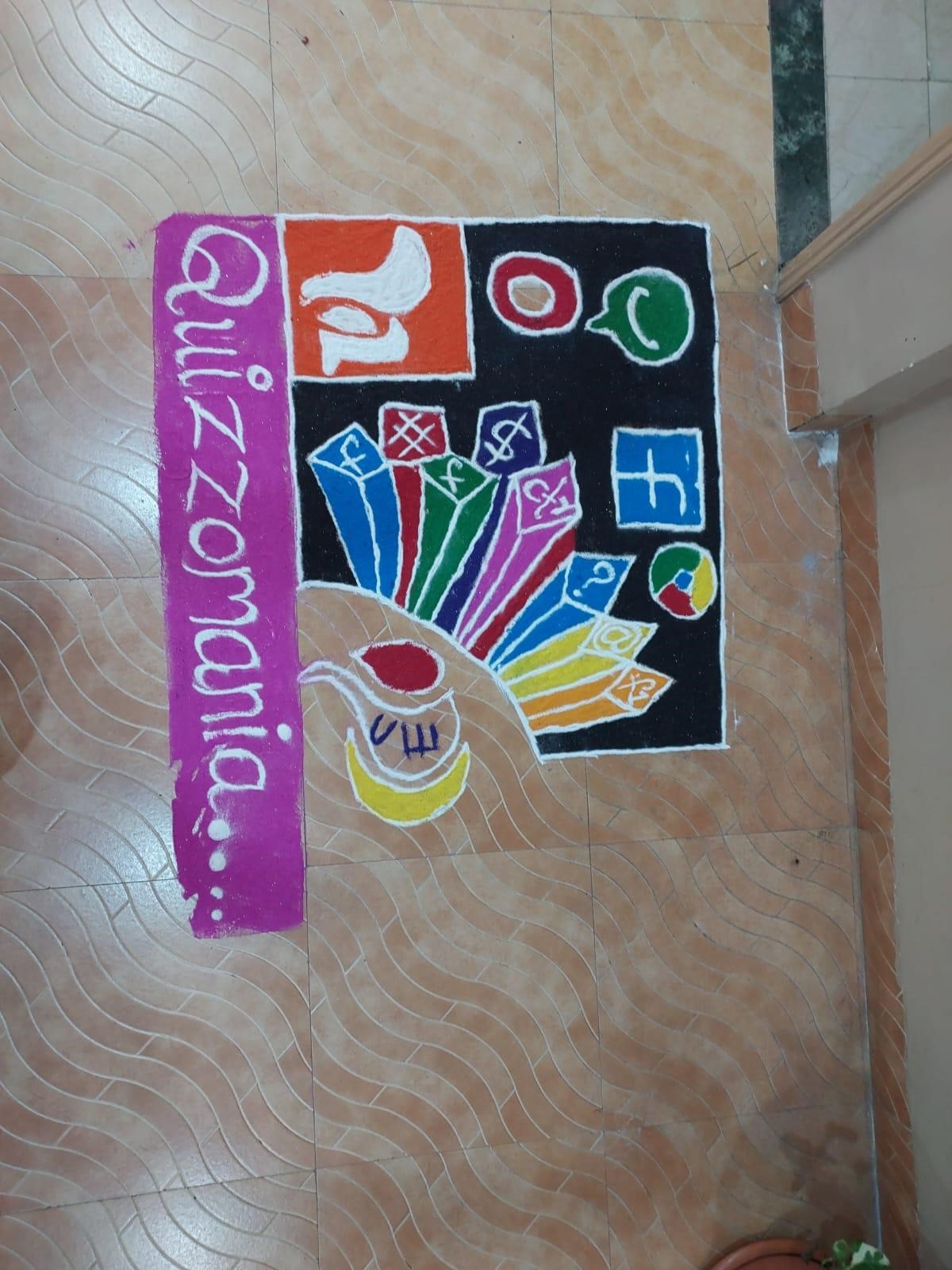
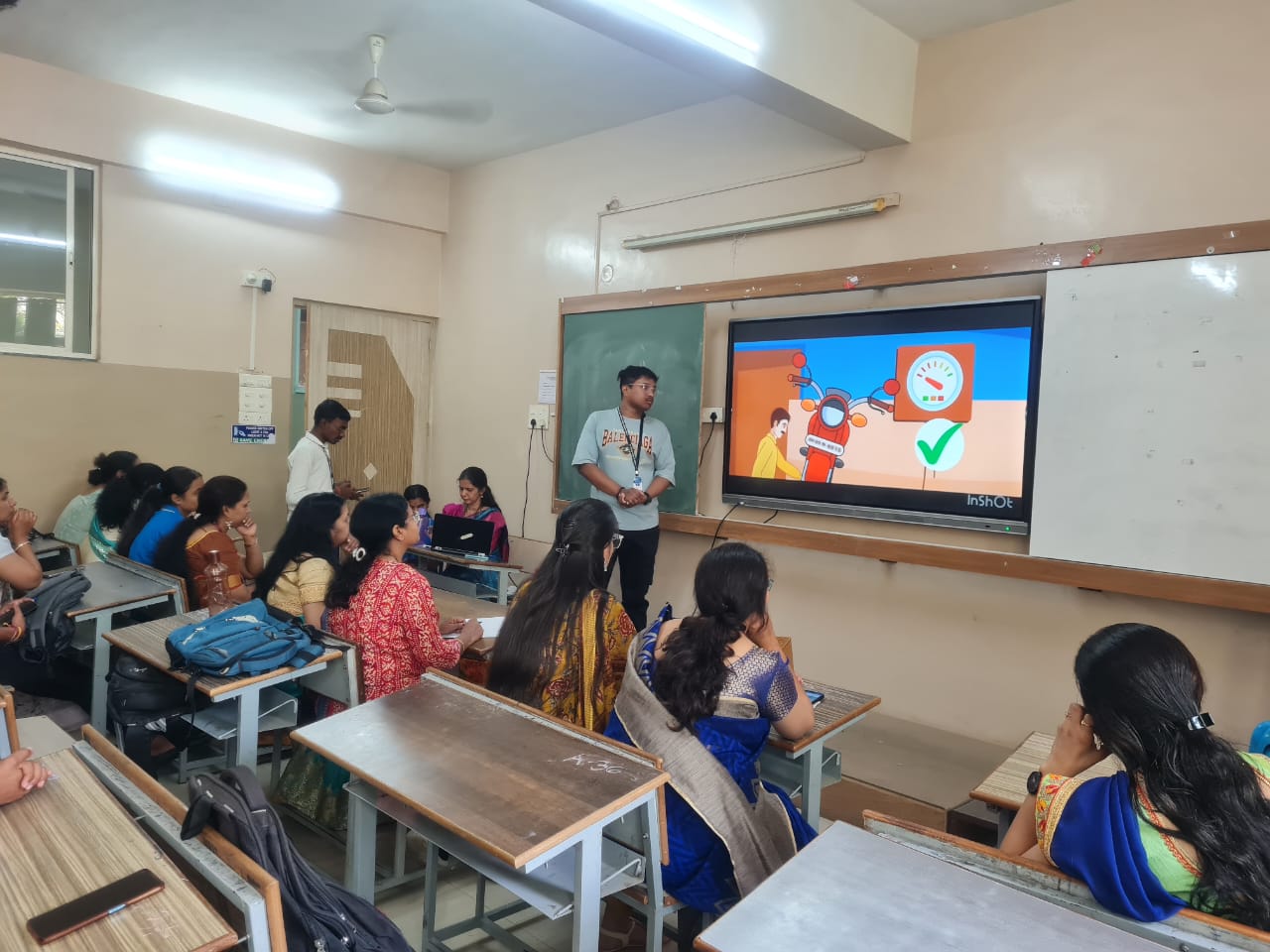
Gallery
B.Sc. (Reg)
Course Overview
Introduction about the Course
The B.Sc. (Regular) Department was established in 2016 with an initial intake of 19 students. Currently, the department caters to around 150 students, offering specializations in Statistics and Chemistry. The department was founded with the primary objective of fostering scientific aptitude, skills, and awareness among students, grounded in a strong foundation of basic sciences. The program is designed to cultivate a scientific temper, encouraging independent thought, logical reasoning, and the ability to make rational and informed decisions. It also promotes an interdisciplinary approach to knowledge, aiming to empower students to contribute meaningfully to a dynamic and evolving society.
Year of Establishment: 2016
Affiliated to Savitribai Phule Pune University, Pune
Intake: 120
Eligibility
B.Sc. (Statistics)
Eligibility: Higher secondary school certificate (10+2) or its equivalent examination with English & Mathematics & with any three science subjects such as Physics, Chemistry, Biology, Geography, Geology etc.
B.Sc. (Chemistry)
Eligibility: Higher secondary school certificate (10+2) or its equivalent examination with English & Mathematics & with any three science subjects such as Physics, Chemistry, Biology, Geography, Geology etc.
Duration of the Course
4 Years
Course Structure
Credit Summary
| Year | Term I | Term II | Total |
|---|---|---|---|
| First | Total Credit | Total Credit | Term I + Term II |
| Second | 22 | 22 | 44 |
| Third | 22 | 22 | 44 |
| Fourth | 22 | 22 | 44 |
Semester I — Group A: Statistics, Mathematics and Chemistry
| Semester | Course Type | Course Name / Course Title | Total Credits |
|---|---|---|---|
| I | Theory | CHE-101 Fundamentals of Chemistry-I | 2 |
| I | Practical | CHE-102 Chemistry Practical-I | 2 |
| I | Theory | MTS-101 Algebra and Calculus-I | 2 |
| I | Practical | MTS-102 Mathematics Practical | 2 |
| I | Theory | STS-101 Univariate and Bivariate Data Analysis | 2 |
| I | Practical | STS-102 Statistics Practical-I | 2 |
| I | Practical | SECP-101-STS MS Excel for Data Analysis | 2 |
| I | Theory | VEC-101 : Environment Education-I | 2 |
| I | Theory | AEC : English | 2 |
| I | Theory | OE-115 – COM T – Financial Literacy-I | 2 |
| I | Theory | IKS-Generic | 2 |
| Total Credits: | 22 | ||
Semester I — Group B: Chemistry, Botany and Environmental Science
| Semester | Course Type | Course Name / Course Title | Total Credits |
|---|---|---|---|
| I | Theory | CHE-101 Fundamentals of Chemistry-I | 2 |
| I | Practical | CHE-102 Chemistry Practical-I | 2 |
| I | Theory | BOT-101 Applied Aspects of Plant Sciences | 2 |
| I | Practical | BOT-102 Botany Practical | 2 |
| I | Theory | EVS-101 Fundamentals of Environmental Biology | 2 |
| I | Practical | EVS-102 Environmental Science Practical | 2 |
| I | Theory | VEC-101 : Environment Education-I | 2 |
| I | Theory | AEC : English | 2 |
| I | Theory | OE-115 – COM T – Financial Literacy-I | 2 |
| I | Theory | SEC-101-CHE Chemistry Laboratory Skills-I | 2 |
| I | Theory | IKS-Generic | 2 |
| Total Credits: | 22 | ||
Semester II — Group A: Statistics, Mathematics and Chemistry
| Semester | Course Type | Course Name / Course Title | Total Credits |
|---|---|---|---|
| II | Theory | Fundamentals of Chemistry II | 2 |
| II | Practical | Chemistry Practical II | 2 |
| II | Theory | Algebra and Calculus II | 2 |
| II | Practical | Mathematics Practical | 2 |
| II | Theory | Theory of Probability and Discrete Probability Distributions | 2 |
| II | Practical | Statistics Practical II | 2 |
| II | Practical | STS Computational Statistics using MS EXCEL | 2 |
| II | Theory | Environment Education II | 2 |
| II | Theory | English | 2 |
| II | Theory | Financial Literacy-II | 2 |
| II | Practical | Sports and Fitness | 2 |
| Total Credits: | 22 | ||
Semester II — Group B: Chemistry, Botany and Environmental Science
| Semester | Course Type | Course Name / Course Title | Total Credits |
|---|---|---|---|
| II | Theory | Fundamentals of Chemistry II | 2 |
| II | Practical | Chemistry Practical II | 2 |
| II | Theory | Plant Morphology | 2 |
| II | Practical | Practical based on BOT 151 T | 2 |
| II | Theory | Fundamentals of Environmental Physics and Geochemistry | 2 |
| II | Practical | Environmental Science Practical | 2 |
| II | Practical | Chemistry Laboratory Skills – II | 2 |
| II | Theory | Environment Education II | 2 |
| II | Theory | English | 2 |
| II | Theory | Financial Literacy – II | 2 |
| II | Practical | Sports and Fitness | 2 |
| Total Credits: | 22 | ||
Semester III — Group A: Statistics, Mathematics
| Semester | Course Type | Course Name / Course Title | Total Credits |
|---|---|---|---|
| III | Theory | Discrete Probability Distributions | 2 |
| III | Theory | Continuous Probability Distributions | 2 |
| III | Practical | Statistics Practical – III | 2 |
| III | Practical | Statistical Computing using MS-EXCEL – I | 2 |
| III | Project | Field Project | 2 |
| III | Theory | Development of Statistics in India | 2 |
| III | Theory | Mathematics for Physical Science -I | 2 |
| III | Practical | Practical on Mathematics for Physical Science -I | 2 |
| III | Theory | Recent Trends in Marketing -III | 2 |
| III | Theory | Ability Enhancement Course AEC (Marathi) | 2 |
| III | Theory | Co-curricular Course – Health and Wellness | 2 |
| Total Credits: | 22 | ||
Semester III — Group B: Chemistry and Environmental Science
| Semester | Course Type | Course Name / Course Title | Total Credits |
|---|---|---|---|
| III | Theory | Physical Chemistry-I | 2 |
| III | Theory | Inorganic Chemistry-I | 2 |
| III | Practical | Chemistry Practical- III | 2 |
| III | Theory | Environmental Microbiology | 2 |
| III | Project | Practical based on EVS 241 MN | 2 |
| III | Theory | Industrial Chemistry-I | 2 |
| III | Theory | Ancient Indian Chemistry | 2 |
| III | Project | Field Project | 2 |
| III | Theory | Recent Trends in Marketing -III | 2 |
| III | Theory | Ability Enhancement Course AEC (Marathi) | 2 |
| III | Theory | Co-curricular Course – Health and Wellness | 2 |
| Total Credits: | 22 | ||
Semester IV — Group A: Statistics, Mathematics
| Semester | Course Type | Course Name / Course Title | Total Credits |
|---|---|---|---|
| IV | Theory | Test of Significance and Statistical Methods | 2 |
| IV | Theory | Sampling Distribution and Exact Test | 2 |
| IV | Practical | Statistics Practical -IV | 2 |
| IV | Practical | Statistical Computing using MS-EXCEL – II | 2 |
| IV | Project | Community Engagement Project | 2 |
| IV | Practical | Descriptive Statistics using R-software | 2 |
| IV | Theory | Mathematics for Physical Science-II | 2 |
| IV | Practical | Practical On (A) Mathematics for Physical Science-II | 2 |
| IV | Theory | OE | 2 |
| IV | Theory | Marathi | 2 |
| IV | Not Declared | Co-curricular Course | 2 |
| Total Credits: | 22 | ||
Semester IV — Group B: Chemistry and Environmental Science
| Semester | Course Type | Course Name / Course Title | Total Credits |
|---|---|---|---|
| IV | Theory | Organic Chemistry-I | 2 |
| IV | Theory | Analytical Chemistry-I | 2 |
| IV | Practical | Chemistry Practical – IV | 2 |
| IV | Practical | Industrial Chemistry Practical-I | 2 |
| IV | Project | Community Engagement Project (CEP) | 2 |
| IV | Practical | Basic Software in Chemistry | 2 |
| IV | Theory | Solid Waste Management | 2 |
| IV | Practical | Practical on EVS 291 MN | 2 |
| IV | Theory | OE | 2 |
| IV | Theory | Marathi | 2 |
| IV | Not Declared | Co-curricular Course | 2 |
| Total Credits: | 22 | ||
Semester V — Statistics
| Semester | Course Type | Course Name / Course Title | Total Credits |
|---|---|---|---|
| V | Theory | Distribution Theory – I | 2 |
| V | Theory | Theory of Estimation | 2 |
| V | Theory | Design and Analysis of Experiments | 2 |
| V | Theory | Statistical Process and Product Control | 2 |
| V | Theory | Operations Research – I | 2 |
| V | Theory | Regression Analysis | 2 |
| V | Practical | Practical Paper – I | 2 |
| V | Practical | Practical Paper – II | 2 |
| V | Practical | Practical Paper – III | 2 |
| V | Practical | Turbo C | 2 |
| V | Practical | Statistical Computing using R-software | 2 |
| Total Credits: | 22 | ||
Semester VI — Statistics
| Semester | Course Type | Course Name / Course Title | Total Credits |
|---|---|---|---|
| VI | Theory | Distribution Theory – II | 2 |
| VI | Theory | Testing of Hypothesis | 2 |
| VI | Theory | Sampling Theory | 2 |
| VI | Theory | Introduction to Survival Analysis | 2 |
| VI | Theory | Operations Research – II | 2 |
| VI | Theory | Stochastic Processes | 2 |
| VI | Practical | Practical Paper – IV | 2 |
| VI | Practical | Practical Paper – V | 2 |
| VI | Project | Project | 2 |
| VI | Practical | Introduction to Python (Practical Course) | 2 |
| VI | Practical | Data Analytics (Practical Course) | 2 |
| Total Credits: | 22 | ||
Semester V — Chemistry
| Semester | Course Type | Course Name / Course Title | Total Credits |
|---|---|---|---|
| V | Theory | Physical Chemistry -I | 2 |
| V | Theory | Analytical Chemistry-I | 2 |
| V | Practical | Physical Chemistry Practical-I | 2 |
| V | Theory | Inorganic Chemistry-I | 2 |
| V | Theory | Industrial Chemistry | 2 |
| V | Practical | Inorganic Chemistry Practical-I | 2 |
| V | Theory | Chemistry of Biomolecules | 2 |
| V | Theory | Introduction of Medicinal Chemistry | 2 |
| V | Theory | Environmental Chemistry | 2 |
| V | Practical | Organic Chemistry Practical-I | 2 |
| V | Theory | Organic Chemistry-I | 2 |
| Total Credits: | 22 | ||
Semester VI — Chemistry
| Semester | Course Type | Course Name / Course Title | Total Credits |
|---|---|---|---|
| VI | Theory | Physical Chemistry – II | 2 |
| VI | Theory | Physical Chemistry – III | 2 |
| VI | Practical | Physical Chemistry Practical-II | 2 |
| VI | Theory | Inorganic Chemistry -II | 2 |
| VI | Theory | Inorganic Chemistry -III | 2 |
| VI | Practical | Inorganic Chemistry Practical-II | 2 |
| VI | Theory | Organic Chemistry-II | 2 |
| VI | Theory | Organic Chemistry III | 2 |
| VI | Project | Organic Chemistry Practical-II | 2 |
| VI | Theory | Introduction of Forensic Chemistry | 2 |
| VI | Practical | Analytical Chemistry-II | 2 |
| Total Credits: | 22 | ||
Career Prospects
B.Sc. (Statistics)
- Data Analyst / Business Analyst
- Statistical Officer (Govt. Agencies)
- Market Research Analyst
- Banking and Financial Analyst
- Actuarial Analyst
- Quality Control Analyst
- Research Assistant
- Biostatistician
- Higher Education
B.Sc. (Chemistry) - Lab Technician / Chemical Analyst
- QA/QC Roles in Pharma & Chemical Industries
- Research Assistant
- Environmental & Analytical Chemist
- Production Chemist
- Science Communicator / Technical Writer
- Higher Studies: M.Sc., Environmental Science, etc.
- Competitive Exams: UPSC, MPSC, CSIR-NET, GATE
Program Outcomes
BSc (Regular) — Program Outcomes
After successful completion of B.Sc.(reg) Programme students will be able to:
| PO No | Outcomes |
|---|---|
| PO 1 | Digital Literacy: The course has been designed in such a way that a student gets software knowledge related to subjects such as Excel, R-Programming, C-Programming, Maxima, Scilab, Python, etc. |
| PO 2 | Environment & Sustainability: To prepare graduates who are not only statistically sound but also capable of using their appropriate statistical skills in interdisciplinary areas such as physics, chemistry, mathematics, finance, health, agriculture, government, business, industry, and telecommunication, biostatistics, etc. As a result, they can pursue their future career either in the core field or in the applied field of Statistics. |
| PO 3 | Disciplinary Knowledge: The proposed curriculum is expected to provide the students with a sound knowledge of Statistics covering various aspects. As a result, they will not only appear appropriate for pursuing higher studies in the subject but also develop skills to apply statistical know-how to a variety of real-life problems. |
| PO 4 | Problem Solving: The students will be able to analyze/handle different/various situations such as model fitting and algorithm writing and will be able to identify and conclude relevant resources to find their rational answers. |
| PO 5 | Communication Skills: As students have to do projects every year, they collect real-life data from the field. Here, these students interact with many people which builds their communication skills. This helps them in the future. |
| PO 6 | Team Work: The students have to complete a project in a group or team that develops the skill of working in a team which in turn develops their unity and integrity. During the completion of the project the students who are reserved, start making interaction with their teammates and other students. These students get desired objectives, motivation and inspiration from team members as a team. |
| PO 7 | Self-directed Learning: Students will be able to identify their learning needs and learning goals. They will be able to choose and implement appropriate learning strategies and evaluate learning outcomes (with or without the help of others). |
| PO 8 | Scientific Reasoning: The students will be able to analyze, interpret and draw appropriate conclusions from both quantitative and qualitative data. |
| PO 9 | Practical Approach: In the project, students have to model real problems and apply the appropriate methods that they learn in three years of the graduation program. |
| PO 10 | Ethics: Apply ethical principles and commit to professional ethics and responsibilities and norms of the science practices. |
Course Outcomes — BSc Regular
Semester I
CHE-101-T: Fundamentals of Chemistry-I
Theory | 2 Credits | 2 Hours/Week
Course Objectives:
- To understand atomic structure, periodic trends, chemical bonding, and basic concepts of thermodynamics.
- To develop problem-solving skills in stoichiometry, equilibrium, and fundamental chemical reactions.
Course Outcomes:
| CO No. | Course Outcome |
|---|---|
| CO-1 | Recall and describe atomic structure, electronic configuration, periodic properties, and types of chemical bonding. |
| CO-2 | Explain the principles of chemical bonding, hybridization, molecular geometry, and VSEPR theory. |
| CO-3 | Apply stoichiometric calculations to determine composition, limiting reagents, and percent yield in chemical reactions. |
| CO-4 | Analyze thermodynamic functions including enthalpy, entropy, and Gibbs free energy to predict reaction spontaneity. |
| CO-5 | Evaluate acid-base equilibria, buffer systems, and solubility product concepts. |
| CO-6 | Summarize the essential principles of solution chemistry and colligative properties. |
SEC-101-CHE: Basic Laboratory Skills in Chemistry
Practical | 2 Credits | 4 Hours/Week
Course Objectives:
- To familiarize students with laboratory equipment, safety protocols, and basic experimental techniques.
- To develop skills in performing titrations, filtration, crystallization, and recording observations.
Course Outcomes:
| CO No. | Course Outcome |
|---|---|
| CO-1 | Identify and safely use basic laboratory glassware and instruments. |
| CO-2 | Demonstrate proper laboratory safety practices and waste disposal techniques. |
| CO-3 | Perform volumetric analysis including acid-base and redox titrations. |
| CO-4 | Analyze experimental data, calculate results, and present findings in a systematic format. |
| CO-5 | Evaluate sources of experimental error and suggest improvements in laboratory procedures. |
| CO-6 | Apply separation techniques such as filtration and crystallization to purify substances. |
EVS-101-T: Fundamentals of Environmental Science-I
Theory | 2 Credits | 2 Hours/Week
Course Objectives:
- To introduce students to the basic concepts of ecology, ecosystems, and environmental issues.
- To understand natural resources, their sustainable use, and conservation strategies.
Course Outcomes:
| CO No. | Course Outcome |
|---|---|
| CO-1 | Define and explain key ecological concepts including ecosystems, food chains, and biogeochemical cycles. |
| CO-2 | Describe different types of natural resources and their importance to human well-being. |
| CO-3 | Identify major environmental problems such as pollution, deforestation, and climate change. |
| CO-4 | Analyze the impact of human activities on natural ecosystems and biodiversity. |
| CO-5 | Evaluate conservation strategies and sustainable development approaches. |
EVS-102-P: Environmental Science Practical-I
Practical | 2 Credits | 2 Hours/Week
Course Objectives:
- To develop practical skills in environmental monitoring and sample analysis.
- To apply field and laboratory techniques to study environmental parameters.
Course Outcomes:
| CO No. | Course Outcome |
|---|---|
| CO-1 | Demonstrate safe handling of environmental samples and laboratory equipment. |
| CO-2 | Perform standard tests to measure water quality parameters such as pH, turbidity, and dissolved oxygen. |
| CO-3 | Analyze soil samples for texture, moisture content, and basic chemical properties. |
| CO-4 | Record, interpret, and present environmental data using appropriate formats. |
| CO-5 | Identify environmental indicators in field studies and relate findings to theoretical concepts. |
BOT-101-T: Diversity of Plants-I
Theory | 2 Credits | 2 Hours/Week
Course Objectives:
- To understand the diversity, classification, and evolutionary significance of lower plant groups.
- To study the morphology, reproduction, and economic importance of algae, fungi, bryophytes, and pteridophytes.
Course Outcomes:
| CO No. | Course Outcome |
|---|---|
| CO-1 | Identify and classify major groups of lower plants based on morphological and reproductive characteristics. |
| CO-2 | Describe life cycles, reproductive strategies, and adaptive features of algae, fungi, and bryophytes. |
| CO-3 | Explain the economic and ecological importance of various plant groups. |
| CO-4 | Analyze evolutionary trends from simple to complex plant forms. |
| CO-5 | Compare and contrast structural and functional differences among major plant phyla. |
MTS-101: Algebra and Calculus-I
Theory | 2 Credits | 2 Hours/Week
Course Objectives:
- To develop a strong foundation in algebra including matrices, determinants, and linear equations.
- To understand the concepts of limits, continuity, differentiation, and integration.
Course Outcomes:
| CO No. | Course Outcome |
|---|---|
| CO-1 | Solve systems of linear equations using matrix methods and determinants. |
| CO-2 | Evaluate limits, test continuity, and differentiate functions using standard rules. |
| CO-3 | Apply differentiation to solve problems involving maxima, minima, and related rates. |
| CO-4 | Compute definite and indefinite integrals using various integration techniques. |
| CO-5 | Apply integration to find areas, volumes, and solve basic differential equations. |
STS-101-T: Descriptive Statistics
Theory | 2 Credits | 2 Hours/Week
Course Objectives:
- To introduce the basic concepts of statistics including data types, collection, and presentation methods.
- To develop skills in computing and interpreting measures of central tendency, dispersion, and correlation.
Course Outcomes:
| CO No. | Course Outcome |
|---|---|
| CO-1 | Classify different types of data and select appropriate methods for collection and presentation. |
| CO-2 | Calculate measures of central tendency (mean, median, mode) and interpret their significance. |
| CO-3 | Compute measures of dispersion including range, variance, and standard deviation. |
| CO-4 | Analyze data using frequency distributions, histograms, and ogive curves. |
| CO-5 | Calculate and interpret Karl Pearson’s and Spearman’s correlation coefficients. |
STS-102-P: Statistics Practical-I
Practical | 2 Credits | 2 Hours/Week
Course Objectives:
- To develop practical skills in computing descriptive statistics and presenting data graphically.
Course Outcomes:
| CO No. | Course Outcome |
|---|---|
| CO-1 | Organize raw data into frequency distributions and construct appropriate diagrams. |
| CO-2 | Compute central tendency, dispersion, and correlation measures by hand and using calculators. |
| CO-3 | Interpret statistical results and draw meaningful conclusions from real-life data sets. |
| CO-4 | Present statistical findings using tables, graphs, and concise written summaries. |
MTS-102: Practical Based on MTS-101
Practical | 2 Credits | 2 Hours/Week
Course Objectives:
- To strengthen understanding of algebraic and calculus concepts through hands-on problem solving.
Course Outcomes:
| CO No. | Course Outcome |
|---|---|
| CO-1 | Solve numerical problems on matrices, determinants, and systems of equations. |
| CO-2 | Apply differentiation and integration techniques to practical problems. |
| CO-3 | Verify mathematical results and interpret solutions in applied contexts. |
SEC-101-STS: MS-EXCEL for Data Analysis
Practical | 2 Credits | 2 Hours/Week
Course Objectives:
- To develop skills in using MS Excel for statistical data analysis and visualization.
Course Outcomes:
| CO No. | Course Outcome |
|---|---|
| CO-1 | Use MS Excel to enter, organize, and manage statistical data efficiently. |
| CO-2 | Apply Excel functions to compute descriptive statistics including mean, median, and standard deviation. |
| CO-3 | Create charts, graphs, and pivot tables to visualize data distributions. |
| CO-4 | Perform basic data analysis tasks such as sorting, filtering, and conditional formatting. |
| CO-5 | Interpret Excel outputs to draw statistical inferences from real data. |
IKS (Generic): Indian Knowledge System
Theory | 2 Credits | 2 Hours/Week
Course Objectives:
- To introduce students to the rich traditions of Indian Knowledge Systems including philosophy, science, and arts.
- To cultivate awareness of India’s intellectual heritage and its relevance to modern disciplines.
Course Outcomes:
| CO No. | Course Outcome |
|---|---|
| CO-1 | Identify and describe key contributions of ancient Indian scholars in diverse fields of knowledge. |
| CO-2 | Explain the foundational texts, philosophies, and knowledge traditions of ancient India. |
| CO-3 | Relate traditional Indian knowledge systems to contemporary scientific and social practices. |
| CO-4 | Appreciate the interdisciplinary nature of Indian classical knowledge and its global impact. |
| CO-5 | Evaluate the significance of preserving and promoting Indian intellectual heritage in modern education. |
Semester II
CHE-151-T: Fundamentals of Chemistry-II
Theory | 2 Credits | 2 Hours/Week
Course Objectives:
- To understand the concepts of chemical equilibrium, electrochemistry, and chemical kinetics.
- To develop understanding of organic chemistry fundamentals including functional groups and basic reactions.
Course Outcomes:
| CO No. | Course Outcome |
|---|---|
| CO-1 | Recall and explain the laws of chemical equilibrium, Le Chatelier’s principle, and equilibrium constants. |
| CO-2 | Understand electrochemical cells, electrode potentials, and Faraday’s laws of electrolysis. |
| CO-3 | Apply rate laws to determine reaction order and calculate rate constants. |
| CO-4 | Analyze organic functional groups, isomerism, and nomenclature of organic compounds. |
| CO-5 | Compare ionic, covalent, and metallic bonding models and their influence on physical properties. |
| CO-6 | Summarize the principles of nuclear chemistry including radioactive decay and applications. |
SEC-151 CHE(B)-P: Basics in Computer for Chemistry
Practical | 2 Credits | 4 Hours/Week
Course Objectives:
- To introduce students to basic computer applications useful in chemistry including word processing, spreadsheets, and data handling.
- To develop skills in using computers for chemical data analysis and molecular drawing.
Course Outcomes:
| CO No. | Course Outcome |
|---|---|
| CO-1 | Use basic computer software tools for chemical data recording and processing. |
| CO-2 | Create spreadsheets to perform chemical calculations and plot graphs. |
| CO-3 | Draw molecular structures and reactions using chemical drawing software. |
| CO-4 | Analyze chemical data sets and present results in tabular and graphical formats. |
| CO-5 | Demonstrate proficiency in basic internet-based literature searches for chemistry resources. |
| CO-6 | Apply digital tools to enhance laboratory report writing and data communication. |
STS-151-T: Theory of Probability and Discrete Probability Distributions
Theory | 2 Credits | 2 Hours/Week
Course Objectives:
- To introduce the basic concepts of probability including sample spaces, events, and axioms of probability.
- To develop understanding of discrete probability distributions and their applications.
Course Outcomes:
| CO No. | Course Outcome |
|---|---|
| CO-1 | Define probability concepts including sample space, events, and fundamental theorems. |
| CO-2 | Apply addition and multiplication theorems, conditional probability, and Bayes’ theorem. |
| CO-3 | Identify and apply discrete probability distributions including Binomial and Poisson distributions. |
| CO-4 | Compute expectations, variance, and moments of discrete random variables. |
| CO-5 | Solve real-life probability problems using appropriate discrete distribution models. |
STS-152-P: Statistics Practical-II
Practical | 2 Credits | 2 Hours/Week
Course Objectives:
- To develop practical computational skills in probability and discrete distribution problems.
Course Outcomes:
| CO No. | Course Outcome |
|---|---|
| CO-1 | Compute probabilities using classical, relative frequency, and axiomatic approaches. |
| CO-2 | Solve numerical problems based on Binomial and Poisson distributions. |
| CO-3 | Calculate expectation and variance of discrete random variables. |
| CO-4 | Apply statistical techniques to interpret results from probability models. |
SEC-151-STS: Computational Statistics using MS-EXCEL
Practical | 2 Credits | 2 Hours/Week
Course Objectives:
- To enable students to use MS Excel for computing statistical measures and probability distributions.
- To develop proficiency in data visualization and statistical analysis using Excel tools.
Course Outcomes:
| CO No. | Course Outcome |
|---|---|
| CO-1 | Use Excel to compute descriptive statistics including mean, median, mode, and standard deviation. |
| CO-2 | Generate and interpret frequency tables, histograms, and probability plots using Excel. |
| CO-3 | Calculate probabilities and expected values for discrete distributions using Excel functions. |
| CO-4 | Apply Excel-based tools for regression analysis and correlation computation. |
| CO-5 | Present statistical analysis results effectively using Excel charts and formatted reports. |
MTS-151: Algebra and Calculus-II
Theory | 2 Credits | 2 Hours/Week
Course Objectives:
- To develop understanding of advanced algebraic structures and calculus techniques.
- To apply differential and integral calculus to solve applied mathematical problems.
Course Outcomes:
| CO No. | Course Outcome |
|---|---|
| CO-1 | Understand and apply concepts of sequences, series, and convergence tests. |
| CO-2 | Apply advanced differentiation techniques including implicit, parametric, and logarithmic differentiation. |
| CO-3 | Compute multiple integrals and apply them to find areas and volumes. |
| CO-4 | Analyze ordinary differential equations and solve first-order separable equations. |
| CO-5 | Apply calculus to solve problems in physics, engineering, and other sciences. |
| CO-6 | Evaluate improper integrals and apply the fundamental theorem of calculus. |
MTS-152: Practical Based on MTS-151
Practical | 2 Credits | 2 Hours/Week
Course Objectives:
- To reinforce algebraic and calculus concepts through numerical problem solving and verification.
Course Outcomes:
| CO No. | Course Outcome |
|---|---|
| CO-1 | Solve practical problems on sequences, series, and their convergence. |
| CO-2 | Apply advanced differentiation and integration methods to real-world problems. |
| CO-3 | Compute double and triple integrals numerically and interpret their geometric significance. |
| CO-4 | Verify solutions to differential equations and analyze their physical interpretations. |
| CO-5 | Construct mathematical models for applied problems and validate using calculus tools. |
| CO-6 | Present mathematical solutions clearly with proper notation and logical reasoning. |
BOT-151-T: Plant Morphology
Theory | 2 Credits | 2 Hours/Week
Course Objectives:
- To understand plant morphology fundamentals including organ modifications and flower/inflorescence structure.
- To develop skills in practical identification and classification of plant specimens.
Course Outcomes:
| CO No. | Course Outcome |
|---|---|
| CO-1 | Identify and differentiate plant organs including roots, stems, leaves, and their modifications. |
| CO-2 | Analyze morphological functions and adaptive significance of vegetative organs. |
| CO-3 | Explain flower and inflorescence morphology including floral formulae and floral diagrams. |
| CO-4 | Understand fruit and seed morphology, types, and their ecological significance. |
| CO-5 | Classify plant specimens based on morphological characteristics observed in the laboratory. |
EVS-151-T: Fundamentals of Environmental Physics and Geochemistry
Theory | 2 Credits | 2 Hours/Week
Course Objectives:
- To understand environmental chemistry principles and chemical interactions across environmental segments.
- To study pollutant chemistry, green chemistry principles, and environmental physics concepts.
Course Outcomes:
| CO No. | Course Outcome |
|---|---|
| CO-1 | Define the scope and significance of environmental chemistry in understanding ecosystem processes. |
| CO-2 | Describe major biogeochemical cycles including carbon, nitrogen, phosphorus, and sulfur cycles. |
| CO-3 | Analyze chemical reactions in the atmosphere relevant to ozone depletion and acid rain. |
| CO-4 | Explain the impact of heavy metals and persistent organic pollutants on ecosystems. |
| CO-5 | Differentiate between various types of surfactants and chemical additives in the environment. |
| CO-6 | Perform basic environmental chemical analyses to monitor pollution levels. |
| CO-7 | Explain fundamental environmental physics concepts related to energy, radiation, and climate. |
EVS-152-P: Environmental Science Practical-II
Practical | 2 Credits | 2 Hours/Week
Course Objectives:
- To develop sample collection, preservation, and analysis skills for environmental monitoring.
- To provide hands-on experience in monitoring techniques and practical application of theory.
Course Outcomes:
| CO No. | Course Outcome |
|---|---|
| CO-1 | Demonstrate laboratory safety practices in handling environmental samples and chemicals. |
| CO-2 | Collect and preserve water, soil, and air samples following standard environmental protocols. |
| CO-3 | Measure water quality parameters including BOD, COD, pH, and hardness. |
| CO-4 | Determine soil properties such as texture, moisture content, and organic matter content. |
| CO-5 | Identify common food adulterants using chemical tests and interpret results. |
BOT-102-P: Practical Based on BOT-101-T
Practical | 2 Credits | 4 Hours/Week
Course Objectives:
- To understand plant morphology and classification through direct observation and specimen study.
- To develop microscopic and macroscopic observational skills and awareness of economic/ecological importance.
Course Outcomes:
| CO No. | Course Outcome |
|---|---|
| CO-1 | Identify and classify plant groups based on morphological examination of specimens. |
| CO-2 | Prepare and examine microscopic slides of plant tissues and structures. |
| CO-3 | Explain the industrial and medicinal applications of various plant groups. |
| CO-4 | Differentiate between major plant types using observable morphological and anatomical features. |
| CO-5 | Demonstrate awareness of plant diversity and its ecological and economic significance. |
Semester III
CHE-201-T MJ: Physical Chemistry-I
Theory | 2 Credits | 2 Hours/Week
Course Objectives:
- Build practical skills in kinetics, thermodynamics, conductance, and coordination chemistry experiments.
- Encourage critical evaluation of experimental data and theoretical principles.
Course Outcomes:
| CO No. | Course Outcome |
|---|---|
| CO-1 | Know experimental procedures, formulas, and principles in physical chemistry. |
| CO-2 | Understand rate laws, enthalpy, conductometric titrations, colorimetry, and coordination complex formation. |
| CO-3 | Perform laboratory experiments in kinetics, thermodynamics, and coordination chemistry. |
| CO-4 | Analyze reaction rates, thermodynamic parameters, ligand ratios, and chromatographic separations. |
| CO-5 | Evaluate accuracy vs theoretical values, validate Beer’s Law, and evaluate coordination complex properties. |
| CO-6 | Design experiments for synthesis, analysis, and characterization of chemical systems. |
CHE-202-T: Inorganic Chemistry
Theory | 2 Credits | 2 Hours/Week
Course Objectives:
- Develop comprehensive understanding of inorganic chemistry principles including coordination compounds and bonding theories.
- Enable students to predict chemical behavior using theoretical frameworks.
Course Outcomes:
| CO No. | Course Outcome |
|---|---|
| CO-1 | Understand coordination chemistry including nomenclature, isomerism, and bonding theories. |
| CO-2 | Explain crystal field theory and its applications to transition metal complexes. |
| CO-3 | Predict magnetic properties and electronic spectra of coordination compounds. |
| CO-4 | Analyze stability of coordination complexes using thermodynamic principles. |
| CO-5 | Apply VSEPR and molecular orbital theories to inorganic molecules. |
| CO-6 | Synthesize and characterize inorganic coordination compounds in the laboratory. |
CHE-201-T (IKS): Ancient Indian Chemistry
Theory | 2 Credits | 2 Hours/Week
Course Objectives:
- Explore the contributions of ancient Indian scholars to chemistry and metallurgy.
- Understand traditional chemical practices and their relevance to modern chemistry.
Course Outcomes:
| CO No. | Course Outcome |
|---|---|
| CO-1 | Describe ancient Indian contributions to chemistry, metallurgy, and material science. |
| CO-2 | Explain traditional chemical processes documented in ancient texts like Rasashastra. |
| CO-3 | Analyze the scientific basis of traditional Indian pharmaceutical and metallurgical practices. |
| CO-4 | Compare ancient Indian chemical knowledge with modern scientific principles. |
| CO-5 | Appreciate the integration of chemistry in ancient Indian medicine, alchemy, and crafts. |
| CO-6 | Evaluate the sustainability and eco-friendliness of traditional chemical practices. |
CHE-221-T: Industrial Chemistry-I
VSC Theory | 2 Credits | 2 Hours/Week
Course Objectives:
- Introduce students to industrial chemical processes and manufacturing techniques.
- Develop understanding of large-scale production, quality control, and industrial safety.
Course Outcomes:
| CO No. | Course Outcome |
|---|---|
| CO-1 | Describe major industrial chemical processes including production of acids, bases, and fertilizers. |
| CO-2 | Explain the principles of unit operations and unit processes in chemical industries. |
| CO-3 | Analyze raw material selection, process optimization, and product quality parameters. |
| CO-4 | Understand environmental and safety regulations in chemical manufacturing. |
| CO-5 | Compare batch and continuous processes in industrial chemical production. |
| CO-6 | Evaluate economic and environmental aspects of industrial chemical processes. |
CHE-231: Field Project
FP | 2 Credits | 2 Hours/Week
Course Objectives:
- Provide practical exposure to real-world applications of chemistry through fieldwork.
- Develop project management, teamwork, and technical documentation skills.
Course Outcomes:
| CO No. | Course Outcome |
|---|---|
| CO-1 | Design and execute a chemistry-related field project independently. |
| CO-2 | Apply theoretical knowledge to solve practical problems in industrial or environmental contexts. |
| CO-3 | Collect, analyze, and interpret field data using appropriate analytical techniques. |
| CO-4 | Work collaboratively in teams to achieve project objectives. |
| CO-5 | Prepare comprehensive project reports with proper documentation and presentation. |
| CO-6 | Demonstrate professional conduct and ethical practices during field activities. |
CHE-203-P MJP: Chemistry Practical-III
Practical | 2 Credits | 2 Hours/Week
Course Objectives:
- Build practical skills in kinetics, thermodynamics, conductance, and coordination chemistry experiments.
- Encourage critical evaluation of experimental data.
Course Outcomes:
| CO No. | Course Outcome |
|---|---|
| CO-1 | Know experimental procedures, formulas, and principles. |
| CO-2 | Understand rate laws, enthalpy, conductometric titrations, colorimetry, coordination complex formation. |
| CO-3 | Perform lab experiments in kinetics and thermodynamics. |
| CO-4 | Analyze reaction rates, thermodynamic parameters, ligand ratios, chromatographic separations. |
| CO-5 | Evaluate accuracy vs theoretical values, validate Beer’s Law, evaluate coordination complex properties. |
| CO-6 | Design experiments for synthesis, analysis, characterization. |
EVS-241 MN: Environmental Microbiology
Theory | 2 Credits | 2 Hours/Week
Course Objectives:
- Introduce microorganisms’ role in environment.
- Understand diversity and classification.
- Explore ecological principles in ecosystems.
- Investigate biogeochemical cycles.
- Study applications in waste treatment, bioremediation, and monitoring.
- Highlight human activities-microbial health relationship.
Course Outcomes:
| CO No. | Course Outcome |
|---|---|
| CO-1 | Demonstrate understanding of microorganisms in environmental processes and ecosystems. |
| CO-2 | Identify and classify microorganisms by environmental function. |
| CO-3 | Analyze microbial mechanisms in nutrient cycling and waste degradation. |
| CO-4 | Evaluate impact in natural and polluted environments. |
| CO-5 | Apply concepts in pollution control, waste management, and bioremediation. |
| CO-6 | Develop practical skills in laboratory techniques. |
EVS 242 MNP: Practical Based on EVS 242 MN
Practical | 2 Credits | 2 Hours/Week
Course Objectives:
- Familiarize with fundamental techniques.
- Develop isolation and identification skills.
- Understand microorganisms’ role in ecological processes.
- Enable analysis of microbial diversity and interactions.
- Study application in environmental management.
- Equip for microbiological research and analysis.
Course Outcomes:
| CO No. | Course Outcome |
|---|---|
| CO-1 | Perform basic and advanced microbiological techniques. |
| CO-2 | Identify and isolate microorganisms from environmental samples. |
| CO-3 | Analyze microbial interactions in ecosystems. |
| CO-4 | Evaluate role in biodegradation and bioremediation. |
| CO-5 | Apply methods to study water, air, and soil quality. |
| CO-6 | Demonstrate competence in maintaining and handling microbial cultures. |
STS-201-MJ: Discrete Probability Distributions
Theory | 2 Credits | 2 Hours/Week
Course Objectives:
- Understand discrete and bivariate probability distributions and properties.
- Enable derivation and computation of moments, MGF, CGF, and parameters.
- Train to determine conditional expectations, independence, correlation and solve problems.
Course Outcomes:
| CO No. | Course Outcome |
|---|---|
| CO-1 | Obtain moments, MGF, CGF for bivariate random variable. |
| CO-2 | Compute conditional expectation, independence, correlation. |
| CO-3 | Identify discrete probability distributions. |
| CO-4 | Calculate distribution parameters. |
| CO-5 | Solve problems related to distributions. |
STS-202-MJ: Continuous Probability Distributions
Theory | 2 Credits | 2 Hours/Week
Course Objectives:
- Thorough understanding of continuous univariate and bivariate distributions theory and properties.
- Develop ability to derive and interpret moments, MGF, CGF, and statistical measures.
- Enable identification of appropriate continuous distributions for theoretical and practical problems.
Course Outcomes:
| CO No. | Course Outcome |
|---|---|
| CO-1 | Understand continuous univariate distribution concept. |
| CO-2 | Obtain moments, MGF, CGF for continuous univariate distribution. |
| CO-3 | Compute moments, MGF, CGF for continuous bivariate distribution. |
| CO-4 | Identify and solve problems related to continuous univariate distributions. |
STS-201-IKS: Evolution and Development of Statistics in India
Theory | 2 Credits | 2 Hours/Week
Course Objectives:
- Understand historical development and role of statistics in India.
- Explore probability and statistical concepts in ancient times.
- Gain knowledge of major statistical organizations and offices in India.
Course Outcomes:
| CO No. | Course Outcome |
|---|---|
| CO-1 | Understand statistics’ role in India’s history. |
| CO-2 | Use of probability in ancient times. |
| CO-3 | Different statistical organizations and offices in India. |
STS-203-MJ: Statistics Practical III
Practical | 2 Credits | 4 Hours/Week
Course Objectives:
- Fit discrete and continuous probability distributions to study real life situations.
- Identify appropriate probability model.
Course Outcomes:
| CO No. | Course Outcome |
|---|---|
| CO-1 | Fit appropriate discrete and continuous probability distributions to real-life data. |
| CO-2 | Identify and apply suitable probability models for statistical situations. |
| CO-3 | Interpret results from fitted models to draw meaningful conclusions. |
STS-221-VSCP: Statistical Computing By Using MS EXCEL-I
Practical | 2 Credits | 4 Hours/Week
Course Objectives:
- Enable MS Excel application for statistical computation and analysis of probability distributions.
- Develop practical skills in fitting distributions and computing expected frequencies.
- Provide hands-on experience in visualizing distributions and performing model sampling.
Course Outcomes:
| CO No. | Course Outcome |
|---|---|
| CO-1 | Fit Binomial, Poisson, Negative Binomial, Normal distributions and compute expected frequencies using Excel. |
| CO-2 | Calculate probability values and construct and interpret p.m.f. and p.d.f. curves. |
| CO-3 | Perform model sampling from Exponential and Normal distributions using distribution functions and Box-Muller transformation. |
| CO-4 | Apply Excel for statistical data analysis and visualization in real-life contexts. |
STS-231-FP: Field Project
Practical | 2 Credits | 4 Hours/Week
Course Objectives:
- Provide practical exposure to statistical methods through fieldwork.
- Develop teamwork and project management skills.
- Enable application of theoretical knowledge in real-life situations and prepare project report.
Course Outcomes:
| CO No. | Course Outcome |
|---|---|
| CO-1 | Students should be able to work in a team. |
| CO-2 | Students should be able to learn to convert theory into practice. |
MTS-241MN:(A): Mathematics for Physical Science-I
Theory | 2 Credits | 2 Hours/Week
Course Objectives:
- Understand multivariable functions and apply partial differentiation.
- Apply exact and inexact differentials, chain rule, and total derivatives in variable transformations.
- Develop skills in vector algebra to solve geometric problems involving lines, planes, and spheres.
- Apply vector calculus (gradient, divergence, curl) to physical and mathematical problems.
Course Outcomes:
| CO No. | Course Outcome |
|---|---|
| CO-1 | Demonstrate understanding of functions of several variables and apply partial differentiation. |
| CO-2 | Analyze and distinguish exact and inexact differentials, apply chain rule and total derivatives. |
| CO-3 | Perform vector operations including addition, scalar multiplication, magnitudes, and angles. |
| CO-4 | Solve geometric problems using vector methods for lines, planes, and spheres. |
| CO-5 | Apply differentiation and integration to vector functions and interpret physical problems involving vector fields. |
| CO-6 | Evaluate and apply vector calculus operators (gradient, divergence, curl) and use vector identities. |
MTS-242MN:(A): Practical Based on MTS 241MN:(A)
Practical | 2 Credits | 2 Hours/Week
Course Objectives:
- Develop practical skills in evaluating multivariable functions and performing partial differentiation.
- Provide hands-on experience in applying exact and inexact differentials, chain rule, and total derivatives.
- Build proficiency in vector algebra through practical computation and geometric applications.
- Strengthen understanding of vector calculus by computing gradient, divergence, curl, and solving applied vector problems.
Course Outcomes:
| CO No. | Course Outcome |
|---|---|
| CO-1 | Evaluate functions of several variables and compute partial derivatives. |
| CO-2 | Apply exact and inexact differentials, verify chain rule and total derivatives. |
| CO-3 | Perform vector operations and solve geometric problems involving lines, planes, and spheres. |
| CO-4 | Compute and interpret vector calculus operators in physical contexts. |
| CO-5 | Apply differentiation and integration to vector functions to analyze vector fields. |
| CO-6 | Use vector identities and multivariable calculus tools to solve applied problems. |
Semester IV
CHE-252-T MJ: Analytical Chemistry-I
Theory | 2 Credits | 2 Hours/Week
Course Objectives:
- Develop understanding of analytical techniques (titrations, chromatographic separation, solvent extraction).
- Train in standard analytical instruments and techniques (colorimetry, chromatography, extraction).
- Enhance analytical interpretation skills by analyzing titration curves, calibration plots, chromatograms, extraction efficiencies.
Course Outcomes:
| CO No. | Course Outcome |
|---|---|
| CO-1 | Learn concepts, definitions, and reagents in volumetric analysis, colorimetry, chromatography, and solvent extraction. |
| CO-2 | Explain principles of titrations, Beer-Lambert law, chromatographic separation, and solvent extraction mechanisms. |
| CO-3 | Use standard analytical techniques to determine concentrations through titration, colorimetry, chromatography, and extraction. |
| CO-4 | Interpret titration curves, calibration plots, chromatograms, and extraction efficiencies. |
| CO-5 | Compare accuracy, precision, and suitability of analytical techniques. |
| CO-6 | Perform analytical procedures to determine unknown concentrations. |
CHE-271: Industrial Chemistry Practical-I
Practical | 2 Credits | 2 Hours/Week
Course Objectives:
- Develop understanding of analytical techniques.
- Train in standard analytical instruments and techniques.
- Enhance analytical interpretation skills.
Course Outcomes:
| CO No. | Course Outcome |
|---|---|
| CO-1 | Learn basic concepts of industrial preparations, qualitative estimations, and pollution control techniques. |
| CO-2 | Explain principles behind organic synthesis, water hardness estimation, and environmental sampling methods. |
| CO-3 | Demonstrate preparation of industrially important compounds and perform titrimetric analysis for water and soil quality. |
| CO-4 | Compare experimental results to evaluate chemical purity, water salinity, and environmental parameters. |
| CO-5 | Evaluate efficiency of pollution indicators, safety protocols, and synthetic routes. |
| CO-6 | Design and present project/report synthesizing learnings from industrial visits and practicals. |
CHE-251: Organic Chemistry-I
Theory | 2 Credits | 2 Hours/Week
Course Objectives:
- Understand and explain fundamental organic chemistry concepts (acidity, basicity, oxidation-reduction, reaction mechanisms, stereochemistry).
- Analyze and predict reactivity and mechanisms (halogenated hydrocarbons, nucleophilic substitution, oxidation-reduction, stereochemical behavior).
- Design and evaluate synthetic strategies.
Course Outcomes:
| CO No. | Course Outcome |
|---|---|
| CO-1 | Recall basic concepts of acidity, basicity, reaction mechanisms, oxidation, reduction, and stereochemistry. |
| CO-2 | Explain mechanisms involving halides, oxidizing-reducing agents, and stereochemical outcomes in cyclic systems. |
| CO-3 | Apply knowledge to predict behavior of organic compounds. |
| CO-4 | Analyze reaction mechanisms, reactivity trends, and stability of substituted cyclohexane conformations. |
| CO-5 | Evaluate choice of reagents and reaction conditions for specific transformations. |
| CO-6 | Develop synthetic strategies using organic reactions and stereochemical concepts. |
SEC-201: Basic Software in Chemistry
Practical | 2 Credits | 2 Hours/Week
Course Objectives:
- Develop computational skills for chemical data analysis using basic software tools.
- Introduce molecular modeling and visualization software.
- Promote application of software in experimental and theoretical chemistry.
Course Outcomes:
| CO No. | Course Outcome |
|---|---|
| CO-1 | Name and draw structures of organic compounds and determine basic properties. |
| CO-2 | Illustrate key organic reactions and mechanisms. |
| CO-3 | Understand fundamentals of computational chemistry. |
| CO-4 | Build, analyze, and compare 3D molecular structures using visualization software. |
| CO-5 | Interpret periodic trends and predict chemical behavior using online resources. |
| CO-6 | Perform virtual titrations, solubility, and basic thermodynamic calculations. |
CHE-281: Community Engagement Project (CEP)
Field Visit | 2 Credits | 2 Hours/Week
Course Objectives:
- Sensitize students towards societal needs.
- Promote citizenship behavior and contribute to community well-being using chemistry knowledge.
- Spread awareness regarding safe use of chemicals and environment safety.
Course Outcomes:
| CO No. | Course Outcome |
|---|---|
| CO-1 | Identify chemical aspects of local community issues (water quality, waste management, household chemical safety). |
| CO-2 | Understand societal issues and provide scientific solutions. |
| CO-3 | Apply chemistry knowledge to promote awareness about safe chemical practices, sustainability, and green alternatives. |
| CO-4 | Analyze effectiveness of community engagement activities. |
| CO-5 | Assess societal issues through group-based outreach and community interactions. |
| CO-6 | Plan chemistry-related awareness activities (demonstrations, campaigns, surveys). |
CHE-253-P MJP: Chemistry Practical-IV
Practical | 2 Credits | 2 Hours/Week
Course Objectives:
- Develop understanding of principles of organic reactions, separation techniques, and titration methods.
- Train in performing organic synthesis, separation of binary mixtures, and quantitative estimations.
- Enhance analytical skills in identifying and differentiating organic functional groups, interpreting chromatograms, and analyzing titration results.
Course Outcomes:
| CO No. | Course Outcome |
|---|---|
| CO-1 | Remember classification, ingredients, and historical background of cosmetics and perfumes. |
| CO-2 | Explain principles behind organic reactions, separation techniques, and titration methods. |
| CO-3 | Perform organic synthesis, separation, and estimations using volumetric and chromatographic methods. |
| CO-4 | Differentiate between organic functional groups, interpret chromatograms, and analyze titration results. |
| CO-5 | Assess purity and identity using melting point, TLC, confirmatory tests, and validate volumetric results. |
| CO-6 | Execute multi-step analytical procedures combining organic preparation, separation, and titration. |
EVS-291 MN: Solid Waste Management
Theory | 2 Credits | 2 Hours/Week
Course Objectives:
- Understand basic concepts of solid waste and impacts on environment and human health.
- Study challenges and issues in solid waste management.
- Explore waste management strategies to preserve environment quality.
- Understand waste-to-energy concept.
Course Outcomes:
| CO No. | Course Outcome |
|---|---|
| CO-1 | Identify various sources of solid waste. |
| CO-2 | Be aware of collection and transportation methods. |
| CO-3 | Analyze impacts of solid waste disposal. |
| CO-4 | Be mindful of 4 R concept in everyday life. |
EVS-292 MNP: Practical EVS291MN
Practical | 2 Credits | 2 Hours/Week
Course Objectives:
- Understand and categorize waste.
- Apply waste reduction techniques.
- Design waste management systems.
- Conduct field studies.
- Promote sustainable practices.
Course Outcomes:
| CO No. | Course Outcome |
|---|---|
| CO-1 | Identify and classify different types of solid waste based on characteristics and sources. |
| CO-2 | Design and implement small-scale waste management systems. |
| CO-3 | Perform field surveys to evaluate existing practices and propose improvements. |
| CO-4 | Assess environmental and health impacts of improper waste management. |
| CO-5 | Develop and present strategies for community engagement to promote sustainable waste management. |
STS-252-MJ: Sampling Distributions and Exact Test
Theory | 2 Credits | 2 Hours/Week
Course Objectives:
- Introduce fundamental concepts and procedures of hypothesis testing and statistical inference.
- Develop ability to apply and interpret multiple and partial correlation and multiple linear regression.
- Provide understanding of time series analysis, components, and applications.
Course Outcomes:
| CO No. | Course Outcome |
|---|---|
| CO-1 | Distinguish between various sampling distributions. |
| CO-2 | Understand different properties of sampling distributions. |
| CO-3 | Understand interrelationships between distributions. |
| CO-4 | Application of tests of hypothesis testing based on sampling distributions. |
| CO-5 | Solve real life testing problems based on sampling distributions. |
STS-251-MJ: Testing and Statistical Methods
Theory | 2 Credits | 2 Hours/Week
Course Objectives:
- Introduce fundamental concepts and procedures of hypothesis testing and statistical inference.
- Develop ability to apply and interpret multiple and partial correlation and multiple linear regression.
- Provide understanding of time series analysis, components, and applications.
Course Outcomes:
| CO No. | Course Outcome |
|---|---|
| CO-1 | Identify appropriate test of hypothesis for scenario. |
| CO-2 | Infer about validity of hypothesis via various approaches. |
| CO-3 | Identify situation where multiple linear regression can be used. |
| CO-4 | Compute and interpret multiple and partial correlation coefficients. |
| CO-5 | Understand concept of time series and applications. |
| CO-6 | Identify various components of time series and deal with real life situations. |
STS-253-MJP: Statistics Practical-IV
Practical | 2 Credits | 4 Hours/Week
Course Objectives:
- Develop understanding of tests of significance for means, proportions, attributes, and variance.
- Enable students to apply and interpret t-test for testing significance of correlation.
Course Outcomes:
| CO No. | Course Outcome |
|---|---|
| CO-1 | Test significance of mean, proportions, attributes, and variance for sample. |
| CO-2 | Test significance of correlation using t-test. |
STS-271 VSCP: Statistical Computing by Using MS Excel-II
Practical | 2 Credits | 4 Hours/Week
Course Objectives:
- To enhance students’ proficiency in applying MS Excel for advanced statistical analysis and hypothesis testing.
- To enable students to perform curve fitting, time series analysis, and tests of significance using Excel functions and tools.
- To provide practical experience in analyzing and interpreting real-life datasets through statistical methods.
Course Outcomes:
| CO No. | Course Outcome |
|---|---|
| CO-1 | Perform curve fitting, time series analysis, and hypothesis testing using Excel. |
| CO-2 | Analyze and interpret statistical data related to real-life situations. |
| CO-3 | Use MS Excel as an effective tool for statistical computation and decision-making. |
SECP-251-STS: Descriptive Statistics Using R Software
Practical | 2 Credits | 4 Hours/Week
Course Objectives:
- To introduce students to the fundamentals of R programming and data management using R Studio.
- To develop skills in data visualization, statistical summarization, and interpretation through graphical and diagrammatic methods.
- To enable students to perform descriptive and inferential statistical analyses, including correlation, regression, and probability simulations, using R.
Course Outcomes:
| CO No. | Course Outcome |
|---|---|
| CO-1 | Understand and apply basic R programming commands and data management techniques in R Studio. |
| CO-2 | Create and interpret diagrammatic and graphical representations for data visualization. |
| CO-3 | Calculate and analyze measures of central tendency, dispersion, and data partitioning. |
| CO-4 | Summarize datasets using frequency distributions, ogive curves, and advanced statistical summaries. |
| CO-5 | Conduct correlation and regression analysis to evaluate relationships and model performance. |
| CO-6 | Simulate, calculate, and visualize probabilities for discrete and continuous distributions. Test significance of correlation using t-test. |
STS-281-CEP: Community Engagement Project
Practical | 2 Credits | 4 Hours/Week
Course Objectives:
- To develop awareness of community needs, issues, and challenges.
- To enable students to identify and analyze problem areas within the community.
- To equip students with the ability to design and prepare effective community-based project proposals.
Course Outcomes:
| CO No. | Course Outcome |
|---|---|
| CO-1 | To develop an understanding of community needs and challenges. |
| CO-2 | To equip students with skills to identify problem areas within the community. |
| CO-3 | To guide students in creating effective project proposals. |
MTS-291MN:(A): Mathematics for Physical Science-II
Theory | 2 Credits | 2 Hours/Week
Course Objectives:
- To understand and apply methods for solving first-order differential equations.
- To model physical systems using first- and second-order differential equations.
- To solve second-order linear differential equations and interpret related physical phenomena.
- To apply numerical methods for initial value problems and select appropriate solution techniques.
Course Outcomes:
| CO No. | Course Outcome |
|---|---|
| CO-1 | Understand and classify different types of first-order differential equations and solve them using appropriate analytical techniques such as separable, linear, exact, and homogeneous methods. |
| CO-2 | Apply integrating factors and solve real-world problems modeled by first-order differential equations, including applications in electrical circuits and population dynamics. |
| CO-3 | Analyze and solve second-order linear differential equations with constant coefficients, and determine their general solutions. |
| CO-4 | Interpret and model physical systems such as undamped and damped harmonic oscillators using second-order differential equations. |
| CO-5 | Solve initial value problems numerically using Euler’s method, Modified Euler’s method, and Runge-Kutta methods. |
| CO-6 | Demonstrate the ability to choose and apply suitable analytical or numerical methods for solving differential equations in applied contexts. |
MTS-292MN:(A): Practical Based on MTS 291MN:(A)
Practical | 2 Credits | 2 Hours/Week
Course Objectives:
- To understand and apply methods for solving first-order differential equations.
- To model physical systems using first- and second-order differential equations.
- To solve second-order linear differential equations and interpret related physical phenomena.
- To apply numerical methods for initial value problems and select appropriate solution techniques.
Course Outcomes:
| CO No. | Course Outcome |
|---|---|
| CO-1 | Solve first-order differential equations using appropriate analytical methods. |
| CO-2 | Model and interpret physical systems (e.g., population growth, electrical circuits, oscillators) using differential equations. |
| CO-3 | Compute solutions of second-order linear differential equations and analyze their behavior. |
| CO-4 | Apply numerical methods—Euler, Modified Euler, and Runge–Kutta—to solve initial value problems. |
| CO-5 | Choose and implement suitable analytical or numerical techniques for differential equation–based applications. |
| CO-6 | Use computational softwares to implement and visualize solutions of differential equations. |
Faculty/Staff
B.Sc. Regular – Faculty Members

Dr. Jayashree Muley
Program Co-ordinator
B.Sc. (Data Science) & M.Sc. (Statistics), IQAC Coordinator, Ph.D., MBA Finance
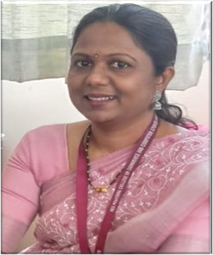
Dr. Rajeshree Nanaware
Program Coordinator
M.Sc., B.Ed., SET, Ph.D Mathematics
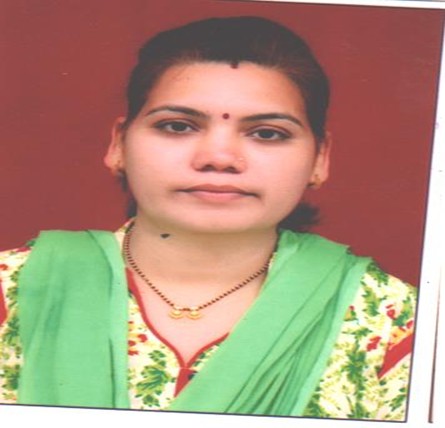
Dr. Surekha Jogdand
Assistant Professor
M.Sc., Ph.D Chemistry
Ragini Chavan
Assistant Professor
M.Sc. Statistics
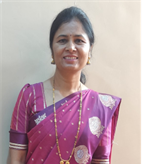
Dr. Nisha Choudhari
Assistant Professor
M.Sc., Ph.D. Botany, EVS
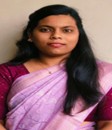
Dr. Seema Patil
Assistant Professor
M.Sc., Ph.D. Chemistry

Dr. Priti Kolhe
Assistant Professor
M.Sc., Ph.D. Environmental Science
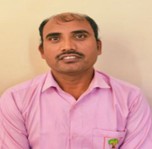
Mr. Suklal Arjun Kumbhar
Assistant Professor
M.Sc. Statistics, SET, Ph.D (Pursuing)

Dr. Yogesh Jorapur
Assistant Professor
M.Sc., GATE, Ph.D. Chemistry, Postdoc. (Japan/S. Korea)
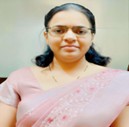
Suruchi Somwanshi
Assistant Professor
M.Sc. Mathematics, M.Sc. Statistics, Ph.D (Pursuing)
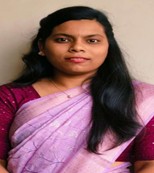
Rutuja Kobal
Assistant Professor
M.Sc. Statistics
Dhanashree Khese
Assistant Professor
M.Sc. Statistics

Chetna N. Thakre
Assistant Professor
M.Sc. Mathematics
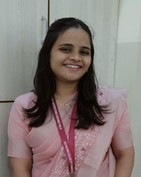
Akshata Gawde
Assistant Professor
M.Sc. Statistics
Samruddhi Bilaskar
Assistant Professor
M.Sc., SET Statistics
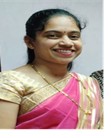
Manisha Sakhare
Assistant Professor
M.Sc. Statistics
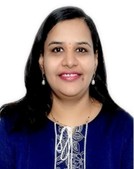
Dr. Anuradha Ghodke
Assistant Professor
MA, MPhil, PhD (English), MBA (HR), D.Ed.
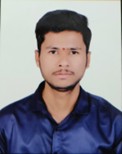
Hrishekesh S. Panchal
Assistant Professor
SET – Commerce
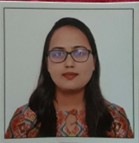
Kanan Padte
Assistant Professor
MBA (Marketing)
Syllabus
Departmental Activities
Academic Year 2024-25
| Sr. No. | Name of Activity | Academic Year |
|---|---|---|
| 1 | Orientation Program 2024-25 for F.Y.B.Sc Students on 5th July 2024 | 2024-25 |
| 2 | Explore Exciting Career Paths for BSc Graduate on 31/08/2024 by Alumina student | 2024-25 |
| 3 | Parents Teacher Meeting on 24th October 2024 | 2024-25 |
| 4 | Three days’ workshop on “Mathematics towards Machine Learning: Unveiling the Fundamentals” on 12th to 14th November 2024 | 2024-25 |
| 5 | Study Excursion visit to “Mahabaleshwar a Biodiversity Hotspot” on 15th November 2024 | 2024-25 |
| 6 | Celebration of National Mathematics Day on 24th December 2024 | 2024-25 |
| 7 | Study Excursion visit of FYBSc and SYBSc students to “Waste to Energy Plant, Moshi, Pune” on 13th January 2025 | 2024-25 |
| 8 | Two days’ workshop on “Power BI” on 17th and 18th January 2025 | 2024-25 |
| 9 | Celebration of Birth Anniversary of Padma Shree Dr. Madhav Gadgil on 20th January 2025 | 2024-25 |
| 10 | Celebration of Birth Anniversary of Dr. Varghese Kurien as National Milk Day on 20th January 2025 | 2024-25 |
| 11 | Chemistry Students visit to MAGS-IATRC Research and Training Private Limited, Bhosari on 21st January 2025 | 2024-25 |
| 12 | Intercollegiate Competition under “Pragyan 2.0” — Sci-Quizathon, Flashcards Fun and Scientific Games on 6th and 7th February 2025 | 2024-25 |
| 13 | Study Excursion visit to Vasantdada Sugar Institute, Manjari followed by Heritage Tour to Theur on 11th February 2025 | 2024-25 |
| 14 | Workshop on “AI Tools and its Applications” on 28th February 2025 | 2024-25 |
| 15 | Intercollegiate Debate Competition under Vigyan 2.0 on 3rd March 2025 | 2024-25 |
Academic Year 2025-26
| Sr. No. | Name of Activity | Academic Year |
|---|---|---|
| 1 | Orientation Program 2025-26 for F.Y.B.Sc Students on 13th July 2025 | 2025-26 |
| 2 | Explore Exciting Career Paths for BSc Graduate on 05/08/2025 by Alumina student | 2025-26 |
| 3 | Two days’ workshop on “Python Powered Workshop on Numerical Methods” on 13th and 14th August 2025 | 2025-26 |
| 4 | Science Association Activity: Science Quiz, Flash Card Fun and Scientific Games on 20th August 2025 | 2025-26 |
| 5 | Celebration of “World Ozone Day” on 24th September 2025 | 2025-26 |
| 6 | Iridescence-2025 — Celebration of Navratri — Scientific Colours on 1st October 2025 | 2025-26 |
| 7 | Study Excursion Tour to Kaas Pathar to learn Biodiversity on 6th October 2025 | 2025-26 |
Gallery
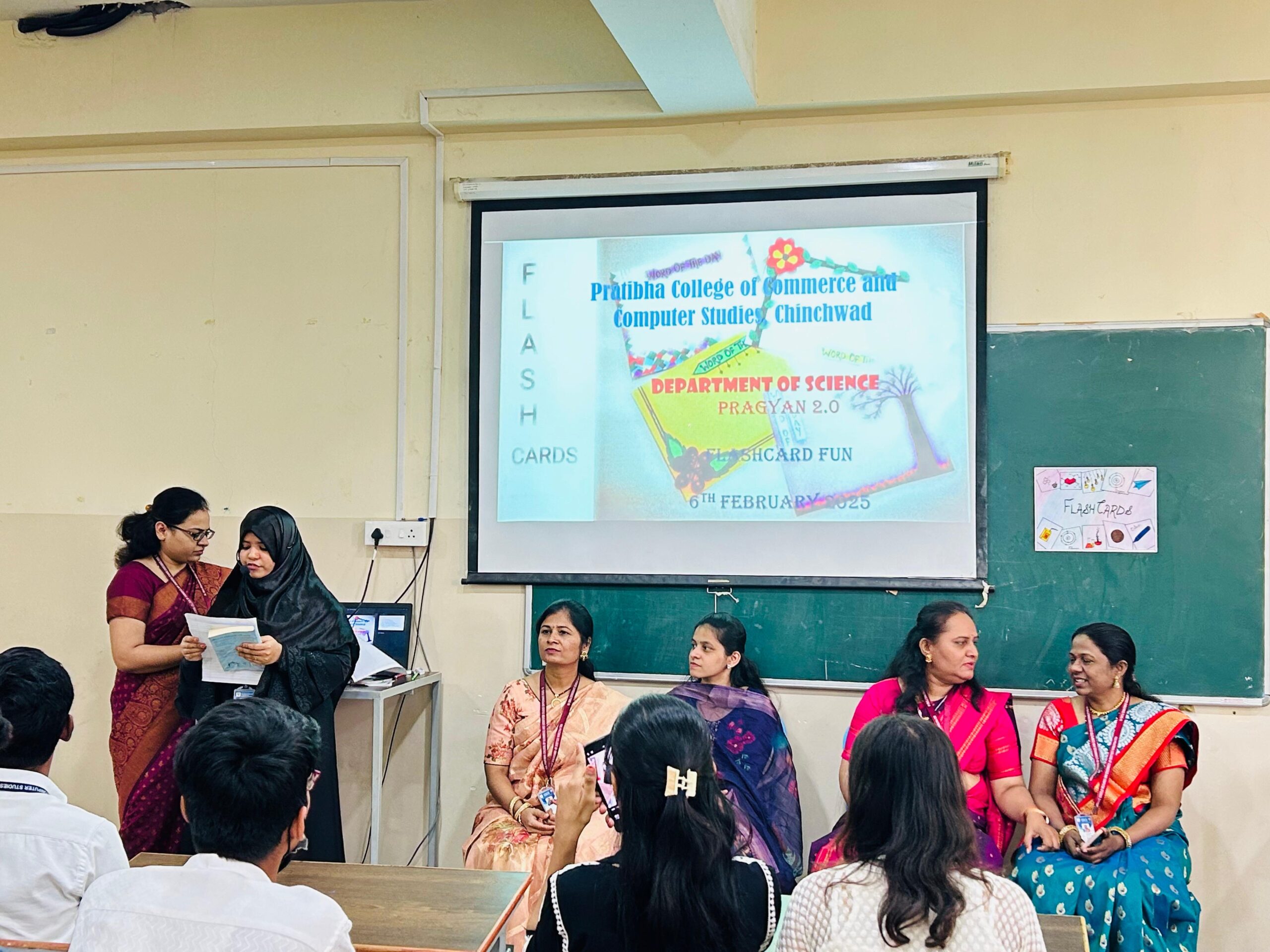
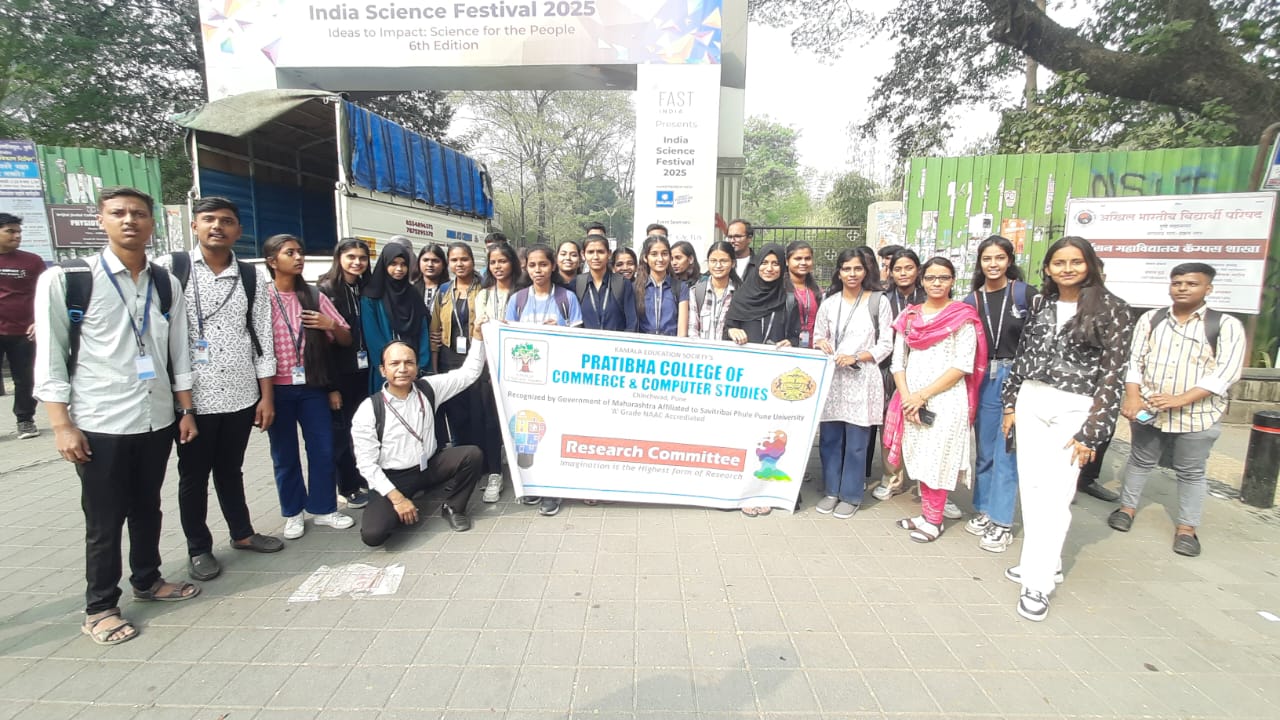
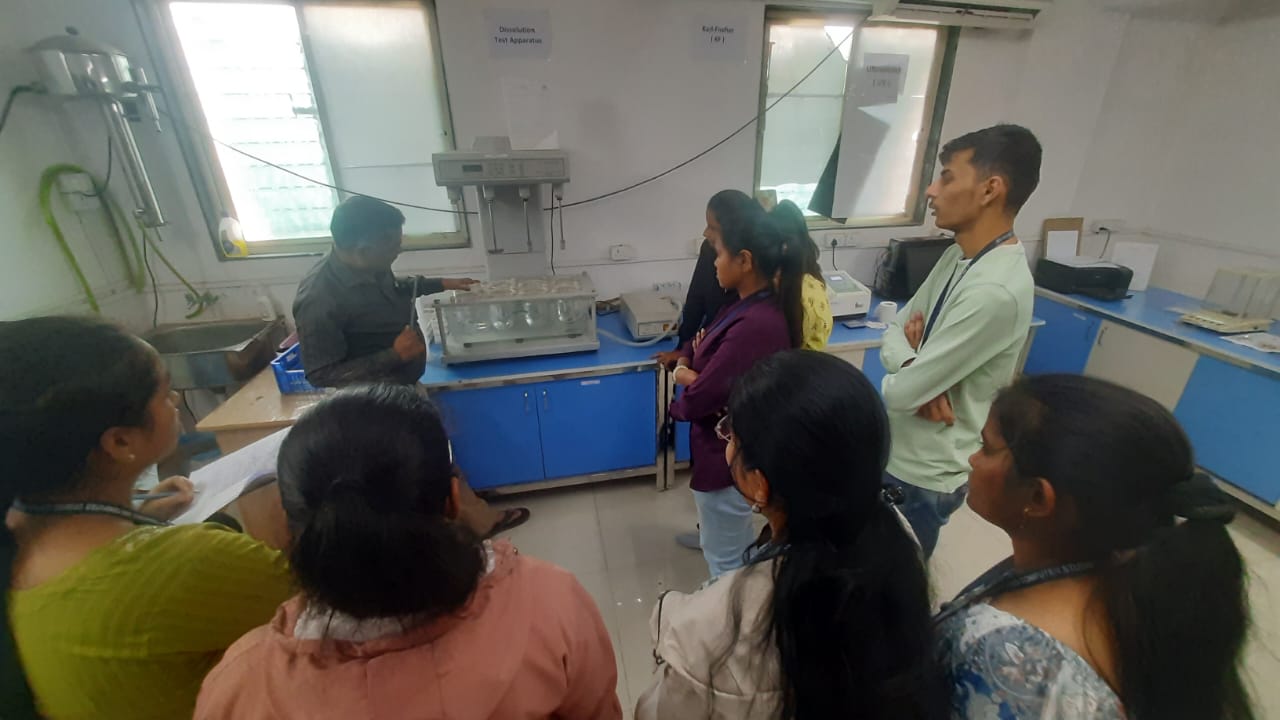
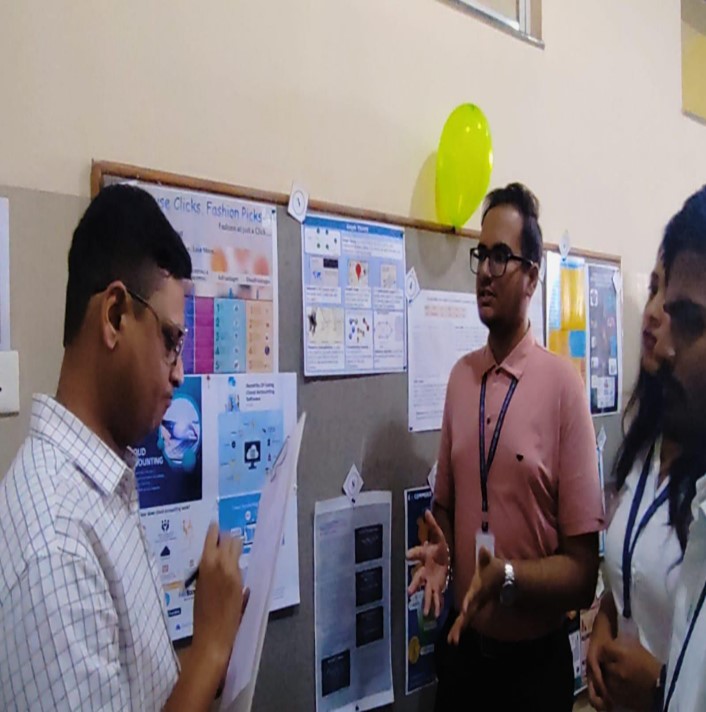
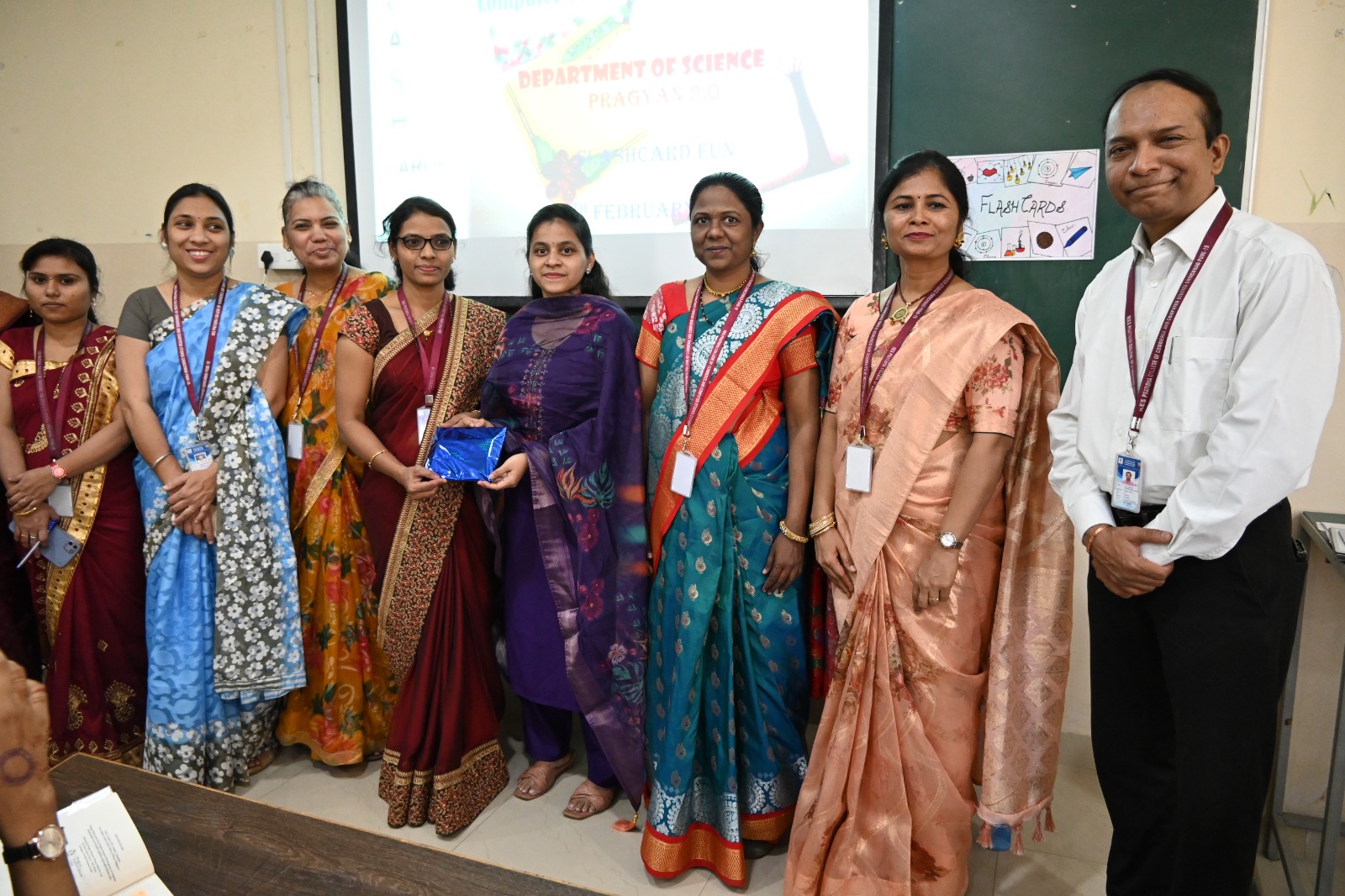
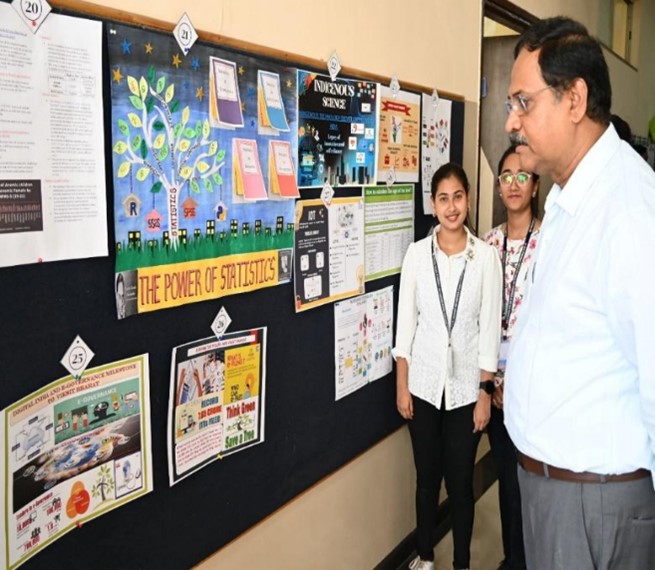
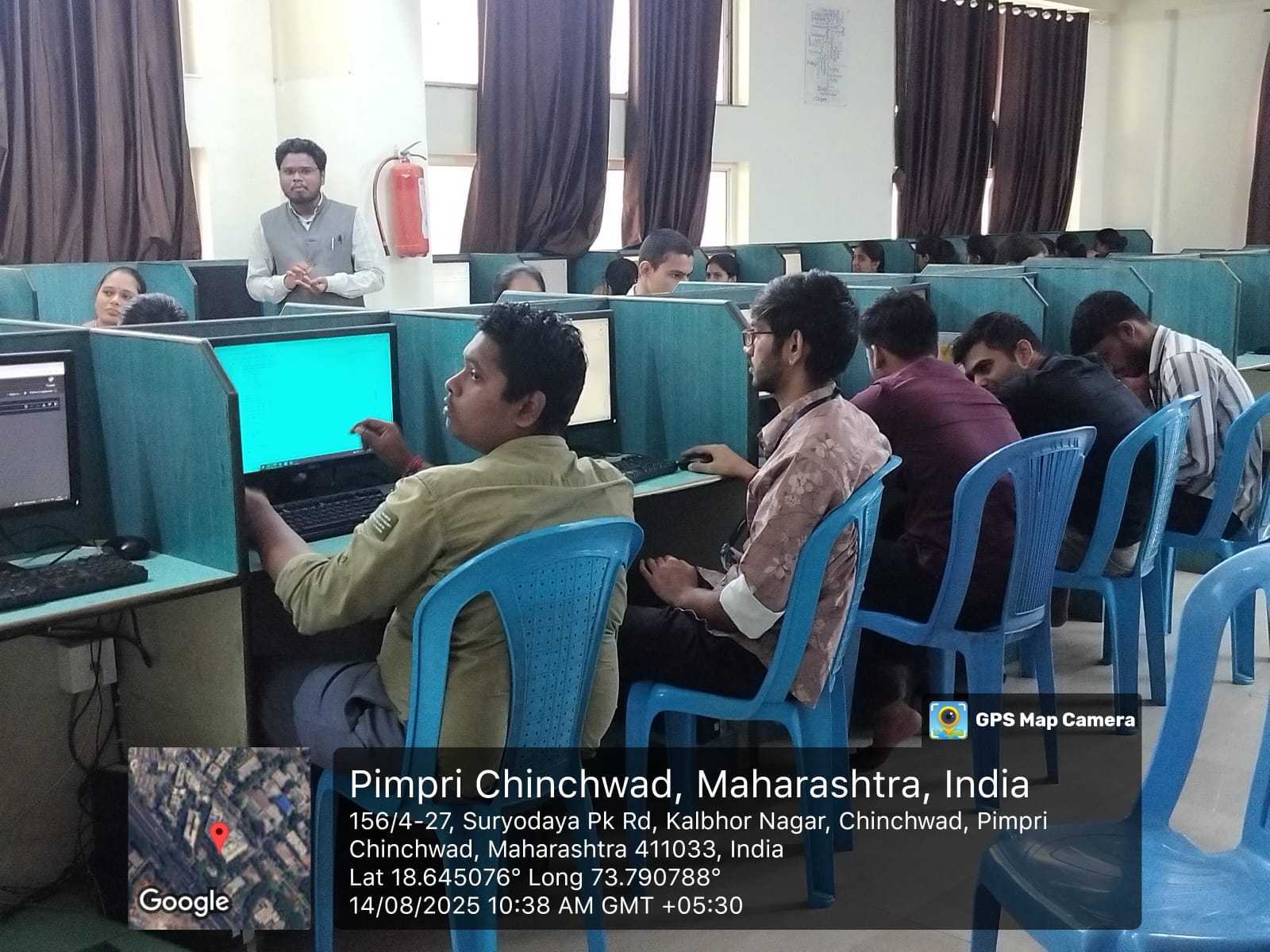
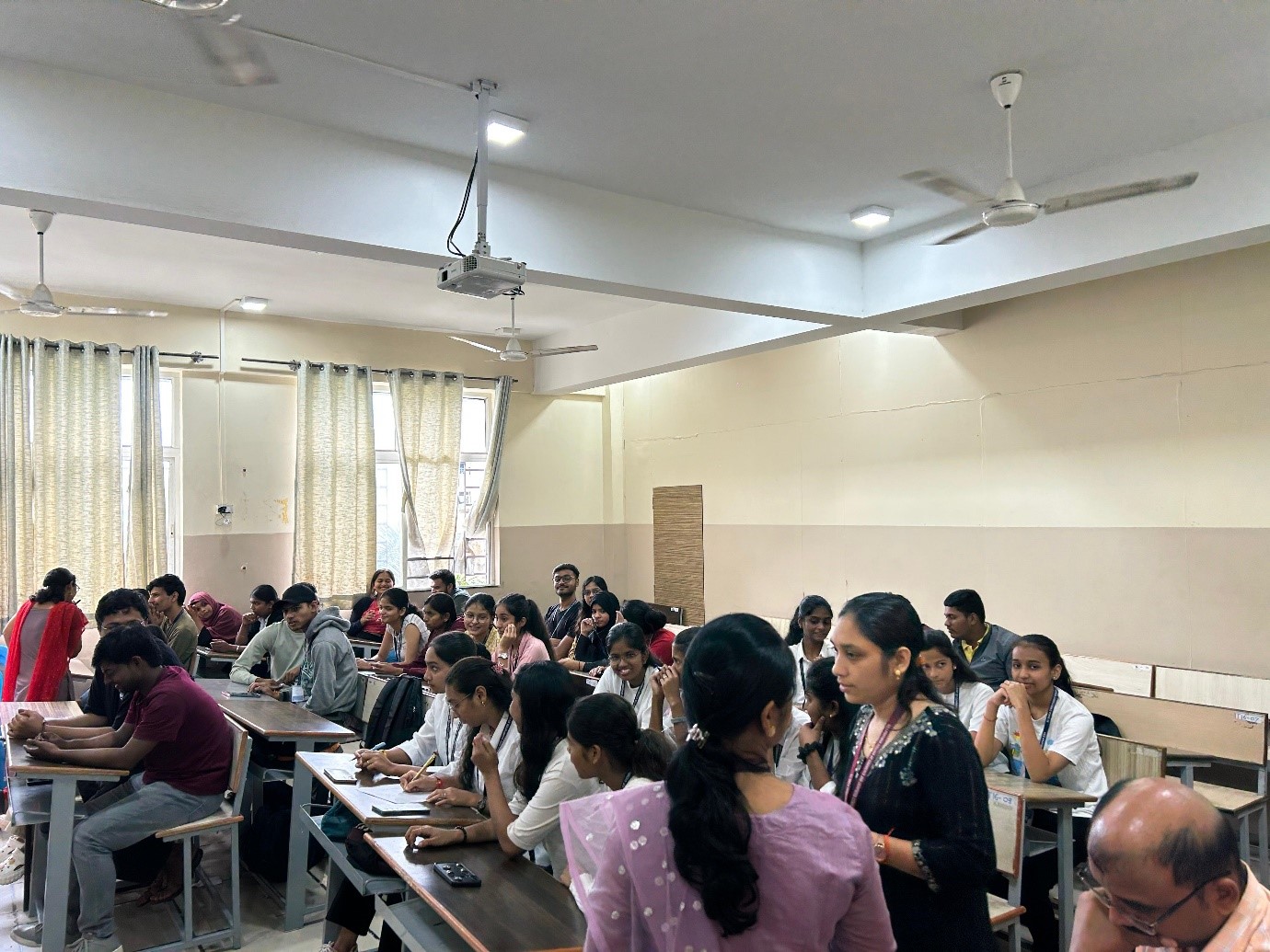
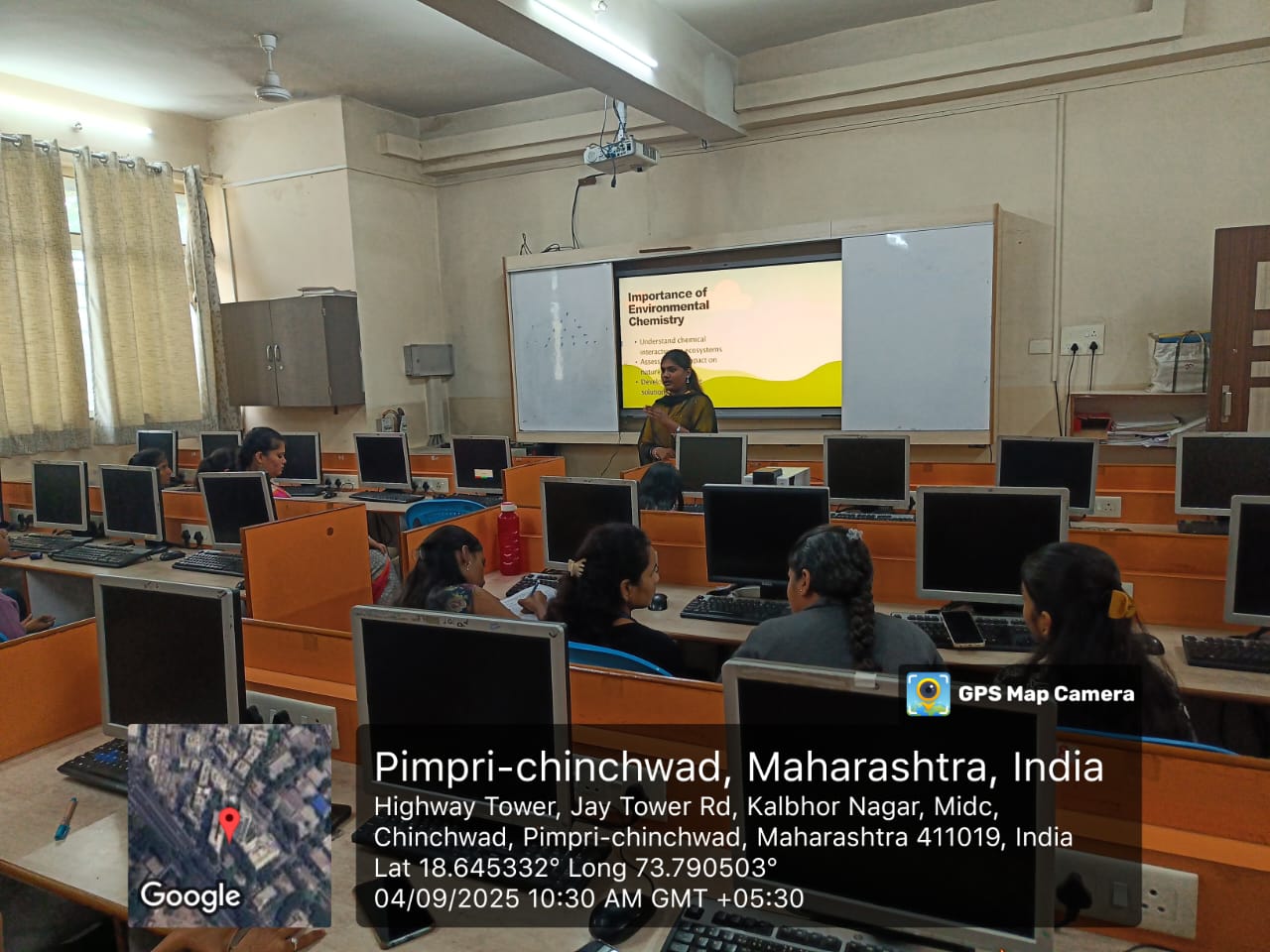
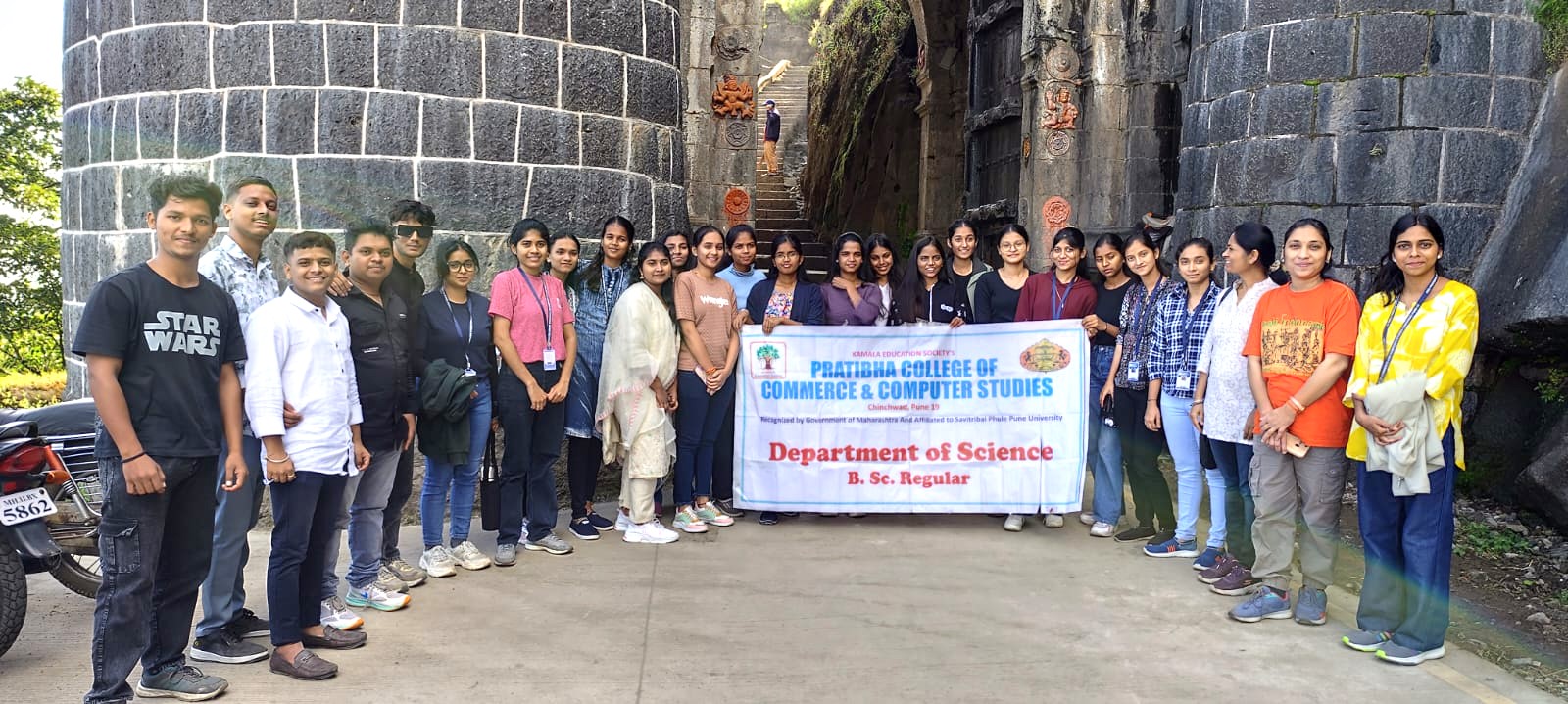
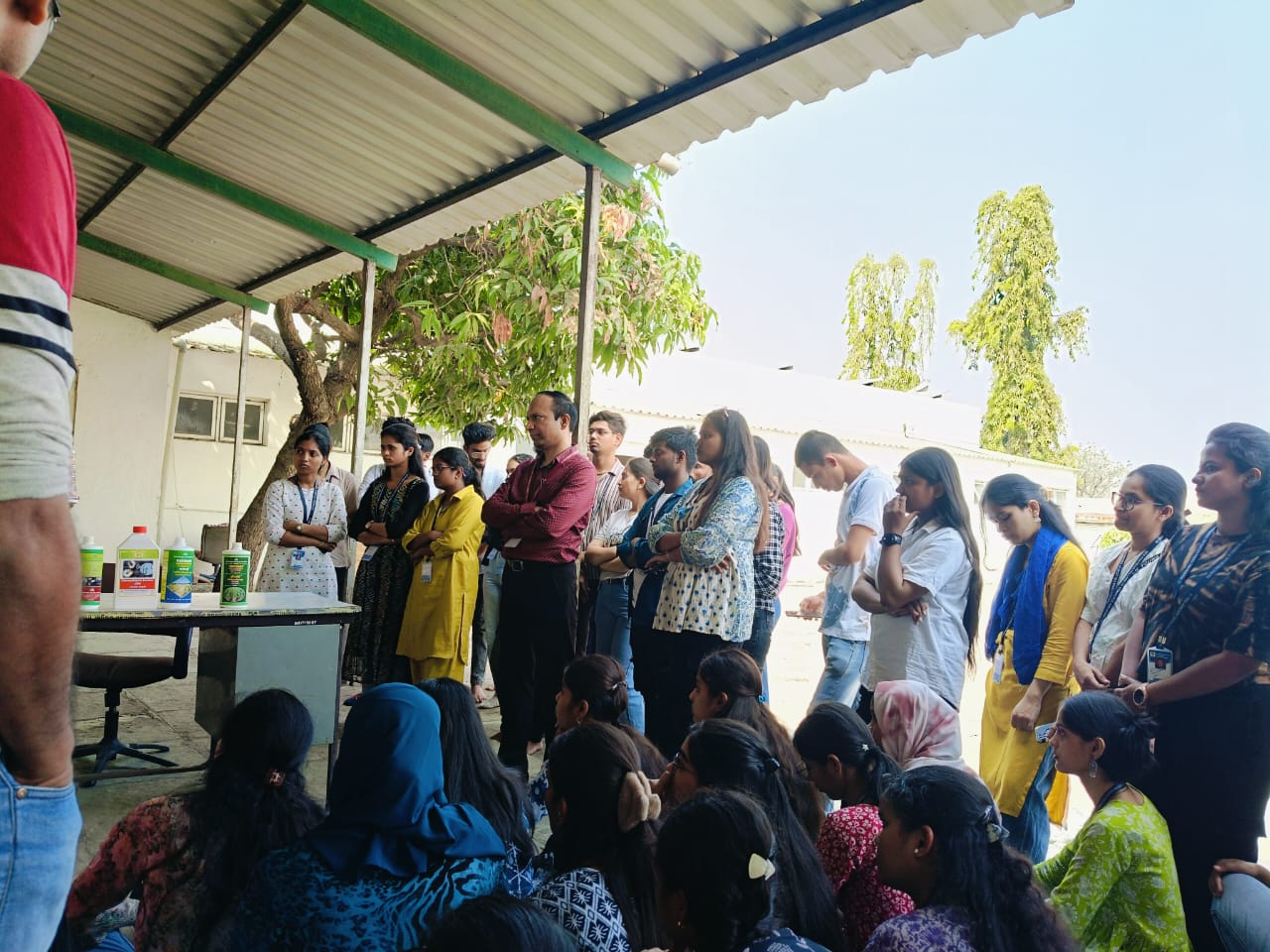
B.Sc. (CS)
Course Overview
Introduction about the Course
- Computer Science plays a pivotal role in this era of the digital revolution. Its presence in today’s world is ubiquitous. There is a great demand, both in industry and academia, for computer science graduates who have sound knowledge of the underlying concepts and principles of computer science as well as the ability to apply them to solve real-world problems.
- The Department of Computer Science trains students to achieve these goals, which enables them to excel in their professional careers, whether in academics, research, or industry. The students study the design of digital hardware and software systems. Computer Science encompasses a wide range of topics like operating systems, computer architecture, computer networks, Mobile Computing, artificial intelligence and Software Engineering.
Objective:
- Possess practical and theoretical knowledge of computer science sufficient to earn a living and contribute to the development of the country.
- Be prepared for advanced education in computer science.
- Demonstrate proficiency in the analysis of complex problems and the synthesis of solutions to those problems.
- Advance the state−of−the−art in computer science and software engineering through the achievement of fundamental advances, testing these advances through their application to hard problems.
- Instruct undergraduate and Post -Graduate students in the state−of−the−art scientific and engineering methods pertinent to computer science and software engineering in order to lead students to a point of understanding where they remain inquisitive, serious, ethical, and creative problem solvers.
- Be engaged in local, regional, and state social and economic development for the benefit of both the public and private sectors.
Year of Establishment :2007
Affiliated to Savitribai Phule Pune University
Intake: 240
Eligibility
- H.S.C. (10 + 2) Science stream with Mathematics.
- Three years diploma course after S.S.C. (10th std.) of Board of Technical Education conducted by Government of Maharashtra or its equivalent.
Duration of the Course
4 year as Per NEP 2020
Course Structure
Enrollment Summary
| Year | Term I | Term II | Total |
|---|---|---|---|
| First | 22 | 22 | 44 |
| Second | 22 | 22 | 44 |
| Third | 22 | 22 | 44 |
| Fourth | 22 | 22 | 44 |
Level 4.5 — First Year | Semester I
| Course Type | Course Code | Course Title | TH | PR |
|---|---|---|---|---|
| Subject 1 | CS-101-T | Problem Solving using ‘C’ Programming | 2 | |
| CS-102-P | Lab Course based on CS-101-T | 2 | ||
| Subject 2 | MTC-101-T | Matrix Algebra | 2 | |
| MTC-102-P | Mathematics Practical I | 2 | ||
| Subject 3 | ELC-101-T | Principles of Analog Electronics | 2 | |
| ELC-102-P | Electronics Practical Course I | 2 | ||
| IKS (2) | IKS-100-T | Generic IKS | 2 | |
| GE/OE* (2) | OE-101-CS-T / OE-102-CS-T / OE-103-CS-T / OE-104-CS-T | Office Automation I / Introduction to Computers and Basics of Internet / Introduction to Google Apps I / Fundamentals of Computers I | 2 | |
| SEC (2) | SEC-101-CS | Statistical Methods for Computer Science I | 2 | |
| AEC (2) | AEC-101-ENG | English | 2 | |
| VEC (2) | VEC-101-ENV | EVS-I | 2 | |
| Total Credits: | 14 | 08 | ||
Level 4.5 — First Year | Semester II
| Course Type | Course Code | Course Title | TH | PR |
|---|---|---|---|---|
| Subject 1 | CS-151-T | Advanced C Programming | 2 | |
| CS-152-P | Lab Course Based on CS-151-T | 2 | ||
| Subject 2 | MTC-151-T | Graph Theory | 2 | |
| MTC-152-P | Mathematics Practical II | 2 | ||
| Subject 3 | ELC-151-T | Principles of Digital Electronics | 2 | |
| ELC-152-P | Electronics Practical Course II | 2 | ||
| GE/OE* (2) | OE-151-CS-T / OE-152-CS-T / OE-153-CS-T / OE-154-CS-T / OE-155-CS-T | Office Automation II / Computer Fundamentals / Introduction to Google Apps II / Fundamentals of Computers II / AI Tools for Business | 2 | |
| SEC (2) | SEC-151-CS-P | Statistical Methods for Computer Science II | 2 | |
| AEC (2) | AEC-151-ENG | English | 2 | |
| VEC (2) | VEC-151-ENV | EVS-II | 2 | |
| CC (2) | CC-151-T | From University Basket | 2 | |
| Total Credits: | 12 | 10 | ||
* The subjects offered to other faculty students under OE vertical are OE-151-CS-P / OE-152-CS-T / OE-153-CS-P / OE-154-CS-T. The students of B.Sc. (Computer Science) will opt the subjects offered by other faculty given in University Basket.
Exit option: Award of UG Certificate in Major with 44 credits and an additional 4 credits core as per university guidelines OR Continue with Major and Minor.
Continue option: Student will select one subject among Subject 2 and Subject 3 as minor and Subject 1 will be major subject. In Second Year, Subject 1 (Computer Science) will be Major Subject.
Exit option: Award of UG Certificate in Major with 44 credits and an additional 4 credits core as per university guidelines OR Continue with Major and Minor.
Continue option: Student will select one subject among Subject 2 and Subject 3 as minor and Subject 1 will be major subject. In Second Year, Subject 1 (Computer Science) will be Major Subject.
Level 5.0 — Second Year | Semester III
| Course Type | Course Code | Course Title | TH | PR |
|---|---|---|---|---|
| Major Core (4+2) | CS-201-MJ-T | Data Structure – I | 2 | |
| CS-202-MJ-T | Database Management System I | 2 | ||
| CS-203-MJ-P | Lab Course based on CS-201-MJ-T & CS-202-MJ-T | 2 | ||
| VSC (2) | CS-221-VSC-T | Software Engineering | 2 | |
| IKS | IKS-200-T | Computations in Ancient India | 2 | |
| FP/OJT/CEP (2) | CS-231-FP | Mini Project | 2 | |
| Minor (2+2) | CS-241-MN-T | Mathematics or Electronics | 2 | |
| CS-242-MN-P | Mathematics or Electronics | 2 | ||
| GE/OE (2) | OE-201-CS-T / OE-202-CS-P / OE-203-CS-T | E-Commerce / Web Design / Digital Marketing | 2 | |
| AEC (2) | AEC-201-T | From University Basket | 2 | |
| CC (2) | CC-201-T | From University Basket | 2 | |
| Total Credits: | 16 | 06 | ||
Level 5.0 — Second Year | Semester IV
| Course Type | Course Code | Course Title | TH | PR |
|---|---|---|---|---|
| Major Core (4+2) | CS-251-MJ-T | Data Structure – II | 2 | |
| CS-252-MJ-T | Database Management System II | 2 | ||
| CS-253-MJ-P | Lab Course based on CS-251-MJ-T & CS-252-MJ-T | 2 | ||
| VSC (2) | CS-221-VSC-P | Advanced Python Programming | 2 | |
| FP/OJT/CEP (2) | CS-281-FP | Mini Project | 2 | |
| Minor (2+2) | CS-291-MN-T | Mathematics or Electronics | 2 | |
| CS-292-MN-P | Mathematics or Electronics | 2 | ||
| GE/OE (2) | OE-251-CS-T / OE-252-CS-P / OE-253-CS-T | E-Commerce / Web Design / Digital Marketing | 2 | |
| SEC (2) | SEC-251-CS-P / SEC-252-CS-P | Computer Networks / Statistical Analysis using R Software | 2 | |
| AEC (2) | AEC251 | From University Basket | 2 | |
| CC (2) | CC-251-T | From University Basket | 2 | |
| Total Credits: | 10 | 12 | ||
Exit option: Award of UG Diploma in Major and Minor with 88 credits and an additional 4 credits core as per university guidelines OR Continue with Major and Minor.
Level 5.5 — Third Year | Semester V
| Course Type | Course Code | Course Title | TH | PR |
|---|---|---|---|---|
| Major Core (8+4) | CS-301-MJ-T | Core Java | 2 | |
| CS-302-MJ-T | Operating Systems | 2 | ||
| CS-303-MJ-T | Web Technology-I | 2 | ||
| CS-304-MJ-T | Theory of Computer Science | 2 | ||
| CS-305-MJ-P | Lab Course based on CS-302-MJ-T | 2 | ||
| CS-306-MJ-P | Lab Course based on CS-301-MJ-T & CS-303-MJ-T | 2 | ||
| Major Elective (2+2) | CS-307-MJ-T | Data Science | 2 | |
| CS-308-MJ-P | Lab Course based on CS-307-MJ-T | 2 | ||
| — OR — | ||||
| CS-309-MJ-T | Database Technologies | 2 | ||
| CS-3010-MJ-P | Lab Course on CS-309-MJ-T | 2 | ||
| — OR — | ||||
| CS-3011-MJ-T | Embedded Systems | 2 | ||
| CS-3012-MJ-P | Lab Course on CS-3011-MJ-T | 2 | ||
| VSC (2) | CS-321-VSC-P | Advanced Python Programming | 2 | |
| FP/OJT/CEP (2) | CS-331-FP | Project | 2 | |
| Minor (2) | CS-341-MN-T | Mathematics or Electronics | 2 | |
| Total Credits: | 12 | 10 | ||
Level 5.5 — Third Year | Semester VI
| Course Type | Course Code | Course Title | TH | PR |
|---|---|---|---|---|
| Major Core (8+4) | CS-351-MJ-T | Advanced Java | 2 | |
| CS-352-MJ-T | Design Framework | 2 | ||
| CS-353-MJ-T | Web Technology-II | 2 | ||
| CS-354-MJ-T | Compiler Construction | 2 | ||
| CS-355-MJ-P | Lab Course based on CS-352-MJ-T | 2 | ||
| CS-356-MJ-P | Lab Course based on CS-351-MJ-T & CS-353-MJ-T | 2 | ||
| Major Elective (2+2) | CS-357-MJ-T | Android Programming | 2 | |
| CS-358-MJ-P | Lab Course based on CS-357-MJ-T | 2 | ||
| — OR — | ||||
| CS-359-MJ-T | Software Testing Tools | 2 | ||
| CS-3510-MJ-P | Lab Course based on CS-359-MJ-T | 2 | ||
| — OR — | ||||
| CS-3511-MJ-T | Internet of Things | 2 | ||
| CS-3512-MJ-P | Lab Course based on CS-3511-MJ-T | 2 | ||
| VSC (2) | CS-321-VSC-P | Agile Processes | 2 | |
| FP/OJT/CEP (4) | CS-381-OJT | OJT | 4 | |
| Total Credits: | 10 | 12 | ||
Level 6.0 — Fourth Year | Semester VII (Research)
| Course Type | Course Code | Course Title | TH | PR |
|---|---|---|---|---|
| Major Core (6+4) | CS-401-MJ-T | Advanced Operating System | 2 | |
| CS-402-MJ-T | Artificial Intelligence | 2 | ||
| CS-403-MJ-T | Principles of Programming Language | 2 | ||
| CS-404-MJ-P | Lab Course based on CS-401-MJ-T | 2 | ||
| CS-405-MJ-P | Lab Course based on CS-402-MJ-T | 2 | ||
| Major Elective (2+2) | CS-406-MJ-T | Advance Databases and Web Technologies | 2 | |
| CS-407-MJ-P | Lab Course on CS-406-MJ-T | 2 | ||
| — OR — | ||||
| CS-408-MJ-T | Cloud Computing | 2 | ||
| CS-409-MJ-P | Lab Course on CS-408-MJ-T | 2 | ||
| — OR — | ||||
| CS-410-MJ-T | C# .NET Programming | 2 | ||
| CS-411-MJ-P | Lab Course on CS-410-MJ-T | 2 | ||
| FP/OJT/CEP/RP (4) | CS-431-RP | Research Project | 4 | |
| CS-451-MN | Research Methodology | 4 | ||
| Total Credits: | 12 | 10 | ||
Level 6.0 — Fourth Year | Semester VIII (Research)
| Course Type | Course Code | Course Title | TH | PR |
|---|---|---|---|---|
| Major Core (6+4) | CS-451-MJ-T | Design and Analysis of Algorithms | 2 | |
| CS-452-MJ-T | Mobile App Development Technologies | 2 | ||
| CS-453-MJ-T | Software Project Management | 2 | ||
| CS-454-MJ-P | Lab Course based on CS-451-MJ-T | 2 | ||
| CS-455-MJ-P | Lab Course based on CS-452-MJ-T | 2 | ||
| Major Elective (2+2) | CS-456-MJ-T | Full Stack Development I | 2 | |
| CS-457-MJ-P | Lab Course based on CS-456-MJ-T | 2 | ||
| — OR — | ||||
| CS-458-MJ-T | Web Services | 2 | ||
| CS-459MJ-P | Lab Course based on CS-458-MJ-T | 2 | ||
| — OR — | ||||
| CS-460-MJ-T | ASP DOT Net Programming | 2 | ||
| CS-461-MJ-P | Lab Course based on CS-460-MJ-T | 2 | ||
| FP/OJT/CEP (8) | CS-481-FP | Research Project | 8 | |
| Total Credits: | 08 | 14 | ||
Level 6.0 — Fourth Year | Semester VII (Honours)
| Course Type | Course Code | Course Title | TH | PR |
|---|---|---|---|---|
| Major Core (10+4) | CS-401-MJ-T | Advanced Operating System | 2 | |
| CS-402-MJ-T | Artificial Intelligence | 2 | ||
| CS-403-MJ-T | Principles of Programming Language | 2 | ||
| CS-404-MJ-P | Lab Course based on CS-401-MJ-T | 2 | ||
| CS-405-MJ-P | Lab Course based on CS-402-MJ-T | 2 | ||
| CS-406-MJ-T | Advanced Networking | 2 | ||
| CS-407-MJ-T | Digital Marketing | 2 | ||
| Major Elective (2+2) | CS-408-MJ-T | Advance Databases and Web Technologies | 2 | |
| CS-409-MJ-P | Lab Course on CS-408-MJ-T | 2 | ||
| — OR — | ||||
| CS-410-MJ-T | Cloud Computing | 2 | ||
| CS-411-MJP-T | Lab Course on CS-410-MJ-T | 2 | ||
| — OR — | ||||
| CS-412-MJ-T | C# .NET Programming | 2 | ||
| CS-413-MJ-P | Lab Course on CS-412-MJ-T | 2 | ||
| CS-441-MN-T | Research Methodology | 4 | ||
| Total Credits: | 16 | 06 | ||
Level 6.0 — Fourth Year | Semester VIII (Honours)
| Course Type | Course Code | Course Title | TH | PR |
|---|---|---|---|---|
| Major Core (10+4) | CS-451-MJ-T | Design and Analysis of Algorithms | 2 | |
| CS-452-MJ-T | Mobile App Development Technologies | 2 | ||
| CS-453-MJ-T | Software Project Management | 2 | ||
| CS-454-MJ-P | Lab Course based on CS-451-MJ-T | 2 | ||
| CS-455-MJ-P | Lab Course based on CS-452-MJ-T | 2 | ||
| CS-456-MJ-T | Crypto Currency Technologies | 2 | ||
| CS-457-MJ-T | Cyber Security | 2 | ||
| Major Elective (2+2) | CS-458-MJ-T | Full Stack Development I | 2 | |
| CS-459-MJ-P | Lab Course based on CS-458-MJ-T | 2 | ||
| — OR — | ||||
| CS-460-MJ-T | Web Services | 2 | ||
| CS-461-MJ-P | Lab Course based on CS-460-MJ-T | 2 | ||
| — OR — | ||||
| CS-462-MJ-T | ASP DOT Net Programming | 2 | ||
| CS-463-MJ-P | Lab Course based on CS-462-MJ-T | 2 | ||
| FP/OJT/CEP (4) | CS-481-OJT | OJT | 4 | |
| Total Credits: | 12 | 10 | ||
Career Prospects
CAREEER OPPOURNITIES
- Software Developer
- Web/App Developer
- Data Analyst
- System/Network Administrator
- QA/Software Tester
- Cybersecurity Analyst
- Cloud Support Engineer
HIGHER STUDIES
- M.Sc. Computer Science
- MCA
- MBA
- M.Sc. Data Science / AI / Cybersecurity
Program Outcomes
Program Outcomes — B.Sc. (Computer Science)
After successful completion of B.Sc.(CS) Programme students will be able to:
| PO No. | Outcomes |
|---|---|
| PO 1 | Develop creative skills, critical thinking, analytical skills and research to address the real world problems using computational skills |
| PO 2 | Understand and apply mathematical foundation, computing and domain knowledge and develop computing models for defined problems |
| PO 3 | Understand software project management and computing principles with computing knowledge to manage projects in multidisciplinary environments |
| PO 4 | Illustrate the concepts of systems fundamentals, including architectures and organization, operating systems, networking and communication |
| PO 5 | Understand and apply the concepts of Digital Electronics, Computer Architecture, IoT etc. |
| PO 6 | Recognize the need for and develop the ability to engage in continuous learning as a Computing professional |
| PO 7 | Apply modern computing tools, skills and techniques necessary for innovative software solutions |
| PO 8 | Communicate effectively with the computing community as well as society by being able to comprehend effective documentations and presentations |
| PO 9 | Gain Self Discipline and commit Professional Ethics in global economic environment |
| PO 10 | Individual & Team Work: Ability to work as a member or leader in diverse teams in multidisciplinary environment |
| PO 11 | Identify opportunities, entrepreneurship vision and use innovative ideas to create value and wealth for the betterment of the individual and society |
Course Outcomes — B.Sc. (Computer Science)
Semester I
CS-101-T: Problem Solving Using C Programming (Subject 1) | 2 Credits | 2 Hrs/Week
Course Objectives:
To introduce the foundations of computing, programming and problem-solving using computers.
To develop the ability to analyse a problem and devise an algorithm to solve it.
To formulate algorithms, pseudo codes and flowcharts for arithmetic and logical problems.
To understand structured programming approaches.
To implement algorithms in the ‘C’ language.
To test, debug and execute programs.
Course Outcomes:
CO1: Explore algorithmic approaches to problem solving.
CO2: Control the sequence of the program and give logical outputs.
CO3: Understand and manage Input/Output operations in ‘C’ program.
CO4: Develop modular programs using control structures and arrays in ‘C’.
MTC-101-T: Matrix Algebra (Subject 2) | 2 Credits | 2 Hrs/Week
Course Objectives:
A student should be able to recall basic facts about mathematics and should be able to display knowledge of conventions such as notations, terminology and recognize basic geometrical figures and graphical displays, state important facts resulting from their studies.
A student should get a relational understanding of mathematical concepts and concerned structures, and should be able to follow the patterns involved, mathematical reasoning.
A student should get adequate exposure to global and local concerns that explore them many aspects of Mathematical.
Course Outcomes:
CO1: Work with graphs and identify certain parameters and properties of the given graphs.
CO2: Perform certain algorithms, justify why these algorithms work, and give some estimates of the running times of these algorithms.
CO3: Solve basic exercises of the type: given a graph with properties X, prove that the graph also has property Y.
CO4: Develop an appreciation for the literature on the subject and be able to read and present results from the literature.
CO5: Write cohesive and comprehensive solutions to exercises and be able to defend their arguments.
ELC-101-T: Principles of Analog Electronics (Subject 3) | 2 Credits | 2 Hrs/Week
Course Objectives:
To study various types of semiconductor devices.
To study elementary electronic circuits and systems.
To study Instrumentation System.
To study various blocks of instrumentation System.
To study smart instrumentation system.
Course Outcomes:
CO1: Understand the concept of semiconductor diodes.
CO2: Understand the different applications of FET, BJT and MOSFET.
CO3: Understand working principle of different sensors.
CO4: Use Op-amp for different application.
AEC-101-ENG: English (AEC) | 2 Credits | 2 Hrs/Week
Course Objectives:
To read and understand texts in English.
To enrich and use vocabulary effectively.
To understand and Develop Communicative Competence.
To use body language in different situations.
To acquaint with digital platforms and technology.
To write letters, notices, agenda, minutes, and blog.
Course Outcomes:
CO1: Read and understand texts in English.
CO2: Enrich and use vocabulary effectively.
CO3: Understand and Develop Communicative Competence.
CO4: Use body language in different situations.
CO5: Acquaint with digital platforms and technology.
CO6: Write letter, notice, agenda, minutes and blog.
IKS-100-T: Generic IKS (IKS) | 2 Credits | 2 Hrs/Week
Course Objectives:
To understand the nature of knowledge.
To understand the evolution of the scientific approach in the Indian subcontinent.
To study contributions made by different people to the various branches of knowledge before modernity evolved in India.
Course Outcomes:
CO1: The concept of the ancient intellectual knowledge tradition will be understood.
CO2: Developments in science from ancient times will be introduced.
CO3: Information about human development will be understood.
VEC-101-ENV: EVS-I (VEC) | 2 Credits | 2 Hrs/Week
Course Objectives:
To create awareness about the natural environment and its importance.
To understand the interrelationship between humans and nature.
To provide knowledge on ecosystems, biodiversity, and natural resources.
To encourage environmental ethics and promote sustainable development.
To build a foundation for solving environmental challenges.
Course Outcomes:
CO1: Describe how human activities impact the environment.
CO2: Explain principles of sustainable development and resource management.
CO3: Analyse local, regional, and global environmental issues and their effects.
CO4: Evaluate different strategies for conserving biodiversity and ecosystems.
CO5: Apply relevant environmental policies and ethical considerations to real-world scenarios.
CO6: Design and implement action plans for community-based environmental projects.
Semester II
CS-151-T: Advanced C Programming (Subject 1) | 2 Credits | 2 Hrs/Week
Course Objectives:
To study advanced concepts of programming using the ‘C’ language.
To understand code organization with complex data types and structures.
To work with files and file operations in C.
Course Outcomes:
CO1: Develop modular programs using control structures, functions, pointers, arrays, strings, and structures.
CO2: Design and develop solutions to real-world problems using advanced C programming.
CO3: Understand and repeat the sequence of instructions and access specific memory locations using pointers.
CO4: Identify, analyze, develop, verify, and document software requirements for a computing environment.
MTC-151-T: Graph Theory (Subject 2) | 2 Credits | 2 Hrs/Week
Course Objectives:
A student should be able to recall basic facts about mathematics and display knowledge of conventions.
A student should get a relational understanding of mathematical concepts and concerned structures.
A student should get adequate exposure to global and local concerns in Mathematical aspects.
Course Outcomes:
CO1: Work with graphs and identify certain parameters and properties of the given graphs.
CO2: Perform certain algorithms, justify why these algorithms work, and give estimates of running times.
CO3: Solve basic exercises: given a graph with properties X, prove that the graph also has property Y.
CO4: Develop an appreciation for the literature on the subject and be able to read and present results.
ELC-151-T: Principles of Digital Electronics (Subject 3) | 2 Credits | 2 Hrs/Week
Course Objectives:
To learn different number system and their inter conversion.
To understand logic gates and their applications.
To study rules and laws of Boolean Algebra.
To understand design of combinational circuit and their different types.
Course Outcomes:
CO1: Learn different number system and their inter conversion.
CO2: Understand logic gates and their applications.
CO3: Study rules and laws of Boolean Algebra.
CO4: Understand design of combinational circuit and their different types.
AEC-151-ENG: English (AEC) | 2 Credits | 2 Hrs/Week
Course Outcomes: (Same as Semester I AEC-101)
VEC-151-ENV: EVS-II (VEC) | 2 Credits | 2 Hrs/Week
Course Objectives:
To provide knowledge about environmental issues and concerns.
To understand the importance of natural resources and biodiversity.
To create awareness about sustainable development and environmental ethics.
To study environmental policies, laws, and practices.
To encourage students to adopt eco-friendly behaviour and conservation values.
Course Outcomes:
CO1: Identify various types of environmental pollution and their impacts on health.
CO2: Explain the basic concepts of climate change, including its causes and effects.
CO3: Analyse different strategies for adapting to and mitigating the effects of climate change.
CO4: Evaluate various environmental management practices and their effectiveness.
CO5: Apply the principles of key environmental treaties and legislation to case studies.
CO6: Create action plans that address specific environmental issues based on current policies.
Semester III
CS-201-MJ-T: Data Structure I (Major Core) | 2 Credits | 2 Hrs/Week
Course Objectives:
To analyse the efficiency of algorithm and solve the problem in systematic way.
To understand the different methods of organizing large amount of data.
To design and implement the different data structures.
To implement solutions for the specific problems.
To apply different data structures to solve real life problems.
Course Outcomes:
CO1: Understand basics of data structure and algorithm analysis.
CO2: Apply working strategy for different data Structures to solve related problems.
CO3: Implement Data Structure and its Applications.
CO4: Develop real world application based on data structures like array, link list, stack and queue.
CO5: Design data structure to solve problems using appropriate algorithmic techniques.
CS-202-MJ-T: Database Management System I (Major Core) | 2 Credits | 2 Hrs/Week
Course Objectives:
To learn the fundamental concepts of database using PostgreSQL.
To understand user requirements and frame it in data model.
To Execute Database Queries like creations, manipulation on database.
Course Outcomes:
CO1: Solve real world problems using appropriate set, function, and relational models.
CO2: Design E-R Model for given requirements and convert the same into database tables.
CO3: Design and create relational database systems.
CO4: Evaluate and apply database management operations to use database systems.
CS-221-VSC-T: Software Engineering (VSC) | 2 Credits | 2 Hrs/Week
Course Objectives:
To get knowledge and understanding of software engineering discipline.
To learn analysis and design principles for software project development.
Implement Agile Development Methodologies in real life Software Projects.
Course Outcomes:
CO1: Identify data requirements, analyse and prepare data models.
CO2: Understand basic software engineering concepts and Process models.
CO3: Compare and chose a process model for a software project development.
CO4: Design different UML Diagrams.
CS-201-IKS-T: Indian Knowledge System in Computing (IKS) | 2 Credits | 2 Hrs/Week
Course Objectives:
To introduce Vedic mathematical techniques and their relevance to modern computational methods.
To understand Nyaya’s logical framework and its application in reasoning and AI.
To explore the algorithmic structure of Panini’s grammar and Chandasastra’s binary system in computational linguistics and mathematics.
Course Outcomes:
CO1: Understand foundational principles of Indian Knowledge Systems related to computing.
CO2: Recognize and explain ancient Indian logic and algorithms.
CO3: Relate traditional computing concepts to modern programming and logic structures.
CO4: Apply insights from IKS in innovative computing solutions and interdisciplinary research.
CO5: Demonstrate awareness of India’s intellectual traditions and their relevance to contemporary computer science.
CS-231-FP: Mini Project (FP/OJT/CEP) | 2 Credits | 2 Hrs/Week
Course Outcomes:
CO1: Identify requirements, analyse and prepare models.
CO2: Understand basic SW engineering concepts and Process models.
CO3: Compare and chose a process model for a software project development.
CO4: Design different UML Diagrams.
CS-241-MN: Embedded System with AVR Microcontroller (Minor) | 2 Credits | 2 Hrs/Week
Course Objectives:
To understand the fundamental concepts of embedded systems and microcontrollers.
To explore the architecture and features of the AVR microcontroller family.
To understand the memory organization of AVR microcontroller.
To gain proficiency in programming AVR microcontrollers using the C language.
To understand and implement peripheral interfacing with real-world applications.
To develop embedded solutions using timers, interrupts, serial communication, and protocols like SPI and I2C.
Course Outcomes:
CO1: Explain the basic concepts of embedded systems and compare microcontrollers and microprocessors.
CO2: Describe AVR microcontroller architecture, including memory structure, register file, and development tools.
CO3: Implement AVR microcontroller-based applications using C, including timers, counters, I/O & serial operations.
CO4: Interface AVR microcontrollers with external devices such as LCDs, sensors, motors, and ADC/DAC components.
CO5: Design embedded applications involving serial communication and peripheral interfacing using standard protocols (SPI, I2C).
MTC-231-T: Numerical Techniques (Minor) | 2 Credits | 2 Hrs/Week
Course Objectives:
To develop a clear understanding of basic numerical methods such as root finding, interpolation, numerical differentiation and integration, and solving systems of linear equations.
To equip students with techniques to apply numerical algorithms for approximating solutions to problems arising in science, engineering, and computational applications.
To implement numerical algorithms using programming languages like C/C++ or Python, enhancing computational thinking and programming proficiency.
To study and evaluate the accuracy, convergence, and stability of numerical methods, enabling students to select appropriate techniques based on error analysis.
To foster logical reasoning by analysing the step-by-step approach of numerical algorithms and their limitations in approximating mathematical problems.
Course Outcomes:
CO1: Understand and apply numerical methods to solve algebraic and transcendental equations, including bisection, false position, and Newton-Raphson methods, with an emphasis on error analysis and convergence.
CO2: Develop a strong foundation in finite difference concepts, including forward, backward, central, and other difference operators, and understand their roles in numerical approximation.
CO3: Apply interpolation techniques for estimating intermediate values, using Newton’s Gregory formulas, Lagrange’s interpolation, and divided differences.
CO4: Utilize numerical integration methods such as the trapezoidal rule, Simpson’s one-third rule, and Simpson’s three-eighth rule to approximate definite integrals.
CO5: Solve ordinary differential equations numerically using Euler’s method, Euler’s modified method, and Runge-Kutta methods, understanding their accuracy and applicability.
Semester IV
CSD-232-T: Data Structure – II (Major Core) | 2 Credits | 2 Hrs/Week
Course Objectives:
Understand the fundamental concepts of trees, search trees, graphs, and hash tables to analyse their structure and properties.
Apply appropriate tree and graph traversal techniques to solve real-world computational problems.
Analyse the efficiency of various searching, graph algorithms, and hashing techniques for optimized data retrieval.
Design and implement tree, graph, and hash-based data structures to develop efficient algorithmic solutions.
Course Outcomes:
CO1: Learn traversal algorithms to solve computational problems efficiently.
CO2: Analyse the performance of different data structures.
CO3: Design graph-based solutions using representations techniques.
CO4: Evaluate the efficiency of different strategies of data storage and retrieval.
CSD-234-T: Database Management System – II (Major Core) | 2 Credits | 2 Hrs/Week
Course Objectives:
To teach fundamental concepts of RDBMS (PL/PGSQL).
To teach database management operations.
Be familiar with the basic issues of transaction processing and concurrency control.
To teach data security and its importance.
Course Outcomes:
CO1: Understand PL/PGSQL database techniques and its programming skill.
CO2: Apply and relate the concepts of database transaction management.
CO3: Implement the concurrency control mechanism and recovery techniques in the databases.
CO4: Inculcate concepts of modern databases.
CO5: Apply the database security concepts in real life situation.
CS-271-VSC-P: Advanced Python Programming (VSC) | 2 Credits | 2 Hrs/Week
Course Objectives:
Understand and manipulate operations on data in Python.
Develop the ability to write reusable functions to organize code better and improve efficiency.
Learn to structure their programs using functions and modules to improve readability.
Course Outcomes:
CO1: Read and write data from & to files in Python.
CO2: Express proficiency in the handling of strings and functions.
CO3: Identify the commonly used operations involving file systems and regular expressions.
CO4: Develop application using python.
CS-281-FP: Mini Project (FP/OJT/CEP) | 2 Credits | 2 Hrs/Week
Course Outcomes: (Same as Semester III Mini Project)
Document continues with Semester V & VI courses…
Due to length constraints, remaining semesters follow the same structured format.
Faculty/Staff

Dr. Harshita Vachhani
Program Coordinator
M.Sc.(C.S), MBA,Ph.D.
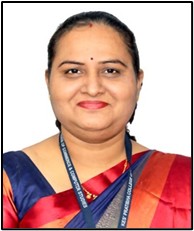
Dr. Nilambari Kale
Assistant Professor
M.Sc.(C.S),SET
Mrs. Tripti Mahabare
Assistant Professor
M.Sc.(C.S),AMIETE, NET,SET,Ph.D. pursuing
Dr. Charushila Patil
Assistant Professor
MSc(CS),NET,SET
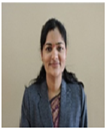
Mrs. Rupali Mote
Assistant Professor
MSc(CS),NET,SET Ph.D (Pursuing)
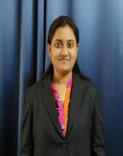
Mrs. Poonam Kankariya
Assistant Professor
MSc (CS), B.Ed., MBA (Business Analytics), Ph.D. (Pursuing)

Mrs. Supriya Gaikwad
Assistant Professor
M.Sc.(C.S),SET, Ph.D.(Pursuing)
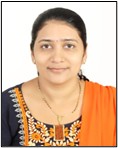
Mrs.Ujwala Falak
Assistant Professor
M.Sc.(C.S),NET, SET, Ph.D.(Pursuing)
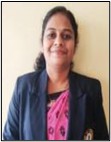
Mrs. Poonam Karale
Assistant Professor
M.Sc.(C.S), Ph.D.(Pursuing)

Mrs. Rupali Kothawade
Assistant Professor
M.C.S,NET,SET
Miss.Ritu Gaikwad
Assistant Professor
MCA Specialization: Development
Miss.Snehal Kadam
Assistant Professor
MCA
Mrs. Kshitija Bhagat
Assistant Professor
MCA
Mrs. Shubhangi Suryawanshi
Assistant Professor
Msc CS B.Ed
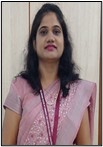
Mrs. Neeta Ukirade
Assistant Professor
M.Sc. Electronics, NET Ph.D Pursuing

Mrs. Gitanjali Dhore
Assistant Professor
M.Sc. Electronics
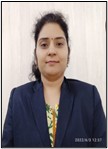
Mrs. Jyoti Ingle
Assistant Professor
M.Sc. Electronics, B.Ed
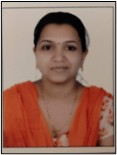
Mrs.Supriya Pachhapure
Assistant Professor
M.Sc. Electronics
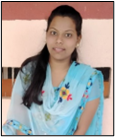
Miss. Rutuja Baliram Kobal
Assistant Professor
MSc. Statistics
Miss.Dhanshree Sayaji Khese
Assistant Professor
MSc. statistics
Miss. Varsha Bhosle
Assistant Professor
Qualifications
Miss.Komal Shridhar Bhhaware
Assistant Professor
M.Sc. Mathematics, B.Ed.

Mr. Sourabh Kalyan Dhawale
Assistant Professor
M.Sc. Mathematics, B.Ed.
Departmental Activities
Department Activities — B.Sc. Computer Science
| Sr. No. | Name of Activity | Academic Year |
|---|---|---|
| 1 | Departmental Meeting for planning yearly activities and events | 2024-25 |
| 2 | Pragyan 2.0 Event organized on 6th Feb. 2025 to 7th Feb 2025 | 2024-25 |
| 3 | Guest Lecture for TYBSc(CS) Students On “Career Opportunities on MCA and MBA” 9th Feb 2024 | 2024-25 |
| 4 | Workshop on Frontend Technology: Angular JS, TypeScript, BootStrap on 26th June 2025 | 2024-25 |
| 5 | Signature Activity organized for FYBSc(CS) Students: “Hardware Workshop” from 22th Jan 25 to 27th Jan 2025 | 2024-25 |
| 6 | Parent Teacher Meeting for FYBSc(CS) students on 26th October 2024 | 2024-25 |
| 7 | Farewell Party for Final Year Students on 7th May 2025 | 2024-25 |
| 8 | AI Documentary Competition on the Occasion of National Science Day on 3rd March 2025 | 2024-25 |
| 9 | Departmental Meeting for planning yearly activities and events 16th July 2025 | 2025-2026 |
| 10 | Induction Program for F.Y.B.Sc(CS) 13th July 2025 | 2025-2026 |
| 11 | Departmental Meeting for planning yearly activities and events | 2025-2026 |
| 12 | TECH-FEST Activity Under Computer Science Association 21st August 2025 | 2025-2026 |
| 13 | Activity on Academic Challenges and Interpersonal Issues on 18th August 2025 | 2025-2026 |
| 14 | Guest Lecture on “Testing Introduction with Manual Testing” on 16th July 2025 | 2025-2026 |
| 15 | Alumni talk for T.Y.B.Sc(CS) students On “How to Get Job Ready in the Era of AI” on 23rd August 2025 | 2025-2026 |
| 16 | One Day Workshop on “Java and Mern Stack” on 18th July 2025 | 2025-2026 |
Gallery

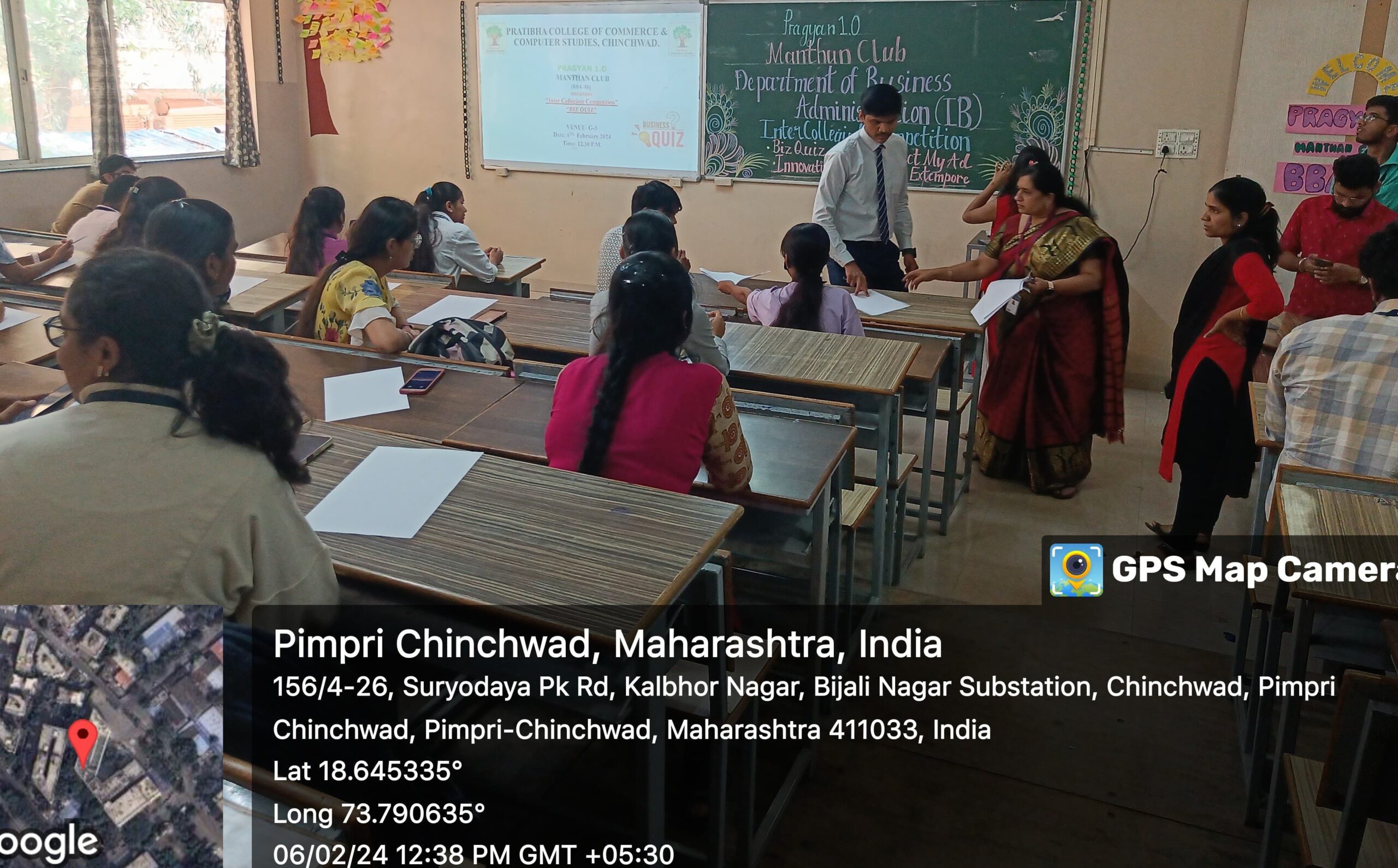

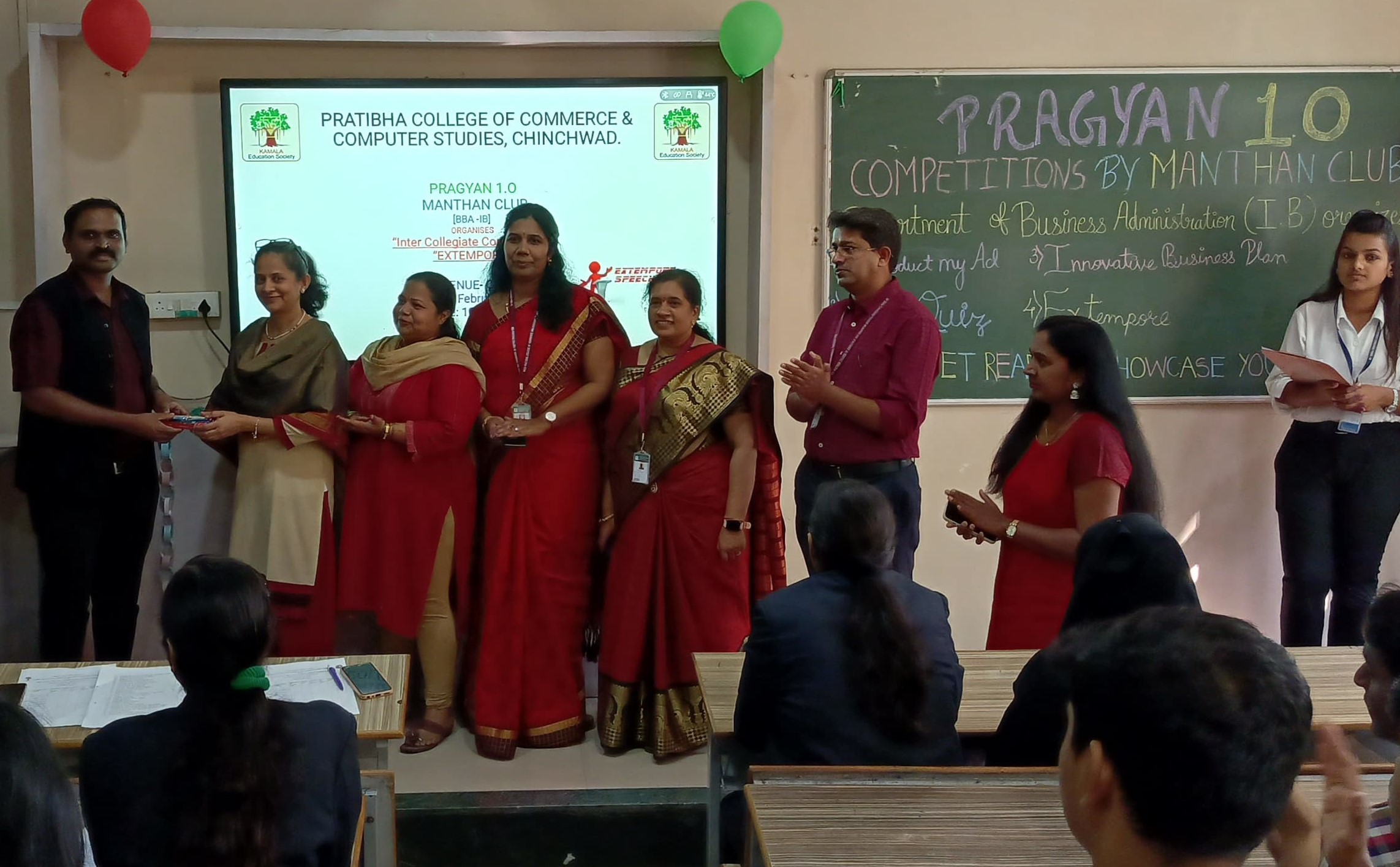
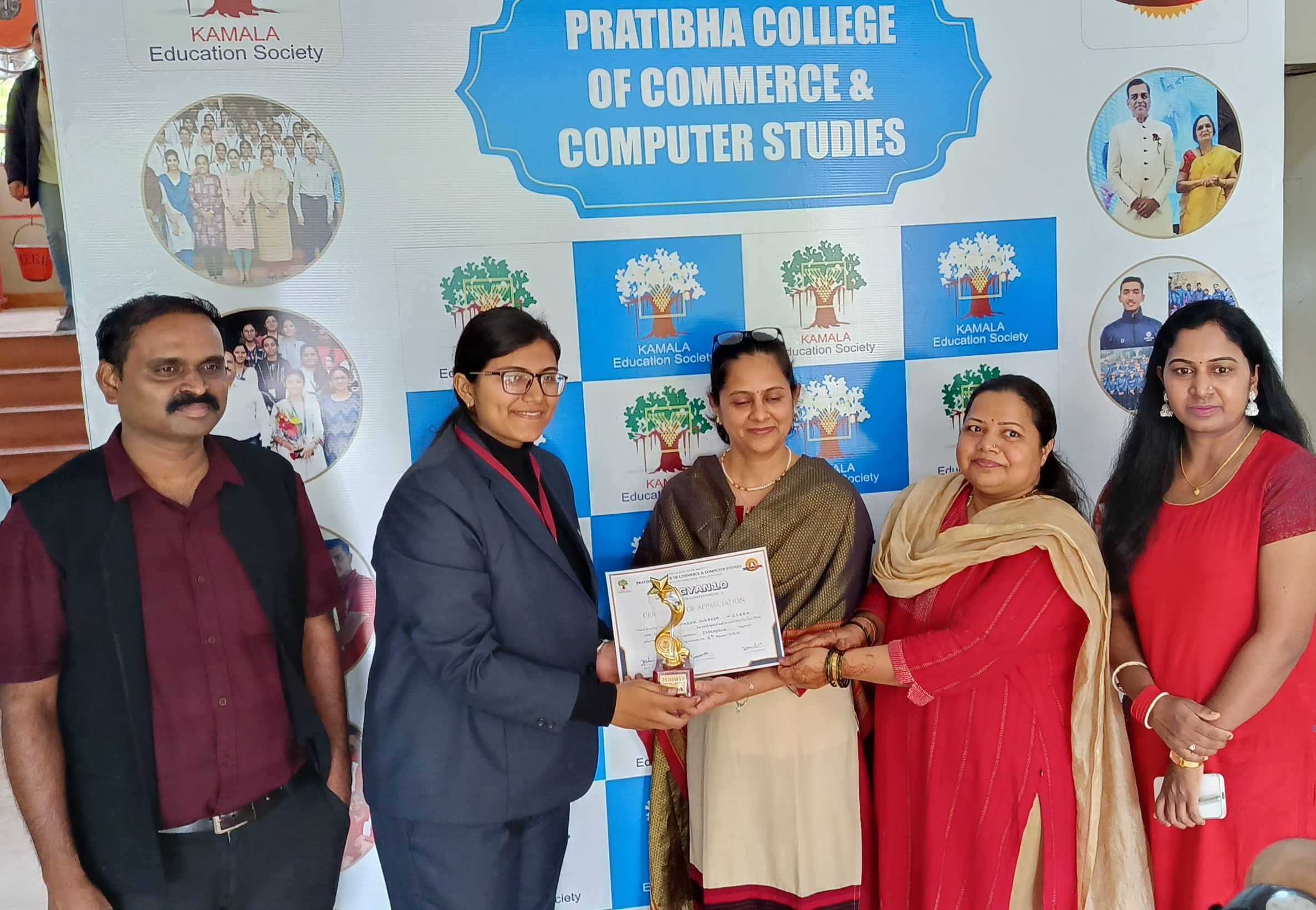

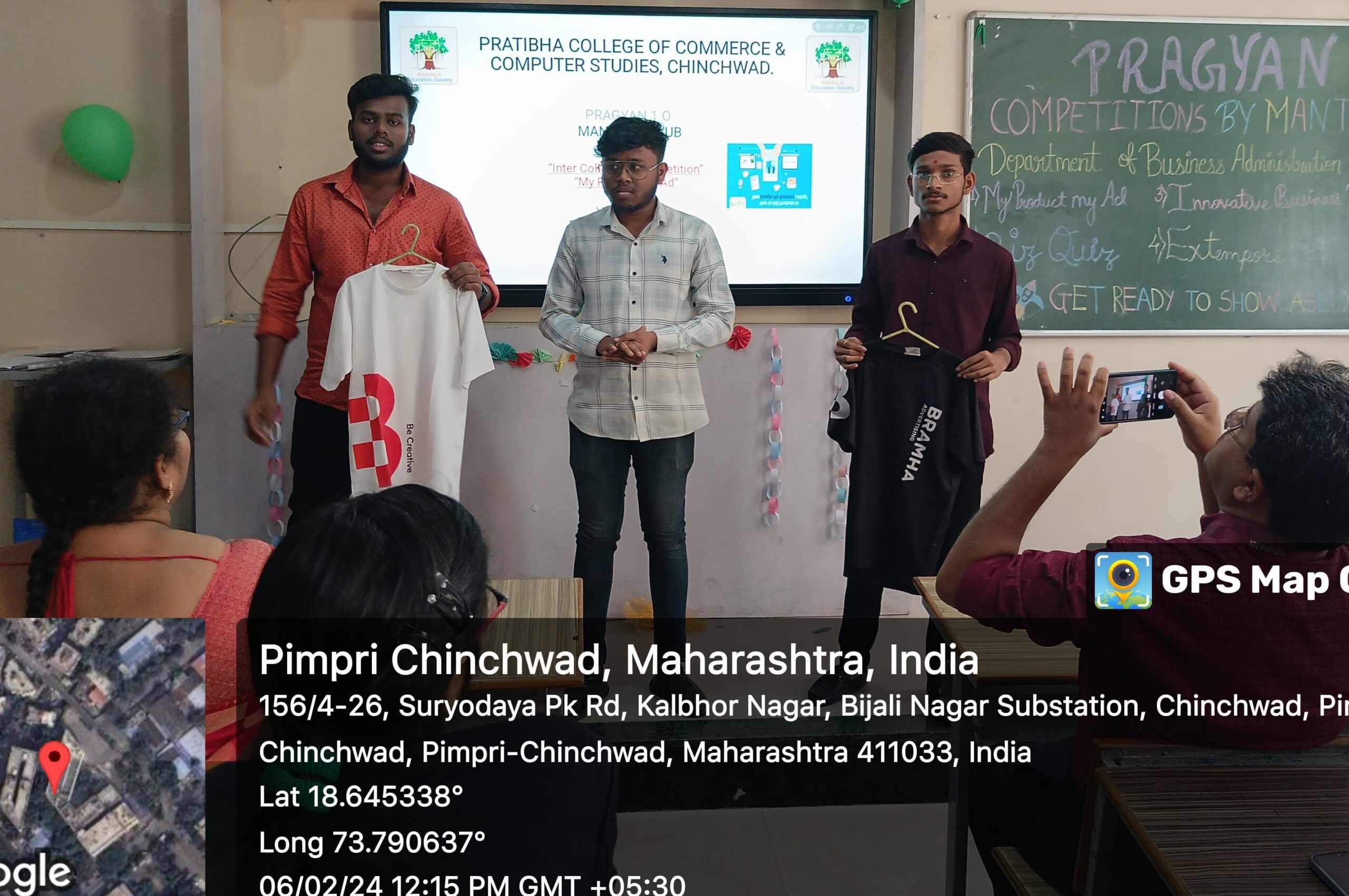
B.Sc. (CDS)
Course Overview
Introduction about the Course
Cyber and Digital Science is a niche subject of modern studies which will prepare students for professional work in business and industry, as well as government and law enforcement. Students will gain insights into the design of digital technologies, and the policy challenges of deploying such technologies, with broad-based training that will draw from computer science, engineering, research methods, management, economics, and other social sciences
Year of Establishment: 2022-2023
Affiliated to Savitribai Phule Pune University, Pune
Intake: 120
Eligibility
- Higher secondary school certificate (10+2) or its equivalent examination with English OR
- Three-year diploma course from the board of technical education conducted by Government of Maharashtra or its equivalent OR
- Higher secondary school certificate (10+2) Examination with English and a vocational subject of +2 level(MCVC)
Duration of the Course
Three years full time course. Students can pursue the fourth year for a B.Sc. (Hons) degree based on the NEP pattern.
Course Structure
Course Structure — BSc Cyber Defense & Security (CDS)
| Year | Term I | Term II | Total |
|---|---|---|---|
| Total Credit | Total Credit | Term I + Term II | |
| First | 22 | 22 | 44 |
| Second | 22 | 22 | 44 |
| Third | 22 | 22 | 44 |
| Fourth | 22 | 22 | 44 |
Semester I
| Semester | Course Type | Course Name/Course Title | TH | PR |
|---|---|---|---|---|
| I | Subject 1 | CDS101MJ Linux System Administration | 2 | |
| I | Subject 2 | CDS102MJ Fundamental of C programming | 2 | |
| I | Subject 3 | CDS103MJ Fundamentals of Computer | 2 | |
| I | Subject 1 Practical | CDS104MJP Practical based on CDS101MJ | 2 | |
| I | Subject 2 Practical | CDS105MJP Practical based on CDS102MJ | 2 | |
| I | Subject 3 Practical | CDS106MJP Practical based on CDS103MJ | 2 | |
| I | IKS | CDS101IKS Computing in ancient India | 2 | |
| I | GE/OE | OE101CDS Office Automation / Introduction to Google Tools | 2 | |
| I | SEC | SEC101CDS Fundamentals of Digital Communication (Practical) | 2 | |
| I | AEC | AEC101MAR / HIN MIL-I (Hindi) / MIL-I (Marathi) | 2 | |
| I | VEC | VEC101ENV EVS-I | 2 | |
| I | CC | CC101PE / NSS / NCC University Basket | ||
| Total Credits: | 14 | 08 | ||
Semester II
| Semester | Course Type | Course Name/Course Title | TH | PR |
|---|---|---|---|---|
| II | Subject 1 | CDS151MJ Fundamentals of Cyber security | 2 | |
| II | Subject 2 | CDS152MJ Network Security | 2 | |
| II | Subject 3 | CDS153MJ Python Programming | 2 | |
| II | Subject 1 Practical | CDS154MJP Practical based on CDS151MJ | 2 | |
| II | Subject 2 Practical | CDS155MJP Practical based on CDS152MJ | 2 | |
| II | Subject 3 Practical | CDS156MJP Practical based on CDS153MJ | 2 | |
| II | GE/OE | OE152CDSP Office Automation / Introduction to Google Tools | 2 | |
| II | SEC | SEC151CDS Statistical techniques for Computer Science OR Advance Excel | 2 | |
| II | AEC | AEC151MAR / HIN MIL-I (Hindi) / MIL-I (Marathi) | 2 | |
| II | VEC | VEC151ENV EVS-II | 2 | |
| II | CC | CC151PE / NSS / NCC University Basket | 2 | |
| TOTAL | 12 | 10 | ||
Semester III
| Semester | Course Type | Course Name/Course Title | TH | PR |
|---|---|---|---|---|
| III | Major Core (4+2) | CDS-201-MJ Ethical Hacking-I | 2 | |
| III | Major Core | CDS-202-MJ Cyber Ethics, Cyber Law & Cyber Policies | 2 | |
| III | Major Core Practical | CDS-203-MJP Practical based on CDS201MJ | 2 | |
| III | VSC (2) | CDS-221-VSC Data Structure using Python | 2 | |
| III | IKS | IKS-200-T Indian Knowledge System in Computing | 2 | |
| III | FP/OJT/CEP (2) | CDS-231-FP Mini Projects | 2 | |
| III | Minor (2+2) | CDS-241-MN Web Technology | 2 | |
| III | Minor Practical | CDS-242-MNP Practical based on CDS241MN | 2 | |
| III | GE/OE (2) | OE-201-CDS-T / OE-202-CDS-T / OE-203-CDS-T / OE-204-CDS-T AI for Everyone I / Web design I / Digital Marketing I / Introduction to Cyber Security | 2 | |
| III | AEC (2) | AEC-201-T From University Basket | 2 | |
| III | CC (2) | CC-201-T/P From University Basket | 2 | |
| Total | 14 | 08 | ||
Semester IV
| Semester | Course Type | Course Name/Course Title | TH | PR |
|---|---|---|---|---|
| IV | Major Core (4+2) | CDS-251-MJ Ethical Hacking-II | 2 | |
| IV | Major Core | CDS-252-MJ Advance Network Security | 2 | |
| IV | Major Core Practical | CDS-253-MJP Practical based on CDS251MJ | 2 | |
| IV | VSC (2) | CDS-271-VSC-P Database management system | 2 | |
| IV | FP/OJT/CEP (2) | CDS-281-FP Mini Projects | 2 | |
| IV | Minor (2+2) | CDS-291-MN Advanced Web Technology | 2 | |
| IV | Minor Practical | CDS-292-MNP Practical based on CDS291MN | 2 | |
| IV | GE/OE (2) | OE-251-CDS-T / OE-252-CDS-T / OE-253-CDS-T AI for Everyone II / Web design II / Digital Marketing II | 2 | |
| IV | SEC (2) | SEC251CDSP Principals of operating System | 2 | |
| IV | AEC (2) | AEC-251-T From University Basket | 2 | |
| IV | CC (2) | CC-251-T/P From University Basket | 2 | |
| Total | 14 | 8 | ||
Semester V
| Semester | Course Type | Course Code | Course Title | TH | PR |
|---|---|---|---|---|---|
| V | Major Core (6+4) | CDS301MJ | Digital Forensic-I | 2 | |
| V | Major Core | CDS302MJ | Malware Analysis | 2 | |
| V | Major Core | CDS303MJ | Cyber Threat Intelligence | 2 | |
| V | Major Core Practical | CDS304MJP | Practical based on CDS301MJ | 2 | |
| V | Major Core Practical | CDS305MJP | Practical based on CDS302MJ | 2 | |
| V | Major Elective (2+2) | CDS306MJ | Block chain | 2 | |
| V | Major Elective Practical | CDS307MJP | Practical based on CDS306MJ | 2 | |
| V | OR | ||||
| V | Major Elective | CDS308MJ | Mobile Forensic | 2 | |
| V | Major Elective Practical | CDS309MJP | Practical based on CDS308MJ | 2 | |
| V | VSC (2) | CDS321VSCP | Statistical Method-II | 2 | |
| V | FP/OJT/CEP (2) | CDS331FP | Project | 2 | |
| V | Minor (2+2) | CDS341MN | Internet Of Things | 2 | |
| V | Minor Practical | CDS342MNP | Practical Based on CDS341MN | 2 | |
| TOTAL | 10 | 12 | |||
Semester VI
| Semester | Course Type | Course Code | Course Title | TH | PR |
|---|---|---|---|---|---|
| VI | Major Core (6+4) | CDS351MJ | Digital Forensic-II | 2 | |
| VI | Major Core | CDS352MJ | IOT Security | 2 | |
| VI | Major Core | CDS353MJ | Cyber Crime & Reports | 2 | |
| VI | Major Core Practical | CDS354MJP | Practical Based on CDS351MJ | 2 | |
| VI | Major Core Practical | CDS355MJP | Practical Based on CDS352MJ | 2 | |
| VI | Major Elective (2+2) | CDS356MJ | Vulnerability Assessment & Penetration Testing | 2 | |
| VI | Major Elective Practical | CDS357MJP | Practical Based on CDS356MJ | 2 | |
| VI | OR | ||||
| VI | Major Elective | CDS358MJ | Fin-Tech Cyber Security | 2 | |
| VI | Major Elective Practical | CDS359MJP | Practical Based on CDS358MJ | 2 | |
| VI | FP/OJT/CEP (2) | CDS381OJT | Hands on Training Project | 4 | |
| VI | Minor (2+2) | CDS391MN | AI and Machine Learning | 2 | |
| VI | Minor Practical | CDS392MNP | Practical Based on CDS391MN | 2 | |
| TOTAL | 10 | 12 | |||
Semester VII (Honors)
| Semester | Course Type | Course Code | Course Title | TH | PR |
|---|---|---|---|---|---|
| VII | Major Core (10+4) | CDS401MJ | Malware Analysis II | 2 | |
| VII | Major Core | CDS402MJ | Intrusion Detection and Prevention System | 2 | |
| VII | Major Core | CDS403MJ | Digital Image Processing | 2 | |
| VII | Major Core Practical | CDS404MJP | Practical Based on CDS401MJ | 2 | |
| VII | Major Core Practical | CDS405MJP | Practical Based on CDS402MJ | 2 | |
| VII | Major Core | CDS406MJ | Cyber Crime Investigation | 2 | |
| VII | Major Core | CDS407MJ | Cyber Threat Intelligence II | 2 | |
| VII | Major Elective (2+2) | CDS408MJ | Digital Payments and Its Security | 2 | |
| VII | Major Elective Practical | CDS409MJP | Practical Based on CDS408MJ | 2 | |
| OR | |||||
| VII | Major Elective | CDS410MJ | Wireless Security | 2 | |
| VII | Major Elective Practical | CDS411MJP | Practical Based on CDS410MJ | 2 | |
| VII | OR | ||||
| VII | Major Elective | CDS412MJ | IT Act 2000 in Cyberspace | 2 | |
| VII | Major Elective Practical | CDS413MJP | Practical Based on CDS412MJ | 2 | |
| VII | Minor (4) | CDS441MN | Research Methodology | 4 | |
| TOTAL | 16 | 06 | |||
Career Prospects
- Cyber Security Analyst / Specialist
- Security Policy Strategist
- Digital Forensics Investigator
- Network Security Engineer
- Ethical Hacker / Penetration Tester
- Information Security Auditor / Consultant
- Cybercrime Investigator (private sector or government)
Program Outcomes
Program Outcomes — BSc Cyber and Digital Science (CDS)
After successful completion of B.Sc (CDS) Programme students will be able to:
| PO No. | PO Outcomes |
|---|---|
| PO 1 | Recognize and be comfortable with Linux administration, as it is important in modern IT environment. |
| PO 2 | Acknowledge and implement action the modern IT world’s needs in cyber security |
| PO 3 | Develop creative skills, critical thinking, analytical skills and research to address the real world problems using cyber security skills. |
| PO 4 | Understand the Concepts of cyber security, Networking, Digital Forensics and vulnerability testing and statistical techniques |
| PO 5 | Applying the Concepts of Digital Communication, IOT and Digital Image Processing |
| PO 6 | Determine and analyze software vulnerabilities and security solutions to reduce the risk of exploitation |
| PO 7 | Learn needful programming languages such as C, Python |
| PO 8 | Establishing together cyber laws and cyber policies in order to comprehend the rules and regulations of the present IT environment |
| PO 9 | To developing regulations and tactics for cyber security |
| PO 10 | Applications, data, and cloud-based infrastructure are all safeguarded through cloud security. |
| PO 11 | Understand security concepts including cyber threat intelligence, Blockchain in cyber security, communication systems security, malware analysis, VAPT, IDS & IPS, and reporting of cybercrimes. |
Course Outcomes
F.Y. B.Sc. (Cyber and Digital Science) — Semester I
| CDS101MJ — Linux System Administration | |||||
| Semester No | Course Code | Type | Course Title | Credits | Hours/Week |
| I | CDS101MJ | Subject 1 | Linux System Administration | 2 | 2 |
| Course Objectives: | |||||
| 1 | To make the students understand the Linux OS | ||||
| 2 | To acquaint them with the basic utilities of Linux | ||||
| 3 | To help them manage a network using Linux OS | ||||
| Course Outcomes: | |||||
| 1 | Demonstrate proficiency using the Linux command line and constructing shell scripts. | ||||
| 2 | Perform maintenance tasks, including user and system management. | ||||
| 3 | Install and configure system services. | ||||
| 4 | To install and implement Linux Operating Systems across the network. | ||||
| 5 | To manage and handle file permissions and other security aspects. | ||||
| CDS-104MJP — Practical based on CDS101MJ Linux System Administration | |||||
| Semester No | Course Code | Type | Course Title | Credits | Hours/Week |
| I | CDS-104MJP | Subject 1 Practical | Practical based on CDS101MJ | 2 | 4 |
| Course Objectives: | |||||
| 1 | To analyze fundamentals of the Linux operating system. | ||||
| 2 | To analyses a problem and devise an algorithm to solve it. | ||||
| Course Outcomes: | |||||
| 1 | Implement and administer a Linux Server. | ||||
| 2 | Setup and manage policies. | ||||
| 3 | Implement File Services. | ||||
| CDS-102MJ — Fundamentals of C Programming | |||||
| Semester No | Course Code | Type | Course Title | Credits | Hours/Week |
| I | CDS-102MJ | Subject 2 | Fundamentals of C Programming | 2 | 2 |
| Course Objectives: | |||||
| 1 | To develop the basic concepts and terminology of programming in general. | ||||
| 2 | To implements the algorithms and program in C language | ||||
| 3 | To develop programming skills to a level such that problems of reasonable complexity can be tackled successfully. | ||||
| Course Outcomes: | |||||
| 1 | Devise computational strategies for developing applications | ||||
| 2 | Develop applications (Simple to Complex) using C programming language | ||||
| CDS-105MJP — Practical based on CDS102MJ Fundamentals of C Programming | |||||
| Semester No | Course Code | Type | Course Title | Credits | Hours/Week |
| I | CDS-105MJP | Subject 2 Practical | Practical based on CDS102MJ | 2 | 4 |
| Course Objectives: | |||||
| 1 | To analyze fundamentals of the Basic C Programming. | ||||
| 2 | To learn flow chart and algorithms | ||||
| 3 | To develop the basic concepts and terminology of programming in general. | ||||
| Course Outcomes: | |||||
| 1 | Explore algorithmic approaches to problem solving | ||||
| 2 | Develop modular programs using control structures and arrays in ‘C’. | ||||
| CDS-103MJ — Fundamentals of Computers | |||||
| Semester No | Course Code | Type | Course Title | Credits | Hours/Week |
| I | CDS-103MJ | Subject 3 | Fundamentals of Computers | 2 | 2 |
| Course Objectives: | |||||
| 1 | To study the basics of Computer System | ||||
| 2 | To learn how to configure computer devices | ||||
| 3 | To Learn Basic Commands of Operating system and application software | ||||
| Course Outcomes: | |||||
| 1 | Learn the fundamental concepts of computer science. | ||||
| 2 | Develop the logic of problem solving. | ||||
| 3 | Explain the needs of hardware and software required for a computation task. | ||||
| CDS-106MJP — Practical based on CDS103MJ Fundamentals of Computers | |||||
| Semester No | Course Code | Type | Course Title | Credits | Hours/Week |
| I | CDS-106MJP | Subject 3 Practical | Practical based on CDS103MJ | 2 | 4 |
| Course Objectives: | |||||
| 1 | To Know the Basics of Computers. | ||||
| 2 | To Understand the Basics of Operating systems | ||||
| Course Outcomes: | |||||
| 1 | Learn the fundamental concepts of computer science. | ||||
| 2 | Develop the logic of problem solving | ||||
| CDS101IKS — Computing in Ancient India | |||||
| Semester No | Course Code | Type | Course Title | Credits | Hours/Week |
| I | CDS101IKS | IKS | Computing in Ancient India | 2 | 2 |
| Course Objectives: | |||||
| 1 | Discuss the rich heritage of mathematical temper of Ancient India | ||||
| 2 | Promote joyful learning of HISTORY | ||||
| Course Outcomes: | |||||
| 1 | Improved critical thinking | ||||
| 2 | New learning from Ancient India | ||||
| SEC101CDS — Fundamentals of Digital Communication (Practical) | |||||
| Semester No | Course Code | Type | Course Title | Credits | Hours/Week |
| I | SEC101CDS | SEC | Fundamentals of Digital Communication (Practical) | 2 | 2 |
| Course Objectives: | |||||
| 1 | To make the student familiar with electronic components | ||||
| 2 | To learn the steps in electronic circuits through simulation and hardware implementation. | ||||
| 3 | To learn about various wireless & cellular communication networks. | ||||
| Course Outcomes: | |||||
| 1 | On completion of the course, students will be able to interpret and summarize the specifications of different passive, active and Integrated components required to build electronic circuits. | ||||
| 2 | To solve problems on Number systems and their representation | ||||
| 3 | To familiarize with logic gates and applications in combinational and sequential circuits. | ||||
| 4 | To identify the importance of different blocks in electronic communication systems. | ||||
Faculty/Staff
Mrs. Dipali L. Mahajan
Program Coordinator
M.Sc. (C.S.) SET, Pursuing P.hd

Dr. Aparna A. Joshi
Assistant Professor
M.Sc. (C.S.) , B.Ed., SET

Mrs.Prajakta A.Yeole
Assistant Professor
MCA(Computer Science)

Mrs. Shivani Tikone
Assistant Professor
M.Sc. (C.S.)

Mrs. Mayura Sawant
Assistant Professor
M.Sc. (C.S.) (Pursuing)
Mrs.Pallavi Patil
Assistant Professor
M.Sc. (C.S.)

Mrs.Nisha Patil
Assistant Professor
M.Sc. (C.S.)

Mr. Pritam Kasliwal
Assistant Professor
MCA

Mrs.Samruddhi Pingle
Assistant Professor
M.Sc.(C.S.)

Mrs. Vaishnavi Moharir
Assistant Professor
MCA

Faculty Name
Assistant Professor
M.Sc. (C.S.)
Departmental Activities
Departmental Activities — CDS Department
| S.N. | Name of Activity |
|---|---|
| 2024-2025 | |
| 1 | Cyber Crypt Pragyaan 2.0 |
| 2 | Public Eye Pragyaan 2.0 |
| 3 | Art Fraction Pragyaan 2.0 |
| 4 | Runtime Terror Pragyaan 2.0 |
| 5 | Model Activity Vigyaan 2.0 |
| 6 | Builders of Modern Society Day celebration – Subhash Chandra Bose |
| 7 | Builders of Modern Society Day celebration – Sarojini Naidu |
| 8 | Builders of Modern Society Day celebration – Dr Vikram Sarabhai |
| 9 | Signature Activity: Byte Hunt |
| 10 | Aluminia Talk: Mr. Ramnivas Sutar (Carrier Path) |
| 11 | Farewell Party |
| 12 | Bridge Course |
| 13 | Workshop on Hands-on Java |
| 14 | PTA Meeting (CDS, IT Department) |
| 2025-2026 | |
| 1 | Bridge Course |
| 2 | Induction Program |
| 3 | Live Seminar on “Web Development with MERN Stack with live API integration with Javascript” |
| 4 | Workshop on Unlocking opportunities: “Internship Awareness Drive” |
| 5 | FY BSc Cyber Security and FY BSc CDS Activity “Trace the Output” on C programming language Under Club of Cyber Gems |
Gallery
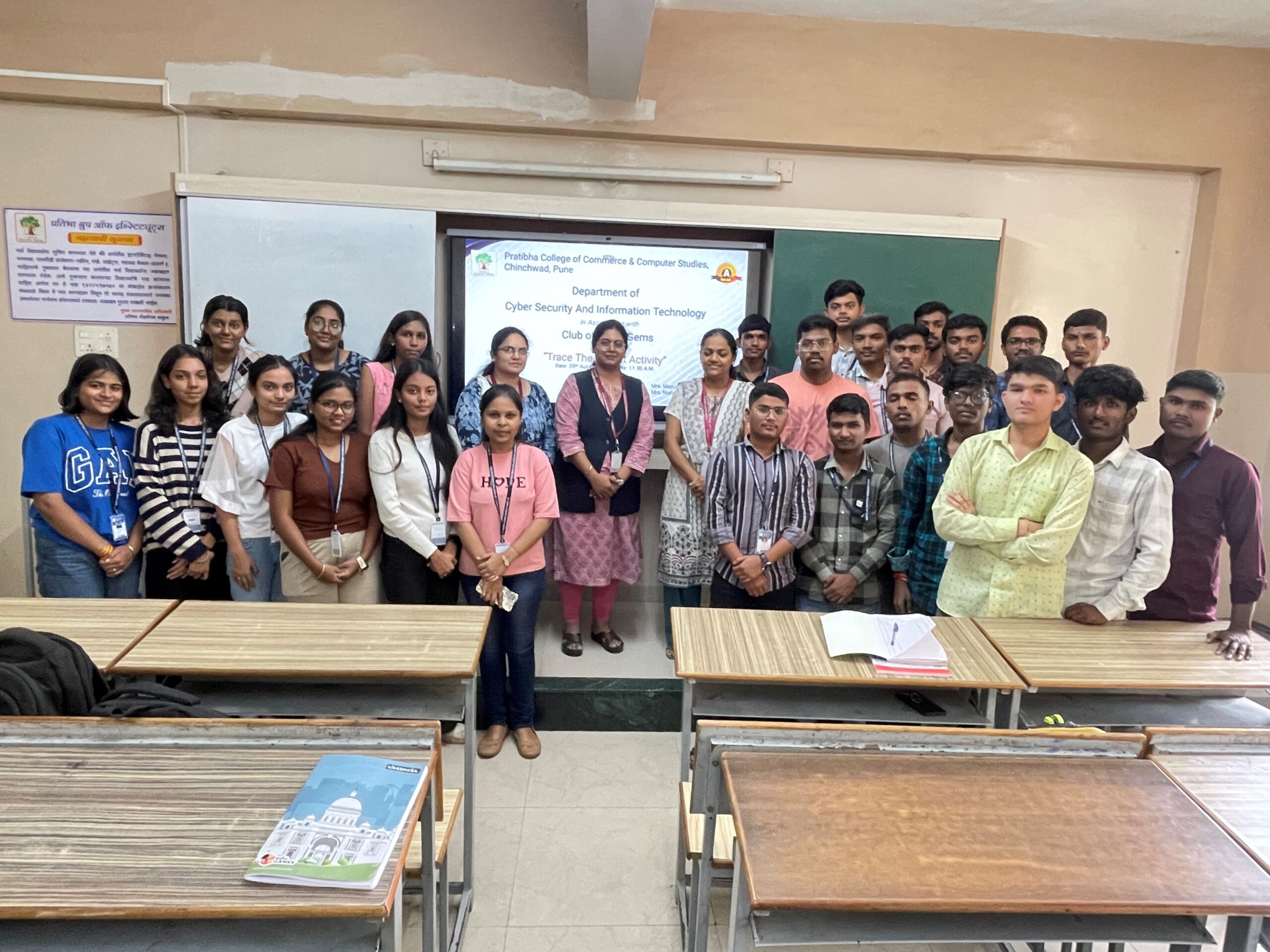
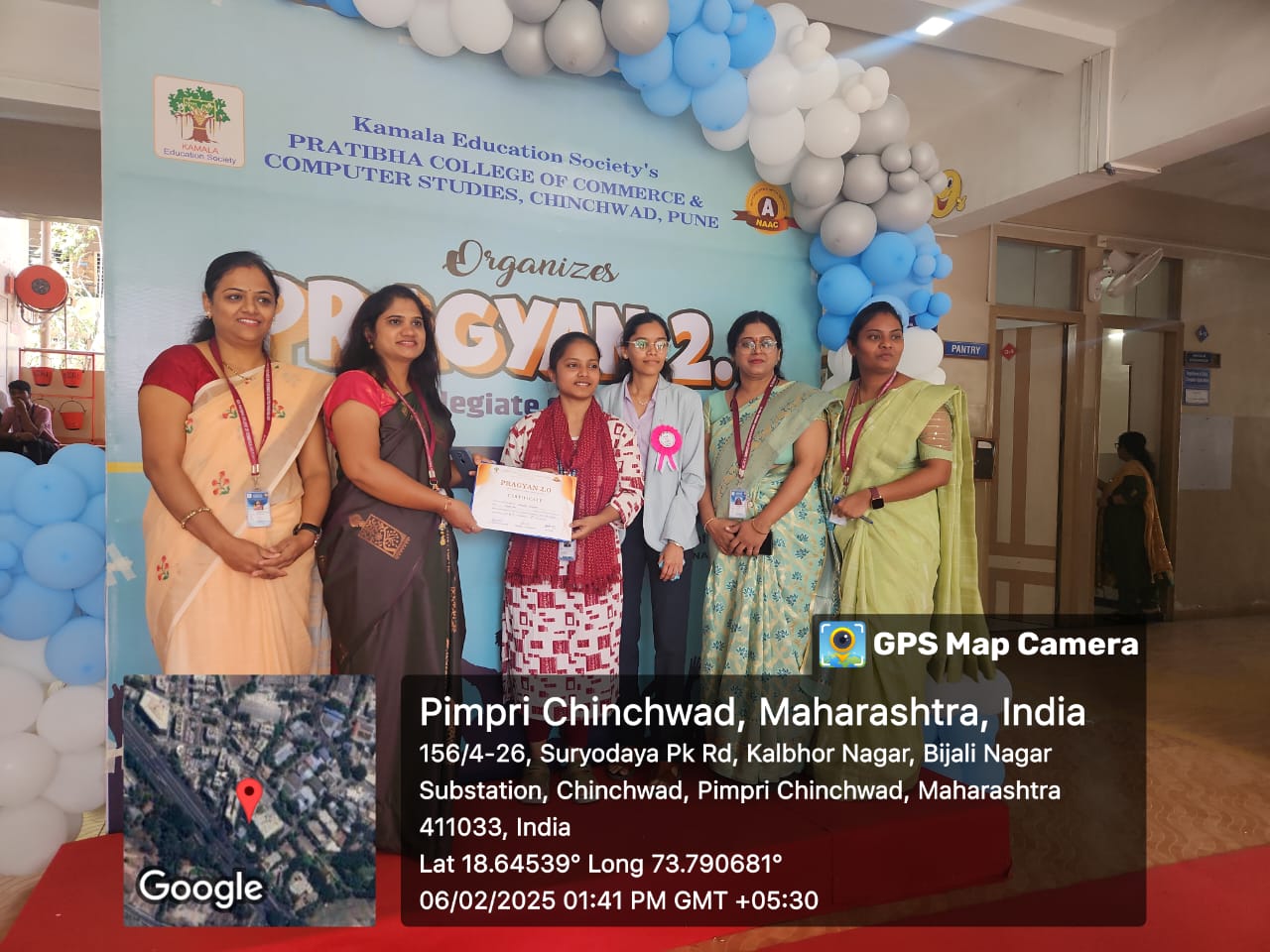
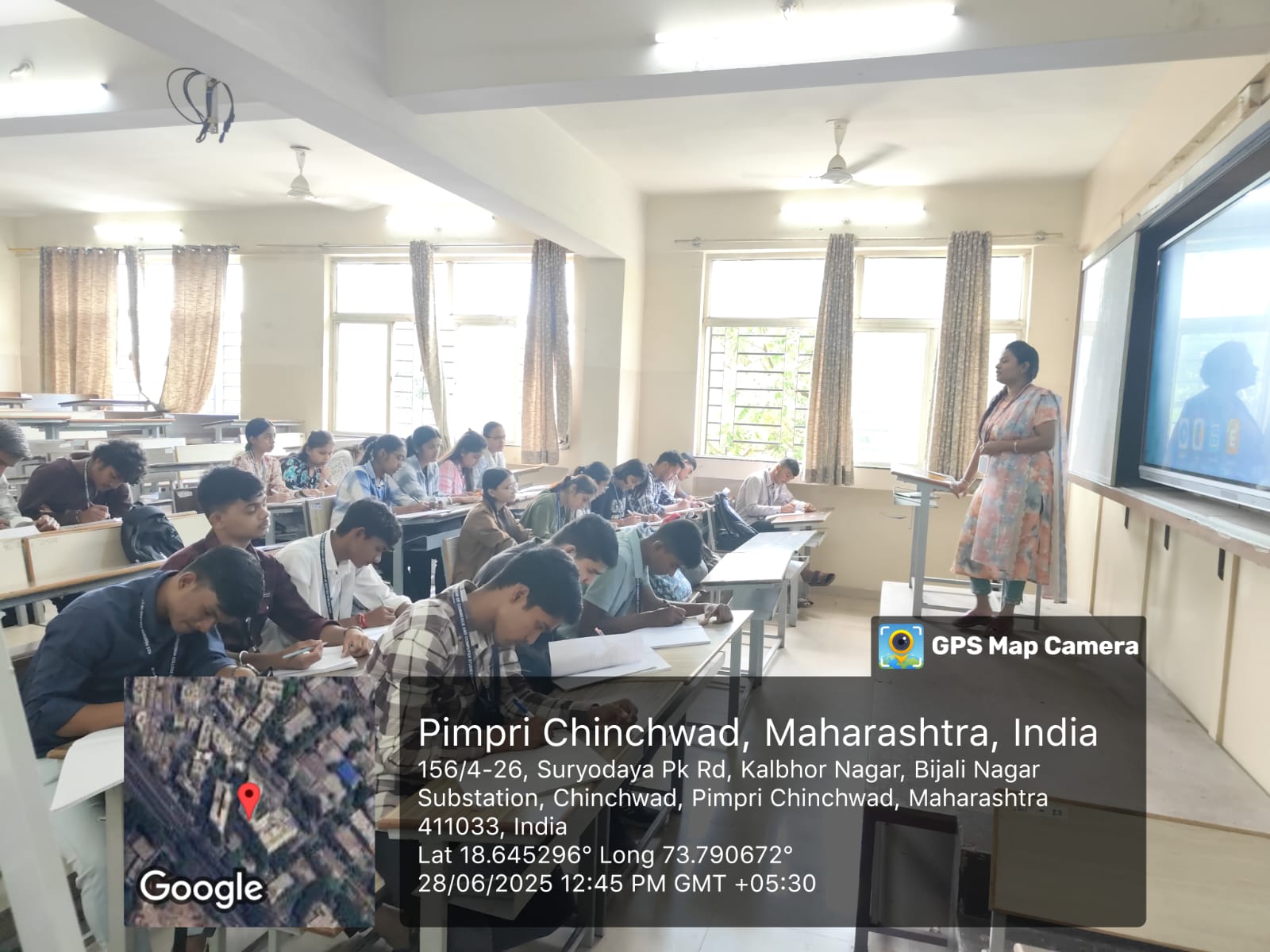
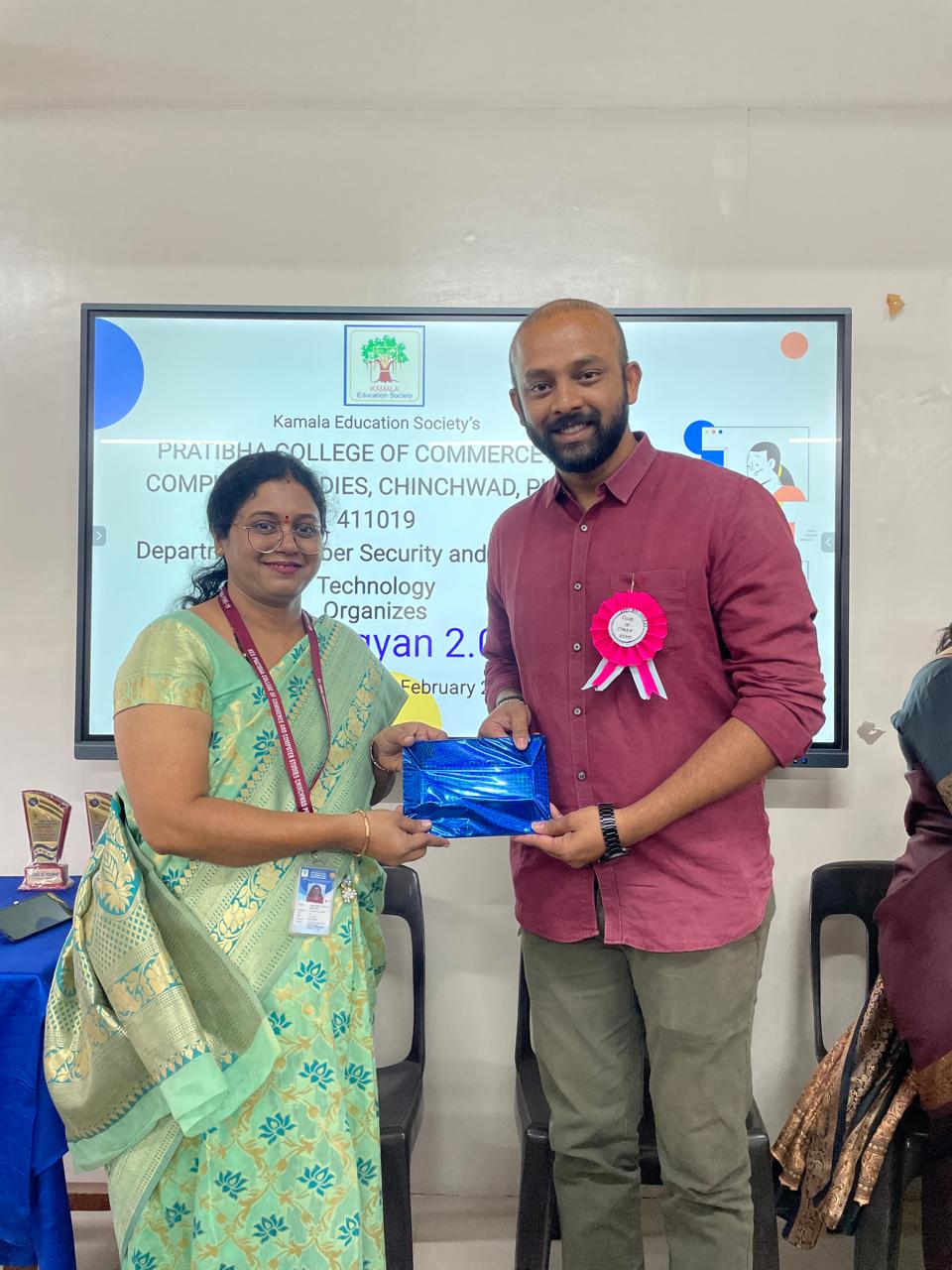
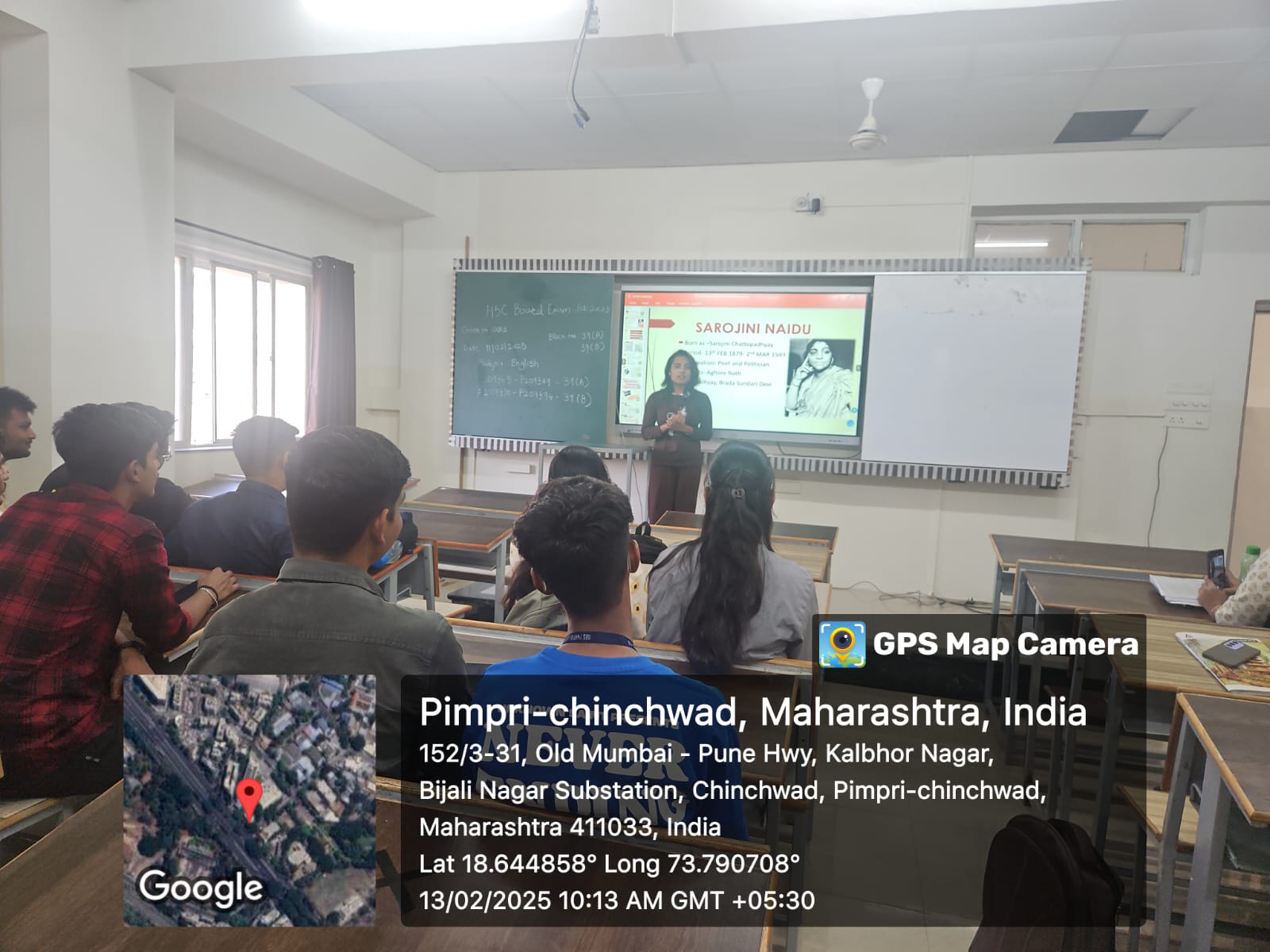
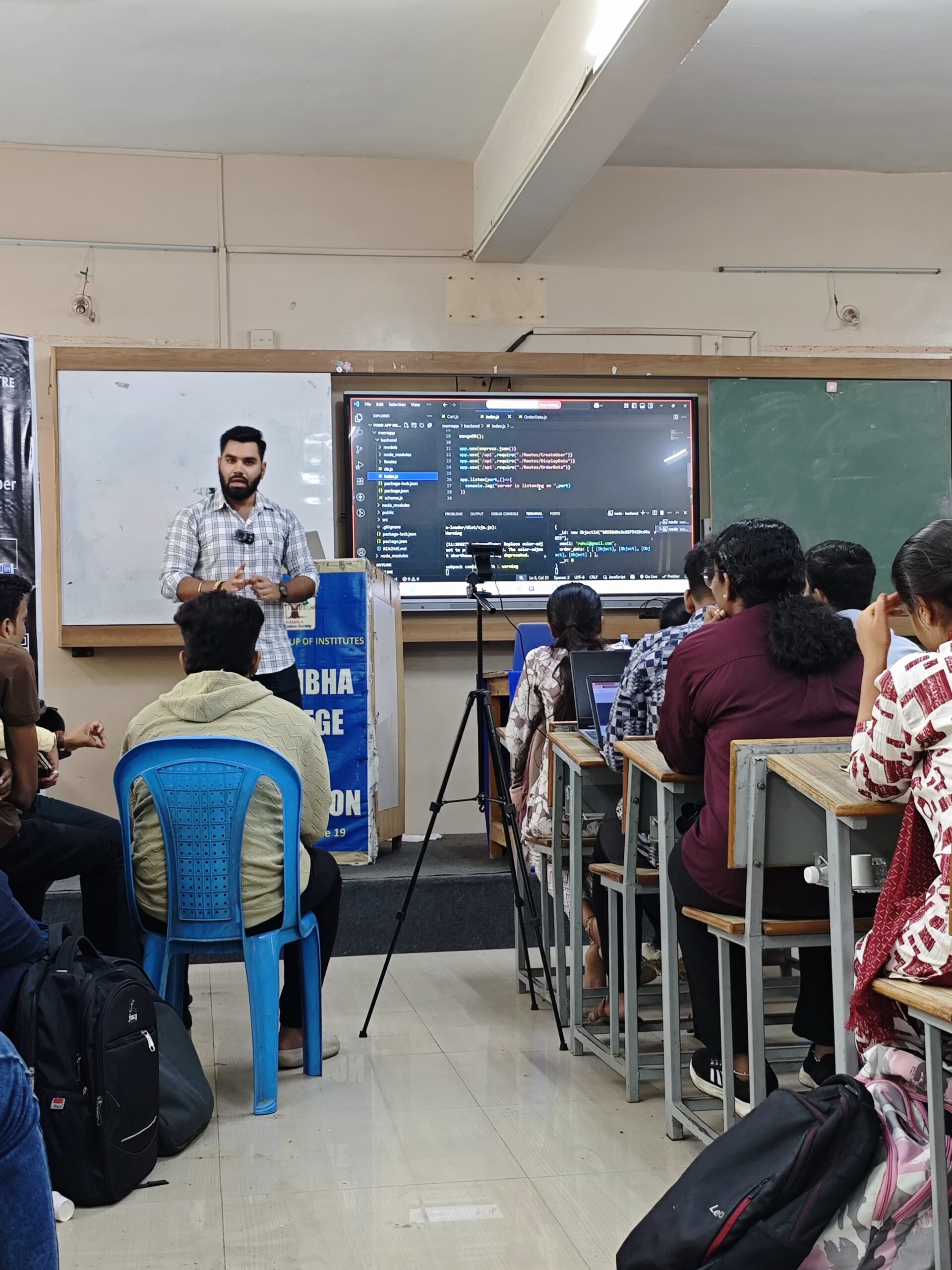
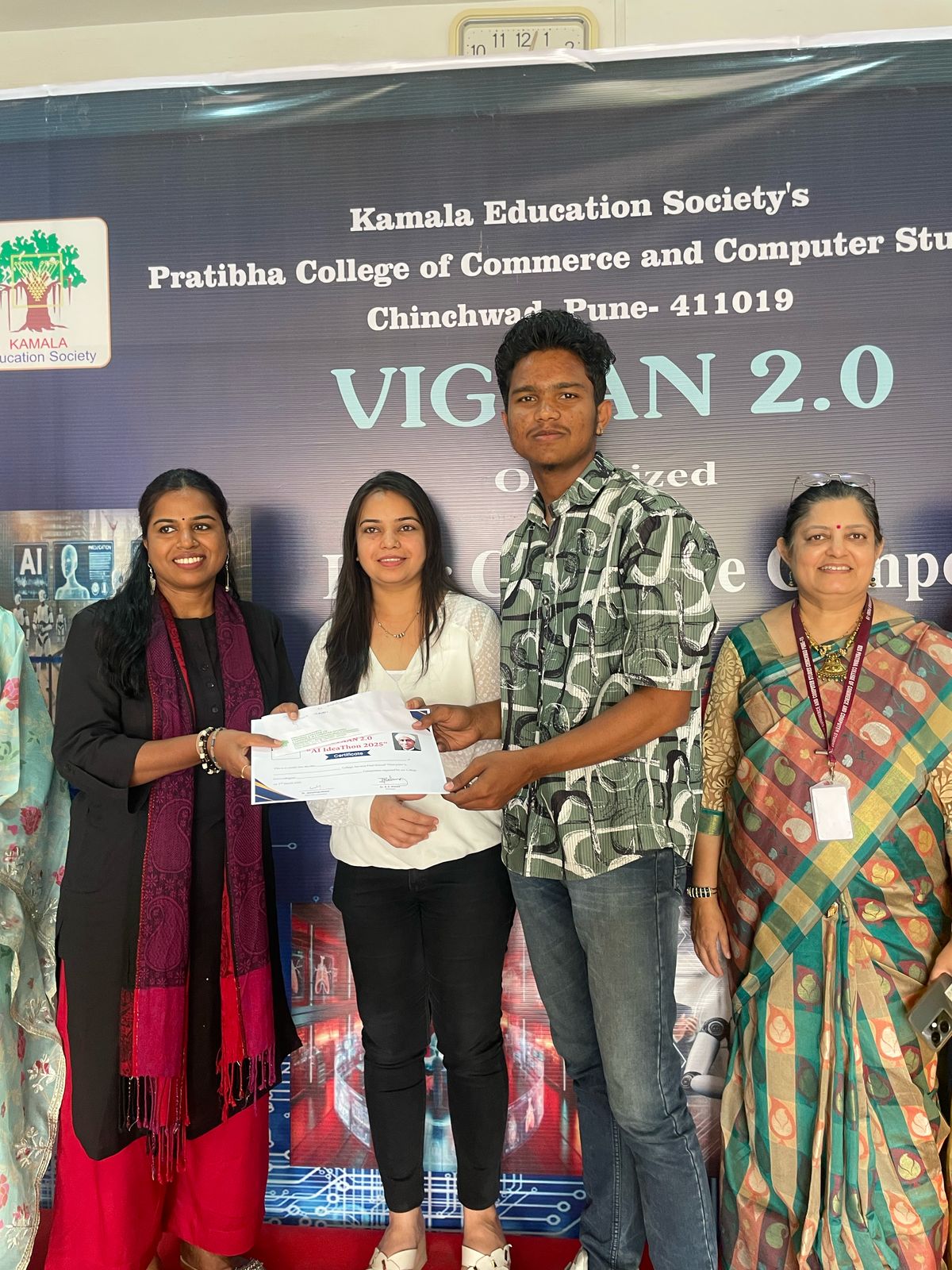
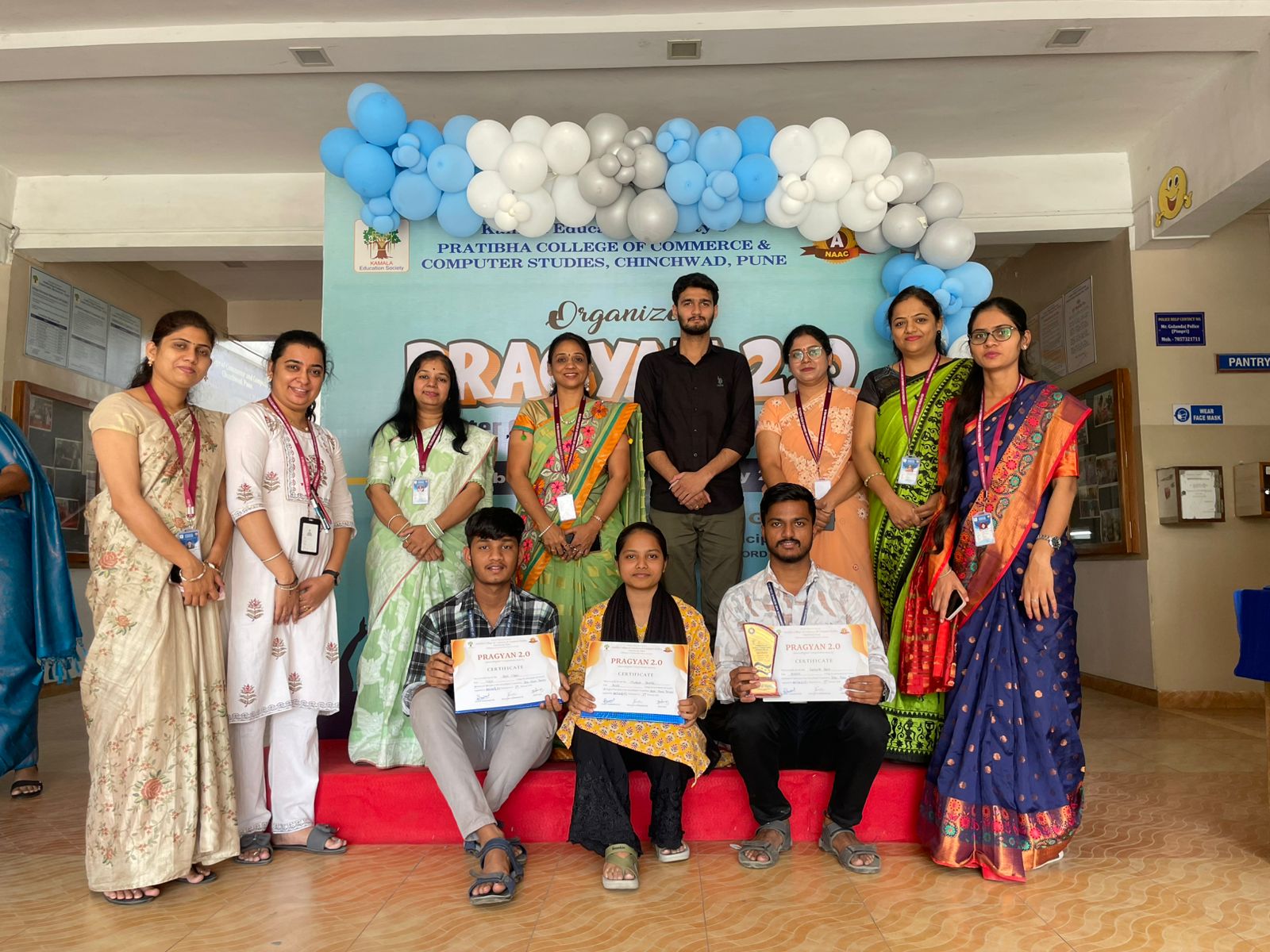
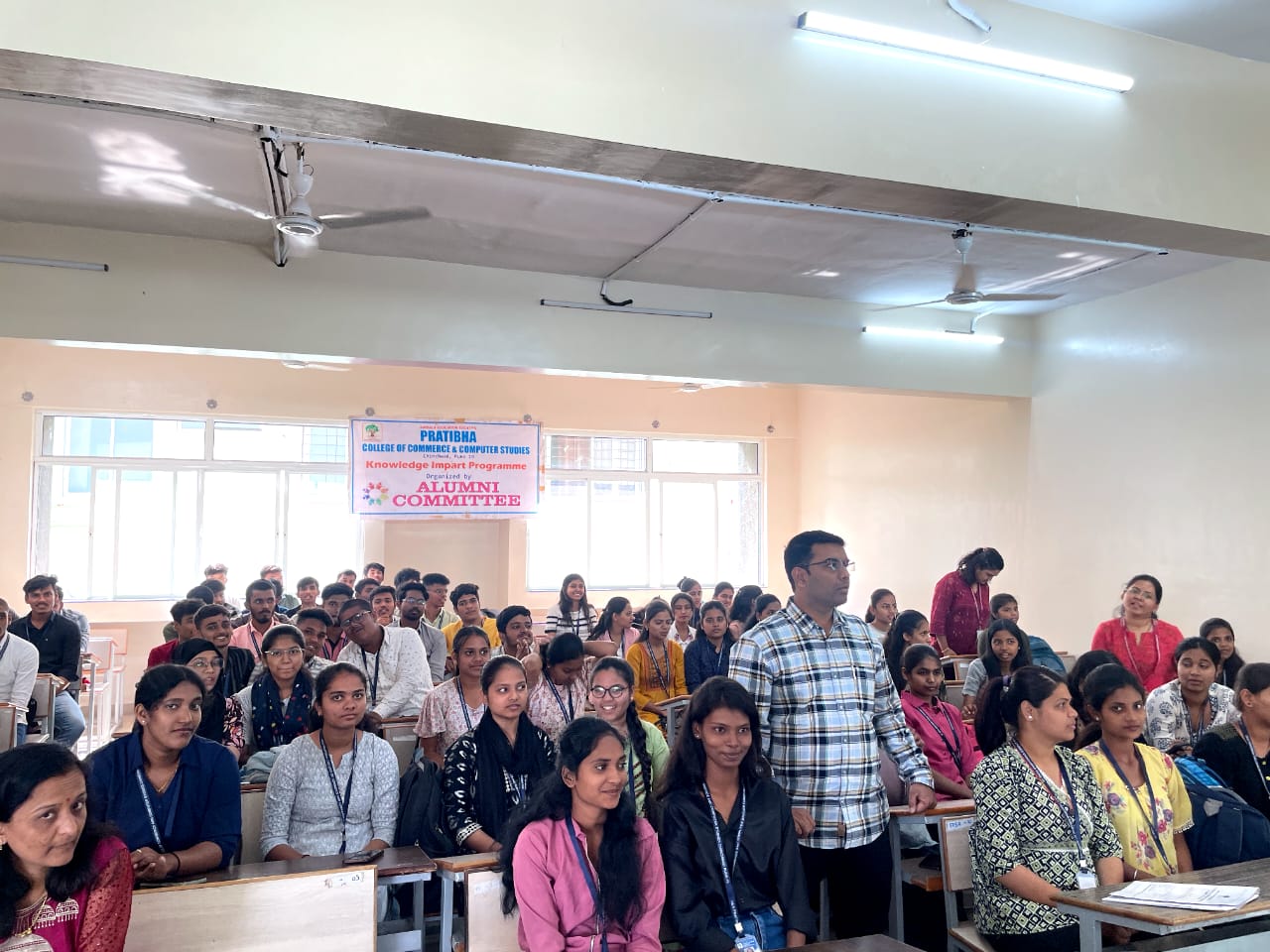
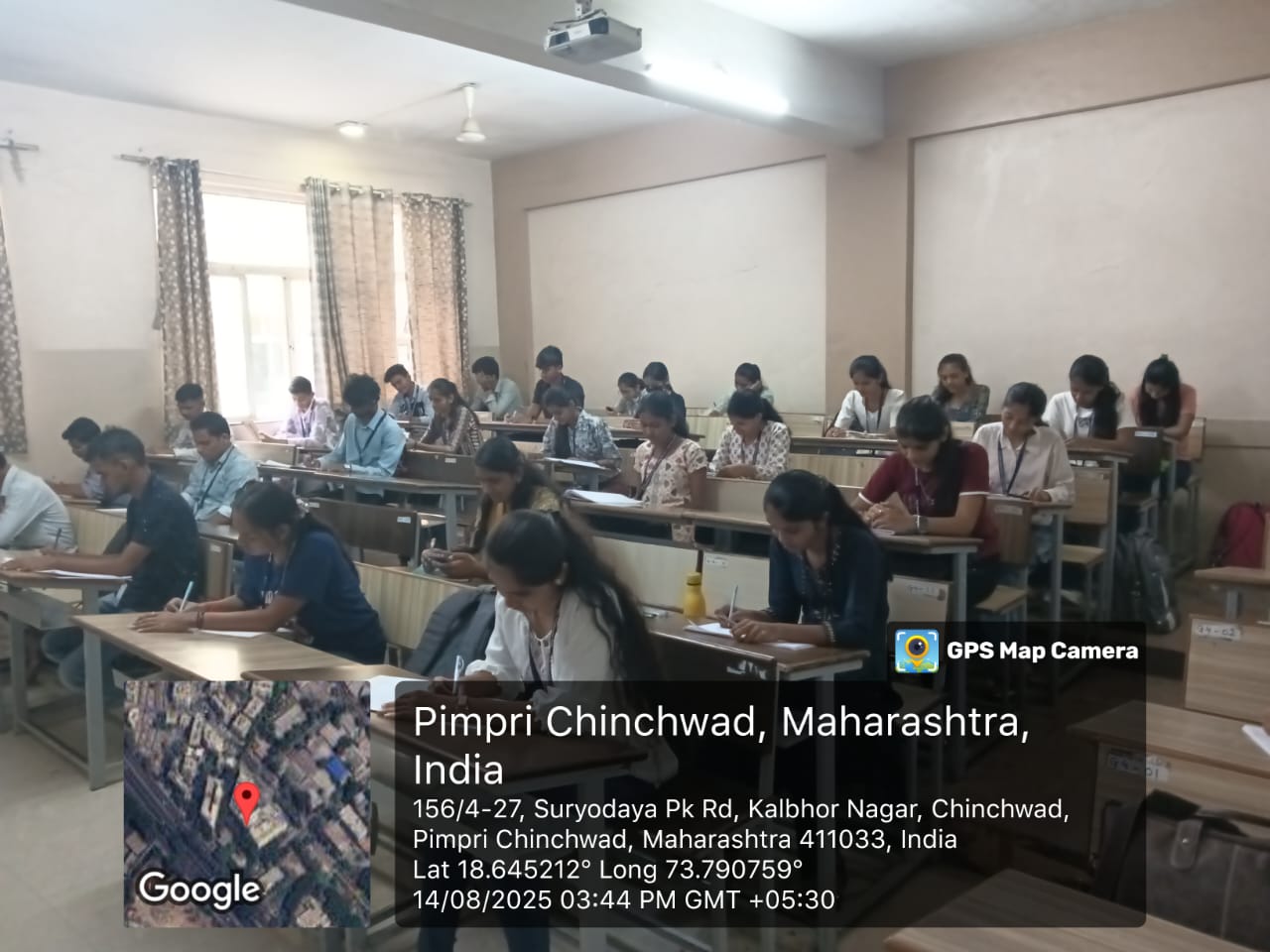
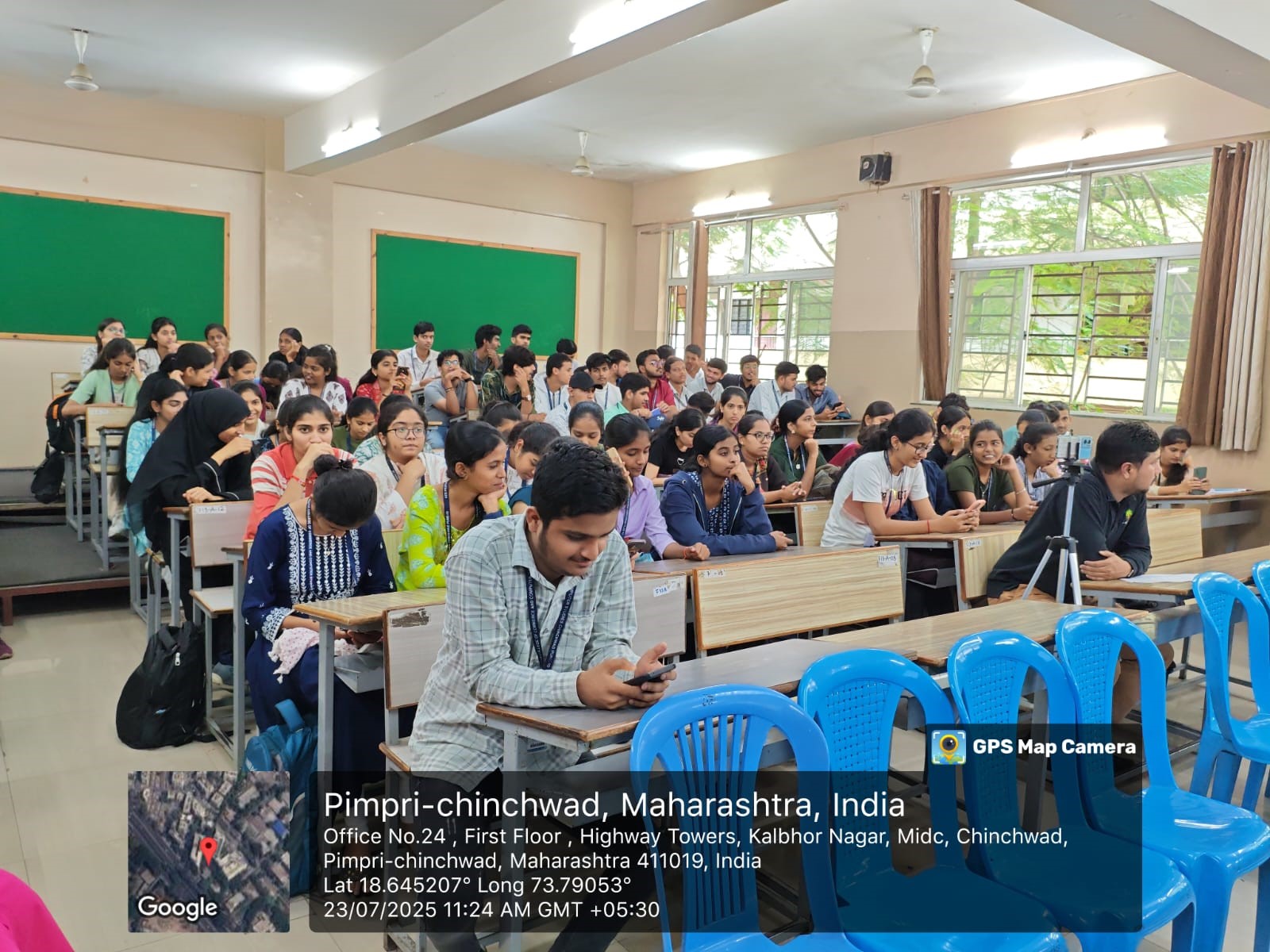
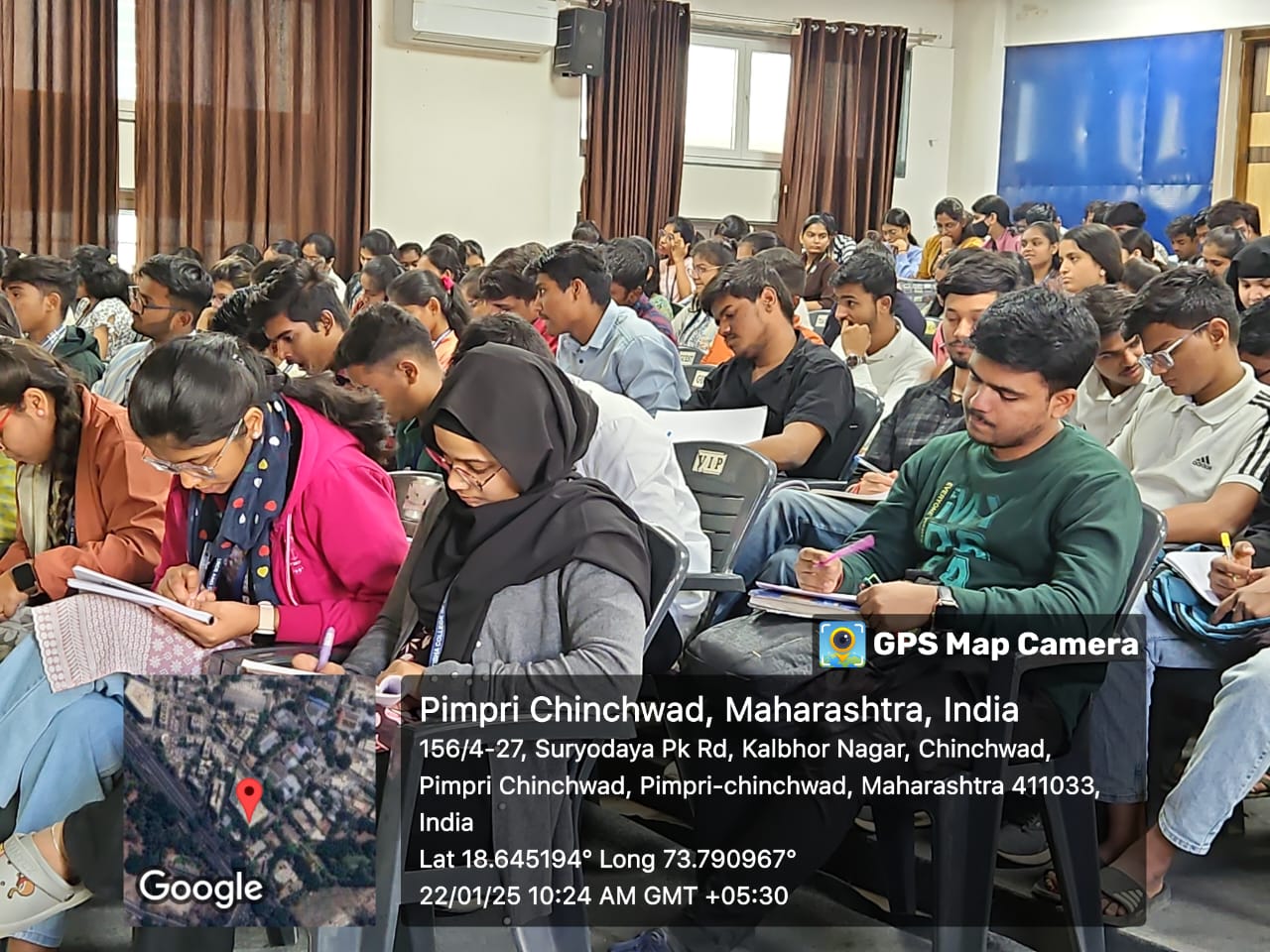
B.Sc. (IT)
Course Overview
Introduction about the Course
- Information Technology is the study of quantity, structure, space and change, focusing on problem solving, application development with wider scope of application in science and technology, social sciences etc. throughout the world in last couple of decades and it has carved out a space for itself like any other disciplines of basic Science and Technology.
- The Students completing this programme will be able to present software application clearly and precisely, make abstract ideas precise by formulating them in the computer languages. Completion of this programme will also enable the learners to join teaching profession, enhance their employability for government jobs, jobs in software industry, banking, insurance and investment sectors, data analyst jobs and jobs in various other public and private enterprises.
- At the First year, course is based on problem solving and programming along with Designing and Development Skills. Primary Concepts of C Programming, Python, Database and Computer Networking are also introduced in course. The practical courses are designed to support the theoretical training in the year.
- Along with Information Technology (Major), VSC and SEC courses helps in building a personality. Another Aspect of this course is IKS which tells about the rich heritage and advancement of India in the field of computation.
- At the second year, computational problem solving skills are further strengthened by course in Data Structure using python. Object Oriented Programming using Java and Programming Concepts in Database Management System are also introduced in this year.
- At the third year, all the courses are designed to fulfill core Information technology requirements as well as the needs of the IT industry. Major elective courses are taking care of recent trends in the field of Information Technology.
- Minor and skills Enhancement courses enable the students to acquire additional skills.
- At the fourth year (Honors) and (Research), all the subjects are designed to fulfill core Information Technology requirements as well as meet the needs of the IT industry.
Practical courses and field projects enable students to get hands on training. Numerous learning tracks are open through major elective courses. Research Methodology course will create interest among a student to bring research in the field of Information Technology.
Year of Establishment: 2024-2025
Affiliated to Savitribai Phule Pune University, Pune
Intake: 160
Eligibility
- Higher secondary school certificate (10+2) Science or its equivalent examination with English.
OR Three-year diploma course from the board of technical education conducted by Government of Maharashtra or its equivalent.
ORHigher secondary school certificate (10+2) Examination with English and a vocational subject of +2 level (MCVC)
Duration of the Course
Three years full time course. Students can pursue the fourth year for a B.Sc. (Hons) degree based on the NEP pattern.
Course Structure
Course Structure — BSc Information Technology
| Year | Term I | Term II | Total |
|---|---|---|---|
| Total Credit | Total Credit | Term I + Term II | |
| First | 22 | 22 | 44 |
| Second | 22 | 22 | 44 |
| Third | 22 | 22 | 44 |
| Fourth | 22 | 22 | 44 |
Semester I
| Semester | Course Type | Course Code | Course Title | TH | PR |
|---|---|---|---|---|---|
| I | Subject 1 | IT101MJ | Problem Solving using Python Programming | 2 | |
| I | Subject 1 Practical | IT102MJP | Practical Based on IT101MJ | 2 | |
| I | Subject 2 | IT103MJ | Basics of Computer Network | 2 | |
| I | Subject 2 Practical | IT104MJP | Practical Based on IT103MJ | 2 | |
| I | Subject 3 | IT105MJ | Fundamentals of Cloud Computing | 2 | |
| I | Subject 3 Practical | IT106MJP | Practical Based on IT105MJ | 2 | |
| I | GE/OE (2T) | OE101IT | MS Office Automation | 2 | |
| I | SEC 2(T) | SEC101IT | Database Management System | 2 | |
| I | IKS (2T) | IT101IKS | Generic IKS | 2 | |
| I | AEC (2T) | AEC101ENG | English | 2 | |
| I | VEC (2) | VEC101ENV | EVS-I | 2 | |
| TOTAL | 16 | 06 | |||
Semester II
| Semester | Course Type | Course Code | Course Title | TH | PR |
|---|---|---|---|---|---|
| II | Subject 1 | IT151MJ | Advanced Python | 2 | |
| II | Subject 1 Practical | IT152MJP | Practical Based on IT151MJ | 2 | |
| II | Subject 2 | IT153MJ | Advanced Networking | 2 | |
| II | Subject 2 Practical | IT154MJP | Practical Based on IT153MJ | 2 | |
| II | Subject 3 | IT155MJ | Cloud Computing Architecture and Design | 2 | |
| II | Subject 3 Practical | IT156MJP | Practical Based on IT155MJ | 2 | |
| II | GE/OE (2P) | OE151ITP | Tally Prime | 2 | |
| II | SEC 2(P) | SEC102ITP | Practical Based on SEC101IT | 2 | |
| II | AEC (2T) | AEC151ENG | English | 2 | |
| II | VEC (2) | VEC151ENV | EVS-II | 2 | |
| II | CC (2) | CC151PE/NSS/NCC | Course from University Basket | 2 | |
| TOTAL | 16 | 06 | |||
Semester III
| Semester | Course Type | Course Code | Course Title | TH | PR |
|---|---|---|---|---|---|
| III | Major Core (4+2) | IT201MJ | Object Oriented Programming using Python | 2 | |
| III | Major Core | IT202MJ | Wireless Networking | 2 | |
| III | Major Core Practical | IT203MJP | Practical Based on IT201MJ + IT202MJ | 2 | |
| III | VSC 2(T/P) | IT221VSC | E-commerce | 2 | |
| III | FP/OJT/CEP (2) | IT231FP | Mini Project | 2 | |
| III | Minor (2T+2P) | IT241MN | Public Cloud – Google, AWS, Azure | 2 | |
| III | Minor Practical | IT242MNP | Practical Based on IT241MN | 2 | |
| III | GE/OE (2T) | OE201IT | Content Writing / Script Writing | 2 | |
| III | IKS | IT201IKS | From University Basket | 2 | |
| III | AEC (2) | AEC201ENG | Soft Skill – I | 2 | |
| TOTAL | 16 | 06 | |||
Semester IV
| Semester | Course Type | Course Code | Course Title | TH | PR |
|---|---|---|---|---|---|
| IV | Major Core (4+2) | IT251MJ | Exploratory Data Analysis | 2 | |
| IV | Major Core | IT252MJ | Cryptography & Network Security | 2 | |
| IV | Major Core Practical | IT253MJP | Practical Based on IT251MJ + IT252MJ | 2 | |
| IV | VSC 2(T) | IT231VSC | Software Engineering | 2 | |
| IV | FP/OJT/CEP (2) | IT282FP | Mini Project | 2 | |
| IV | Minor (2T+2P) | IT291MN | Automation tools for cloud Deployment | 2 | |
| IV | Minor Practical | IT292MNP | Practical Based on IT291MN | 2 | |
| IV | GE/OE (2P) | OE251ITP | Practical Based on Script Writing | 2 | |
| IV | SEC 2(T) | SEC251IT | Linux Operating System | 2 | |
| IV | AEC (2) | AEC251ENG | Soft Skill – II | 2 | |
| IV | CC (2) | CC251PE/NSS/NCC | From University Basket | 2 | |
| TOTAL | 16 | 06 | |||
Semester V
| Semester | Course Type | Course Code | Course Title | TH | PR |
|---|---|---|---|---|---|
| V | Major Core (8T+4P) | IT301MJ | Data Mining | 2 | |
| V | Major Core | IT302MJ | Internet Technology | 2 | |
| V | Major Core | IT303MJ | Mobile Application Development | 2 | |
| V | Major Core | IT304MJ | Emerging Technologies | 2 | |
| V | Major Core Practical | IT305MJP | Practical Based on IT301MJ | 2 | |
| V | Major Core Practical | IT306MJP | Practical Based on IT303MJ | 2 | |
| V | Major Elective (2T+2P) | IT307MJ | Core Java | 2 | |
| V | Major Elective Practical | IT308MJP | Practical based on IT307MJ | 2 | |
| V | OR | ||||
| V | Major Elective | IT309MJ | VB dotnet | 2 | |
| V | Major Elective Practical | IT310MJP | Practical Based on IT309MJ | 2 | |
| V | VSC 2(T) | IT321VSC | IT Service Management | 2 | |
| V | FP/OJT/CEP (2) | IT331FP | Project | 2 | 2 |
| V | Minor (2T) | IT341MN | Cloud computing and visualization foundation | 2 | |
| TOTAL | 14 | 8 | |||
Semester VI
| Semester | Course Type | Course Code | Course Title | TH | PR |
|---|---|---|---|---|---|
| VI | Major Core (8+4) | IT351MJ | Data Analysis Tool (power Bi) | 2 | |
| VI | Major Core | IT352MJ | Information Security Management and Data Privacy | 2 | |
| VI | Major Core | IT353MJ | Web Technologies | 2 | |
| VI | Major Core | IT354MJ | Public cloud, networking and security | 2 | |
| VI | Major Core Practical | IT355MJP | Practical Based on IT351MJ | 2 | |
| VI | Major Core Practical | IT356MJP | Practical Based on IT353MJ | 2 | |
| VI | Major Elective (2+2) | IT357MJ | Advanced Java | 2 | |
| VI | Major Elective Practical | IT358MJP | Practical Based on IT357MJ | 2 | |
| VI | OR | ||||
| VI | Major Elective | IT359MJ | Dot net framework Using ASP | 2 | |
| VI | Major Elective Practical | IT360MJP | Practical Based on IT359MJ | 2 | |
| VI | VSC (2) | IT322VSCP | Practical Based on IT352MJ | 2 | |
| VI | FP/OJT/CEP (4) | IT381OJT | On Job Training | 4 | |
| TOTAL | 10 | 12 | |||
Semester VII
| Semester | Course Type | Course Code | Course Title | TH | PR |
|---|---|---|---|---|---|
| VII | Major Core (10+4) | CDS-401-MJ | Malware Analysis II | 2 | |
| VII | Major Core | CDS-402-MJ | Intrusion Detection and Prevention System | 2 | |
| VII | Major Core | CDS-403-MJ | Digital Image Processing | 2 | |
| VII | Major Core Practical | CDS-404-MJP | Practical Based on CDS401MJ | 2 | |
| VII | Major Core Practical | CDS-405-MJP | Practical Based on CDS402MJ | 2 | |
| VII | Major Core | CDS-406-MJ | Cyber Crime Investigation | 2 | |
| VII | Major Core | CDS-407-MJ | Cyber Threat Intelligence II | 2 | |
| VII | Major Elective (2+2) | CDS-408-MJ | Digital Payments and Its Security | 2 | |
| VII | Major Elective Practical | CDS-409-MJP | Practical Based on CDS408MJ | 2 | |
| VII | OR | ||||
| VII | Major Elective | CDS-410-MJ | Wireless Security | 2 | |
| VII | Major Elective Practical | CDS-411-MJP | Practical Based on CDS410MJ | 2 | |
| VII | OR | ||||
| VII | Major Elective | CDS-412-MJ | IT Act 2000 in Cyberspace | 2 | |
| VII | Major Elective Practical | CDS-413-MJP | Practical Based on CDS412MJ | 2 | |
| VII | Minor (4) | CDS-441-MN | Research Methodology | 4 | |
| TOTAL | 16 | 06 | |||
Semester VIII
| Semester | Course Type | Course Code | Course Title | TH | PR |
|---|---|---|---|---|---|
| VIII | Major Core (10+4) | CDS-451-MJ | Mobile Application And Services | 2 | |
| VIII | Major Core | CDS-452-MJ | Incident Handling | 2 | |
| VIII | Major Core | CDS-453-MJ | Cyber Security Architecture | 2 | |
| VIII | Major Core Practical | CDS-454-MJP | Practical Based on CDS451MJ | 2 | |
| VIII | Major Core Practical | CDS-455-MJP | Practical Based on CDS452MJ | 2 | |
| VIII | Major Core | CDS-456-MJ | Introduction to Hardware Security | 2 | |
| VIII | Major Core | CDS-457-MJ | IT Security Strategy Planning and Leadership | 2 | |
| VIII | Major Elective (2+2) | CDS-458-MJ | Dark web and Cyber warfare | 2 | |
| VIII | Major Elective Practical | CDS-459-MJP | Practical Based on CDS458MJ | 2 | |
| VIII | OR | ||||
| VIII | Major Elective | CDS-460-MJ | DecSecOps | 2 | |
| VIII | Major Elective Practical | CDS-461-MJP | Practical Based on CDS460MJ | 2 | |
| VIII | OR | ||||
| VIII | Major Elective | CDS-462-MJ | Tools and Technology for Cyber Security | 2 | |
| VIII | Major Elective Practical | CDS-463-MJP | Practical Based on 462MJ | 2 | |
| VIII | FP/OJT/CEP (4) | CDS-481-OJT | OJT | 4 | |
| TOTAL | 12 | 10 | |||
Course Structure — BSc Information Technology
| Year | Term I | Term II | Total |
|---|---|---|---|
| Total Credit | Total Credit | Term I + Term II | |
| First | 22 | 22 | 44 |
| Second | 22 | 22 | 44 |
| Third | 22 | 22 | 44 |
| Fourth | 22 | 22 | 44 |
Semester I
| Semester | Course Type | Course Code | Course Title | TH | PR |
|---|---|---|---|---|---|
| I | Subject 1 | IT101MJ | Problem Solving using Python Programming | 2 | |
| I | Subject 1 Practical | IT102MJP | Practical Based on IT101MJ | 2 | |
| I | Subject 2 | IT103MJ | Basics of Computer Network | 2 | |
| I | Subject 2 Practical | IT104MJP | Practical Based on IT103MJ | 2 | |
| I | Subject 3 | IT105MJ | Fundamentals of Cloud Computing | 2 | |
| I | Subject 3 Practical | IT106MJP | Practical Based on IT105MJ | 2 | |
| I | GE/OE (2T) | OE101IT | MS Office Automation | 2 | |
| I | SEC 2(T) | SEC101IT | Database Management System | 2 | |
| I | IKS (2T) | IT101IKS | Generic IKS | 2 | |
| I | AEC (2T) | AEC101ENG | English | 2 | |
| I | VEC (2) | VEC101ENV | EVS-I | 2 | |
| TOTAL | 16 | 06 | |||
Semester II
| Semester | Course Type | Course Code | Course Title | TH | PR |
|---|---|---|---|---|---|
| II | Subject 1 | IT151MJ | Advanced Python | 2 | |
| II | Subject 1 Practical | IT152MJP | Practical Based on IT151MJ | 2 | |
| II | Subject 2 | IT153MJ | Advanced Networking | 2 | |
| II | Subject 2 Practical | IT154MJP | Practical Based on IT153MJ | 2 | |
| II | Subject 3 | IT155MJ | Cloud Computing Architecture and Design | 2 | |
| II | Subject 3 Practical | IT156MJP | Practical Based on IT155MJ | 2 | |
| II | GE/OE (2P) | OE151ITP | Tally Prime | 2 | |
| II | SEC 2(P) | SEC102ITP | Practical Based on SEC101IT | 2 | |
| II | AEC (2T) | AEC151ENG | English | 2 | |
| II | VEC (2) | VEC151ENV | EVS-II | 2 | |
| II | CC (2) | CC151PE/NSS/NCC | Course from University Basket | 2 | |
| TOTAL | 16 | 06 | |||
Semester III
| Semester | Course Type | Course Code | Course Title | TH | PR |
|---|---|---|---|---|---|
| III | Major Core (4+2) | IT201MJ | Object Oriented Programming using Python | 2 | |
| III | Major Core | IT202MJ | Wireless Networking | 2 | |
| III | Major Core Practical | IT203MJP | Practical Based on IT201MJ + IT202MJ | 2 | |
| III | VSC 2(T/P) | IT221VSC | E-commerce | 2 | |
| III | FP/OJT/CEP (2) | IT231FP | Mini Project | 2 | |
| III | Minor (2T+2P) | IT241MN | Public Cloud – Google, AWS, Azure | 2 | |
| III | Minor Practical | IT242MNP | Practical Based on IT241MN | 2 | |
| III | GE/OE (2T) | OE201IT | Content Writing / Script Writing | 2 | |
| III | IKS | IT201IKS | From University Basket | 2 | |
| III | AEC (2) | AEC201ENG | Soft Skill – I | 2 | |
| TOTAL | 16 | 06 | |||
Semester IV
| Semester | Course Type | Course Code | Course Title | TH | PR |
|---|---|---|---|---|---|
| IV | Major Core (4+2) | IT251MJ | Exploratory Data Analysis | 2 | |
| IV | Major Core | IT252MJ | Cryptography & Network Security | 2 | |
| IV | Major Core Practical | IT253MJP | Practical Based on IT251MJ + IT252MJ | 2 | |
| IV | VSC 2(T) | IT231VSC | Software Engineering | 2 | |
| IV | FP/OJT/CEP (2) | IT282FP | Mini Project | 2 | |
| IV | Minor (2T+2P) | IT291MN | Automation tools for cloud Deployment | 2 | |
| IV | Minor Practical | IT292MNP | Practical Based on IT291MN | 2 | |
| IV | GE/OE (2P) | OE251ITP | Practical Based on Script Writing | 2 | |
| IV | SEC 2(T) | SEC251IT | Linux Operating System | 2 | |
| IV | AEC (2) | AEC251ENG | Soft Skill – II | 2 | |
| IV | CC (2) | CC251PE/NSS/NCC | From University Basket | 2 | |
| TOTAL | 16 | 06 | |||
Semester V
| Semester | Course Type | Course Code | Course Title | TH | PR |
|---|---|---|---|---|---|
| V | Major Core (8T+4P) | IT301MJ | Data Mining | 2 | |
| V | Major Core | IT302MJ | Internet Technology | 2 | |
| V | Major Core | IT303MJ | Mobile Application Development | 2 | |
| V | Major Core | IT304MJ | Emerging Technologies | 2 | |
| V | Major Core Practical | IT305MJP | Practical Based on IT301MJ | 2 | |
| V | Major Core Practical | IT306MJP | Practical Based on IT303MJ | 2 | |
| V | Major Elective (2T+2P) | IT307MJ | Core Java | 2 | |
| V | Major Elective Practical | IT308MJP | Practical based on IT307MJ | 2 | |
| V | OR | ||||
| V | Major Elective | IT309MJ | VB dotnet | 2 | |
| V | Major Elective Practical | IT310MJP | Practical Based on IT309MJ | 2 | |
| V | VSC 2(T) | IT321VSC | IT Service Management | 2 | |
| V | FP/OJT/CEP (2) | IT331FP | Project | 2 | 2 |
| V | Minor (2T) | IT341MN | Cloud computing and visualization foundation | 2 | |
| TOTAL | 14 | 8 | |||
Semester VI
| Semester | Course Type | Course Code | Course Title | TH | PR |
|---|---|---|---|---|---|
| VI | Major Core (8+4) | IT351MJ | Data Analysis Tool (power Bi) | 2 | |
| VI | Major Core | IT352MJ | Information Security Management and Data Privacy | 2 | |
| VI | Major Core | IT353MJ | Web Technologies | 2 | |
| VI | Major Core | IT354MJ | Public cloud, networking and security | 2 | |
| VI | Major Core Practical | IT355MJP | Practical Based on IT351MJ | 2 | |
| VI | Major Core Practical | IT356MJP | Practical Based on IT353MJ | 2 | |
| VI | Major Elective (2+2) | IT357MJ | Advanced Java | 2 | |
| VI | Major Elective Practical | IT358MJP | Practical Based on IT357MJ | 2 | |
| VI | OR | ||||
| VI | Major Elective | IT359MJ | Dot net framework Using ASP | 2 | |
| VI | Major Elective Practical | IT360MJP | Practical Based on IT359MJ | 2 | |
| VI | VSC (2) | IT322VSCP | Practical Based on IT352MJ | 2 | |
| VI | FP/OJT/CEP (4) | IT381OJT | On Job Training | 4 | |
| TOTAL | 10 | 12 | |||
Semester VII
| Semester | Course Type | Course Code | Course Title | TH | PR |
|---|---|---|---|---|---|
| VII | Major Core (10+4) | CDS-401-MJ | Malware Analysis II | 2 | |
| VII | Major Core | CDS-402-MJ | Intrusion Detection and Prevention System | 2 | |
| VII | Major Core | CDS-403-MJ | Digital Image Processing | 2 | |
| VII | Major Core Practical | CDS-404-MJP | Practical Based on CDS401MJ | 2 | |
| VII | Major Core Practical | CDS-405-MJP | Practical Based on CDS402MJ | 2 | |
| VII | Major Core | CDS-406-MJ | Cyber Crime Investigation | 2 | |
| VII | Major Core | CDS-407-MJ | Cyber Threat Intelligence II | 2 | |
| VII | Major Elective (2+2) | CDS-408-MJ | Digital Payments and Its Security | 2 | |
| VII | Major Elective Practical | CDS-409-MJP | Practical Based on CDS408MJ | 2 | |
| VII | OR | ||||
| VII | Major Elective | CDS-410-MJ | Wireless Security | 2 | |
| VII | Major Elective Practical | CDS-411-MJP | Practical Based on CDS410MJ | 2 | |
| VII | OR | ||||
| VII | Major Elective | CDS-412-MJ | IT Act 2000 in Cyberspace | 2 | |
| VII | Major Elective Practical | CDS-413-MJP | Practical Based on CDS412MJ | 2 | |
| VII | Minor (4) | CDS-441-MN | Research Methodology | 4 | |
| TOTAL | 16 | 06 | |||
Semester VIII
| Semester | Course Type | Course Code | Course Title | TH | PR |
|---|---|---|---|---|---|
| VIII | Major Core (10+4) | CDS-451-MJ | Mobile Application And Services | 2 | |
| VIII | Major Core | CDS-452-MJ | Incident Handling | 2 | |
| VIII | Major Core | CDS-453-MJ | Cyber Security Architecture | 2 | |
| VIII | Major Core Practical | CDS-454-MJP | Practical Based on CDS451MJ | 2 | |
| VIII | Major Core Practical | CDS-455-MJP | Practical Based on CDS452MJ | 2 | |
| VIII | Major Core | CDS-456-MJ | Introduction to Hardware Security | 2 | |
| VIII | Major Core | CDS-457-MJ | IT Security Strategy Planning and Leadership | 2 | |
| VIII | Major Elective (2+2) | CDS-458-MJ | Dark web and Cyber warfare | 2 | |
| VIII | Major Elective Practical | CDS-459-MJP | Practical Based on CDS458MJ | 2 | |
| VIII | OR | ||||
| VIII | Major Elective | CDS-460-MJ | DecSecOps | 2 | |
| VIII | Major Elective Practical | CDS-461-MJP | Practical Based on CDS460MJ | 2 | |
| VIII | OR | ||||
| VIII | Major Elective | CDS-462-MJ | Tools and Technology for Cyber Security | 2 | |
| VIII | Major Elective Practical | CDS-463-MJP | Practical Based on 462MJ | 2 | |
| VIII | FP/OJT/CEP (4) | CDS-481-OJT | OJT | 4 | |
| TOTAL | 12 | 10 | |||
Career Prospects
- Software Developer
- Web Developer
- Database Administrator (DBA)
- Network Administrator / Engineer
- System Analyst / IT Analyst
- Cybersecurity Analyst
- IT Consultant
Program Outcomes
Program Outcomes — BSc (Information Technology)
| PO No. | Program Outcome |
|---|---|
| PO 1 | Analyses a problem and identify and define the computing requirements appropriate to its solution. |
| PO 2 | Focuses on preparing students for roles pertaining to computer applications and IT industry. |
| PO 3 | Developing programming skills, networking skills, learn applications, programming languages and modern techniques of IT. |
| PO 4 | Get skills and information about computers and information technology. |
| PO 5 | Learn programming languages such as Python, SQL, Java etc. |
| PO 6 | Information about various computer applications and latest development in IT. |
| PO 7 | Gives overview of the topics in IT like software skills, Networking, web development and trouble shooting. |
| PO 8 | Ability to select appropriate techniques to tackle and solve problems in the discipline of Information Technology. |
Course Outcomes — BSc IT
F.Y. BSc (IT) — Semester I
IT101MJ: Problem Solving using Python Programming
Subject 1 | 2 Credits | 2 Hours/Week
Course Objectives:
- To understand problem solving aspects.
- To learn problem solving using computers.
- To analyze a problem and devise an algorithm to solve it.
- To learn the basics of Python language.
- To acquaint with data types, input output statements, decision making, looping and functions in Python.
Course Outcomes:
| CO No. | Course Outcome |
|---|---|
| CO-1 | Inculcate and apply various skills in problem solving. |
| CO-2 | Choose most appropriate programming constructs and features to solve problems in diversified domains. |
| CO-3 | Demonstrate Python programming skills for problems that require the writing of well documented programs including use of the logical constructs of the language. |
| CO-4 | Design algorithms, implement, test, debug and execute programs in the Python language. |
IT103MJ: Basics of Computer Network
Subject 2 | 2 Credits | 2 Hours/Week
Course Objectives:
- To understand basic terms of computer networks and the internet environment.
- Become familiar with layered communication architectures (OSI and TCP/IP).
Course Outcomes:
| CO No. | Course Outcome |
|---|---|
| CO-1 | To familiarize the student with the basic taxonomy and terminology of computer networks. |
| CO-2 | To prepare the student for advanced courses in computer networking. |
| CO-3 | To understand data transmission across the network. |
| CO-4 | Gather knowledge of various types of networks and topologies. |
| CO-5 | Get an overview of the Internet, its applications and various browsers available to access the Internet. |
| CO-6 | Connect to the Internet using various modes of connections/devices available. |
IT102MJP: Practical Based on IT101MJ
Practical 1 | 2 Credits | 4 Hours/Week
Course Objectives:
- To apply problem solving aspects.
- To analyze a problem and devise an algorithm to solve it.
- To use the Python programming environment.
- To execute Python programs.
Course Outcomes:
| CO No. | Course Outcome |
|---|---|
| CO-1 | Apply various skills in problem solving. |
| CO-2 | Solve simple problems by choosing the most appropriate programming constructs and features in Python. |
| CO-3 | Implement, test, debug and execute programs in the Python language. |
IT104MJP: Practical Based on IT103MJ
Practical 2 | 2 Credits | 4 Hours/Week
Course Objectives:
- Become familiar with layered communication architectures (OSI and TCP/IP).
- To get the basic knowledge and terminologies of computer networks.
Course Outcomes:
| CO No. | Course Outcome |
|---|---|
| CO-1 | Understand data transmission across the network. |
| CO-2 | Understand various types of networks and topologies. |
| CO-3 | Understand various types of network devices. |
| CO-4 | Understand different Routing Algorithm. |
| CO-5 | Understand data transmission across the network. |
IT105MJ: Fundamentals of Cloud Computing
Subject 3 | 2 Credits | 2 Hours/Week
Course Objectives:
- To study cloud computing concepts, technologies, architecture and applications.
- To understand issues in application deployment and implementations in cloud environment.
- To learn recent trends in cloud computing.
Course Outcomes:
| CO No. | Course Outcome |
|---|---|
| CO-1 | Explain the core issues in cloud computing such as security, privacy, and interoperability. |
| CO-2 | Compare and contrast various cloud services. |
| CO-3 | Choose the appropriate technologies and approaches for the given application. |
IT106MJP: Practical Based on IT105MJ
Practical 3 | 2 Credits | 4 Hours/Week
Course Objectives:
- Learn and apply virtualization techniques with hypervisors.
- Implement and evaluate different load balancing strategies.
- Explore, Utilize and use various Amazon Web Services (AWS).
- Set Up a Basic Cloud Environment, Configure and manage a basic cloud setup. Understand IaaS, PaaS, and SaaS; deploy a sample application.
- Understand and analyze emerging trends in cloud computing.
- Learn and apply security best practices in cloud environments.
Course Outcomes:
| CO No. | Course Outcome |
|---|---|
| CO-1 | Identify and analyze current and emerging trends in cloud computing and their business and technological implications. |
| CO-2 | Implement and manage virtualization solutions using Type 1 and Type 2 hypervisors. |
| CO-3 | Implement and compare various load balancing algorithms in different cloud environments. |
| CO-4 | Analyze real-world use cases of cloud computing across various industries. |
| CO-5 | Implement security best practices in cloud computing, including encryption and access control. |
| CO-6 | Utilize various AWS services to develop practical solutions. |
| CO-7 | Set up, configure, and manage a basic cloud environment with virtual machines, storage, and networking. |
| CO-8 | Understand and deploy applications using IaaS, PaaS, and SaaS models. Explore and implement. |
SEC101IT: Database Management System
SEC | 2 Credits | 2 Hours/Week
Course Objectives:
- To understand Database Management System conceptually.
- To understand how user requirements can be mapped to schemas.
- To introduce core principles and techniques required in the design and implementation of database systems.
- To become skilled at how to organize, maintain and retrieve – efficiently and effectively information from a DBMS.
Course Outcomes:
| CO No. | Course Outcome |
|---|---|
| CO-1 | Take the most important responsibility as a Database Administrator. |
| CO-2 | Design an Entity-Relationship model from a realistic problem specification. |
| CO-3 | Improve the database design by applying normalization techniques to normalize the database. |
| CO-4 | Formulate SQL queries on database. |
IT101IKS: Generic IKS
IKS | 2 Credits | 2 Hours/Week
Course Objectives:
- To understand the nature of knowledge.
- To understand the evaluation of the scientific approach in the Indian subcontinent.
- To study contribution made by different people to the various branches of knowledge before modernity evolved in India.
Course Outcomes:
| CO No. | Course Outcome |
|---|---|
| CO-1 | The concept of the ancient intellectual knowledge tradition will be understood. |
| CO-2 | Developments in science from ancient times will be introduce. |
| CO-3 | Information about human development will be understood. |
F.Y. BSc (IT) — Semester II
IT151MJ: Advanced Python
Subject 1 | 2 Credits | 2 Hours/Week
Course Objectives:
- To learn how to write loops and decision statements in Python.
- To define the structure and components of a Python program.
- To learn GUI programming.
- To learn the Advanced of Python language.
- Python’s threading module provides mechanisms for parallel execution, making it suitable for tasks that can benefit from concurrency.
Course Outcomes:
| CO No. | Course Outcome |
|---|---|
| CO-1 | Demonstration of more advanced topics like object-oriented programming, modules, files handling, and exception handling. |
| CO-2 | The fundamental programming skills they’ll learn in this course are transferrable between programming languages and problem domains. |
| CO-3 | Build basic programs using fundamental programming constructs like variables, conditional logic, looping, and functions. |
| CO-4 | To handle abnormal termination of a program using exception handling. |
IT152MJP: Practical Based on IT151MJ
Practical 1 | 2 Credits | 4 Hours/Week
Course Objectives:
- To apply Functional programming techniques.
- To analyse a problem and devise an algorithm to solve it.
- To use the Python programming environment.
- To execute Python programs.
Course Outcomes:
| CO No. | Course Outcome |
|---|---|
| CO-1 | Apply various skills in problem solving. |
| CO-2 | Solve simple problems by choosing the most appropriate programming constructs and features in Python. |
| CO-3 | Implement, test, debug and execute programs in the Python language. |
IT153MJ: Advanced Networking
Subject 2 | 2 Credits | 2 Hours/Week
Course Objectives:
- To understand basic understanding and application of complex networking concepts, technologies, and protocols.
- Student will demonstrate understanding in: Internet Protocol and Routing in the Internet.
Course Outcomes:
| CO No. | Course Outcome |
|---|---|
| CO-1 | Understand the Internet Protocol, Routing Protocol. |
| CO-2 | Explore protocols at application layer. |
| CO-3 | Analyze the fundamentals concepts of computer security and network security. |
IT154MJP: Practical based on Advanced Networking (IT153MJ)
Practical 2 | 2 Credits | 4 Hours/Week
Course Objectives:
- To link devices and enable smooth communication and data exchange between them.
- Collaborative Learning and Teamwork.
- The Advanced Networking course delves into advanced concepts, protocols, and technologies in computer networking.
- Skill Development in Network Configuration and Management.
Course Outcomes:
| CO No. | Course Outcome |
|---|---|
| CO-1 | Learn how to design and manage a typical corporate telecommunication network. |
| CO-2 | Will gain the basic competencies of a network administrator. |
| CO-3 | To analyze the classification of network services, protocols and architectures. |
| CO-4 | To understand key Internet applications and their protocols. |
| CO-5 | Learn how to design and manage a typical corporate telecommunication network. |
IT155MJ: Cloud Computing Architecture and Design
Subject 3 | 2 Credits | 2 Hours/Week
Course Objectives:
- To study cloud computing concepts, technologies, and architectures.
- Get understanding of Cloud Data centre Infrastructure framework.
- Understand components which help achieve cloud infrastructure.
- To understand the implementation of Virtualization in Cloud Computing.
- To learn the application and security of cloud computing.
- To study risk management in cloud computing.
- To understand the advanced technologies and recent trends in cloud computing.
Course Outcomes:
| CO No. | Course Outcome |
|---|---|
| CO-1 | Identify the architecture, infrastructure and delivery models of cloud computing. |
| CO-2 | Apply suitable virtualization concept. |
| CO-3 | Choose the appropriate cloud player, Programming Models and approach. |
| CO-4 | Address the core issues of cloud computing such as security, privacy and interoperability and design Cloud Services and Set a private cloud. |
| CO-5 | Understand the different Cloud Computing environment. |
IT156MJP: Practical based on Cloud Computing Architecture and Design (IT155MJ)
Practical 3 | 2 Credits | 4 Hours/Week
Course Objectives:
- Learn how to install and configure the VMware ESXi hypervisor.
- Install and configure VMware vCenter Server, which centralizes management for multiple ESXi hosts.
- Create and manage Linux virtual machines on an ESXi host.
- Create and manage Windows virtual machines on an ESXi host.
Course Outcomes:
| CO No. | Course Outcome |
|---|---|
| CO-1 | This course aims to provide practical, hands-on experience with virtualization technologies, focusing on VMware ESXi and Xen Server platforms. |
| CO-2 | By completing these assignments, students will gain the skills necessary to install, configure, and manage virtual environments, as well as implement high availability solutions. |
SEC102ITP: Practical based on Database Management System (SEC101IT)
Practical | 2 Credits | 4 Hours/Week
Course Objectives:
- To understand the practical applicability of database management system concepts to solve different level problems & to learn its applications.
- To work on database design, relational database creation, database query formulation.
Course Outcomes:
| CO No. | Course Outcome |
|---|---|
| CO-1 | Apply normalization techniques for development of tables to solve realistic problems. |
| CO-2 | Formulate SQL queries using DDL/DML commands. |
Faculty/Staff
Mrs. Dipali L. Mahajan
Program Coordinator
M.Sc. (C.S.) SET, Pursuing P.hd
Dr. Aparna A. Joshi
Assistant Professor
M.Sc. (C.S.), B.Ed., SET
Mrs.Prajakta A.Yeole
Assistant Professor
MCA(Computer Science)
Mrs. Shivani Tikone
Assistant Professor
M.Sc. (C.S.)
Mrs.Pallavi Patil
Assistant Professor
M.Sc. (C.S.)
Mrs.Nisha Patil
Assistant Professor
M.Sc.(C.S.)
Mrs.Samruddhi Pingle
Assistant Professor
M.Sc.(C.S.)
Mrs. Vaishnavi Moharir
Assistant Professor
M.C.A

Mrs. Jyoti Kawale
Assistant Professor
M.Sc. (C.S.)
Syllabus
Departmental Activities
Departmental Activities
| S.N. | Name of Activity |
|---|---|
| 2024-2025 | |
| 1 | Cyber Crypt Pragyaan 2.0 |
| 2 | Public Eye Pragyaan 2.0 |
| 3 | Art Fraction Pragyaan 2.0 |
| 4 | Runtime Terror Pragyaan 2.0 |
| 5 | Model Making Vigyaan 2.0 |
| 6 | Builders of Modern Society Day celebration – Pandit Bhimasen Joshi |
| 7 | Aluminia Talk: Mr. Sagar Sonar (Advance Networking) |
| 8 | Bridge Course |
| 9 | Workshop on Think in objects: C++ way |
| 10 | PTA Meeting |
| 2025-2026 | |
| 1 | Bridge Course |
| 2 | Induction Program |
| 3 | Live Seminar on “Web Development with MERN Stack with live API integration with Javascript” |
| 4 | Workshop on Unlocking opportunities: “Internship Awareness Drive” |
| 5 | FY BSc Cyber Security and FY BSc CDS Activity and FY IT “Trace the Output” on C programming language Under Club of Cyber Gems |
| 6 | FY IT Screening Test-2025-26 |
Gallery
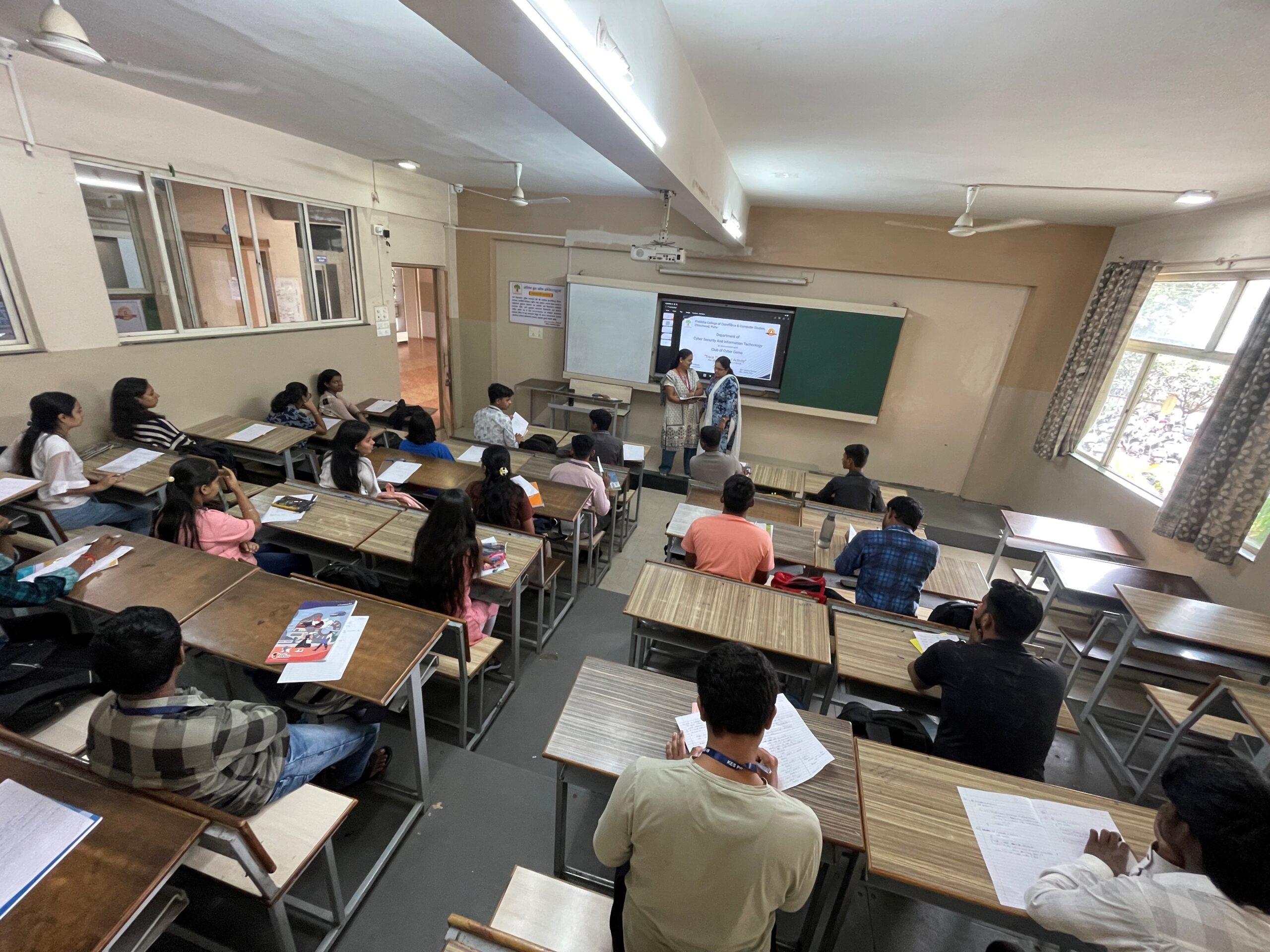
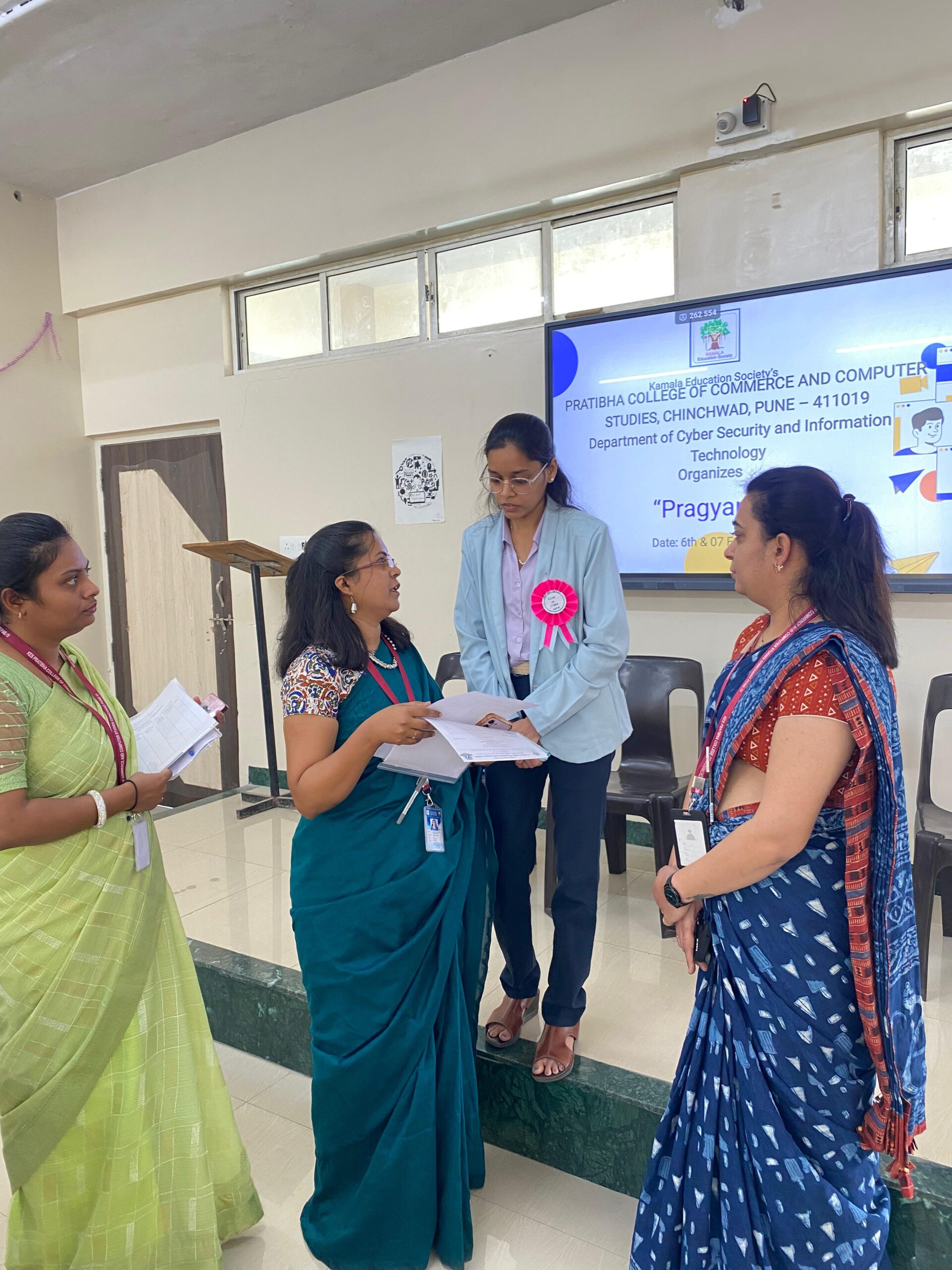
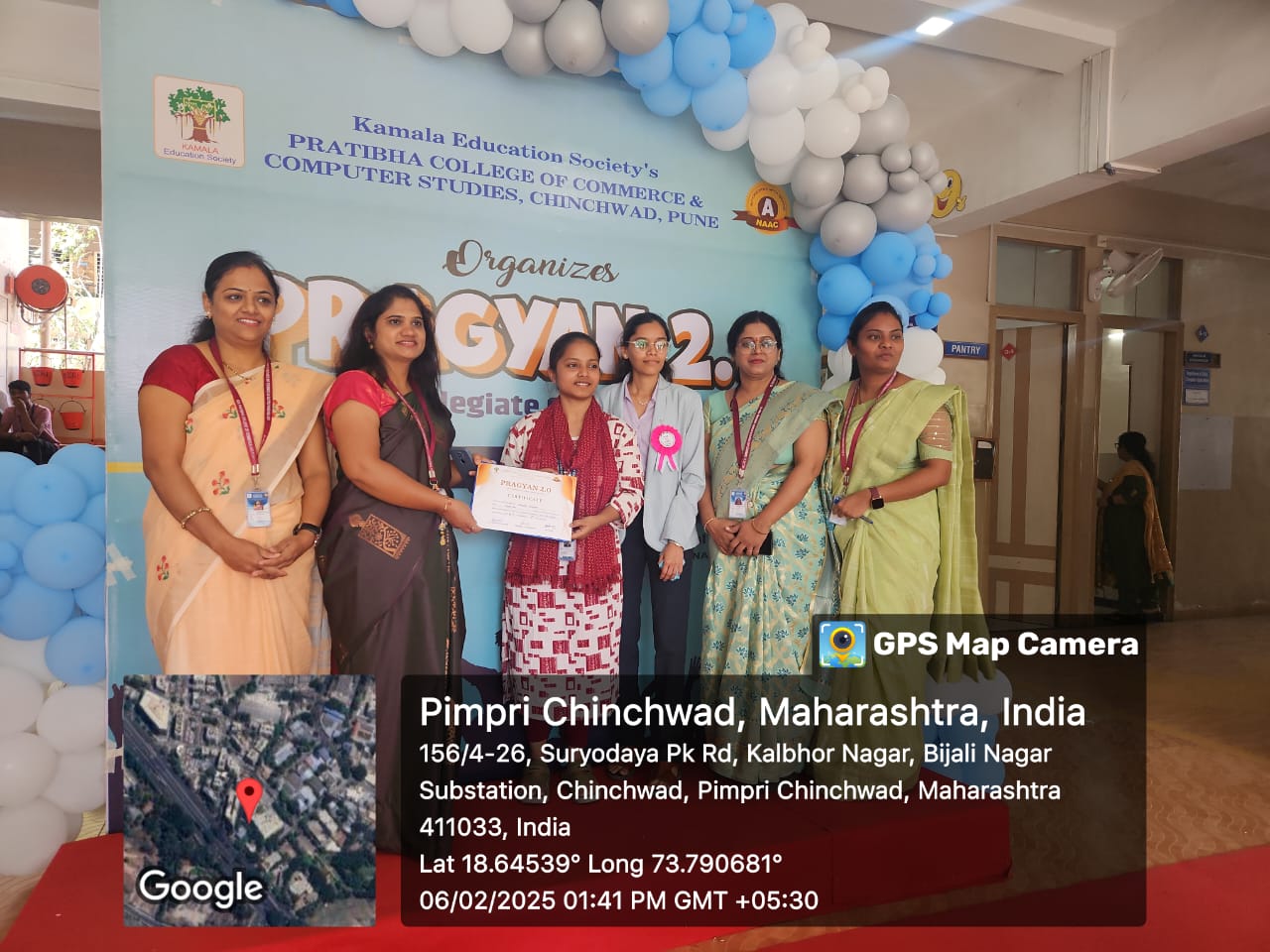
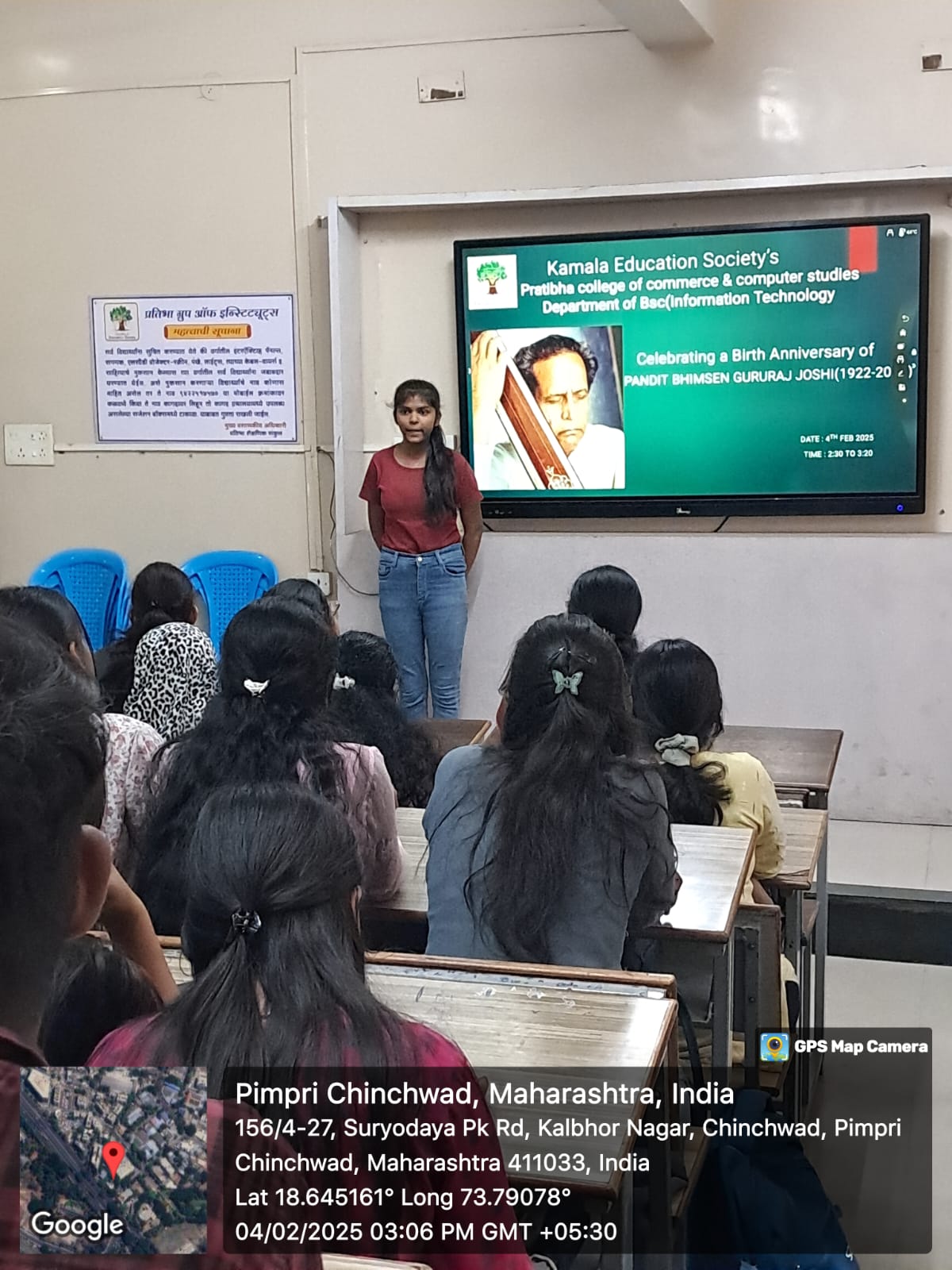
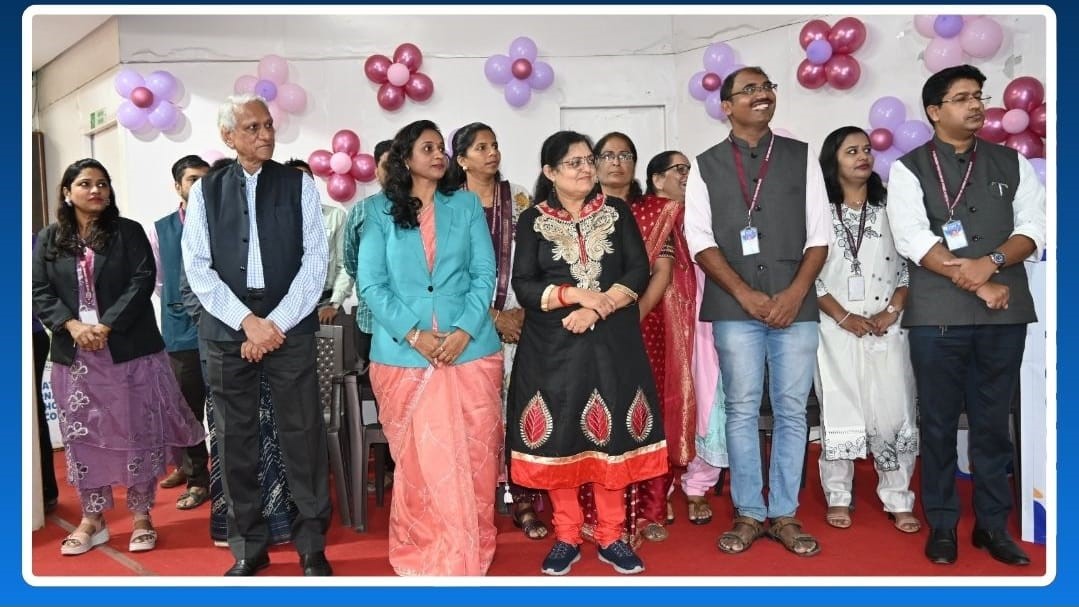
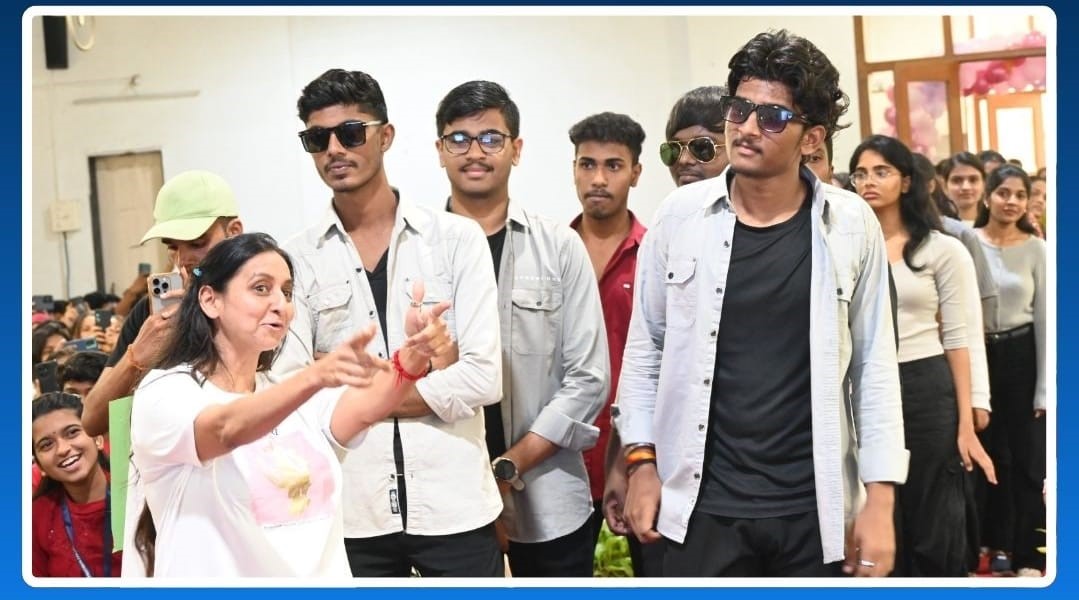
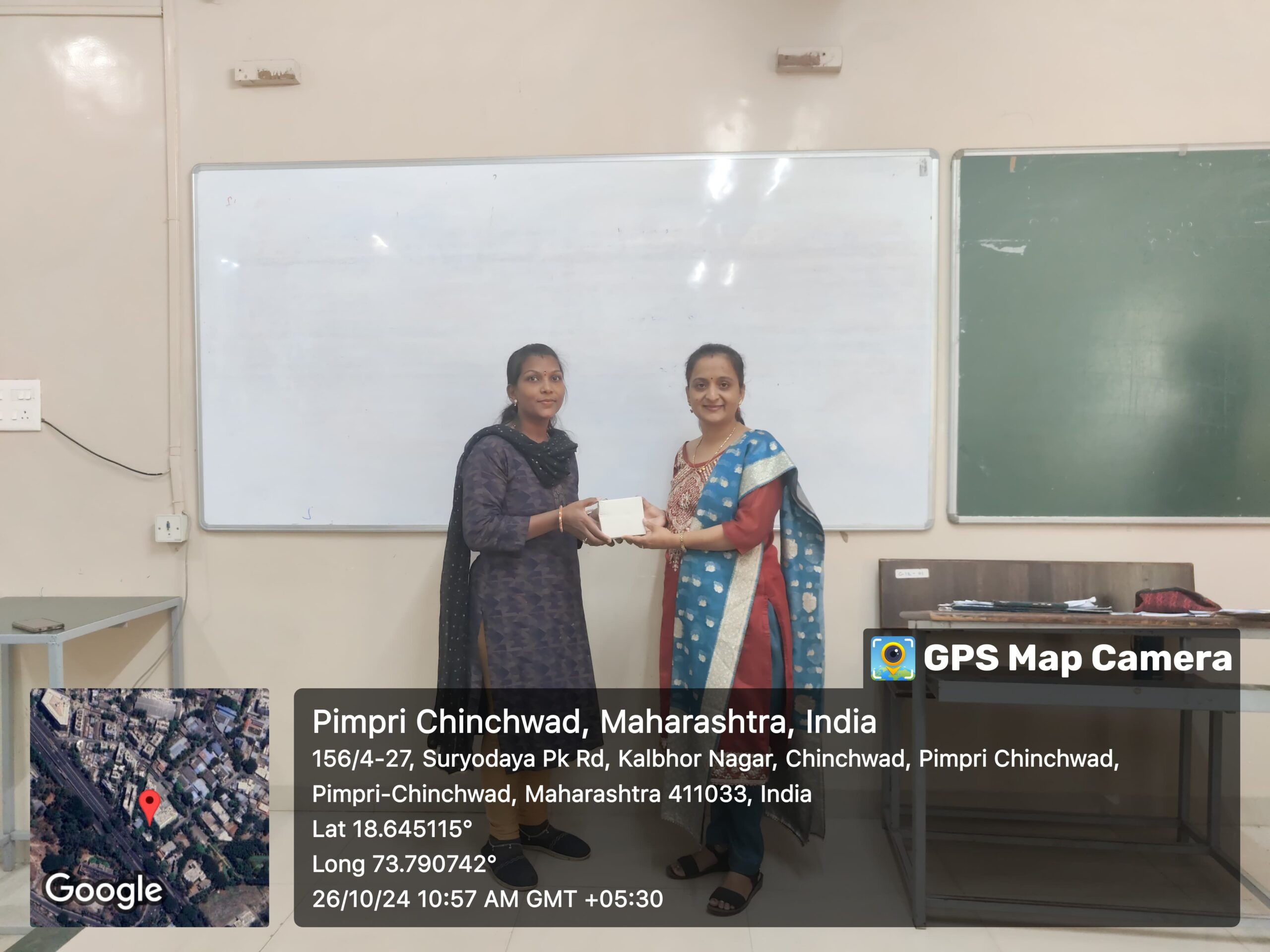
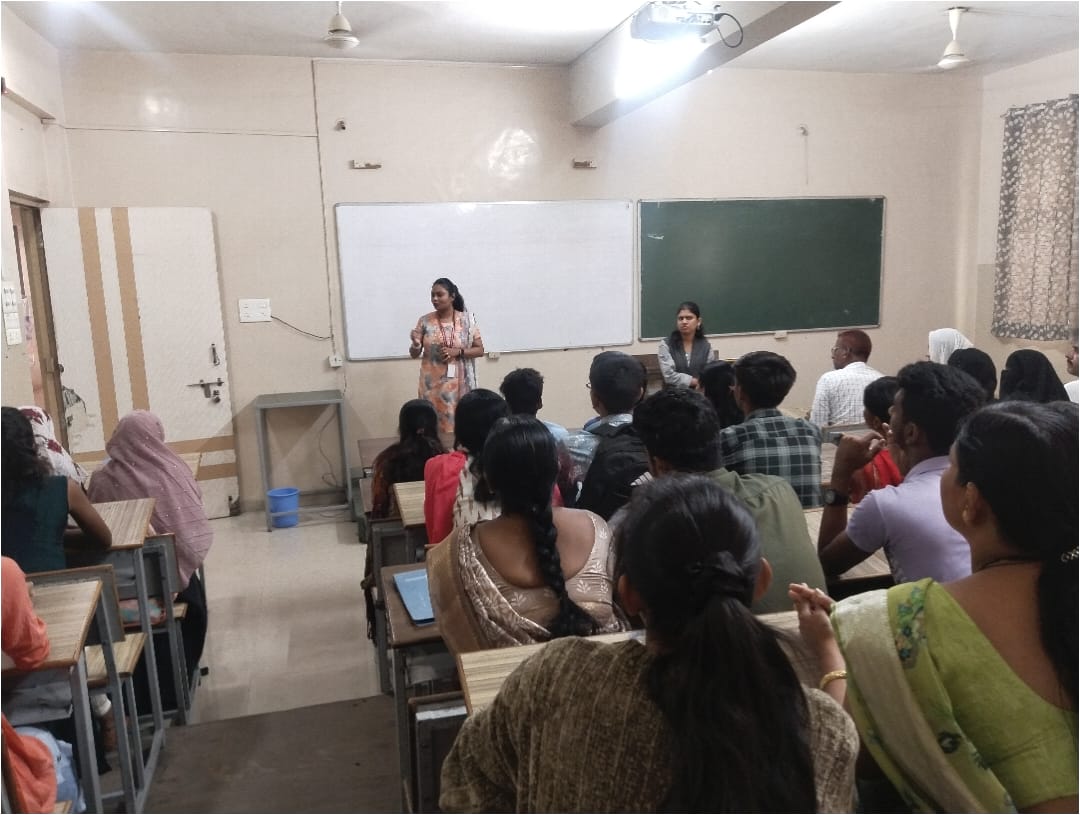
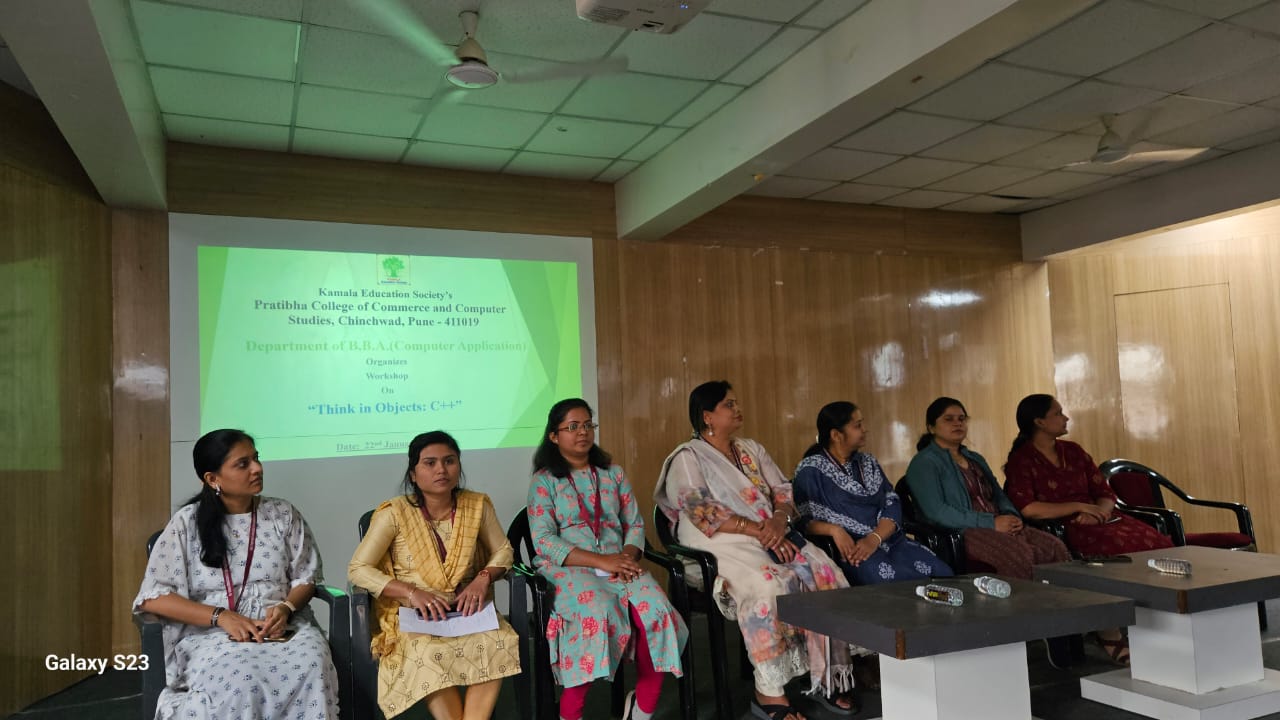
B.Sc. ( AI/ML )
Course Overview
Introduction about the Course
- The Bachelor of Science in Artificial Intelligence and Machine Learning (B.Sc. (AI & ML)) and B.Sc. (AI & ML) Honors and Research; program is designed to provide advanced education and training in the field of AI and ML.
- Driven by the combination of increased access to data, computational power, and improved algorithms, Artificial Intelligence (AI) technologies are entering the mainstream of technological innovation.
- These technologies include search, machine learning, and natural language processing, robotics and computer vision.
- This course will also introduce the field of Machine Learning, in particular focusing on the Core concepts of supervised, unsupervised learning and reinforcement learning.
- In supervised learning we will discuss algorithms which are trained on input data labeled with a desired output, for instance an image of a face and the name of the person whose face it is, and learn a function mapping from the input to the output.
- Unsupervised learning aims to discover latent structure in input data where no output labels are available.
- Students will learn the algorithms which underpin many popular Machine Learning techniques, as well as developing an understanding of the theoretical relationships between these algorithms.
- Objective:
The B.Sc. in Artificial Intelligence and Machine Learning (AI & ML) aims to provide students with a strong foundation in computer science, mathematics, and the theoretical and practical aspects of AI and ML.
The primary objectives of the program are:
- To build a strong foundational knowledge of core concepts in artificial intelligence, machine learning, data science, and computer programming.
- To develop analytical and problem-solving skills necessary to design, develop, and deploy AI/ML models and systems.
- To provide hands-on experience with modern tools, programming languages, and frameworks used in AI and ML through lab sessions, projects, and internships.
- To cultivate innovation and research aptitude in emerging areas of intelligent systems, deep learning, robotics, natural language processing, and more.
To prepare students for careers in industries such as technology, healthcare, finance, and manufacturing, where AI and ML are transforming operations and decision-making.
Year of Establishment :2025
Affiliated to Savitribai Phule Pune University
Intake: 60
Eligibility
Passed Standard XII (10+2) or equivalent examination with Physics and Mathematics as compulsory subjects along with one of the Chemistry/ Biotechnology/ Biology/ Technical Vocational subject/
Computer Science/ Information Technology/ Informatics Practices/ Agriculture/ Engineering
Graphics/ Business Studies from any recognized Board with a minimum of 50% marks or equivalent grade (45% marks or equivalent grade for Scheduled Caste/ Scheduled Tribes).
Duration of the Course
3 year as Per NEP 2020
Course Structure
B.Sc (AI & ML) Course Structure
| Year | Term I | Term II | Total |
|---|---|---|---|
| First | 22 | 22 | 44 |
| Second | 22 | 22 | 44 |
| Third | 22 | 22 | 44 |
| Fourth | 22 | 22 | 44 |
Level: 4.5 (First Year) — Semester I
| Course Type | Course Code | Course Name | Credits | |
|---|---|---|---|---|
| TH | PR | |||
| Subject-1 | AIML-101-T | Object Oriented concepts and Programming using C++ | 2 | — |
| AIML-102-P | Practical based on AIML-101-T | — | 2 | |
| Subject-2 | MTS-101-T | Discrete Structures for Computer Science | 2 | — |
| MTS-102-P | Practical based on MTS-101-T | — | 2 | |
| Subject-3 | STS-101-T | Notion of Statistical Data Analysis | 2 | — |
| STS-102-P | Practical based on STS-101-T | — | 2 | |
| GE /OE | OE-101-AIML-T | From University Basket* | 2 | — |
| SEC | SEC-101-AIML-T | Basic Probability theory and Discrete Distributions | 2 | — |
| IKS | AIML-101-IKS | Generic IKS | 2 | — |
| AEC | AEC-101-ENG | English | 2 | — |
| VEC | VEC-101-ENV | EVS-I | 2 | — |
| Total | 16 | 06 | ||
*Open Elective (OE) Subjects offered to students from other than science faculty are:
- OE-101-CS-T: Office Automation I
- OE-102-CS-T: Introduction to Computers and Basics of Internet
- OE-103-CS-T: Introduction to Google Apps I
- OE-104-CS-T: Introduction to Computers I
Level: 4.5 (First Year) — Semester II
| Course Type | Course Code | Course Name | Credits | |
|---|---|---|---|---|
| TH | PR | |||
| Subject-1 | AIML-151-T | Introduction to Python Programming | 2 | — |
| AIML-152-P | Practical based on AIML-151-T | — | 2 | |
| Subject-2 | MTS-151-T | Graph Theory | 2 | — |
| MTS-152-P | Practical based on MTS-151-T | — | 2 | |
| Subject-3 | STS-151-T | Continuous Probability Distributions and Testing of Hypothesis | 2 | — |
| STS-152-P | Practical based on STS-151-T | — | 2 | |
| GE /OE | OE-151-AIML-T | From University Basket* | 2 | — |
| SEC | SEC-151-AIML-T | Databases – I | 2 | — |
| AEC | AEC-151-ENG | English | 2 | — |
| VEC | VEC-151-ENV | EVS-II | 2 | — |
| CC | CC-151-PE/NSS/NCC | From University Basket | 2 | — |
| Total | 16 | 06 | ||
*Open Elective (OE) Subjects offered to students from other than science faculty are:
- OE-151-CS-T: Office Automation II
- OE-152-CS-T: Computer Fundamentals
- OE-153-CS-T: Introduction to Google Apps II
- OE-154-CS-T: Introduction to Computers II
Exit option: Award of UG Certificate in Major with 44 credits and an additional 4 credits core as per university guidelines OR Continue with Major and Minor
Continue option: Student will select one subject among the (subject 2 and subject 3) as minor and subject 1 will be major subject.
Continue option: Student will select one subject among the (subject 2 and subject 3) as minor and subject 1 will be major subject.
Level: 5.0 (Second Year) — Semester III
| Course Type | Course Code | Course Name | Credits | |
|---|---|---|---|---|
| TH | PR | |||
| Major Mandatory | AIML-201-MJ-T | Data Structures (using Python) | 2 | — |
| AIML-202-MJ-T | Software Engineering | 2 | — | |
| AIML-203MJ-P | Lab course on AIML201MJ + AIML202MJ | — | 2 | |
| VSC | AIML-221-VSC-P | Advanced Python Programming | — | 2 |
| IKS | AIML-201-IKS | Computing in Ancient India | 2 | — |
| FP/OJT/CEP | AIML-231-FP | Mini Project | — | 2 |
| Minor | AIML-241-MN-T | Linear Algebra | 2 | — |
| AIML-242-MN-P | Practical on AIML241MN | — | 2 | |
| GE/OE | OE-201-AIML-T | From University Basket* | 2 | — |
| AEC | AEC-201-ENG | From University Basket | 2 | — |
| CC | CC-201-PE/NSS/NCC | From University Basket | 2 | — |
| Total | 14 | 08 | ||
*Open Elective (OE) Subjects offered to students from other than science faculty are:
- OE-201-CS-T: E commerce I
- OE-202-CS-T: Web Design I
- OE-203-CS-T: Digital Marketing I
Level: 5.0 (Second Year) — Semester IV
| Course Type | Course Code | Course Name | Credits | |
|---|---|---|---|---|
| TH | PR | |||
| Major Mandatory | AIML-251-MJ-T | Microservices using Python | 2 | — |
| AIML-252-MJ-T | Artificial Intelligence – I | 2 | — | |
| AIML-253-MJ-P | Practical based on AIML251MJ + AIML252MJ | — | 2 | |
| VSC | AIML-221-VSC-P | Databases – II | — | 2 |
| FP/OJT/CEP | AIML-241-FP | Mini Project | — | 2 |
| Minor | AIML-241-MN-T | Logic | 2 | — |
| AIML-242-MN-P | Practical based on AIML241MN | — | 2 | |
| GE/OE | OE-251-AIML-T | From University Basket* | 2 | — |
| SEC | SEC-251-AIML-P | DAA – I (Brute Force, D&C, Greedy, Dynamic Programming) | — | 2 |
| AEC | AEC-251-SUB | From University Basket | 2 | — |
| CC | CC251PE/NSS/NCC | From University Basket | 2 | — |
| Total | 12 | 10 | ||
*Open Elective (OE) Subjects offered to students from other than science faculty are:
- OE-251-CS-T: E commerce II
- OE-252-CS-T: Web Design II
- OE-253-CS-T: Digital Marketing II
Exit option: Award of UG Diploma in Major and Minor with 88 credits and an additional 4 credits core as per university guidelines OR Continue with Major and Minor
Level: 5.5 (Third Year) — Semester V
| Course Type | Course Code | Course Name | Credits | |
|---|---|---|---|---|
| TH | PR | |||
| Major Mandatory | AIML-301-MJ-T | Artificial Intelligence – II | 2 | — |
| AIML-302-MJ-T | Machine Learning Techniques – I (Supervised) | 2 | — | |
| AIML-303-MJ-T | Data Preparation and Visualization | 2 | — | |
| AIML-304-MJ-T | DAA – II (Backtracking, B&B, Randomized, P&NP and approximation algos) | 2 | — | |
| AIML-305-MJ-P | Practical based on AIML301MJ | — | 2 | |
| AIML-306-MJ-P | Practical based on AIML302MJ & AIML303MJ | — | 2 | |
| Major Elective | AIML-310-MJ-T | Big Data Analytics | 2 | — |
| AIML-311-MJ-P | Practical based on AIML306MJ | — | 2 | |
| AIML-312-MJ-T | MEAN – I | 2 | — | |
| AIML-313-MJ-P | Practical based on AIML308MJ | — | 2 | |
| AIML-314-MJ | Mobile app development | 2 | — | |
| AIML-315-MJ-P | Practical based on AIML310MJ | — | 2 | |
| VSC | AIML-321-VSC-P | Linux Shell Scripting | — | 2 |
| FP/OJT/CEP | AIML-331-FP | Project | — | 2 |
| Minor | AIML-341-MN-T | Calculus for ML | 2 | — |
| Total | 12 | 10 | ||
Level: 5.5 (Third Year) — Semester VI
| Course Type | Course Code | Course Name | Credits | |
|---|---|---|---|---|
| TH | PR | |||
| Major Mandatory | AIML-351-MJ-T | Optimization Techniques | 2 | — |
| AIML-352-MJ-T | Machine Learning Techniques – II | 2 | — | |
| AIML-353-MJ-T | Data Mining Techniques | 2 | — | |
| AIML-354-MJ-T | Evolutionary Algorithms (FL, GA) | 2 | — | |
| AIML-355-MJ-P | Practical based on AIML351MJ | — | 2 | |
| AIML-356-MJ-P | Practical based on AIML352MJ & AIML353MJ | — | 2 | |
| Major Elective | AIML-360-MJ-T | Business Intelligence (Atoti) | 2 | — |
| AIML-361-MJ-P | Practical based on AIML357MJ | — | 2 | |
| AIML-362-MJ-T | MEAN II | 2 | — | |
| AIML-363-MJ-P | Practical based on AIML359MJ | — | 2 | |
| AIML-364-MJ-T | Game Theory | 2 | — | |
| AIML-365-MJ-P | Practical based on AIML361MJ | — | 2 | |
| VSC | AIML-371-VSC-P | Database Technologies (Unstructured Databases) | — | 2 |
| FP/OJT/CEP | AIML-381-OJT | On Job Training | — | 4 |
| Total | 10 | 12 | ||
Honors with Research Degree
Level: 6.0 (Fourth Year) — Semester VII
| Course Type | Course Code | Course Name | Credits | |
|---|---|---|---|---|
| TH | PR | |||
| Major Mandatory | AIML-401-MJ-T | Deep Learning – I | 2 | — |
| AIML-402-MJ-T | Natural Language Processing – I | 2 | — | |
| AIML-403-MJ-T | Software Design and Software Architectures | 2 | — | |
| AIML-404-MJ-P | Practical based on AIML401MJ | — | 2 | |
| AIML-405-MJ-P | Practical based on AIML402MJ | — | 2 | |
| Major Elective | AIML-410-MJ-T | Cloud computing | 2 | — |
| AIML-411-MJ-P | Practical based on AIML406MJ | — | 2 | |
| AIML-412-MJ-T | Theory of Computation (TCS) | 2 | — | |
| AIML-413-MJ-P | Practical based on AIML408MJ | — | 2 | |
| AIML-414-MJ-T | C# .NET Programming | 2 | — | |
| AIML-415-MJ-P | Lab Course on CS410MJ | — | 2 | |
| FP/OJT/CEP/RP | AIML-431-RP | Research Project | — | 4 |
| RM | AIML-441-RM | Research Methodology | 4 | — |
| Total | 12 | 10 | ||
OR Honors Degree
Level: 6.0 (Fourth Year) — Semester VII
| Course Type | Course Code | Course Name | Credits | |
|---|---|---|---|---|
| TH | PR | |||
| Major Mandatory | AIML-401-MJ-T | Deep Learning | 4 | — |
| AIML-402-MJ-T | Natural Language Processing – I | 2 | — | |
| AIML-403-MJ-T | Software Design and Software Architectures | 4 | — | |
| AIML-404-MJ-P | Practical based on AIML401MJ | — | 2 | |
| AIML-405-MJ-P | Practical based on AIML402MJ | — | 2 | |
| Major Elective | AIML-410-MJ-T | Cloud computing | 2 | — |
| AIML-411-MJ-P | Practical based on AIML406MJ | — | 2 | |
| AIML-412-MJ-T | Theory of Computation (TCS) | 2 | — | |
| AIML-413-MJ-P | Practical based on AIML408MJ | — | 2 | |
| AIML-414-MJ-T | C# .NET Programming | 2 | — | |
| AIML-415-MJ-P | Lab Course on CS410MJ | — | 2 | |
| RM | AIML-441-RM | Research Methodology | 4 | — |
| Total | 12 | 10 | ||
Honors with Research Degree
Level: 6.0 (Fourth Year) — Semester VIII
| Course Type | Course Code | Course Name | Credits | |
|---|---|---|---|---|
| TH | PR | |||
| Major Mandatory | AIML-451-MJ-T | Deep Learning – II | 2 | — |
| AIML-452-MJ-T | Natural Language Processing – II | 2 | — | |
| AIML-453-MJ-T | Cryptography | 4 | — | |
| AIML-454-MJ-P | Practical based on AIML451MJ | — | 2 | |
| AIML-455-MJ-P | Practical based on AIML452MJ | — | 2 | |
| Major Elective | AIML-460-MJ-T | DevOps | 2 | — |
| AIML-461-MJ-P | Practical Based on AIML456MJ | — | 2 | |
| AIML-462-MJ-T | Data Analytics | 2 | — | |
| AIML-463-MJ-P | Practical Based on AIML458MJ | — | 2 | |
| AIML-464-MJ-T | Computer Vision (Img Processing) | 2 | — | |
| AIML-465-MJ-P | Practical Based on AIML460MJ | — | 2 | |
| FP/OJT/CEP | AIML-481-RP | Research Project | — | 8 |
| Total | 08 | 14 | ||
OR Honors Degree
Level: 6.0 (Fourth Year) — Semester VIII
| Course Type | Course Code | Course Name | Credits | |
|---|---|---|---|---|
| TH | PR | |||
| Major Mandatory | AIML-451-MJ-T | Deep Learning – II | 4 | — |
| AIML-452-MJ-T | Natural Language Processing – II | 2 | — | |
| AIML-453-MJ-T | Cryptography | 4 | — | |
| AIML-454-MJ-P | Practical based on AIML451MJ | — | 2 | |
| AIML-455-MJ-P | Practical based on AIML452MJ | — | 2 | |
| Major Elective | AIML-456-MJ-T | DevOps | 2 | — |
| AIML-457-MJ-P | Practical Based on AIML456MJ | — | 2 | |
| AIML-458-MJ-T | Theory of Computation (TCS) | 2 | — | |
| AIML-459-MJ-P | Practical based on AIML408MJ | — | 2 | |
| AIML-460-MJ-T | C# .NET Programming | 2 | — | |
| AIML-461-MJ-P | Lab Course on CS410MJ | — | 2 | |
| OJT | AIML-481-OJT | On Job Training | 4 | — |
| Total | 12 | 10 | ||
Career Prospects
- CAREER OPPORTUNITIES
- AI/ML Engineer
- Data Analyst
- Junior Data Scientist
- Python Developer
- Automation Engineer
- Software Developer
2. HIGHER STUDIES
- M.Sc. AIML / AI / Data Science
- M.Sc. Computer Science
- MCA
- MBA (Analytics/IT)
Program Outcomes
B.Sc (AI & ML) — Program Outcomes
| Program Outcomes | |
| PO1 | Apply basic principles of AI in solutions that require problem solving, inference, perception, knowledge representation, and learning. |
| PO2 | Demonstrate awareness and a fundamental understanding of various applications of AI techniques in intelligent agents, expert systems, artificial neural networks and other machine learning models. |
| PO3 | Identify problems where artificial intelligence techniques are applicable and demonstrate ability to share in discussions of AI, its current scope and limitations, and societal implications. |
| PO4 | Demonstrate proficiency in applying scientific method to models of machine learning. |
| PO5 | Develop an appreciation for what is involved in learning models from data by understanding a wide variety of learning algorithms and by understanding of the strengths and weaknesses of many popular machine learning approaches. |
| PO6 | To apply the algorithms to a real-world problem, optimize the models learned and report on the expected accuracy that can be achieved by applying the ML models. |
| PO7 | Consider the pros and cons when choosing ML / AI methods for different applications. |
| PO8 | Appreciate the underlying mathematical relationships within and across Machine Learning and AI. |
| PO9 | Conduct investigations of complex problems by using research-based knowledge and research methods including design of experiments, analysis and interpretation of data, and synthesis of the information to provide valid conclusions. |
| PO10 | Function effectively as an individual, and as a member or leader in diverse teams, and in multidisciplinary settings. |
| PO11 | Communicate effectively on complex engineering activities with the engineering community and with society at large, such as, being able to comprehend and write effective reports and design documentation, make effective presentations, and give clear instructions. |
Course Outcomes
Semester I
| SEMESTER I | |||||
| Semester No | Course Code | Type of Course | Course Title | Credits | Hours/Week |
| I | AIML-101-T | Major | Object Oriented Concepts and Programming using C++ | 2 | 2 |
| Course Objective: | |||||
| 1 | The Syntax And Semantics Of The C++ Programming Language. | ||||
| 2 | Designing C++ Classes For Code Reuse. | ||||
| 3 | Implementation Of Copy Constructors And Class Member Functions. | ||||
| 4 | Understand The Concept Of Data Abstraction And Encapsulation. | ||||
| 5 | Apply Function And Operator Overloading In C++. | ||||
| 6 | How Containment And Inheritance Promote Code Reuse In C++. | ||||
| 7 | Teach How Inheritance And Virtual Functions Implement Dynamic Binding With Polymorphism. | ||||
| 8 | Designing And Implementation Of Generic Classes With C++ Templates. | ||||
| 9 | Use Of Exception Handling In C++ Programs Of Set, Set Operation, Principle Inclusion Exclusion. | ||||
| Course Outcomes: | |||||
| CO-1 | Describe And Explore Programming Basics And Oops Concepts. | ||||
| CO-2 | Understand Tokens, Expressions, And Control Structures, Use Functions And Pointers In A C++ Program, Manage Input And Output Data. | ||||
| CO-3 | Explain Arrays And Strings And Create Programs Using Them. | ||||
| CO-4 | Implementing Oops Concepts In C++: Defining Classes, Describe And Use Constructors And Destructors, Static And Friend Classes, Virtual And Abstract Classes. | ||||
| CO-5 | Implementing Inheritance And Polymorphism Using C++. | ||||
| CO-6 | Demonstrate How To Control Errors With Exception Handling. | ||||
| SEMESTER I | |||||
| Semester No | Course Code | Type of Course | Course Title | Credits | Hours/Week |
| I | STS-101 | Major | Notion of Statistical Data Analysis | 2 | 2 |
| Course Objective: | |||||
| 1 | Methods In Descriptive Statistics. | ||||
| 2 | The Use Of Concepts In Descriptive Statistics As Applied To Real Data. | ||||
| 3 | Methods For Finding Correlation Between Variables. | ||||
| 4 | Fitting An Equation For Prediction And Apply The Same For Real Data. | ||||
| Course Outcomes: | |||||
| CO-1 | Summarize Data Visually And Numerically. | ||||
| CO-2 | Analyse A Problem, Identify Methods In Descriptive Statistics And Define The Computing Requirements Appropriate To Its Solution. | ||||
| CO-3 | Identify Correlation Between Variables, And Fit An Equation For Prediction And Apply The Same For Real Data And Assess Data-Based Models. | ||||
| CO-4 | Execute Statistical Analysis With Any Software Tool. | ||||
| SEMESTER I | |||||
| Semester No | Course Code | Type of Course | Course Title | Credits | Hours/Week |
| I | SEC-101-AIML-T | SEC | Basic Probability theory and discrete distributions (Skill Enhancement course) | 2 | 2 |
| Course Objective: | |||||
| 1 | To Teach Basic Probability Theory. | ||||
| 2 | To Teach Basics Of Conditional Probability, Bayes Theorem And Its Applications. | ||||
| 3 | To Teach Concepts Of Discrete Random Variables. | ||||
| 4 | To Teach The Concept, Types And Use Of Discrete Probability Distributions. | ||||
| Course Outcomes: | |||||
| CO-1 | Analyse A Problem, Identify The Methods In Basic Probability Theory. | ||||
| CO-2 | Use Of Conditional Probability. | ||||
| CO-3 | Apply Bayes Theorem In Real-Life Situations. | ||||
| CO-4 | Identify The Various Distribution For Given Data Sets. | ||||
| SEMESTER I | |||||
| Semester No | Course Code | Type of Course | Course Title | Credits | Hours/Week |
| I | MTS-101 | Major | Discrete Mathematics for Computer Science | 2 | 2 |
| Course Objective: | |||||
| 1 | The basic concepts of set, set operation, principle inclusion Exclusion. | ||||
| 2 | The concepts of Relation and their properties. | ||||
| 3 | Function and its type. | ||||
| 4 | Elementary combinatorics. | ||||
| 5 | The concepts of recurrences relation, modelling of recurrence relation, its solution. | ||||
| Course Outcomes: | |||||
| CO-1 | Students will be able to, Use logical notation to define the reason mathematically about the fundamental data types and structures such as numbers, sets used in computer algorithm and systems. | ||||
| CO-2 | Identify and apply properties of combinatorial structures and properties know the basic techniques in combinatorics and counting. | ||||
| CO-3 | Analyze sets with operations and identify their structure, reason and conclude properties about the structure based on the observations. | ||||
| CO-4 | Gain the conceptual background needed to be able to identify recurrence relation, model recurrence relation and obtain a solution to it. | ||||
Semester II
| SEMESTER II | |||||
| Semester No | Course Code | Type of Course | Course Title | Credits | Hours/Week |
| II | AIML-151-T | Major | Introduction to Python Programming | 2 | 2 |
| Course Objective: | |||||
| 1 | The Python Environment, Data Types, Operators Used In Python. | ||||
| 2 | The Use Of Control Structures And Numerous Native Data Types With Their Methods. | ||||
| 3 | The Design And Implement User Defined Functions, Modules, And Packages And Exception Handling Methods. | ||||
| 4 | Creating And Handling Files In Python. | ||||
| 5 | Object Oriented Programming (Oop) Concepts. | ||||
| 6 | The Semantics Of Python Programming Language And Illustrate The Process Of Structuring The Data Using Lists, Dictionaries, Tuples, Strings And Sets. | ||||
| Course Outcomes: | |||||
| CO-1 | Interpret The Basic Principles Of Python Programming Language. | ||||
| CO-2 | Articulate The Object-Oriented Programming Concepts Such As Encapsulation, Inheritance And Polymorphism, Code Reuse As Used In Python. | ||||
| CO-3 | Solve, Test And Debug Basic Problems Using Python Script. | ||||
| CO-4 | Manipulate Python Programs By Using The Python Data Structures Like Lists, Dictionaries, Tuples, Strings And Sets. | ||||
| CO-5 | Design Object‐Oriented Programs With Python Classes. | ||||
| CO-6 | Identify The Commonly Used Operation Involved In Files For I/O Processing. | ||||
| CO-7 | Familiarize The Handling Of I/O Exceptions And Usage Of Directories, Identify The Commonly Used Operations Involving File Systems And Regular Expressions. | ||||
| SEMESTER II | |||||
| Semester No | Course Code | Type of Course | Course Title | Credits | Hours/Week |
| II | MTS-151-T | Major | Graph Theory | 2 | 2 |
| Course Objective: | |||||
| 1 | Basic concepts of Graphs viz. types, applications, definitions. | ||||
| 2 | Tree as a special type of graph. | ||||
| 3 | Tree traversals and use of trees. | ||||
| 4 | Graph coloring and its use. | ||||
| Course Outcomes: | |||||
| CO-1 | Achieve Command Of The Fundamental Definitions And Concepts Of Graph Theory. | ||||
| CO-2 | Understand And Apply The Core Theorems And Algorithms, Generating Examples As Needed. | ||||
| CO-3 | Achieve An Understanding Of Graph Coloring. | ||||
| CO-4 | Understand The Concept Of Dominating Sets. | ||||
| CO-5 | Familiarize With The Major Viewpoints And Goals Of Graph Theory: Classification And Optimization. | ||||
| SEMESTER II | |||||
| Semester No | Course Code | Type of Course | Course Title | Credits | Hours/Week |
| II | STS-151-T | Major | Continuous probability Distributions and Testing of Hypothesis | 2 | 2 |
| Course Objective: | |||||
| 1 | To teach continuous probability distributions and its applications. | ||||
| 2 | To teach various concepts of testing of hypothesis. | ||||
| 3 | To teach large and small sample tests. | ||||
| 4 | To teach various nonparametric tests. | ||||
| Course Outcomes: | |||||
| CO-1 | Acquire Knowledge On Various Continues Probability Distributions And Its Applications In Real Life Situations. | ||||
| CO-2 | Understand The Concept Of Testing Of Hypothesis. | ||||
| CO-3 | Understand The Concept Of Test Of Significance And Apply The Same To Test Population Parameters By Using Large And Small Sample Tests. | ||||
| CO-4 | Identify Problems And Apply Appropriate Non Parametric Test And Interpret The Conclusion. | ||||
| SEMESTER II | |||||
| Semester No | Course Code | Type of Course | Course Title | Credits | Hours/Week |
| II | SEC-151-AIML-T | SEC | Databases – I (Skill Enhancement Course) | 2 | 2 |
| Course Objective: | |||||
| 1 | Teach Data Processing Using Computers To Students. | ||||
| 2 | Introduce Principles Of Databases. | ||||
| 3 | Teach The Conversion Of ER Model Into Relational Tables. | ||||
| 4 | Teach The Basic Concepts Of Data Model, Entity Relationship Model, Database Design. | ||||
| 5 | The Course Is Designed To Teach Creation, Manipulation, And Querying Of Data In Databases. | ||||
| 6 | Teach Different Normalization Methods To Model A Database. | ||||
| 7 | Introduce Postgresql For Manipulating The Data. | ||||
| Course Outcomes: | |||||
| CO-1 | Describe The Fundamental Elements Of Relational Database Management Systems. | ||||
| CO-2 | Analyse Database Requirements And Identify The Entities Involved In The System Along With Their Relationship To One Another. | ||||
| CO-3 | Apply The Basic Concepts Of Relational Data Model, Entity-Relationship Model, Relational Database Design And SQL. | ||||
| CO-4 | Convert The ER-Model To Relational Tables, Design A Relational Database And Develop SQL Queries On Data Using Postgresql. | ||||
| CO-5 | Apply Database Design Techniques And Tools To Create A Database Schema And Database Instance For A Database Related Software Application. | ||||
Semester III
| SEMESTER III | |||||
| Semester No | Course Code | Type of Course | Course Title | Credits | Hours/Week |
| III | AIML-201-MJ-T | Major Mandatory | Data Structures | 2 | 2 |
| Course Objective: | |||||
| 1 | Basic techniques of algorithm analysis using mathematical techniques. | ||||
| 2 | Estimate algorithm complexity using step and frequency counts. | ||||
| 3 | Iterative and recursive methods for several sub-quadratic sorting algorithms including quicksort, merge sort and heapsort. | ||||
| 4 | Basic linear data structures such as stacks and queues and operations on them. | ||||
| 5 | Implementation of linked data structures such as linked lists and binary trees. | ||||
| 6 | Advanced data structures such as balanced search trees, hash tables and priority queues. | ||||
| 7 | Graph algorithms such as shortest path and minimum spanning tree. | ||||
| Course Outcomes: | |||||
| CO-1 | Understand the concept of algorithms and their complexity using mathematical notation, dynamic memory management, abstract data types. | ||||
| CO-2 | Evaluate algorithms and data structures in terms of time and memory complexity of basic operations. | ||||
| CO-3 | Express the basic types for data structure, implementation and application. | ||||
| CO-4 | Judge the strength and weakness of different data structures. | ||||
| CO-5 | Deduce an appropriate data structure in context of solution of given problem like sorting, searching, insertion and deletion of data. | ||||
| CO-6 | Develop programming skills which require to solve given problem involving graphs, trees and heaps. | ||||
| CO-7 | Determine bugs in program and compare and contrast the operation of common data structures. | ||||
| SEMESTER III | |||||
| Semester No | Course Code | Type of Course | Course Title | Credits | Hours/Week |
| III | AIML-202-MJ-T | Major Mandatory | Software Design and Project Management | 2 | 2 |
| Course Objective: | |||||
| 1 | Design & implementation of complex software solutions using state of the software engineering techniques. | ||||
| 2 | Identify a software system that needs to be developed. | ||||
| 3 | Document methods in form of Software Requirements Specification (SRS) for the identified system. | ||||
| 4 | The requirements and design representation methods using of UML (Unified Modeling Languages) for a given case study – the design use cases and develop the use case model. | ||||
| 5 | The method of identifying the conceptual classes and develop a Domain Model to derive class diagram from that, using the identified scenarios, find the interaction between objects and represent them, construction of relevant State Chart and Activity Diagrams for a system/case under study. | ||||
| 6 | Implementation of the system as per the detailed design. | ||||
| 7 | Inculcate and excel working capabilities as part of software team and develop significant projects under a tight deadline time / schedule and present the project in a professional manner. | ||||
| 8 | Familiarize the students with the basic features of agile development. | ||||
| Course Outcomes: | |||||
| CO-1 | Define software and relate to the importance of software models. | ||||
| CO-2 | Elicit, analyze and specify software requirements through a productive working relationship with various stakeholders of the project. | ||||
| CO-3 | Perform formal analysis on specifications, use SRS to document software requirements. | ||||
| CO-4 | Apply agile methodology to manage a software project. | ||||
| CO-5 | Use UML diagrams for analysis and design. | ||||
| CO-6 | Build class diagrams for a software project/case. | ||||
| CO-7 | Explain fundamentals of Agile methodology and principles. | ||||
| CO-8 | Identify software project characteristics that would not be suitable for an agile process and apply Scrum principles. | ||||
| CO-9 | Apply practices of XP and Incremental design. | ||||
| SEMESTER III | |||||
| Semester No | Course Code | Type of Course | Course Title | Credits | Hours/Week |
| III | AIML-201-IKS | IKS | Indian Knowledge System in Computing | 2 | 2 |
| Course Objective: | |||||
| 1 | To introduce Vedic mathematical techniques and their relevance to modern computational methods. | ||||
| 2 | To understand Nyaya’s logical framework and its application in reasoning and AI. | ||||
| 3 | To explore the algorithmic structure of Panini’s grammar and Chandasastra’s binary system in computational linguistics and mathematics. | ||||
| 4 | To explore real-world applications of IKS concepts in computational sciences. | ||||
| Course Outcomes: | |||||
| CO-1 | Understand the computational foundations of Indian Knowledge Systems by applying Vedic mathematical techniques in problem-solving. | ||||
| CO-2 | Use Nyaya’s logical reasoning in AI and decision-making. | ||||
| CO-3 | Explore the connection between Panini’s grammar and NLP technologies. | ||||
| CO-4 | Recognize the applications of IKS in modern computing fields. | ||||
| SEMESTER III | |||||
| Semester No | Course Code | Type of Course | Course Title | Credits | Hours/Week |
| III | AIML-221-VSC-P | VSC | Advanced Python Programming | 2 | 2 |
| Course Objective: | |||||
| 1 | To introduce functional programming techniques using decorators. | ||||
| 2 | To introduce functional programming techniques using decorators. | ||||
| 3 | To provide hands-on experience in data handling and manipulation using NumPy and pandas. | ||||
| 4 | To enable database interaction using Python. | ||||
| 5 | To introduce Django framework for web application development. | ||||
| Course Outcomes: | |||||
| CO-1 | Implement reusable and modular code using decorators. | ||||
| CO-2 | Apply NumPy and Pandas for data analysis. | ||||
| CO-3 | Perform database operations using Python connectors. | ||||
| CO-4 | Develop basic web applications using Django. | ||||
| CO-5 | Integrate Python skills into complete data-to-web pipelines. | ||||
| SEMESTER III | |||||
| Semester No | Course Code | Type of Course | Course Title | Credits | Hours/Week |
| III | AIML-241-MN-T | Minor | Linear Algebra | 2 | 2 |
| Course Objective: | |||||
| 1 | Fundamental concepts such as defining and manipulating vectors in different dimensions, vector spaces and their properties. | ||||
| 2 | Matrix operations and analyzing linear transformations and their representation using matrices. | ||||
| 3 | Solving systems of linear equations, techniques of Gaussian elimination to solve systems of equations and finding the existence and uniqueness of solutions to linear systems. | ||||
| 4 | Use of Eigenvalue and Eigenvector analysis, calculating eigenvalues and eigenvectors of matrices. | ||||
| 5 | Understanding the geometric meaning of eigenvalues and eigenvectors in relation to linear transformations and its applications. | ||||
| Course Outcomes: | |||||
| CO-1 | Visualize the space of vectors and the interrelation of vectors with matrices. | ||||
| CO-2 | Apply vectors, inner products, and linear transformations to real world situations. | ||||
| CO-3 | Apply linear transformation and its corresponding matrix. | ||||
| CO-4 | Solve linear systems of equations using a variety of techniques and to select the best technique for a given system. | ||||
| CO-5 | Develop an algebraic understanding of eigenvalues and eigenvectors and eigenspaces. | ||||
Semester IV
| SEMESTER IV | |||||
| Semester No | Course Code | Type of Course | Course Title | Credits | Hours/Week |
| IV | AIML-251-MJ-T | Major Mandatory | Microservices using Python | 2 | 2 |
| Course Objective: | |||||
| 1 | To introduce students to the concept of Microservices architecture, including its benefits, challenges, and differences compared to monolithic architectures. | ||||
| 2 | To provide hands-on knowledge of Django REST Framework (DRF) for building RESTful APIs, focusing on both basic and advanced API development techniques. | ||||
| 3 | To enable students to design and implement REST-based microservices using Django, including service decomposition, database design, and inter-service communication. | ||||
| 4 | To familiarize students with practical tools and techniques for logging, error handling, and basic security in microservices-based applications. | ||||
| 5 | To expose students to real-world case studies and best practices for designing reliable, maintainable, and secure microservices applications. | ||||
| Course Outcomes: | |||||
| CO-1 | Explain the concepts, characteristics, advantages, and challenges of Microservices architecture, and differentiate it from Monolithic architecture. | ||||
| CO-2 | Set up and configure Django REST Framework (DRF) within Django projects and develop basic REST APIs using serializers, views, and URL routing. | ||||
| CO-3 | Build fully functional REST APIs using both Function-based Views (FBVs) and Class-based Views (CBVs), handle CRUD operations, and test them using Postman. | ||||
| CO-4 | Design microservices-based systems, including service decomposition, database separation, and REST-based communication between services. | ||||
| CO-5 | Apply basic logging, error handling techniques, and security practices (such as authentication and authorization) in microservices applications using Django. | ||||
| CO-6 | Demonstrate the ability to use structured logging, error handling mechanisms, and API gateways to enhance the resilience and observability of microservices applications. | ||||
| SEMESTER IV | |||||
| Semester No | Course Code | Type of Course | Course Title | Credits | Hours/Week |
| IV | AIML-252-MJ-T | Major Mandatory | Artificial Intelligence – I | 2 | 2 |
| Course Objective: | |||||
| 1 | Fundamental concepts of Artificial Intelligence (AI). | ||||
| 2 | Architecture and functioning of intelligent agents. | ||||
| 3 | Identification of problem-solving components. | ||||
| 4 | Different informed and uninformed search algorithms. | ||||
| 5 | Search method using classical approach of a problem-space. | ||||
| 6 | Concept of constraint satisfaction problem and various search methods. | ||||
| Course Outcomes: | |||||
| CO-1 | Explain the concepts, characteristics, advantages, and challenges of Microservices architecture, and differentiate it from Monolithic architecture. | ||||
| CO-2 | Set up and configure Django REST Framework (DRF) within Django projects and develop basic REST APIs using serializers, views, and URL routing. | ||||
| CO-3 | Build fully functional REST APIs using both Function-based Views (FBVs) and Class-based Views (CBVs), handle CRUD operations, and test them using Postman. | ||||
| CO-4 | Design microservices-based systems, including service decomposition, database separation, and REST-based communication between services. | ||||
| CO-5 | Apply basic logging, error handling techniques, and security practices (such as authentication and authorization) in microservices applications using Django. | ||||
| CO-6 | Demonstrate the ability to use structured logging, error handling mechanisms, and API gateways to enhance the resilience and observability of microservices applications. | ||||
| SEMESTER IV | |||||
| Semester No | Course Code | Type of Course | Course Title | Credits | Hours/Week |
| IV | AIML-281-FP | FP/OJT/CEP | Mini Project I | 2 | 2 |
| Course Objective: | |||||
| 1 | Equip students with practical skills and knowledge to successfully design software projects. | ||||
| 2 | Methods to inculcate and excel working capabilities as part of software team and develop significant. | ||||
| 3 | Methods of knowledge acquisition, skill development, and a deeper understanding of real-world applications. | ||||
| 4 | Managing projects using a suitable agile methodology. | ||||
| 5 | Presentation of projects in a professional manner. | ||||
| 6 | Approaches to put to the test the knowledge students have acquired in classrooms, and to acquire new knowledge and skills directly related to the issues and realities they encounter in real life like software projects. | ||||
| Course Outcomes: | |||||
| CO-1 | Use software engineering techniques to analyse user requirements and documentation methods of a software project. | ||||
| CO-2 | Develop engineering solutions to complex problems by designing and developing appropriate UI, business logic, reports etc. | ||||
| CO-3 | Use agile techniques to effectively manage process involved in software development. | ||||
| CO-4 | Implement effective methods to communicate with stakeholders and work collaboratively in teams. | ||||
| CO-5 | Develop cross-disciplinary skills of implementation of the case. | ||||
| SEMESTER IV | |||||
| Semester No | Course Code | Type of Course | Course Title | Credits | Hours/Week |
| IV | AIML-291-MN-T | Minor | Mathematical Logic | 2 | 2 |
| Course Objective: | |||||
| 1 | To formalize reasoning in symbolic languages with precisely defined meanings and precisely defined rules of inference. | ||||
| 2 | Translate fragments of natural language into the symbolic languages. | ||||
| 3 | Give mathematically precise meanings (semantics) to the terms and sentences of the symbolic languages. | ||||
| 4 | Construct formally correct arguments in the logics, mirroring valid arguments in mathematical, philosophical, or ordinary reasoning. | ||||
| 5 | Understand the idea—and some specific examples—of algorithms for deciding the validity or consistency of logical formulas, as well as the idea of undecidability. | ||||
| 6 | Use the precise syntax and semantics of predicate logic to disambiguate sentences of natural language. | ||||
| 7 | A concise base of Mathematical Logic. | ||||
| Course Outcomes: | |||||
| CO-1 | Translate between narrative arguments and propositional logic. | ||||
| CO-2 | Prove logical equivalency, contingency, tautology, and contradictions. | ||||
| CO-3 | Explain and apply basic notions of symbolic logic. | ||||
| CO-4 | Analyze natural language arguments by means of symbolic propositional logic. | ||||
| CO-5 | Analyse propositions and arguments in propositional logic by natural deduction method. | ||||
| CO-6 | Apply inference rules to solve problems. | ||||
| CO-7 | Prove or disprove assertions using predicate logic. | ||||
| SEMESTER IV | |||||
| Semester No | Course Code | Type of Course | Course Title | Credits | Hours/Week |
| IV | SEC-251-AIML-T | SEC | Design and Analysis of Algorithms – I | 2 | 2 |
| Course Objective: | |||||
| 1 | Notion of pseudo conventions used in algorithms and the use of the RAM model. | ||||
| 2 | Concept of complexity of an algorithm using mathematical notations. | ||||
| 3 | Guidelines for asymptotic analysis and properties of asymptotic notations. | ||||
| 4 | Use of recurrence relations and methods to solve recurrence relations. | ||||
| 5 | Use of Brute force / Exhaustive search strategy and its pros and cons. | ||||
| 6 | Application of divide and conquer and its variations in various problems. | ||||
| Course Outcomes: | |||||
| CO-1 | Compute the complexity of an algorithm using mathematical concepts. | ||||
| CO-2 | Interpret recurrence relations and find the complexity for the same using different methods. | ||||
| CO-3 | Understand the classes of algorithm and their strategies. | ||||
| CO-4 | Derive a solution to a computational problem using the brute force approach and explore the pros and cons of the applied strategy. | ||||
| CO-5 | Apply various forms of the divide and conquer strategy to problems and derive the complexity. | ||||
Semester IV — Open Electives
| SEMESTER IV | |||||
| Semester No | Course Code | Type of Course | Course Title | Credits | Hours/Week |
| IV | OE-251-AIML-T | OE | E-Commerce-II | 2 | 2 |
| Course Objective: | |||||
| 1 | To understand the technical and security aspects of E-Commerce. | ||||
| 2 | To explore data-driven decision-making and analytics in E-Commerce. | ||||
| 3 | To study supply chain and logistics management in E-Commerce. | ||||
| 4 | To gain insights into global E-Commerce trends and challenges. | ||||
| 5 | To learn about the integration of AI, Blockchain, and Cloud Computing in E-Commerce. | ||||
| Course Outcomes: | |||||
| CO-1 | Implement secure E-Commerce transactions and protect user data. | ||||
| CO-2 | Apply analytics tools to track and enhance E-Commerce performance. | ||||
| CO-3 | Manage E-Commerce logistics and understand global trends. | ||||
| CO-4 | Use emerging technologies such as AI, Blockchain, and Cloud for E-Commerce applications. | ||||
| SEMESTER IV | |||||
| Semester No | Course Code | Type of Course | Course Title | Credits | Hours/Week |
| IV | OE-252-AIML-T | OE | Web Design-II | 2 | 2 |
| Course Objective: | |||||
| 1 | To learn to define the structure and content of XML documents using XML. | ||||
| 2 | To know and learning how to use the DOM to access and manipulate XML data within applications. | ||||
| 3 | To prepare the learners with the fundamentals of CSS programming and scripting languages. | ||||
| 4 | Learners should know how to create and interact with web pages effectively, develop static and dynamic websites, and understand how they work together. | ||||
| Course Outcomes: | |||||
| CO-1 | Implement secure E-Commerce transactions and protect user data. | ||||
| CO-2 | Apply analytics tools to track and enhance E-Commerce performance. | ||||
| CO-3 | Manage E-Commerce logistics and understand global trends. | ||||
| CO-4 | Use emerging technologies such as AI, Blockchain, and Cloud for E-Commerce applications. | ||||
| SEMESTER IV | |||||
| Semester No | Course Code | Type of Course | Course Title | Credits | Hours/Week |
| IV | OE-253-AIML-T | OE | Digital Marketing-II | 2 | 2 |
| Course Objective: | |||||
| 1 | To understand Digital Marketing as the most powerful marketing tool. | ||||
| 2 | To Learn to create digital marketing artworks. | ||||
| 3 | To use social media sites like Facebook, Instagram, Twitter, LinkedIn, and others to raise sales, engage customers, and establish a brand for a product. | ||||
| Course Outcomes: | |||||
| CO-1 | Understand and learn marketing strategies and results effectively to stakeholders. | ||||
| CO-2 | Assess and enhance digital marketing campaigns’ return on investment. | ||||
| CO-3 | Analyze and implement practical experience with industry-standard digital marketing tools. | ||||
| CO-4 | Analyze and use variety of social media channels to create and interact with communities, raise awareness of a brand. | ||||
| SEMESTER IV | |||||
| Semester No | Course Code | Type of Course | Course Title | Credits | Hours/Week |
| IV | OE-254-AIML-T | OE | AI for Everyone – II | 2 | 2 |
| Course Objective: | |||||
| 1 | Understand the basics of artificial intelligence and its subfields. | ||||
| 2 | Explore real-world applications of AI across different industries. | ||||
| 3 | Gain insights into the ethical, social, and economic implications of AI. | ||||
| 4 | Develop an appreciation for the potential of AI to drive innovation and transformation. | ||||
| Course Outcomes: | |||||
| CO-1 | Understand different types of AI Models. | ||||
| CO-2 | Learn and use content optimization using AI. | ||||
| CO-3 | Compare and implement Animations and motions in AI. | ||||
| CO-4 | Understand and analyse AI tools. | ||||
Faculty/Staff
Mrs. Dipali L. Mahajan
Program Coordinator
M.Sc. (C.S.) SET, Pursuing P.hd
Dr. Aparna A. Joshi
Assistant Professor
M.Sc. (C.S.), B.Ed., SET
Mrs.Prajakta A.Yeole
Assistant Professor
MCA(Computer Science)
Mrs. Mayura Sawant
Assistant Professor
M.Sc. (C.S.)
Mrs. Jyoti Kawale
Assistant Professor
M.Sc. (C.S.)
Syllabus
Departmental Activities
| SN | Name of Activity |
|---|---|
| 2024-2025 | |
| 1 | Cyber Crypt Pragyaan 2.0 |
| 2 | Public Eye Pragyaan 2.0 |
| 3 | Art Fraction Pragyaan 2.0 |
| 4 | Runtime Terror Pragyaan 2.0 |
| 5 | Model Making Vigyaan 2.0 |
| 6 | Builders of Modern Society Day celebration- Pandit Bhimasen Joshi |
| 7 | Aluminia Talk: Mr. Sagar Sonar (Advance Networking) |
| 8 | Bridge Course |
| 9 | Workshop on Think in objects: C++ way |
| 10 | PTA Meeting |
| 2025-2026 | |
| 1 | Bridge Course |
| 2 | Induction Program |
| 3 | Live Seminar on “Web Development with MERN Stack with live API integration with Javascript” |
| 4 | Workshop on Unlocking opportunities: “Internship Awareness Drive” |
| 5 | FY BSC Cyber Security and FY BSc CDS Activity and FY IT “Trace the Output” on C programming language Under Club of Cyber Gems |
| 6 | FY IT Screening Test-2025-26 |
Gallery
BSc(Cyber Security)
Course Overview
Introduction about the Course
- In today’s interconnected world, the proliferation of digital technologies has brought about unprecedented convenience and efficiency. However, this digital transformation has also led to an increase in cyber threats, making cyber security an essential field. Cyber-attacks can cause significant harm to individuals, businesses, and national security. As a result, there is a growing demand for skilled cyber security professionals who can protect sensitive information and critical infrastructure. The B.Sc. in Cyber Security program is designed to address this demand by providing students with a comprehensive education in the field. Aligned with the National Education Policy (NEP) 2020, this program emphasizes a holistic, flexible, and multidisciplinary approach to education, preparing students for the complexities of the cyber security landscape. The Program is of Three Years duration with six semesters. It is a Full-Time Degree Program. The program will be based on the Choice-based credit system comprising 140 credit points.
Year of Establishment: 2025-2026
Affiliated to Savitribai Phule Pune University, Pune
Intake: 80
Eligibility
- Higher secondary school certificate (10+2) Science or its equivalent examination with English.
OR Three-year diploma course from the board of technical education conducted by Government of Maharashtra or its equivalent.
ORHigher secondary school certificate (10+2) Examination with English and a vocational subject of +2 level (MCVC)
Duration of the Course
- Three years full time course. Students can pursue the fourth year for a B.Sc. (Hons) degree based on the NEP pattern.
Course Structure
Course Structure — BSc Cyber Security
| Year | Term I | Term II | Total |
| First | Total Credit | Total Credit | Term I + Term II |
| Second | — | — | — |
| Third | — | — | — |
| Fourth | — | — | — |
Semester I
| Semester | Course Type | Course Code | Course Name | TH | PR |
|---|---|---|---|---|---|
| I | Subject 1 | CYS101MJ | Fundamentals of Linux Administration | 2 | — |
| I | Subject 2 | CYS102MJ | Foundations of C programming | 2 | — |
| I | Subject 3 | CYS103MJ | Information Technology | 2 | — |
| I | Subject 1 Practical | CYS104MJP | Practical based on CYS101MJ | — | 2 |
| I | Subject 2 Practical | CYS105MJP | Practical based on CYS102MJ | — | 2 |
| I | Subject 3 Practical | CYS106MJP | Practical based on CYS103MJ | — | 2 |
| I | IKS | CYS101IKS | Computing in ancient India | 2 | — |
| I | GE/OE | OE101CYS | Office Automation / Introduction to Google Tools | 2 | — |
| I | SEC | SEC101CYS | Basics of Digital Communication (Practical) | — | 2 |
| I | AEC | AEC101MAR/HIN/ENG | MIL-I (Hindi) / MIL-I (Marathi) / MIL-I (English) | 2 | — |
| I | VEC | VEC101ENV | EVS-I | 2 | — |
| TOTAL | 14 | 8 | |||
Semester II
| Semester | Course Type | Course Code | Course Name | TH | PR |
|---|---|---|---|---|---|
| II | Subject 1 | CYS151MJ | Cyber Security Fundamentals | 2 | — |
| II | Subject 2 | CYS152MJ | Computer Networks | 2 | — |
| II | Subject 3 | CYS153MJ | Python Programming | 2 | — |
| II | Subject 1 Practical | CYS154MJP | Practical based on CYS151MJ | — | 2 |
| II | Subject 2 Practical | CYS155MJP | Practical based on CYS152MJ | — | 2 |
| II | Subject 3 Practical | CYS156MJP | Practical based on CYS153MJ | — | 2 |
| II | GE/OE | OE152CYSP | Office Automation / Introduction to Google Tools | — | 2 |
| II | SEC | SEC151CYS | Statistical Methods-I | — | 2 |
| II | AEC | AEC151MAR/HIN/ENG | MIL-I (Hindi) / MIL-I (Marathi) / MIL-I (English) | 2 | — |
| II | VEC | VEC151ENV | EVS-II | 2 | — |
| II | CC | CC151PE/NSS/NCC | University Basket | 2 | — |
| TOTAL | 12 | 10 | |||
Credit Summary
Semester I Total: 22 Credits (14 Theory + 8 Practical)
Semester II Total: 22 Credits (12 Theory + 10 Practical)
First Year Total: 44 Credits
Course Type Abbreviations
- MJ: Major
- MJP: Major Practical
- IKS: Indian Knowledge System
- GE/OE: General Elective / Open Elective
- SEC: Skill Enhancement Course
- AEC: Ability Enhancement Course (MIL – Modern Indian Language)
- VEC: Value Education Course
- CC: Co-Curricular (PE – Physical Education, NSS, NCC)
Career Prospects
- Security Operations Center (SOC) Analyst
- Penetration Tester / Ethical Hacker
- Network Security Engineer
- Incident Response Specialist
- Digital Forensics Analyst
- Cyber Security Consultant
- Cloud Security Engineer
- Malware Analyst
- Application Security Engineer
Program Outcomes
Program Outcomes — BSc Cyber Security
After successful completion of B.Sc.(CS) Programme students will be able to:
| PO No. | Program Outcome |
|---|---|
| PO 1 | Become proficient in Linux administration, as it is essential in today’s IT environment. |
| PO 2 | Address and take action to meet the cyber security needs of the modern IT world. |
| PO 3 | Cultivate creative abilities, critical thinking, analytical skills, and research capabilities to tackle real-world problems using cyber security expertise. |
| PO 4 | Understand the Concepts of cyber security, Networking and vulnerability testing and statistical methods. |
| PO 5 | Applying the Concepts of Digital Communication and IOT. |
| PO 6 | Identify and evaluate software vulnerabilities and security solutions to mitigate the risk of exploitation. |
| PO 7 | Acquire essential programming languages such as C and Python. |
| PO 8 | Integrate ethics and cyber laws to understand the rules and regulations of the current IT environment. |
| PO 9 | To developing regulations and tactics for cyber security. |
| PO 10 | Cloud security protects applications, data, and cloud-based infrastructure. |
| PO 11 | Comprehend security concepts such as cyber threat intelligence, block chain in cyber security, communication systems security, malware analysis, vulnerability assessment and penetration testing (VAPT), intrusion detection and prevention systems (IDS & IPS), and cybercrime reporting. |
Course Outcomes — BSc Cyber Security
Semester I
CYS-101MJ: Fundamentals of Linux Administration
Subject 1 | 2 Credits | 2 Hours/Week
Course Objectives:
- To make the students understand the Linux OS.
- To acquaint them with the rich set of utilities that are essential for system management, file manipulation.
- To help they manage a network interface to managing connections and troubleshooting network issues.
Course Outcomes:
| CO No. | Course Outcome |
|---|---|
| CO-1 | Illustrate Adeptness using the Linux command line and constructing shell scripts. |
| CO-2 | Execute maintenance tasks, including user and system management. |
| CO-3 | Install and configure system services. |
| CO-4 | Deploy and Configure Linux Operating Systems Network-wide. |
CYS-102MJ: Foundations of C programming
Subject 2 | 2 Credits | 2 Hours/Week
Course Objectives:
- To develop the foundation and terminology of programming in general.
- To understand structured programming approach.
- To implements the algorithms and Programing method in problem-solving techniques C language.
- To develop programming skills to a level such that problems of reasonable complexity can be tackled successfully.
Course Outcomes:
| CO No. | Course Outcome |
|---|---|
| CO-1 | Understand flow of Control sequence as well as logical outputs of the program. |
| CO-2 | Implements computational strategies for developing applications. |
| CO-3 | Design applications from Simple to Complex using C programming language. |
CYS-103MJ: Information Technology
Subject 3 | 2 Credits | 2 Hours/Week
Course Objectives:
- To Introduce Students to the Basic Concepts and terminology of computer science.
- To Learn Basic Commands of Operating system and application software.
- To Understand the Basics of data Transmission and Network Security.
Course Outcomes:
| CO No. | Course Outcome |
|---|---|
| CO-1 | Learn the fundamental concepts of computer science. |
| CO-2 | Operating Systems Proficiency. |
| CO-3 | Differentiate between hardware and software, including understanding operating systems and applications. |
CYS-104MJP: Practical Based on CYS101MJ
Subject 1 Practical | 2 Credits | 4 Hours/Week
Course Objectives:
- Study the core principles of Linux OS.
- Investigate a problem and design an algorithm.
Course Outcomes:
| CO No. | Course Outcome |
|---|---|
| CO-1 | Deploy and manage a Linux server. |
| CO-2 | Create and administer policies. |
| CO-3 | Configure file services. |
CYS-105MJP: Practical Based on CYS102MJ
Subject 2 Practical | 2 Credits | 4 Hours/Week
Course Objectives:
- To Learn and apply the basic syntax and structure, different data types, control structures, etc. in C programs.
- To Implement user-defined functions and use standard library functions.
- To develop programming skills to a level such that problems of reasonable complexity can be tackled successfully.
Course Outcomes:
| CO No. | Course Outcome |
|---|---|
| CO-1 | Build Proficiency in Basic C Syntax and Structure. |
| CO-2 | Develop effective Use of Data Types and Variables. |
| CO-3 | Develop ability to work with arrays (single and multi-dimensional) and strings, performing operations. |
| CO-4 | Demonstrate the ability to perform file input and output operations, reading from and writing to files using appropriate functions. |
CYS-106MJP: Practical Based on CYS103MJ
Subject 3 Practical | 2 Credits | 4 Hours/Week
Course Objectives:
- To Understand Basics of Information Technology.
- To Understand the Basics of Operating systems & Operating Systems Proficiency.
Course Outcomes:
| CO No. | Course Outcome |
|---|---|
| CO-1 | Learn the fundamental concepts of Information Technology. |
| CO-2 | Develop the logic of problem-solving. |
SEC 101 CYS: Basics of Digital Communication System (Practical)
SEC | 2 Credits | 4 Hours/Week
Course Objectives:
- To make the student familiar with electronic components.
- To learn number systems and their representation.
- To understand basic logic gates, Boolean algebra and K-maps.
- To learn about various wireless & cellular communication networks.
- To impart knowledge regarding concepts of AM, FM modulation and detection.
Course Outcomes:
| CO No. | Course Outcome |
|---|---|
| CO-1 | On completion of the course, students will be able to interpret and summarize the specifications of different passive, active and integrated components required to build electronic circuits. |
| CO-2 | To solve problems on Number systems and their representation. |
| CO-3 | To familiarize with logic gates and applications in combinational and sequential circuits. |
| CO-4 | To identify the importance of different blocks in electronic communication systems. |
| CO-5 | Understand the working principles of mobile networks and Contrast different types of telecommunication networks. |
Semester II
CYS151MJ: Cyber Security Fundamentals
Subject 1 | 2 Credits | 2 Hours/Week
Course Objectives:
- The purpose of this course is to arm students with the technical know-how and abilities required to safeguard and defend computer networks and systems.
- In order to grow, pupils must be able to recognize contemporary computer security flaws.
Course Outcomes:
| CO No. | Course Outcome |
|---|---|
| CO-1 | Students will be able to measure performance and troubleshoot Cyber Security Systems: – Analyze and evaluate an organization’s needs for cyber security. |
| CO-2 | To outline the latest activities pertaining to cyberspace. |
CYS152MJ: Computer Networks
Subject 2 | 2 Credits | 2 Hours/Week
Course Objectives:
- To understand basic terms of computer networks and the internet environment.
- Become familiar with layered communication architectures (OSI and TCP/IP).
Course Outcomes:
| CO No. | Course Outcome |
|---|---|
| CO-1 | To familiarize the student with the basic taxonomy and terminology of computer networks. |
| CO-2 | To prepare the student for advanced courses in computer networking. |
| CO-3 | To understand data transmission across the network. |
| CO-4 | Gather knowledge of various types of networks and topologies. |
| CO-5 | Get an overview of the Internet, its applications and various browsers available to access the Internet. |
| CO-6 | Connect to the Internet using various modes of connections/devices available. |
CYS153MJ: Python Programming
Subject 3 | 2 Credits | 2 Hours/Week
Course Objectives:
- To define the structure and components of a Python program. Also, Gain a solid understanding of Python syntax and semantics.
- To acquaint with data types, input/output statements, decision making, looping and functions in Python.
- Learn and implement various data structures such as lists, tuples, dictionaries, and sets in Python programs.
- Develop proficiency in writing reusable and modular code using functions in Python.
- Gain a solid understanding of OOP principles and concepts. Understand the importance of modules and packages in Python.
Course Outcomes:
| CO No. | Course Outcome |
|---|---|
| CO-1 | Demonstrate Python programming skills for problems that require the writing of well documented programs including use of the logical constructs of the language. |
| CO-2 | Apply the problem-solving skills using different data structures in Python. Develop an application using functions, classes and built-in modules of Python. |
| CO-3 | Apply the problem-solving skills using different data structures in Python. |
| CO-4 | Develop an application using functions, classes and built-in modules of Python. |
CYS154MJP: Practical Based on CYS151MJ
Subject 1 Practical | 2 Credits | 4 Hours/Week
Course Objectives:
- To prepare students with the technical knowledge and skills needed to protect and defend computer systems and networks.
- To develop students can identify the current Computer security and breaches.
Course Outcomes:
| CO No. | Course Outcome |
|---|---|
| CO-1 | Understand and explore the basics of Computer Networks and Various. |
| CO-2 | Administrate a network and schedule flow of information. |
| CO-3 | Examine the network security issues in Mobile and ad hoc networks. |
| CO-4 | Demonstrate the TCP/IP and OSI fashions with merits and demerits. |
| CO-5 | Evaluate the shortest path by using Routing algorithms. |
CYS155MJP: Practical Based on CYS152MJ
Subject 2 Practical | 2 Credits | 4 Hours/Week
Course Objectives:
- To prepare students with basic networking concept.
- To understand process of data communication using protocols and standards.
- To learn various topologies and applications of network.
- To understand the concept of network layer, transport layer and application layer.
Course Outcomes:
| CO No. | Course Outcome |
|---|---|
| CO-1 | Understand the concept of OSI Reference Model and TCP/IP. |
| CO-2 | To know the components of the Network Security. |
| CO-3 | Understand top down approach of data communication from one user to another user. |
| CO-4 | To detect the IP address and route. |
SEC151CYS: Statistical Methods-I
SEC | 2 Credits | 4 Hours/Week
Course Objectives:
- To tabulate and make frequency distribution of the given data.
- To use various graphical and diagrammatic techniques and interpret.
- To compute various measures of central tendency, dispersion.
- To compute the relation between variables and prediction values using correlation and regression.
Course Outcomes:
| CO No. | Course Outcome |
|---|---|
| CO-1 | Handling raw data and understand the nature of the data. |
| CO-2 | How to represent data by graphical methods. |
| CO-3 | Set up and Install the system services. |
| CO-4 | Predict the values in correlation & regression and interpret to make decisions. |
Faculty/Staff
Mrs. Dipali L. Mahajan
Program Coordinator
M.Sc. (C.S.) SET, Pursuing P.hd
Dr. Aparna A. Joshi
Assistant Professor
M.Sc. (C.S.), B.Ed., SET
Mrs.Prajakta A.Yeole
Assistant Professor
MCA(Computer Science)
Mrs. Shivani Tikone
Assistant Professor
M.Sc. (C.S.)
Mrs.Pallavi Patil
Assistant Professor
M.Sc. (C.S.)
Mrs.Nisha Patil
Assistant Professor
M.Sc.(C.S.)
Mrs. Mayura
Sawant
Assistant Professor
M.Sc.(C.S.)
Mrs. Vaishnavi Moharir
Assistant Professor
M.C.A
Mrs. Jyoti Kawale
Assistant Professor
M.Sc. (C.S.)
Syllabus
Departmental Activities
Activities — Academic Year 2025-2026
| S.N. | Name of Activity | Year |
|---|---|---|
| 1 | Bridge Course | 2025-2026 |
| 2 | Induction Program | 2025-2026 |
| 3 | FY BSc Cyber Security and FY BSc CDS Activity “Trace the Output” on C programming language Under Club of Cyber Gems | 2025-2026 |
Gallery
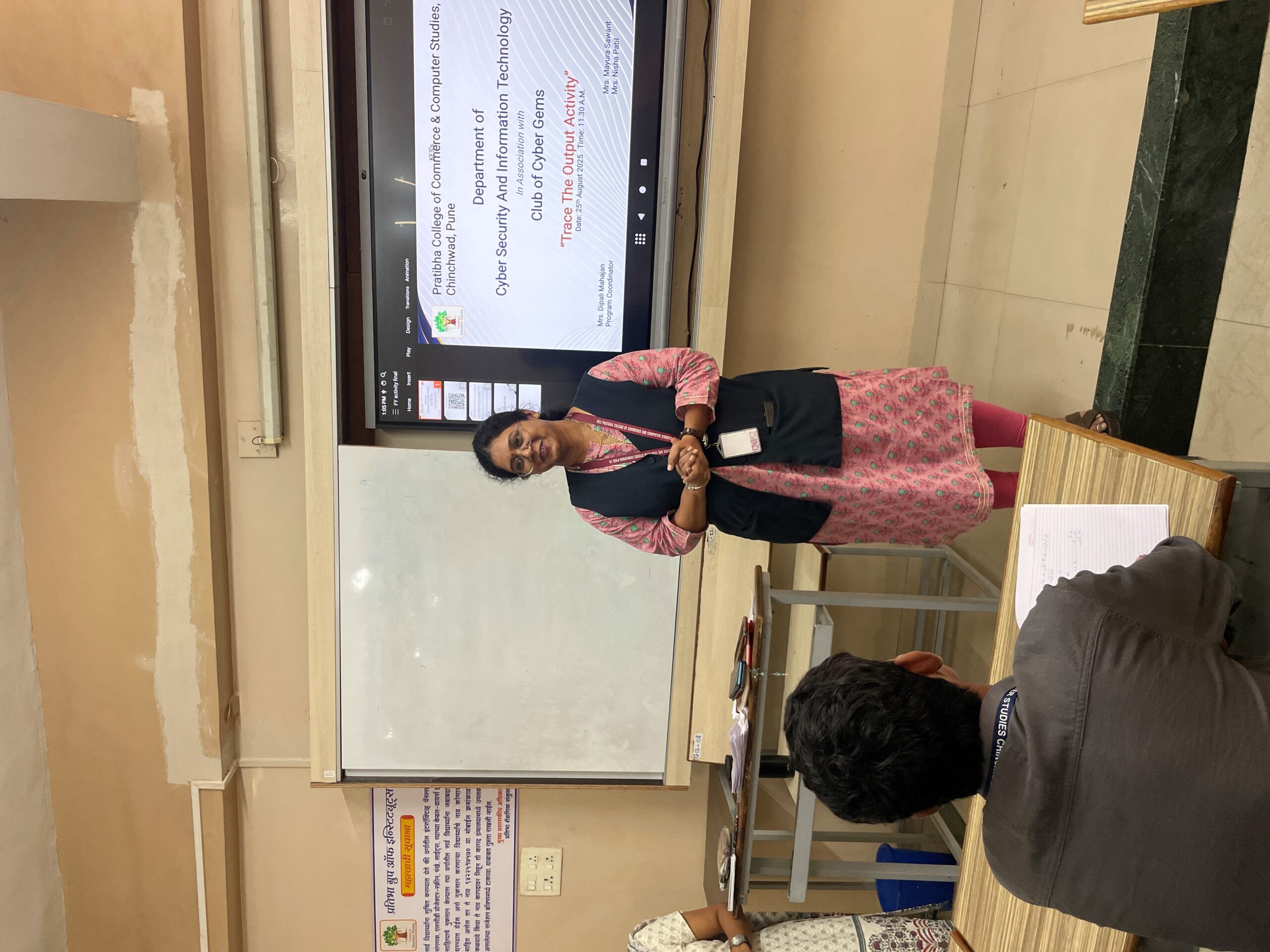
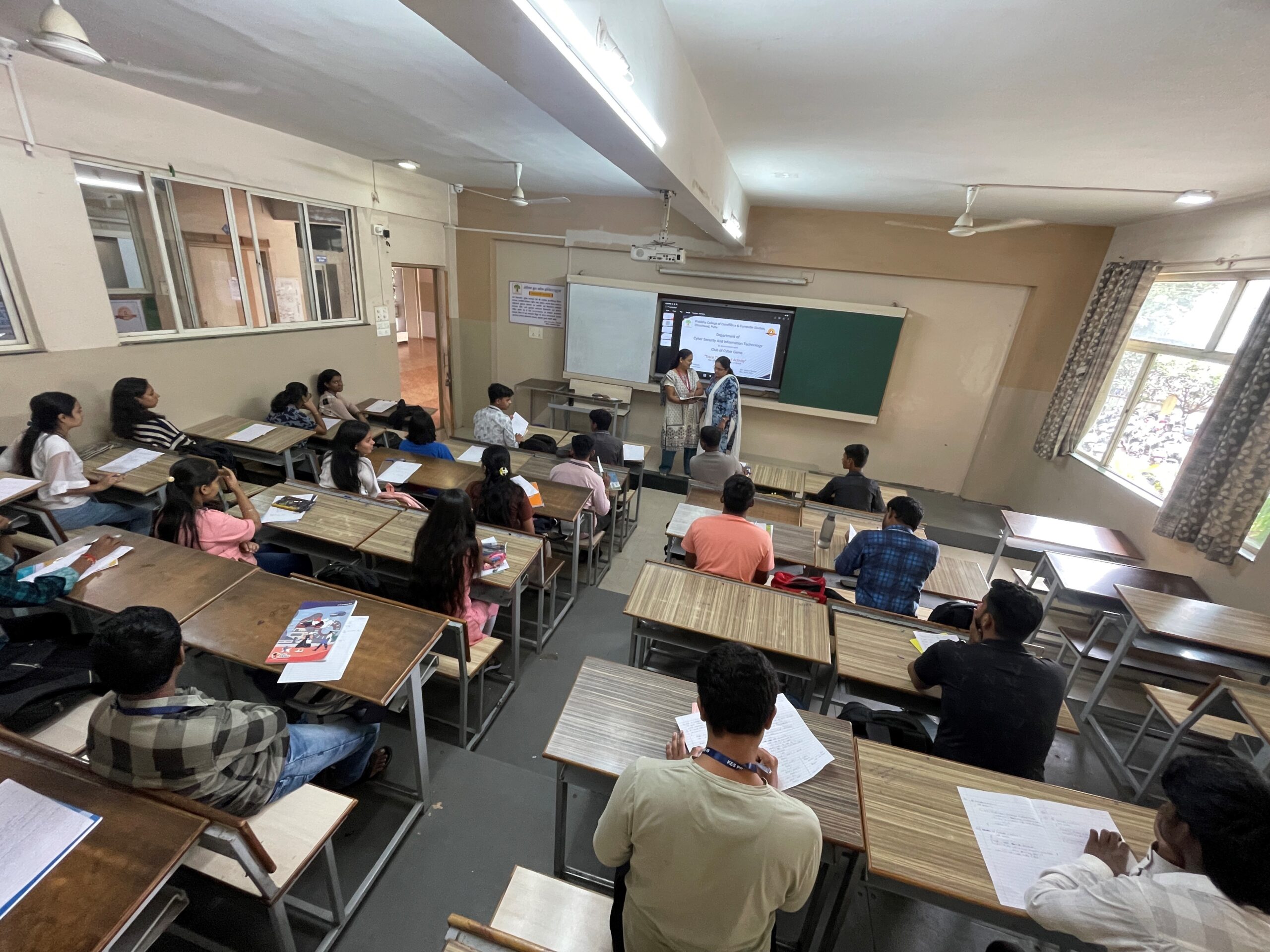
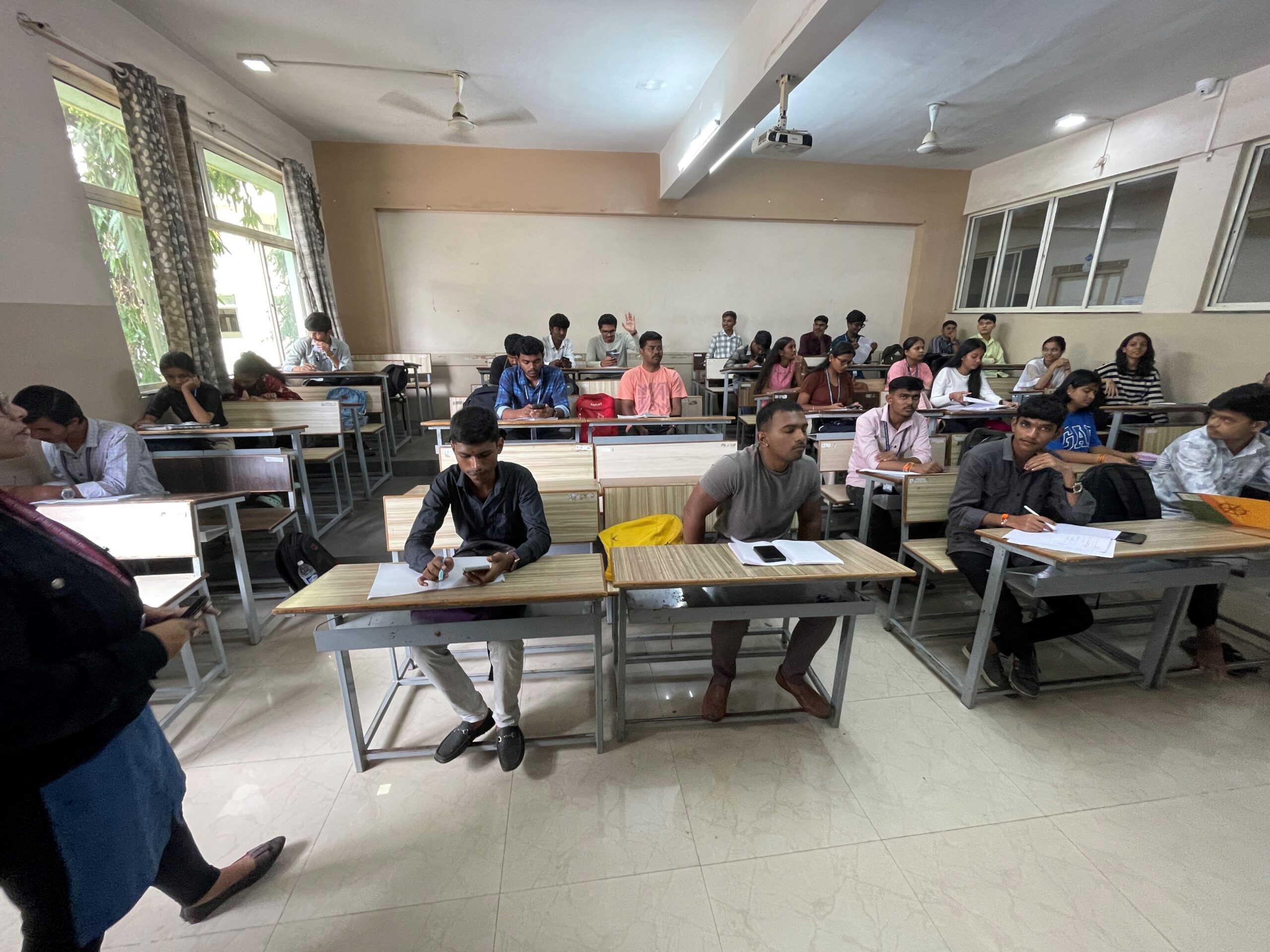
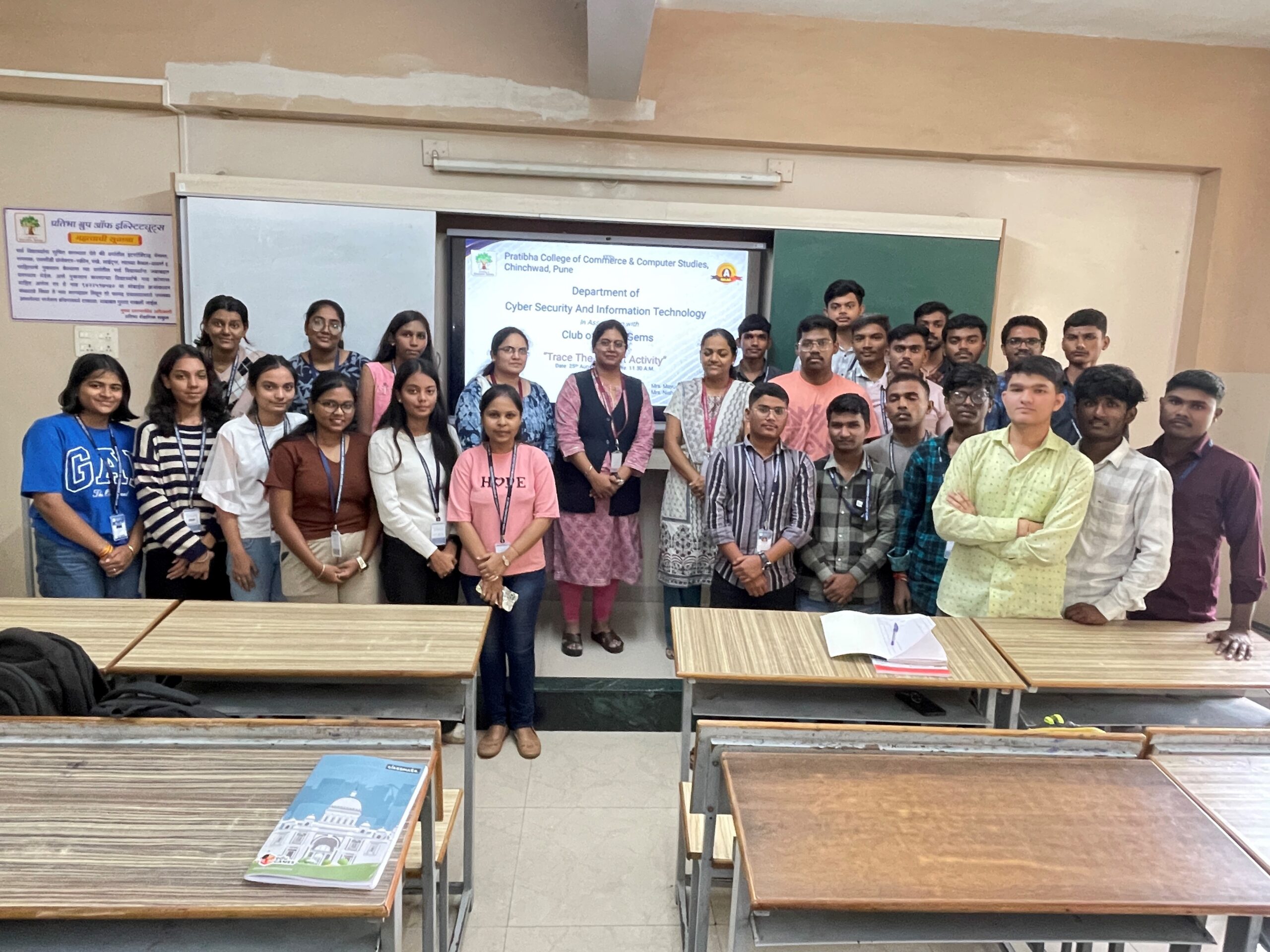
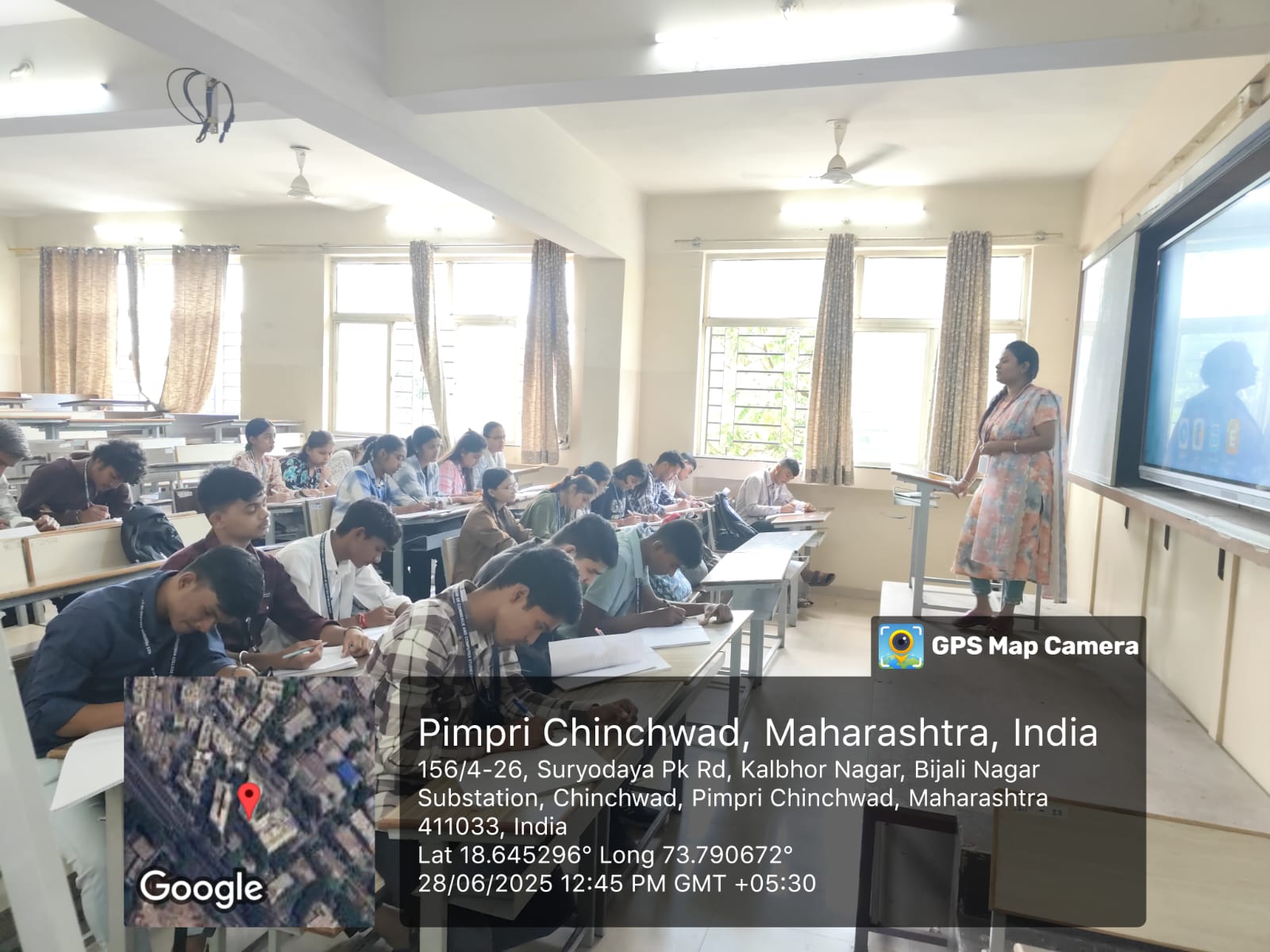
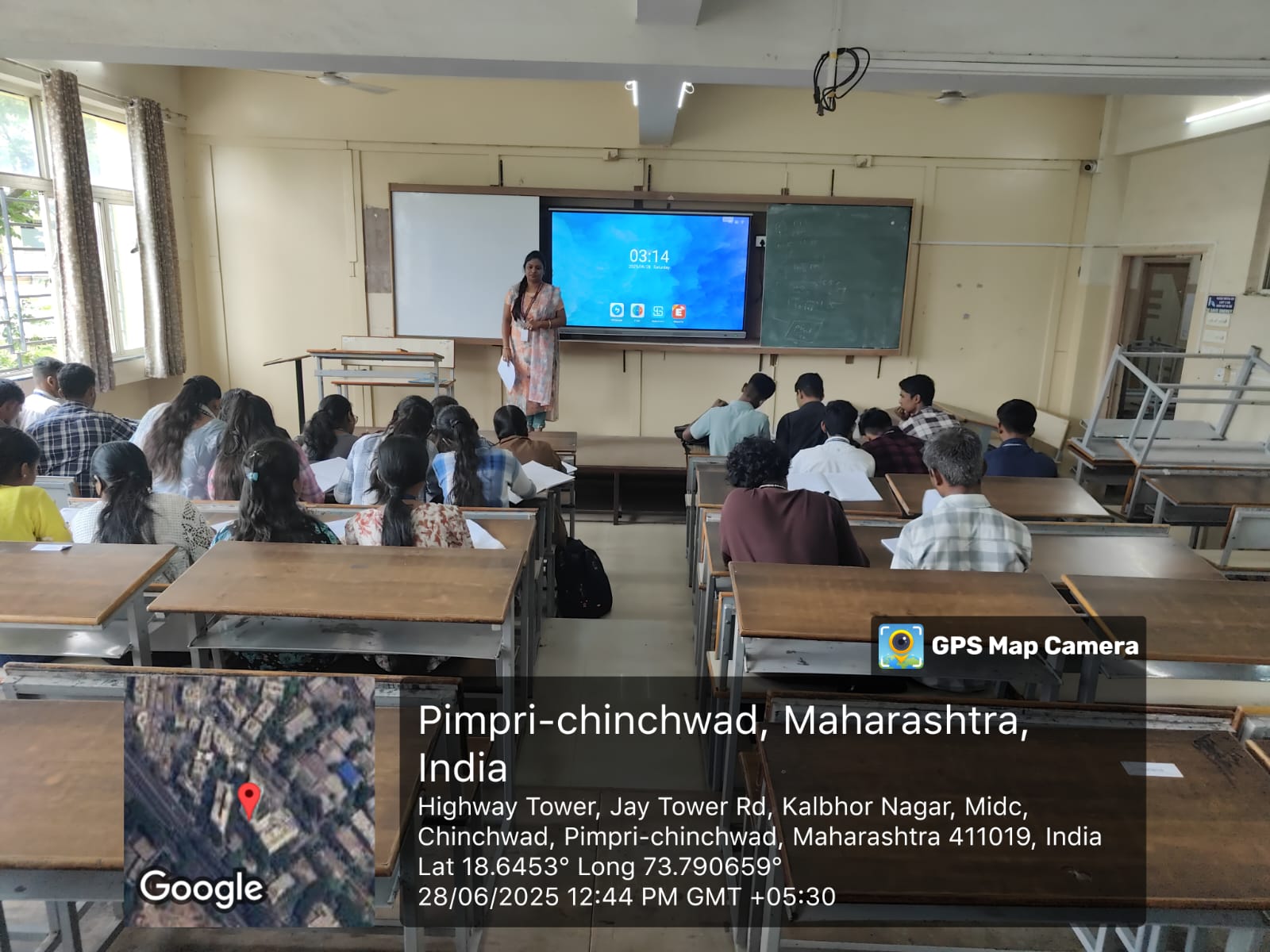
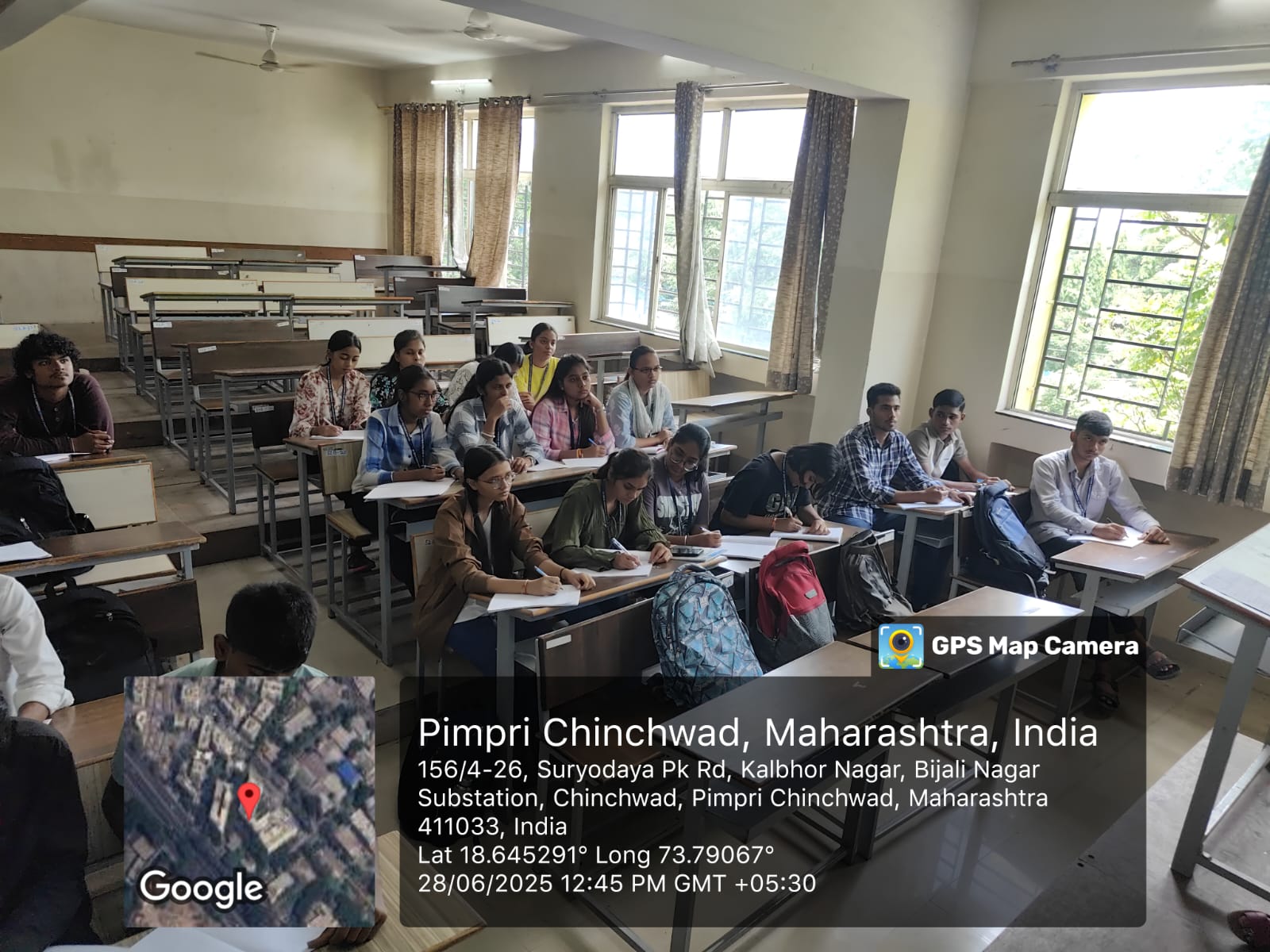
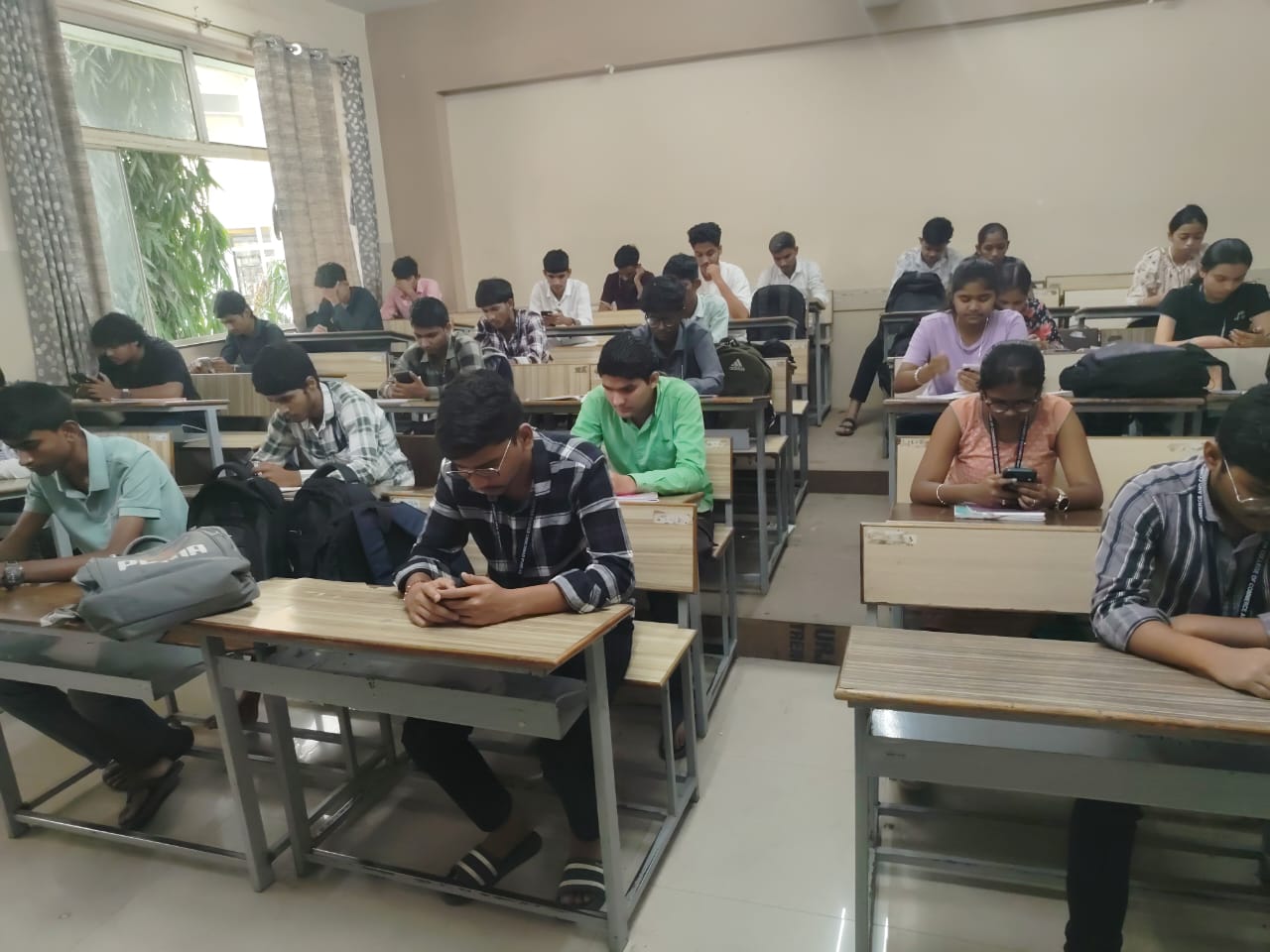
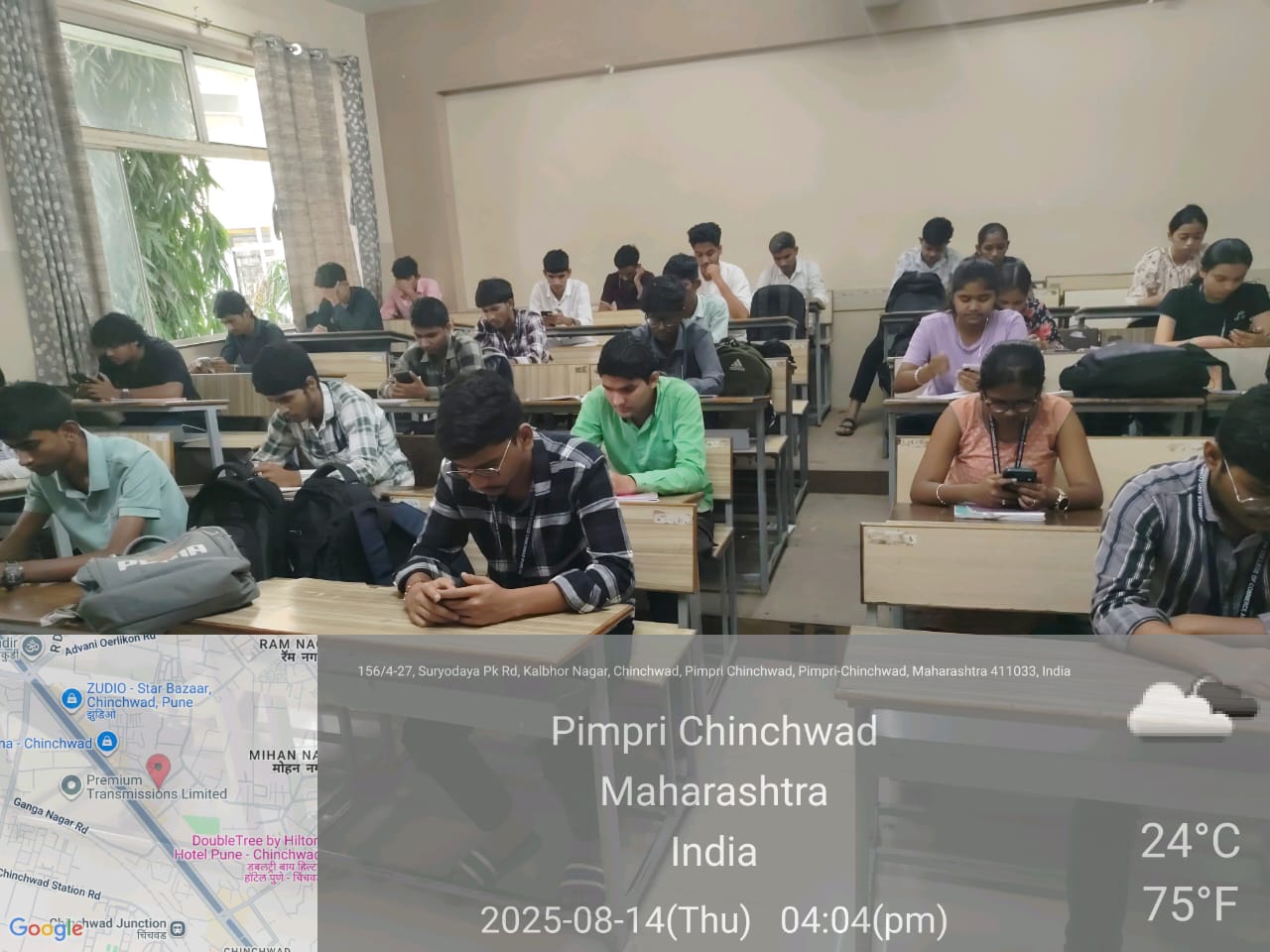
BSc(Data Science)
Course Overview
Introduction about the Course
The Bachelor of Science (B.Sc) in Data Science under Statistics is a newly established program launched in 2025 to meet the rapidly growing demand for datadriven decision-making across industries. The program is designed to integrate statistical theory, mathematical foundations, and modern data-science tools, preparing students to analyze complex data and solve real-world problems.
The course aims to produce graduates who are competent in statistical reasoning, computational thinking, and analytical skills, allowing them to thrive in emerging roles such as Data Analysts, Junior Data Scientists, Statisticians, and Business Intelligence professionals.
Established: 2025
Program: B.Sc Data Science (Under Statistics)
Intake: 80 Students
Outcome: Graduates equipped with strong statistical knowledge, programming ability, machine-learning skills, and analytical thinking to excel in modern datacentric roles
Course Intake – 52 Students (2025)
For the academic year 2025, the program admits a maximum of 52 students. This limited intake ensures:
- Personalized attention to each learner
- Better faculty–student interaction
- Hands-on lab sessions and project-based learning
- Strong guidance and mentoring for research and career development
Eligibility
Higher secondary school certificate (10+2) or its equivalent examination with English & Mathematics & with any three science subjects such as Physics, Chemistry, Biology, Geography, Geology etc. A minimum of 50% aggregate marks (or as per institutional norms) is required.
Duration of the Course
3/ 4 years
- 1 Year (2 Semesters): Certificate
- 2 Years (4 Semesters): Diploma
- 3 Years (6 Semesters): Bachelor’s Degree
- 4 Years (8 Semesters): Bachelor’s Degree with Honours / Honours with Research
Course Structure
Credit Summary
| Year | Term I | Term II | Total |
|---|---|---|---|
| First | 28 | 30 | 58 |
| Second | 28 | 30 | 58 |
| Third | 32 | 30 | 62 |
| Fourth | 28 | 28 | 56 |
Semester I
| Semester | Course Type | Course Name / Course Title | Total Credits |
|---|---|---|---|
| 1 | Subject-1 | Problem Solving and Python Programming | 2T + 4P = 6 |
| Subject-2 | Descriptive Statistics | 2T + 4P = 6 | |
| Subject-3 | Computational Mathematics | 2T + 4P = 6 | |
| OE | Financial Literacy-1 | 2T = 2 | |
| SEC | Computer Organization | 2T = 2 | |
| IKS | Generic IKS | 2T = 2 | |
| AEC | English | 2T = 2 | |
| VEC | EVS-I | 2T = 2 | |
| Total Credits: | 28 | ||
Semester II
| Semester | Course Type | Course Name / Course Title | Total Credits |
|---|---|---|---|
| 2 | Subject-1 | Advanced Python Programming | 2T + 4P = 6 |
| Subject-2 | Discrete Probability and Probability Distributions | 2T + 4P = 6 | |
| Subject-3 | Graph Theory | 2T + 4P = 6 | |
| OE | Financial Literacy-2 | 2T = 2 | |
| SEC | Lab Course on Excel and Advanced Excel | 4P = 4 | |
| AEC | English | 2T = 2 | |
| VEC | EVS-II | 2T = 2 | |
| CC | Physical Education | 2T = 2 | |
| Total Credits: | 30 | ||
Semester III
| Semester | Course Type | Course Name / Course Title | Total Credits |
|---|---|---|---|
| 3 | Major Core | Database Management System | 2T = 2 |
| Major Core | Data Structure-I | 2T = 2 | |
| Major Core | Lab Course on Database Management System and Data Structure-I | 4P = 4 | |
| VSC | Foundations of Data Science | 2T = 2 | |
| FP | Mini Project | 4P = 4 | |
| Minor | Probability Distribution and Modelling | 2T + 4P = 6 | |
| OE | Marketing-I | 2T = 2 | |
| IKS | Indian Knowledge System in Computing | 2T = 2 | |
| AEC | Marathi | 2T = 2 | |
| CC | CC-201-T | 2T = 2 | |
| Total Credits: | 28 | ||
Semester IV
| Semester | Course Type | Course Name / Course Title | Total Credits |
|---|---|---|---|
| 4 | Major Core | Relational Database Management System | 2T = 2 |
| Major Core | Data Structure-II | 2T = 2 | |
| Major Core | Lab Course on Relational Database Management System and Data Structure-II | 4P = 4 | |
| VSC | Data Analytics | 4P = 4 | |
| FP | Mini Project | 4P = 4 | |
| Minor | Testing of Hypothesis and Sampling Distributions | 2T + 4P = 6 | |
| OE | Marketing-II | 2T = 2 | |
| SEC | Software Engineering | 2T = 2 | |
| AEC | Marathi | 2T = 2 | |
| Total Credits: | 30 | ||
Semester V
| Semester | Course Type | Course Name / Course Title | Total Credits |
|---|---|---|---|
| 5 | Major Core | NoSQL Databases | 4T + 4P = 8 |
| Major Core | R Programming | 2T + 4P = 6 | |
| Major Core | Foundations of Artificial Intelligence | 2T = 2 | |
| Major Elective | Business Analytics | 2T + 4P = 6 | |
| VSC | Lab Course on MATLAB | 4P = 4 | |
| FP | Project | 4P = 4 | |
| Minor | Categorical and Multivariate Data Analysis | 2T = 2 | |
| Total Credits: | 32 | ||
Semester VI
| Semester | Course Type | Course Name / Course Title | Total Credits |
|---|---|---|---|
| 6 | Major Core | Data Visualization and Modelling | 4T + 4P = 8 |
| Major Core | Artificial Intelligence in Data Science | 2T + 4P = 6 | |
| Major Core | Data Security and Privacy | 2T = 2 | |
| Major Elective | HR / Financial Analytics | 2T + 4P = 6 | |
| VSC | Advance Data Science Tools | 4T = 4 | |
| OJT | On Job Training | 4T = 4 | |
| Total Credits: | 30 | ||
Semester VII
| Semester | Course Type | Course Name / Course Title | Total Credits |
|---|---|---|---|
| 7 | Major Core | Machine Learning | 4T + 4P = 8 |
| Major Core | Basics of Cloud Computing | 2T + 4P = 6 | |
| Major Elective | Supply Chain & Logistics Analytics | 2T + 4P = 6 | |
| RP | Research Project | 4P = 4 | |
| RM | Research Methodology | 4T = 4 | |
| Total Credits: | 28 | ||
Semester VIII
| Semester | Course Type | Course Name / Course Title | Total Credits |
|---|---|---|---|
| 8 | Major Core | Data Mining and Warehousing | 4T + 4P = 8 |
| Major Core | Deep Learning | 2T + 4P = 6 | |
| Major Core | Natural Language Processing | 4T = 4 | |
| Major Elective | Geospatial Technology / E-Commerce | 2T + 4P = 6 | |
| OJT | On Job Training | 4P = 4 | |
| Total Credits: | 28 | ||
Career Prospects
After completing the B.Sc Data Science under Statistics program, students can pursue diverse and high-growth roles in data-driven industries. Possible career paths include: 📊 Data & Analytics Careers
- Data Analyst
- Junior Data Scientist
- Business/Data Intelligence Analyst
- Operations Analyst
- Marketing/Financial Analyst
- Quantitative Analyst (Entry Level)
📈 Statistical & Research Careers
- Statistician
- Research Assistant / Research Analyst
- Survey/Data Collection Specialist Risk & Actuarial Assistant
💻 Technology & Computing Careers
- Machine Learning Assistant / ML Technician
- Database Manager / SQL Analyst Data Visualization Specialist
- Big Data Technician (entry-level)
Program Outcomes
Program Outcomes — B.Sc. (Data Science)
After successful completion of B.Sc.(DS) Programme students will be able to:
| PO No. | Outcomes |
|---|---|
| PO 1 | The programme seeks to develop strong foundation in Mathematics, Statistics and Computer Science that demonstrate proficiency in basic programming languages and tools. |
| PO 2 | The programme aims to understand the principles of data storage and retrieval by acquiring knowledge of data type structures and basic data manipulation techniques. |
| PO 3 | The programme helps to learn database management techniques with design and management of databases as well as executing SQL queries for data retrieval and manipulation. |
| PO 4 | By applying advanced statistical methods and machine learning techniques, the students can analyze complex datasets, interpret and communicate findings effectively. |
| PO 5 | The programme also aims to understand and work with big data technologies and apply these technologies to process and analyze large-scale datasets. |
| PO 6 | The students can create clear and effective data visualizations using various tools and communicate complex findings through visual representations. |
| PO 7 | The programme also seeks to develop comprehensive projects by applying data science techniques to solve real-world problems that will improve the ability of learner to integrate knowledge and skills acquired throughout the programme. |
| PO 8 | Through hands-on projects, practical assignments, and exposure to state-of-the-art tools and technologies, programme aim to develop the technical proficiency and problem-solving skills necessary for success in the professional world. |
| PO 9 | Depending on the chosen track, students can develop expertise in data analytics with areas such as Business, Social Media, HR, Financial, Healthcare, Supply Chain & Logistics and Big Data etc. |
| PO 10 | The program include On Job Training, internships and research work that provides learners with practical experience, applying their knowledge to real-world challenges. |
| PO 11 | Graduates will be adept at presenting complex technical concepts clearly and effectively, both in written and oral forms, to various audiences. |
| PO 12 | The programme places a strong emphasis on ethical considerations, responsible use of technology, and awareness of the societal impact of data science and computing solutions. |
| PO 13 | The programme aim to produce graduates who approach their work with integrity and a sense of social responsibility. |
| PO 14 | Acknowledging the dynamic nature of computer science, the programme aim to inspire students for continuous learning and professional development, empowering them to adapt and thrive in the face of technological advancements; prepared them to adapt to new technologies and methodologies throughout their careers. |
| PO 15 | The students will be encouraged to think creatively and innovatively, exploring new ideas and approaches to solve data science related problems and advance the state of the art in the field. |
Course Outcomes — B.Sc. (Data Science)
Semester I
| Semester | Course Code | Course Type | Course Title | Credits | Hours/Week |
|---|---|---|---|---|---|
| I | DS-101-T | Subject I | Problem Solving and Python Programming | 02 | 02 |
| Course Objectives: | |||||
| 1 | To teach students systematic and efficient problem-solving methods, including problem analysis, algorithm design, and solution implementation. | ||||
| 2 | To provide a solid understanding of the Python programming language, including its syntax, data types, control structures, and functions. | ||||
| 3 | To instill good programming habits, including code readability, commenting, and documentation. | ||||
| 4 | To nurture the ability to think algorithmically and express solutions as step-by-step processes using Python programs. | ||||
| 5 | To learn and understand Object Oriented Programming. | ||||
| 6 | To improve debugging techniques and error identification and correction in Python programs. | ||||
| Course Outcomes: | |||||
| CO 1 | Create clear and efficient algorithms for solving a variety of problems. | ||||
| CO 2 | Write Python programs to implement algorithms and solve problems. | ||||
| CO 3 | Identify and correct errors in Python programs using systematic debugging techniques. | ||||
| CO 4 | Understand Object Oriented Concepts in Python. | ||||
| CO 5 | Learn and understand modules and packages in Python. | ||||
| CO 6 | Define and demonstrate the use of built-in data structures “lists” and “dictionary”. | ||||
| Semester | Course Code | Course Type | Course Title | Credits | Hours/Week |
|---|---|---|---|---|---|
| I | DS-102-P | Subject 1 | Lab Course on DS-101-T (Python Programming) | 02 | 04 |
| Course Objectives: | |||||
| 1 | Learn Programming fundamentals using Python. | ||||
| 2 | Understand the concepts and usage data types, variables and other basic elements. | ||||
| 3 | Learn about using operators and control statements in Python. | ||||
| 4 | Learn about using arrays and strings in Python. | ||||
| 5 | Learn Object Oriented concepts in Python. | ||||
| 6 | Learn how to use modules in packages in Python Programming. | ||||
| Course Outcomes: | |||||
| CO 1 | Implement the use of built-in data structures “lists”, “dictionary”, “Tuples” and “Sets”. | ||||
| CO 2 | Implement programs on Arrays and Strings. | ||||
| CO 3 | Implement programs on Object Oriented concepts in Python. | ||||
| CO 4 | Implement programs by importing modules and packages in Python. | ||||
| Semester | Course Code | Course Type | Course Title | Credits | Hours/Week |
|---|---|---|---|---|---|
| I | DS-103-T | Theory | Descriptive Statistics | 02 | 02 |
| Course Objectives: | |||||
| 1 | To acquaint students with some basic concepts in Statistics. | ||||
| 2 | To introduce to some elementary statistical methods of analysis of data. | ||||
| 3 | To identify the nature and type of data. | ||||
| 4 | To apply statistical tools to numerical and categorical data. | ||||
| Course Outcomes: | |||||
| CO 1 | Identify the different types of variables and data. | ||||
| CO 2 | Compute various measures of central tendency, dispersion. | ||||
| CO 3 | Compute various measures of skewness and kurtosis. | ||||
| CO 4 | Find correlation coefficient between numerical variables. | ||||
| CO 5 | Fit linear regression lines. | ||||
| CO 6 | Fit non-linear regression lines. | ||||
| Semester | Course Code | Course Type | Course Title | Credits | Hours/Week |
|---|---|---|---|---|---|
| I | DS-104-P | Practical | Lab Course on DS-103-T (Descriptive Statistics) | 02 | 04 |
| Course Objectives: | |||||
| 1 | To acquaint students with some basic concepts in Statistics. | ||||
| 2 | To introduce to some elementary statistical methods of analysis of data. | ||||
| 3 | To identify the nature and type of data. | ||||
| 4 | To apply statistical tools to numerical and categorical data. | ||||
| Course Outcomes: | |||||
| CO 1 | Identify the different types of variables and data. | ||||
| CO 2 | Compute various measures of central tendency, dispersion. | ||||
| CO 3 | Compute various measures of skewness and kurtosis. | ||||
| CO 4 | Find correlation coefficient between numerical variables. | ||||
| CO 5 | Fit linear regression lines. | ||||
| CO 6 | Fit non-linear regression lines. | ||||
| Semester | Course Code | Course Type | Course Title | Credits | Hours/Week |
|---|---|---|---|---|---|
| I | DS-105-T | Subject I | Computational Mathematics | 02 | 02 |
| Course Objectives: | |||||
| 1 | To understand the basic arithmetic operations on vectors and matrices, including determinants, using technology where appropriate. | ||||
| 2 | To solve systems of linear equations, using technology to facilitate row reduction. | ||||
| 3 | To understand the basic terminology of linear algebra in Euclidean spaces, including linear independence, spanning, basis, rank, nullity, subspace, and linear transformation. | ||||
| 4 | To abstract notions of vector space and inner product space. | ||||
| 5 | To understand and find the eigenvalues and eigenvectors of a matrix or a linear transformation, and using them to diagonalize a matrix. | ||||
| 6 | Enables to find projections and orthogonality among Euclidean vectors, including the Gram-Schmidt ortho normalization process and orthogonal matrices. | ||||
| Course Outcomes: | |||||
| CO 1 | Solve systems of linear equations using methods by Gaussian elimination. | ||||
| CO 2 | Demonstrate understanding of the concepts of vector space, linear independence and basis. | ||||
| CO 3 | Determine eigenvalues and eigenvectors and solve eigenvalue problems. | ||||
| CO 4 | Demonstrate understanding the use of truth tables and laws of identity, distributive, commutative, and domination. | ||||
| CO 5 | Simplify and prove Boolean expressions, Compute sum of products and product of sum expansions. | ||||
| Semester | Course Code | Course Type | Course Title | Credits | Hours/Week |
|---|---|---|---|---|---|
| I | DS-106-P | Subject I | Lab Course on DS-105-T (Computational Mathematics) | 02 | 04 |
| Course Objectives: | |||||
| 1 | To understand the basic arithmetic operations on vectors and matrices, including determinants, using technology where appropriate. | ||||
| 2 | To solve systems of linear equations, using software to facilitate row reduction. | ||||
| 3 | To understand the basic terminology of linear algebra in Euclidean spaces, including linear independence, spanning, basis. | ||||
| 4 | To abstract notions of vector space and inner product space. | ||||
| 5 | To understand and find the eigenvalues and eigenvectors of a matrix and using them to diagonalize a matrix. | ||||
| 6 | Enables to Simplify and prove Boolean expressions. Compute sum of products and product of sum expansions. | ||||
| 7 | To know how to use maxima software. | ||||
| Course Outcomes: | |||||
| CO 1 | Understand the systems of linear equations using methods by Gaussian elimination. | ||||
| CO 2 | Demonstrate understanding of the concepts of vector space, linear independence and basis. | ||||
| CO 3 | Compute eigenvalues and eigenvectors problems. | ||||
| CO 4 | Demonstrate the use of truth tables and laws of identity, distributive, commutative, and domination. | ||||
| CO 5 | Simplify and prove Boolean expressions, Compute sum of products and product of sum expansions. | ||||
| CO 6 | Students can solve the problem based on theory by using maxima software. | ||||
| Semester | Course Code | Course Type | Course Title | Credits | Hours/Week |
|---|---|---|---|---|---|
| I | IKS-101-HIS | Subject I | Indian Knowledge System | 02 | 02 |
| Course Objectives: | |||||
| 1 | To understand the nature of knowledge. | ||||
| 2 | To understand the evolution of the scientific approach in the Indian subcontinent. | ||||
| 3 | To study contributions made by different people to the various branches of knowledge before modernity evolved in India. | ||||
| Course Outcomes: | |||||
| CO 1 | Students are able to understand the nature and philosophy of knowledge in the Indian context. | ||||
| CO 2 | Students are able to analyze traditional Indian knowledge systems and their methodologies. | ||||
| CO 3 | Students are able to identify key contributors to various branches of knowledge in pre-modern India. | ||||
| CO 4 | Students are able to relate ancient Indian knowledge traditions to modern scientific thought. | ||||
| Semester | Course Code | Course Type | Course Title | Credits | Hours/Week |
|---|---|---|---|---|---|
| I | AEC 101 | Theory | Professional Communication Skills | 02 | 30 |
| Course Objectives: | |||||
| 1 | To read and understand texts in English. | ||||
| 2 | To enrich and use vocabulary effectively. | ||||
| 3 | To understand and develop Communicative Competence. | ||||
| 4 | To use body language in different situations. | ||||
| 5 | To acquaint with digital platforms and technology. | ||||
| 6 | To understand and write letter, notice, agenda, minutes and blog. | ||||
| Course Outcomes: | |||||
| CO 1 | Read and understand texts in English. | ||||
| CO 2 | Enrich and use vocabulary effectively. | ||||
| CO 3 | Understand and develop Communicative Competence. | ||||
| CO 4 | Use body language in different situations. | ||||
| CO 5 | Acquaint with digital platforms and technology. | ||||
| CO 6 | Write letter, notice, agenda, minutes and blog. | ||||
| Semester | Course Code | Course Type | Course Title | Credits | Hours/Week |
|---|---|---|---|---|---|
| I | VEC-101-T | Theory | Environment Education – I | 02 | 02 |
| Course Objectives: | |||||
| 1 | To develop foundational knowledge of environmental science and human–environment interactions. | ||||
| 2 | To enable students to understand environmental challenges at local, regional, and global levels. | ||||
| 3 | To cultivate sustainable thinking and responsible resource management skills, empowering students to adopt and promote sustainable development practices in society. | ||||
| 4 | To enhance analytical and problem-solving abilities required to evaluate environmental issues, biodiversity conservation strategies, and policy frameworks. | ||||
| Course Outcomes: | |||||
| CO 1 | Describe how human activities impact the environment. | ||||
| CO 2 | Explain principles of sustainable development and resource management. | ||||
| CO 3 | Analyze local, regional, and global environmental issues and their effects. | ||||
| CO 4 | Evaluate different strategies for conserving biodiversity and ecosystems. | ||||
| CO 5 | Apply relevant environmental policies and ethical considerations to real-world scenarios. | ||||
| CO 6 | Design and implement action plans for community-based environmental projects. | ||||
| Semester | Course Code | Course Type | Course Title | Credits | Hours/Week |
|---|---|---|---|---|---|
| I | OE108COM-T | GE / OE | Financial Literacy, Paper-I | 02 | 02 |
| Course Objectives: | |||||
| 1 | To understand the importance, principles and concept of Financial Literacy. | ||||
| 2 | To familiarize students with different aspects of financial literacy such as savings, investment rules. | ||||
| 3 | To help students understand the relevance and process of financial planning, digital payments and its types. | ||||
| 4 | To promote understanding of financial well-being and role of modern digital payment system. | ||||
| Course Outcomes: | |||||
| CO 1 | Understand the importance, types, principles and concept of financial literacy. | ||||
| CO 2 | Develop proficiency for personal and family financial planning. | ||||
| CO 3 | Understand the importance and types of financial planning, digital payments and its types. | ||||
| CO 4 | Understand the financial well-being and role of modern digital payment system. | ||||
Semester II
| Semester | Course Code | Course Type | Course Title | Credits | Hours/Week |
|---|---|---|---|---|---|
| II | DS-153-T | Theory | Discrete Probability and Probability Distributions | 02 | 02 |
| Course Objectives: | |||||
| 1 | To revise the basic concepts of probability, axiomatic theory of probability. | ||||
| 2 | To understand the concept of random variable. | ||||
| 3 | To study probability distribution (univariate and bivariate) discrete random variables, expectation and moments of probability distribution. | ||||
| 4 | To find marginal distribution and conditional distribution of bivariate frequency distribution. | ||||
| 5 | To find conditional mean of bivariate frequency distribution. | ||||
| 6 | To find variance, covariance and correlation of bivariate frequency distribution. | ||||
| Course Outcomes: | |||||
| CO 1 | Find the probabilities of events and its expectation, mean, variance, etc. | ||||
| CO 2 | Distinguish between random and non-random experiments. | ||||
| CO 3 | Identify the nature of distribution. | ||||
| CO 4 | Find marginal distribution and conditional distribution. | ||||
| CO 5 | Find mean of marginal distribution and conditional mean of bivariate frequency distribution. | ||||
| CO 6 | Find correlation of bivariate frequency distribution. | ||||
| Semester | Course Code | Course Type | Course Title | Credits | Hours/Week |
|---|---|---|---|---|---|
| II | DS-154-P | Practical | Lab Course on DS-153-T (Discrete Probability and Probability Distributions) | 02 | 04 |
| Course Objectives: | |||||
| 1 | To understand the concept of random variable. | ||||
| 2 | To study probability distribution (univariate and bivariate) discrete random variables, expectation and moments of probability distribution. | ||||
| 3 | To find marginal distribution and conditional distribution of bivariate frequency distribution. | ||||
| 4 | To find conditional mean of bivariate frequency distribution. | ||||
| 5 | To find variance, covariance and correlation of bivariate frequency distribution. | ||||
| Course Outcomes: | |||||
| CO 1 | Find the probabilities of events and its expectation, mean, variance, etc. | ||||
| CO 2 | Distinguish between random and non-random experiments. | ||||
| CO 3 | Identify the nature of distribution. | ||||
| CO 4 | Find marginal distribution and conditional distribution. | ||||
| CO 5 | Find mean of marginal distribution and conditional mean of bivariate frequency distribution. | ||||
| CO 6 | Find correlation of bivariate frequency distribution. | ||||
| Semester | Course Code | Course Type | Course Title | Credits | Hours/Week |
|---|---|---|---|---|---|
| II | AEC 151 | Theory | Professional Communication Skills | 02 | 30 |
| Course Objectives: | |||||
| 1 | To read and understand texts in English. | ||||
| 2 | To enrich and use vocabulary effectively. | ||||
| 3 | To understand and develop Communicative Competence. | ||||
| 4 | To use body language in different situations. | ||||
| 5 | To acquaint with digital platforms and technology. | ||||
| 6 | To understand and write letter, notice, agenda, minutes and blog. | ||||
| Course Outcomes: | |||||
| CO 1 | Read and understand texts in English. | ||||
| CO 2 | Enrich and use vocabulary effectively. | ||||
| CO 3 | Understand and develop Communicative Competence. | ||||
| CO 4 | Use body language in different situations. | ||||
| CO 5 | Acquaint with digital platforms and technology. | ||||
| CO 6 | Write letter, notice, agenda, minutes and blog. | ||||
| Semester | Course Code | Course Type | Course Title | Credits | Hours/Week |
|---|---|---|---|---|---|
| II | SEC-151-DS | Practical | Lab Course on Excel and Advanced Excel | 02 | 04 |
| Course Objectives: | |||||
| 1 | To familiarize the student in introducing and exploring MS Excel. | ||||
| 2 | To provide different ways of representation and exploratory data analysis in Excel. | ||||
| 3 | To prepare the students to use Excel in their project works. | ||||
| 4 | Analyze data like a professional. | ||||
| Course Outcomes: | |||||
| CO 1 | Implement fundamental concept of Microsoft Excel. | ||||
| CO 2 | Perform calculations in Excel and apply Excel functions. | ||||
| CO 3 | Represent data using charts and diagrams. | ||||
| CO 4 | Design advanced graphic presentations on stored data. | ||||
| CO 5 | Perform various advanced data tools and data analytics. | ||||
Faculty/Staff
Dr.Jayashree Muley
Program Co-ordinator
B.Sc. (Data
Science) & M.Sc. (Statistics),
IQAC- Coordinator
Ph.D., MSc. Statistics, MBA Finance
Sejal Fegade
Assistant Professor
MSc Statistics

Dr. Priti Kolhe
Assistant Professor
Ph.D., M.Sc. Environmental Science
Ms. Rutuja Kobal
Asst.Professor
MSc Statistics
Akshata Gawde
Asst.Professor
MSc Statistics
Dr. Anuradha Ghodke
Asst.Professor
M.A., M.Phil. Ph.D. (English), M.B.A. (HR), D.Ed.
Mrs. Anita Vishwakarma
Asst.Professor
M.Com (Costing, A/c & Taxation) M.B.A. (HRM , Financial Management), Pursuing Ph.d

Mr. Sourabh Dhaware
Asst.Professor
MSc Mathematics
Mrs.Ragini Chavan
Assistant Professor
MSc Statistics
Mr. Dinesh Sonawane
Assistant Professor
MSC Electronics
Syllabus
Departmental Activities
Academic Year 2025-26
| SN | Name of Activity | Academic Year |
|---|---|---|
| 1. | CSR Activity under Pratibha Finishing School | 2025-26 |
| 2. | Day Celebration on Birth anniversary of Sir John McCarthy (Father of AI): Prompt Challenge Competition to create AI generated Videos | |
| 3. | Guest Lecture: (A) Career Guidance for Database Developer by Mr. Shahid Sayyed (Sr. Specialist at Synechron) (B) Hands on Training on Machine Learning Concept by Mr. Piyush Pundpal (Data Scientist at One Network Enterprises) (C) Java + MERN Stack Live hands on training workshop by Trainer: Pankaj Arora | |
| 4. | Screening Test for Entry level Students (FY BSc (CA)): A short screening to evaluate foundational knowledge and prepare you for upcoming subjects. | |
| 5. | SEBI Lecture by Mr. Amol Marekar (SEBI-Securities Market Trainer, NISM Certified, Investment Education Advocate): An insightful session introducing students to SEBI’s role in ensuring fair and transparent financial markets. | |
| 6. | Ticket to IT Activity (Rapid Chain Story, Talk Show, Open Mike, Tech Charades: Damm Sheras, Memory Stack, Introduce Yourself: Confidence Grooming): A dynamic ice-breaking activity series aimed at enhancing communication, memory, and personality development for IT beginners. | |
| 7. | Outdoor Management Training: Industrial Visit for PG Students to Khandi (Explored outdoor activities & gained the adventurous knowledge by Mr. Rajesh Kapade) |
Academic Year 2024-25
| SN | Name of Activity | Academic Year |
|---|---|---|
| 1. | Seminar: Current Trends in Computer Technologies: “Agile and DevOps” by Mr. Manjul Solanke (Lead DevOps Engineer) & Mr. Rajesh Patankar (Automation Lead & Scrum Master (Agile Coach)) | 2024-25 |
| 2. | F.Y. B.Sc.(Computer Application) Orientation Program — Induction Program for U.G and P.G. Students (A structured induction to help students understand the course, campus culture, and opportunities ahead.) | |
| 3. | Alumni Lecture: (A) “Career Guidance” by Mr. Akash Murhe (Web Developer at Applot Solution Private Ltd.) (B) Alumni Lecture on “HyperAutomation” by Nikita Jain (Sr. Consultant at Protiviti Global Consulting Firm) | |
| 4. | Guest Lecture: (A) “Data Structures: Understanding the Algorithmic Power” by Mr. Sandesh Dumbre (Sr. Software Eng. at Telstra) (B) “Career Awareness about Study Abroad” by Mr. Aman Sayyed (Eyebright Global Services) (C) Career counselling session on Career after under graduation by Manish Patankar (Program Coordinator of MCA at PIBM) (D) Career in Startups by Mr. Rahul Bankar | |
| 5. | Parent Teacher’s Meet Regarding Student’s Progress — A collaborative meeting to discuss students’ academic progress and overall development. | |
| 6. | Builders of Modern Society Celebration: (A) Birth Anniversary of Sir C. D. Deshmukh (First Indian Governor of RBI & Ex. Finance Minister) (B) Birth Anniversary of Mr. Osamu Suzuki (Padma Vibhushan Awardee) | |
| 7. | Signature Activity 1: General Aptitude Test (“A quick test designed to measure core aptitude and analytical thinking.”) | |
| 8. | Signature Activity 2: (A) Workshop on Python & Angular JS by Mr. Akash Gole (Lead Frontend Developer at Dynasty Gaming and Media) (B) Workshop on “Dive in Web Technology via Frameworks (Python, Tkinter, and Databases)” by Ms. Asmita Gorse (Technical Trainer at GTT Barclays, Pune) | |
| 9. | Outdoor Management Training: Industrial Visit to Khandi for PG Students (Explored outdoor activities) | |
| 10. | Pragyan 2.0 — Pulse Pixel Competition: Pulse Pixel Video Making Competition | |
| 11. | Pragyan 2.0 — Groove on The Go Competition: E-Flyer Making Competition | |
| 12. | Pragyan 2.0 — Play with Clay Competition: Model Making Competition | |
| 13. | Pragyan 2.0 — Freeze The Moment Competition: Freeze The Moment Quiz Competition | |
| 14. | Vigyaan 2.0 Competition: Animation Movie Making Competition |
Academic Year 2023-24
| SN | Name of Activity | Academic Year |
|---|---|---|
| 1. | Industrial Visit: (A) ISRO (“Our students had the opportunity to visit ISRO’s main laboratory, gaining inspiring exposure to India’s premier space research facility.”) (B) Barclays IT MNC (Educational Visit to give students major exposure to real working environment for women) | |
| 2. | Day Celebration Activity: (A) Ramdhari Singh Dinkar Birthday Celebration (Padma Bhushan and Sahitya Akademi Awardee) (B) Tribute to Mr. Karpoori Thakur (Bihar’s 11th Chief Minister, Bharat Ratna Awardee) (C) Bihar Diwas: Yuva Shakti Bihar ki Pragati (one minute talk activity) | 2023-24 |
| 3. | Guest Lecture: (A) Domains in Computer Networking and Ethical Hacking by Mr. Tejas Palaspagar (Testing Expert at Jetking Education Skill Institute) (B) Java Database Connectivity by Mr. Hitesh Wankhede (Prof. at CJC Classes, Akurdi) | |
| 4. | Alumni Lecture: Knowledge Impart Program on DevOps by Mr. Kiran Pyati (Project Manager at Infobeans Technologies) | |
| 5. | Add On Course: Add on Course on Mobile Application Development (“An add-on course designed to build practical skills in Mobile Application Development for real-world use.”) | |
| 6. | Pragyan — Pulse Pixel Competition: Pulse Pixel Video Making Competition | |
| 7. | Pragyan — Groove on The Go Competition: E-Flyer Making Competition | |
| 8. | Pragyan — Play with Clay Competition: Model Making Competition | |
| 9. | Vigyaan Competition: Rangoli Making Competition |
Gallery
- M.Sc. (Computer Science)
- M.S.c (Computer Application)
- M.Sc (Statistics)
- M.Sc (Organic Chemistry)
- MSc(Cyber Security)
- MSc(Data Science)
- Introduction
- Objectives of the Program
- Highlights
- Infrastructure
- Best Practices
- Staff
- Programmes & Courses Outcomes
- Syllabus
- Activities & Achievements
- Post graduation degree added in the department from year 2009 with initial intake 30.
- Currently department has 90 intake for M.S.c Computer Science.
- Our departmental tree has grown to hold 174 students.
- To devlop problem solving abilities using computer
- To build the necessary skill set and analytical abilities for devloping computer based solution for real life problem
- To train students in professional skills related to software industry
- To Prepare nessary knowlage based for reasearch and devlopment in computer science
- To help students build-up a successful career in computer science and to procedure enterpreneurs who can innovate and
devlope software products
- Excellent Infrastructure with spacious class rooms, computer laboratory.
- Highly qualified, experienced & approved staff.
- Seminars and Guest Lectures by Industrialists and subject experts.
- Technical & Non-technical program are arranged to enhance the IT & soft skills.
- Project Guidance by alumni’s and industrialists.
- Student mentoring system for giving personal touch to each of the students. The faculty member
provides constant support and every piece of advice to the students whenever he/she faces a problem
with any aspect of the curriculum or any personal problems.
📄 Special Features:
Download Document
IT Resources
Open Sources :
C, php, java, netbeans, postgresql, wamp, open GL on linux platform.
Hardware :
- Vivek Vahini (Science Association)
- RBPT (Research Based Pedagogical Tools)
- Social responsibility – No Vehicle Day
- Learning through Statistical games
- Listing of plant species in Campus
- Industrial Visit/ Field Visit to esteem organizations, to provide practical knowledge to students like
- Satara- Ajiyankya tara sugar Institute
- Botanical Survey of India, Pune regional Office.
- Gipsom Garden, Naneghat
- Onion Garlic Research Institute, Rajgurunagar, Pune.
- Mamta Milk Dairy PVT. Ltd.
- Agriculture College, Shivajinagar, Pune.
- Malavali, Lonavala – Biodiversity Study
- Vasantdada sugar institute Manjari
- Social Responsibility Activity with Vatsalya Matimand School Every year during Diwali. we help to sells Diwali Diyas at college premises made by Physically challenged students.
Curricular activity :
- Conducted Remedial / Bridge course.
- Cyber Security & CPMA.
- Workshop on software development.
Co- Curricular activity :
- National Level Conference.
- “Bits Bytes In IT “ &
- “ Recent Trends in IT.
- State Level Seminar In Statistics.
- State Level Seminar In Electronic.
- Soft –Skills & Personality Development Programs.
- Career Counseling & Mentoring.
- Hands-On Industrial Training Visits .
- Guest Lecture Series.
- Sports Day.
Extra-curricular activity :
- Alumni Engagement & Take Flight.
- Live Project Trainings.
- Entrepreneurship Development.
- Departmental Activities (Techphilphia , Electrofest ,Mathstract ,Brain-o –Fest ).
- Teacher Day Celebrations.
- Notice board.
- Parent’s meeting.
Social concern :
- Skill Development Trainings.
Faculty Achievements:
Students Achievements:
- Introduction
- Objectives of the Program
- Highlights
- Infrastructure
- Best Practices
- Staff
- Programmes & Courses Outcomes
- Syllabus
- Activities & Achievements
- Post graduation degree added in the department from year 2009 with initial intake 30.
- Currently department has 90 intake for M.S.c Computer Science.
- Our departmental tree has grown to hold 174 students.
- To devlop problem solving abilities using computer
- To build the necessary skill set and analytical abilities for devloping computer based solution for real life problem
- To train students in professional skills related to software industry
- To Prepare nessary knowlage based for reasearch and devlopment in computer science
- To help students build-up a successful career in computer science and to procedure enterpreneurs who can innovate and
devlope software products
- Excellent Infrastructure with spacious class rooms, computer laboratory.
- Highly qualified, experienced & approved staff.
- Seminars and Guest Lectures by Industrialists and subject experts.
- Technical & Non-technical program are arranged to enhance the IT & soft skills.
- Project Guidance by alumni’s and industrialists.
- Student mentoring system for giving personal touch to each of the students. The faculty member provides constant support and every piece of advice to the students whenever he/she faces a problem with any aspect of the curriculum or any personal problems.
📄 Special Features: Download Document
IT Resources
Open Sources :
C, php, java, netbeans, postgresql, wamp, open GL on linux platform.
Hardware :
- Vivek Vahini (Science Association)
- RBPT (Research Based Pedagogical Tools)
- Social responsibility – No Vehicle Day
- Learning through Statistical games
- Listing of plant species in Campus
- Industrial Visit/ Field Visit to esteem organizations, to provide practical knowledge to students like
- Satara- Ajiyankya tara sugar Institute
- Botanical Survey of India, Pune regional Office.
- Gipsom Garden, Naneghat
- Onion Garlic Research Institute, Rajgurunagar, Pune.
- Mamta Milk Dairy PVT. Ltd.
- Agriculture College, Shivajinagar, Pune.
- Malavali, Lonavala – Biodiversity Study
- Vasantdada sugar institute Manjari
- Social Responsibility Activity with Vatsalya Matimand School Every year during Diwali. we help to sells Diwali Diyas at college premises made by Physically challenged students.
Programmes & Courses Outcomes Click Here
Curricular activity :
- Conducted Remedial / Bridge course.
- Cyber Security & CPMA.
- Workshop on software development.
Co- Curricular activity :
- National Level Conference.
- “Bits Bytes In IT “ &
- “ Recent Trends in IT.
- State Level Seminar In Statistics.
- State Level Seminar In Electronic.
- Soft –Skills & Personality Development Programs.
- Career Counseling & Mentoring.
- Hands-On Industrial Training Visits .
- Guest Lecture Series.
- Sports Day.
Extra-curricular activity :
- Alumni Engagement & Take Flight.
- Live Project Trainings.
- Entrepreneurship Development.
- Departmental Activities (Techphilphia , Electrofest ,Mathstract ,Brain-o –Fest ).
- Teacher Day Celebrations.
- Notice board.
- Parent’s meeting.
Social concern :
- Skill Development Trainings.
Faculty Achievements:
Students Achievements:

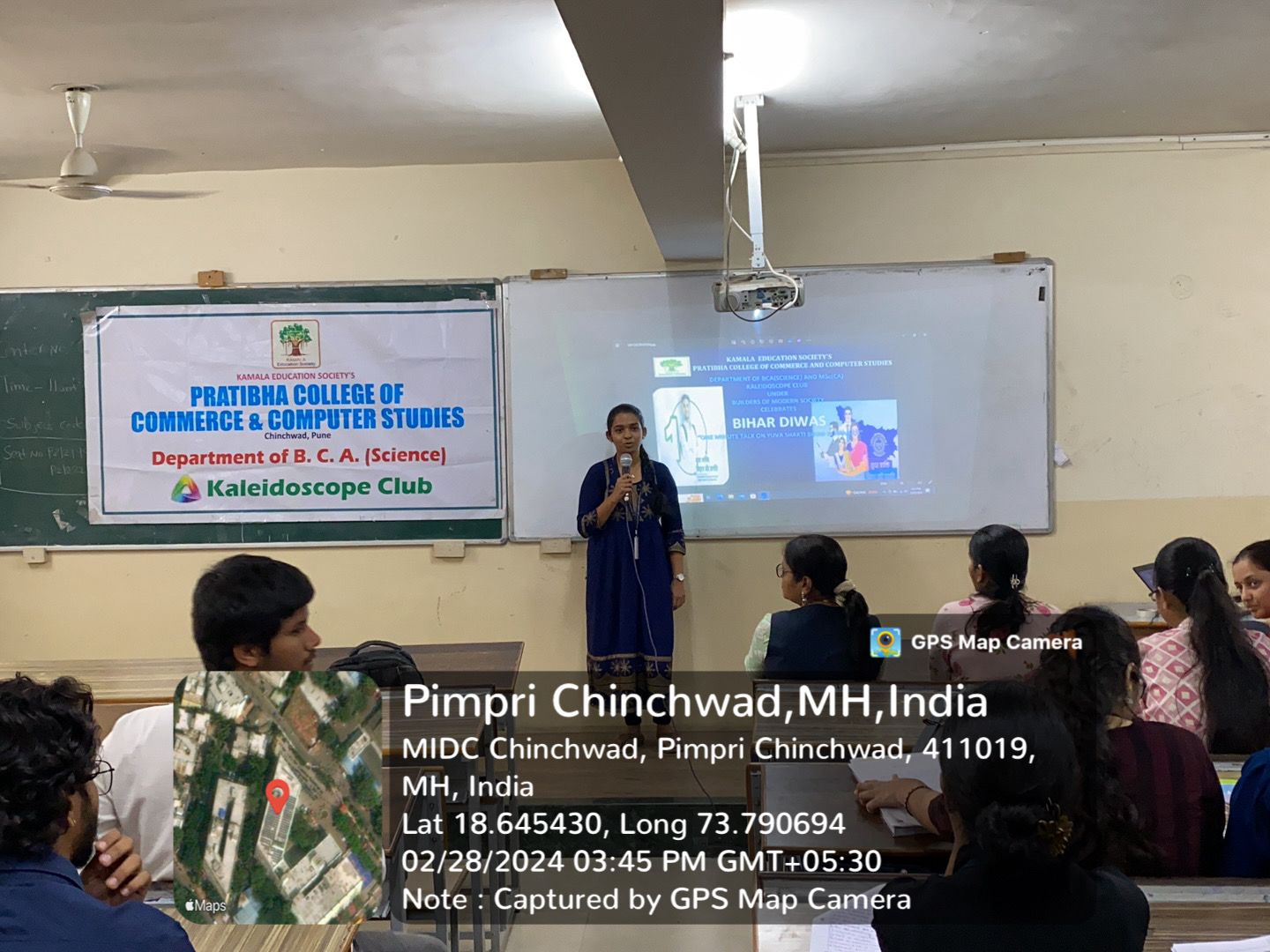
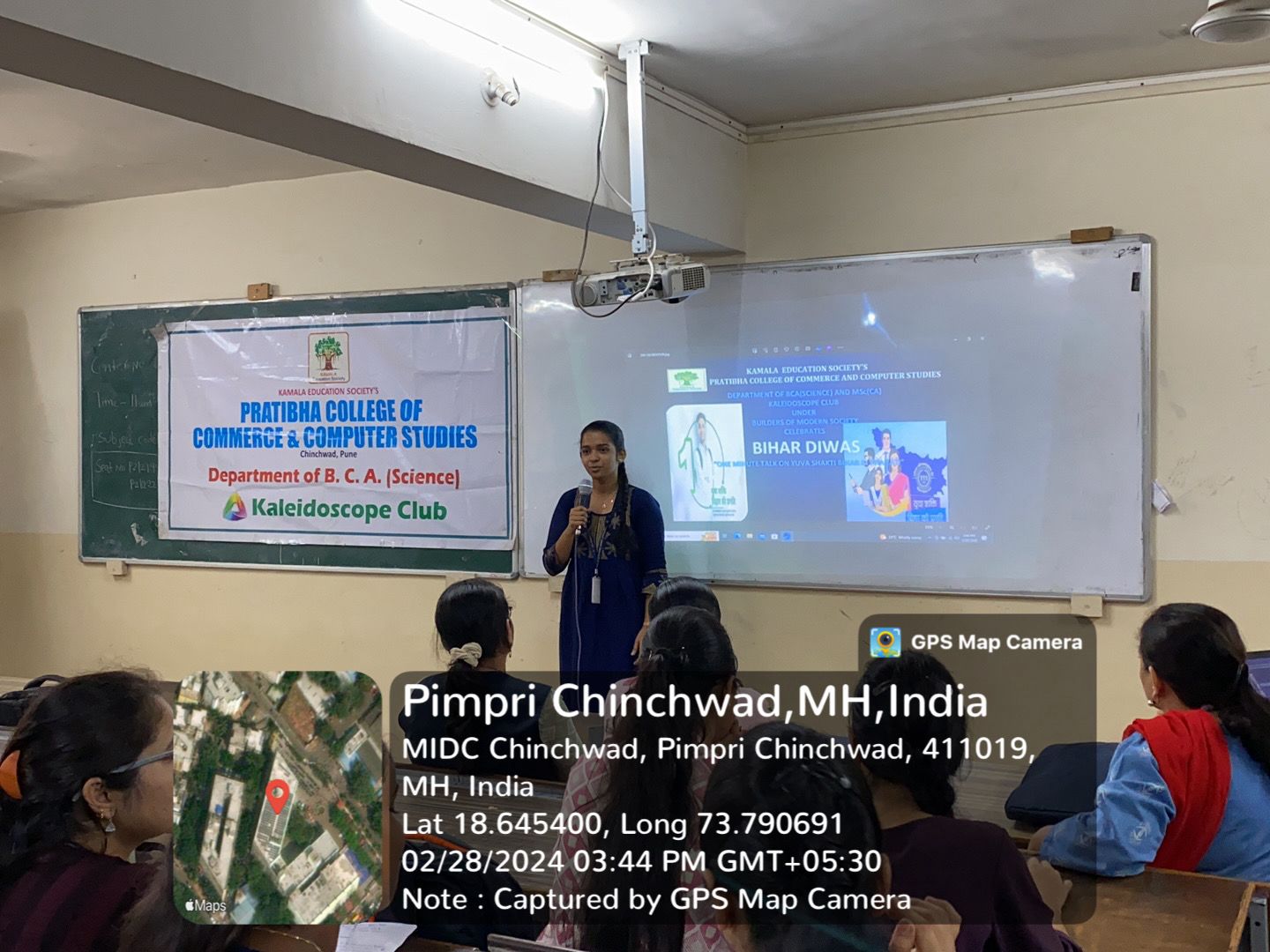


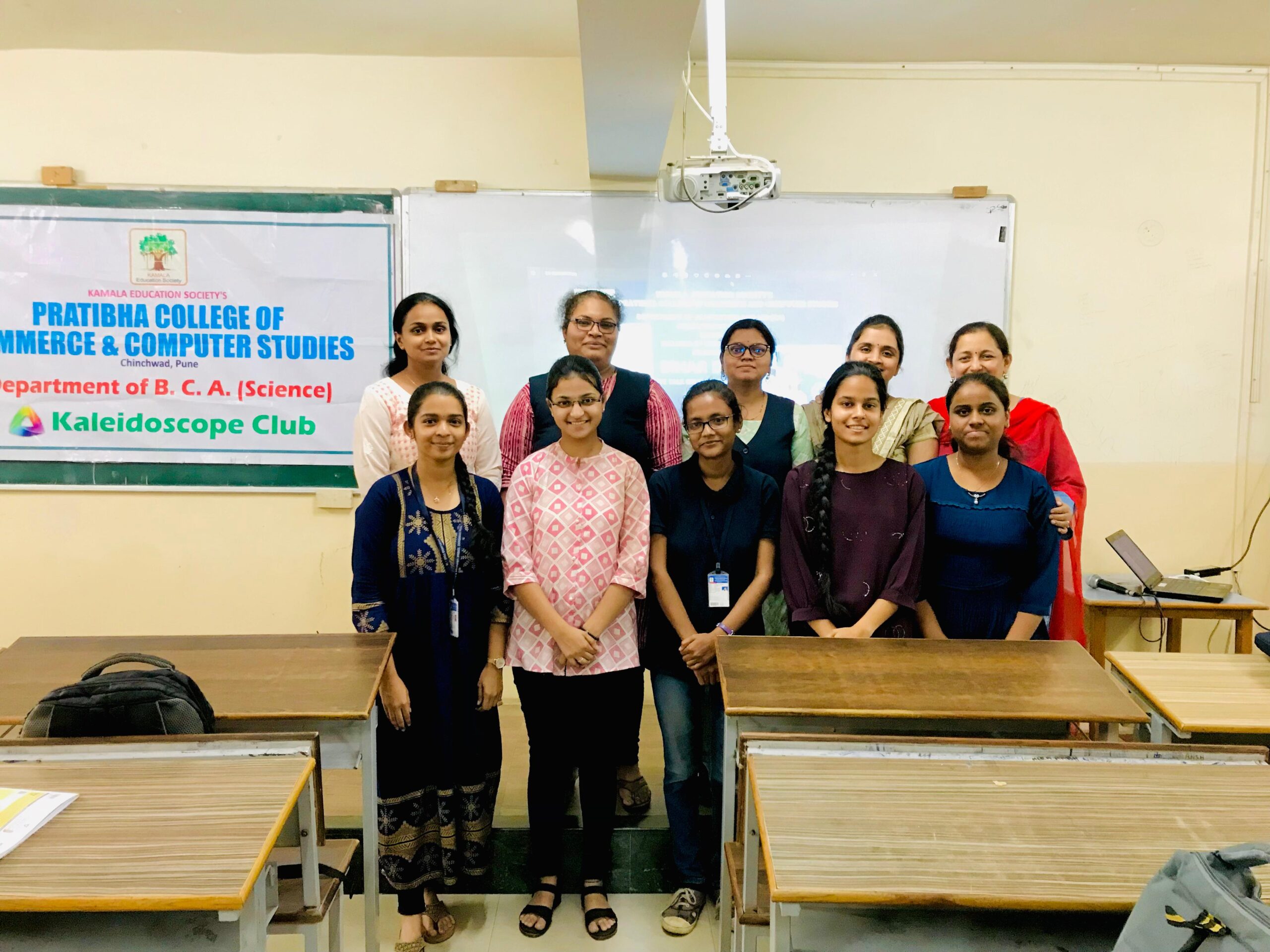
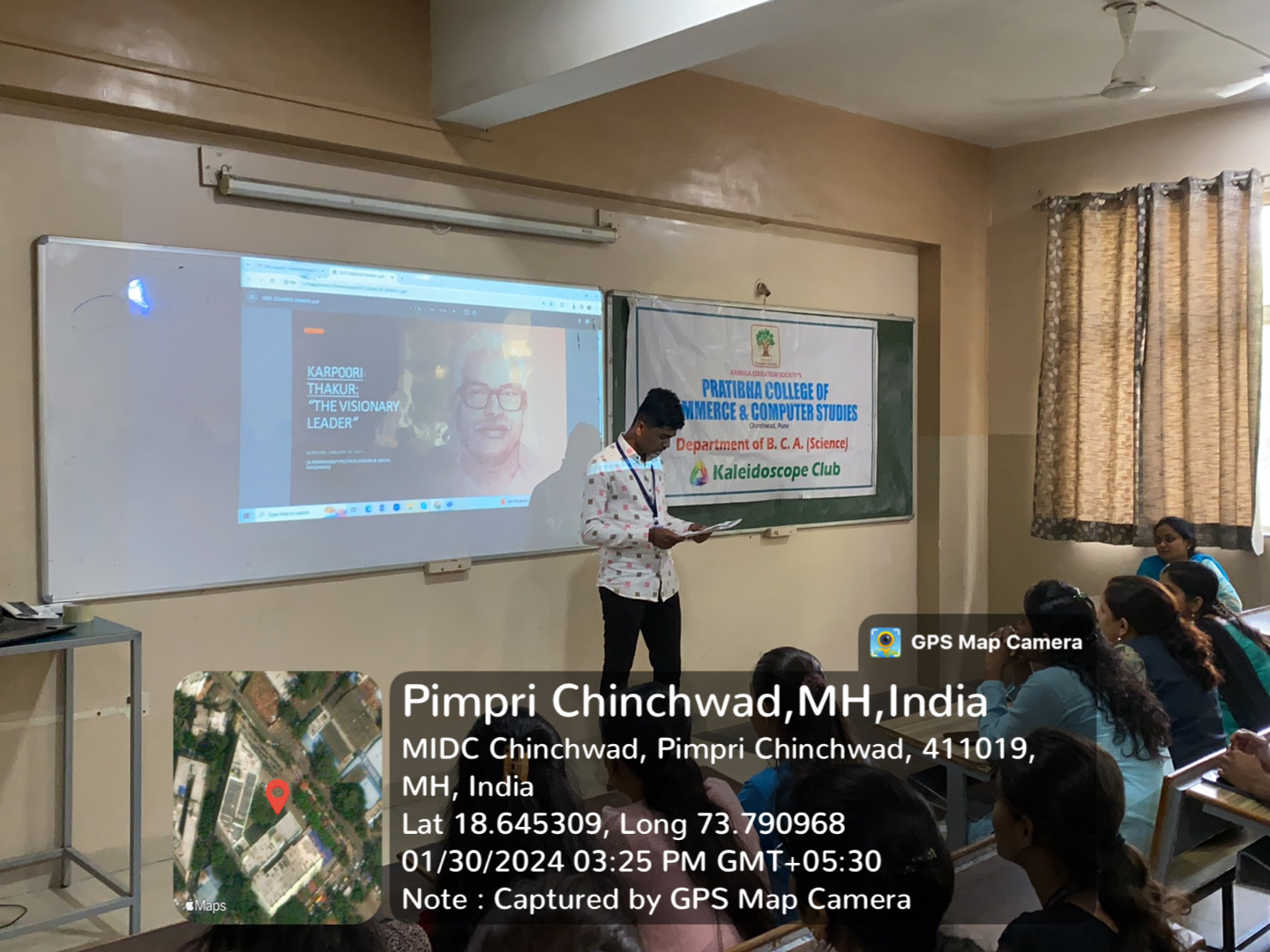



Establishment / Milestones:
- This department is established in the year 2022.
- The current strength of this department is 31 students.
- M.Sc. (Computer Applications) Program is of Two Years duration with four semesters.
post graduate Degree Program. The program is based on credit system comprising of total 88 credit points.
Eligibility:
A Bachelor Degree in Science/Technology/Engineering with minimum 50% marks or equivalent for student belonging to Unreserved Category and minimum 45% or equivalent for students belonging to the Reserved Category.
Highlights:
- Excellent Infrastructure with spacious class rooms, computer laboratory.
- Highly qualified, experienced & approved staff.
- Seminars and Guest Lectures by Industrialists and subject experts.
- Technical & Non-technical program are arranged to enhance the IT & soft skills.
- Project Guidance by alumni’s and industrialists.
- Student mentoring system for giving personal touch to each of the students.
- The faculty member provides constant support and every piece of advice to the students whenever he/she faces a problem with any aspect of the curriculum or any personal problems.
Objectives:
The objective of the Program is to produce trained software professionals with hands-on experience on state-of-the art technologies who will be able to handle challenges in IT industry. The objectives of M.Sc. (Computer Applications) program are: –
- To produce knowledgeable and skilled human resources that is employable in IT and ITES.
- To impart knowledge required for planning, designing and building Complex
- Application Software Systems as well as to provide support for automated systems or applications.
Softwares:
C++, php, java, netbeans, Weka, Software Testing , Selenium, Android, Web Services, Python, Django, IOT, Artificial Intelligence
Hardware:
Lab No. | Area | No. of PCs | Projector | Laptop | Printer | Configuration |
Lab I | 815.34 Sq.ft | 40 | 01 | 01 | – | INTEL CORE 2 DEUO E8500 @ |
Lab II | 780.89 sq.ft. | 40 | 01 | 01 | 04 | Pentium 4 |
Lab III | 648sq. Ft. | 40 | 01 | 02 | 01 | Intel P4 |
Lab IV | 40 | 01 | 01 | 02 | Intel Dual Core | |
Lab V | 41 | 01 | 01 | 01 | i5 4th Generation |
- Vivek Vahini (Science Association)
- RBPT (Research Based Pedagogical Tools)
- Social responsibility – No Vehicle Day
- Learning through Statistical games
- Listing of plant species in Campus
- Industrial Visit/ Field Visit to esteem organizations, to provide practical knowledge to students like
- Satara- Ajiyankya tara sugar Institute
- Botanical Survey of India, Pune regional Office.
- Gipsom Garden, Naneghat
- Onion Garlic Research Institute, Rajgurunagar, Pune.
- Mamta Milk Dairy PVT. Ltd.
- Agriculture College, Shivajinagar, Pune.
- Malavali, Lonavala – Biodiversity Study
- Vasantdada sugar institute Manjari
- Social Responsibility Activity with Vatsalya Matimand School Every year during Diwali. we help to sells Diwali Diyas at college premises made by Physically challenged students.
KALEIDOSCOPE CLUB
| S.No | Photo | Name and Qualification of faculty |
| 1 |  | Ms.Suvarna GogateB.Sc.(CS), MCA, P.h.D. Perusing |
| 2 |  | Ms. Rutuja ChavanB.Sc., MCA, MCM, Ph.D Perusing |
| 3 |  | Ms. Jayshree KambleB.Sc.(CS), M.Sc.(C.S.), Ph.D Perusing |
| 4 |  | Ms. Varsha ThakareB.Sc.(CS), M.Sc.(C.S.) |
| 5 |  | Ms. Nikita BhamareB.Sc.(CS), M.Sc.(C.S.) |
| 6 |  | Ms. Gouramma KadadiBCA, MCA |
| 7 |  | Ms. Snehal MohiteB.E(Comp Sci) |
| 8 |  | Ms. Madhuri GandhiBCA, MCA(Commerce) |
| 9 | 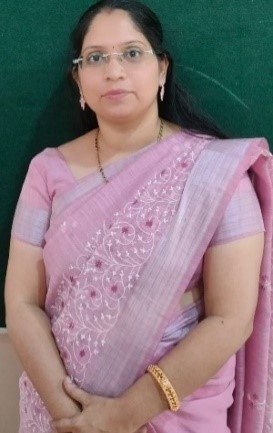 | Ms. Priti KarajkhedeBCA, MCA, SET |
| 10 | 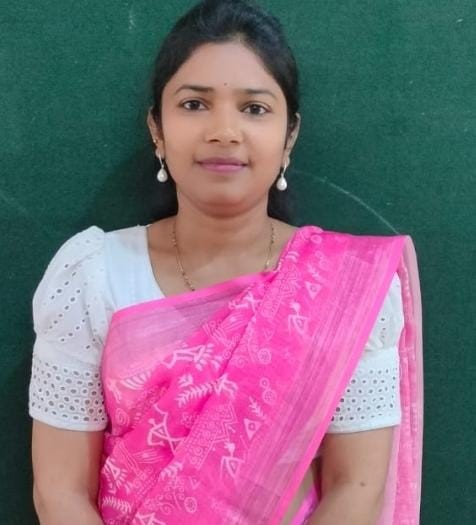 | Ms. Rashmi PimparkarBCA, M.Sc.(C.S.) |
| 11 | 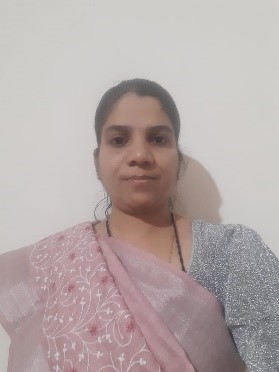 | Ms. Netra ArilikittiB.E.(CS),M.Sc.(C.S.) B.Ed |
Curricular activity:
- Remedial / Bridge course.
- Departmental Competitions
Co-Curricular activity:
- State or National Level Conference/Seminar/Webinar.
- Soft –Skills & Personality Development Programs.
- Career Counselling & Mentoring.
- Guest Lectures series /workshops on recent IT trends related to academics .
- Sports Day Celebration.
- Cultural Fest
- Field and Industry visit
- Skill Development Trainings.
- Birth and Death anniversary and Famous day celebrations.
- Special Attractions : PRAGYAN 1.O and VIGYAAN 2024 ( Different Competitions).
Establishment / Milestones:
Two Year Post graduation Degree Course, M.Sc(Computer Applications)was introduced in the Department from year 2022-23with initial intake 30.
Objectives:
•To produce trained software professionals with hands-on experience on state-of-the art technologies who will be able to handle software challenges in industry as well as academia.
•To produce knowledgeable and skilled human resources that is employable in IT and ITES.
•To impart knowledge required for planning, designing and building Complex Application Software Systems as well as to provide support for automated systems or applications.
•To produce entrepreneurs.
Eligibility:
A Bachelor Degree in Science/Technology/Engineering with minimum 50% marks or equivalent forstudent belonging to Unreserved Category and minimum 45% or equivalent for students belonging tothe Reserved Category.
Highlights:
•Excellent Infrastructure with spacious class rooms, computer laboratory.
•Highly qualified, experienced & approved staff.
•Seminars and Guest Lectures by Industrialists and subject experts. Technical & Non-technical program are arranged to enhance the IT & soft skills.
•Project Guidance by alumni’s and industrialists.Student mentoring system for giving personal touch to each of the students.
•The faculty membersprovide constant support and every piece of advice to the students whenever he/she faces a problem with any aspect of the curriculum or any personal problems.
Softwares:
C++, php, java, netbeans, Weka,Software Testing , Selenium,Android,Web Services, Python, Django, IOT, Artificial Intelligence
Hardware:
Lab No. | Area | No. of PCs | Projector | Laptop | Printer | Configuration |
Lab I | 815.34 Sq.ft | 40 | 01 | 01 | – | INTEL CORE 2 DEUO E8500 @ |
Lab II | 780.89 sq.ft. | 40 | 01 | 01 | 04 | Pentium 4 |
Lab III | 648sq. Ft. | 40 | 01 | 02 | 01 | Intel P4 |
Lab IV |
| 40 | 01 | 01 | 02 | Intel Dual Core |
Lab V |
| 41 | 01 | 01 | 01 | i5 4th Generation |
- Vivek Vahini (Science Association)
- RBPT (Research Based Pedagogical Tools)
- Social responsibility – No Vehicle Day
- Learning through Statistical games
- Listing of plant species in Campus
- Industrial Visit/ Field Visit to esteem organizations, to provide practical knowledge to students like
- Satara- Ajiyankya tara sugar Institute
- Botanical Survey of India, Pune regional Office.
- Gipsom Garden, Naneghat
- Onion Garlic Research Institute, Rajgurunagar, Pune.
- Mamta Milk Dairy PVT. Ltd.
- Agriculture College, Shivajinagar, Pune.
- Malavali, Lonavala – Biodiversity Study
- Vasantdada sugar institute Manjari
- Social Responsibility Activity with Vatsalya Matimand School Every year during Diwali. we help to sells Diwali Diyas at college premises made by Physically challenged students.
Curricular activity:
•Remedial / Bridge course.
•Departmental Competitions
Co-Curricular activity:
•State or National Level Conference/Webinar.
•Soft –Skills & Personality Development Programs.
•Career Counselling & Mentoring.
•Guest Lectures series /workshops on recent IT trends.
•Sports DayCelebration.Social concern:
•Skill Development Trainings.
Establishment / Milestones:
Two Year Post graduation Degree Course, M.Sc(Computer Applications)was introduced in the Department from year 2022-23with initial intake 30.
Objectives:
•To produce trained software professionals with hands-on experience on state-of-the art technologies who will be able to handle software challenges in industry as well as academia.
•To produce knowledgeable and skilled human resources that is employable in IT and ITES.
•To impart knowledge required for planning, designing and building Complex Application Software Systems as well as to provide support for automated systems or applications.
•To produce entrepreneurs.
Eligibility:
A Bachelor Degree in Science/Technology/Engineering with minimum 50% marks or equivalent forstudent belonging to Unreserved Category and minimum 45% or equivalent for students belonging tothe Reserved Category.
Highlights:
•Excellent Infrastructure with spacious class rooms, computer laboratory.
•Highly qualified, experienced & approved staff.
•Seminars and Guest Lectures by Industrialists and subject experts. Technical & Non-technical program are arranged to enhance the IT & soft skills.
•Project Guidance by alumni’s and industrialists.Student mentoring system for giving personal touch to each of the students.
•The faculty membersprovide constant support and every piece of advice to the students whenever he/she faces a problem with any aspect of the curriculum or any personal problems.
Softwares:
C++, php, java, netbeans, Weka,Software Testing , Selenium,Android,Web Services, Python, Django, IOT, Artificial Intelligence
Hardware:
Lab No. | Area | No. of PCs | Projector | Laptop | Printer | Configuration |
Lab I | 815.34 Sq.ft | 40 | 01 | 01 | – | INTEL CORE 2 DEUO E8500 @ |
Lab II | 780.89 sq.ft. | 40 | 01 | 01 | 04 | Pentium 4 |
Lab III | 648sq. Ft. | 40 | 01 | 02 | 01 | Intel P4 |
Lab IV |
| 40 | 01 | 01 | 02 | Intel Dual Core |
Lab V |
| 41 | 01 | 01 | 01 | i5 4th Generation |
- Vivek Vahini (Science Association)
- RBPT (Research Based Pedagogical Tools)
- Social responsibility – No Vehicle Day
- Learning through Statistical games
- Listing of plant species in Campus
- Industrial Visit/ Field Visit to esteem organizations, to provide practical knowledge to students like
- Satara- Ajiyankya tara sugar Institute
- Botanical Survey of India, Pune regional Office.
- Gipsom Garden, Naneghat
- Onion Garlic Research Institute, Rajgurunagar, Pune.
- Mamta Milk Dairy PVT. Ltd.
- Agriculture College, Shivajinagar, Pune.
- Malavali, Lonavala – Biodiversity Study
- Vasantdada sugar institute Manjari
- Social Responsibility Activity with Vatsalya Matimand School Every year during Diwali. we help to sells Diwali Diyas at college premises made by Physically challenged students.
Curricular activity:
•Remedial / Bridge course.
•Departmental Competitions
Co-Curricular activity:
•State or National Level Conference/Webinar.
•Soft –Skills & Personality Development Programs.
•Career Counselling & Mentoring.
•Guest Lectures series /workshops on recent IT trends.
•Sports DayCelebration.Social concern:
•Skill Development Trainings.
Overview
The Department of Chemistry of ‘PRATIBHA’ (Affiliation SPPU) aims at developing young talent for the chemical industry and academia. The curriculum is developed in such a way that the students are able to venture into allied fields too. The aim of the department through the courses it offers is to provide “a cut above the rest” man-power to the ever growing demands of the industry and to prepare students for higher studies and research. The interactive method of teaching at ‘PRATIBHA’ (Affiliation SPPU) is to bring about attitudinal changes to future professionals of the industry.
Equal importance is given to practical and theoretical methods of learning apart from experiential and digital modes of learning. Industrial projects form an integral part of the curriculum. Apart from the syllabus, the University emphasizes on Value Addition Programs like Current Affairs, Holistic Education, Certificate Courses and Placement Training Programs, which include training students in group discussions, facing interviews and so on.
Message
The Department of chemistry is one of the dynamic departments at PRATIBHA (Affiliation SPPU), established in 2015. We have a diverse student population with representation from almost all parts of Maharashtra and other states of India. The department is blessed with highly qualified faculty members who are from diverse backgrounds with abroad experience and involved in leading research in different areas of the subject as well as interdisciplinary areas. The curriculum undergoes frequent revision and provides opportunities for projects and joint research with faculty members.
The postgraduate program currently offers opportunities to specialize in organic, analytical, and general chemistry. Apart from curricular subjects, the department provides personality development and society-oriented programs, career guidance, placement, and opportunities to organize and participate in competitions, seminars, and conferences. Our commitment to excellence in teaching and research has helped the students graduated from the department achieve distinction in academia and industry.
Why choose this course?
- Holistic Foundation in Chemistry
- Hands-On Laboratory Focus
- Modern Analytical Techniques
- Path to Advanced Studies
- Comprehensive Chemical Foundation
What you will learn?
- Understand basic concepts in Chemical and biological sciences
- Apply ethical principles and responsibilities while conducting experimental studies.
- Demonstrate problem solving, analytical and logical skills to provide solutions for the scientific issues
- Express proficiency in oral and written communications to appreciate innovations in research.
- Develop the critical thinking with scientific temper
- Engage in continuous reflective learning in the context of technological and scientific advancements
Career prospects
- Master of Science in Chemistry
- Research in Chemistry
- Pharmaceutical Industry Researcher
- Higher education reputed institutes in India and abroad
- Clinical Laboratory Scientist
- Environmental Scientist
- Chemical or Analytical Chemists in Various Industries
- Quality Control Analyst or Food Technologist
- Academic Researcher or Science Educator
- Careers in Patents and IPR
- Bachelor of Education/Teaching
Job profiles | Research opportunities | Government opportunities |
|
ONGC, HPCL,
scholarships at Japan, South Korea, Singapore, Canada and USA) |
DRDO
|
Objectives of the Program
The UG degree in Chemistry aims to provide:
- Comprehensive knowledge and coherent understanding of the Chemistry.
- Knowledge and skills in Chemistry and related interdisciplinary areas thereby enhancing students’ employability /entrepreneurship.
- In-depth knowledge in Chemistry through understanding of key concepts, principles, theories and their manifestations.
- Critical and analytical thinking, scientific reasoning, creativity, problem-solving skills, communication skills and teamwork.
- Competence and skill in solving both theoretical and applied problems.
- Exposure to the latest advances in Chemistry, allied disciplines and research.
- Inculcate digital skills in Chemistry and interdisciplinary areas.
- Moral and ethical awareness, leadership qualities, innovation, and life-long learning.
- Multicultural and multilingual competence, inclusive spirit, and value education.
- Responsibility for Community engagement and service.
- Programme Outcomes (POs)
PO No. | PO Statement After completing the Master of Science degree students are able to | Knowledge and Skill |
PO-1 | Learn the terms, theories, assumptions, methods, principles, theorem statements and classification | Disciplinary knowledge |
PO-2 | Fix out the problem and resolve it using theories and practical knowledge. | Critical thinking and Problem solving |
PO-3 | Inculcate knowledge for carrying projects and advanced research related skills. | Research related skill |
PO-4 | Actively participate in team on case studies and field-based situations. | Cooperation/Team work |
PO-5 | Analyze and interpret ideas, evidences and experiences with learned scientific reasoning | Scientific reasoning |
PO-6 | Aware and implement the subject facts that can be applied for the personal and social development | Reflective thinking |
PO-7 | Use digital literacy to retrieve and evaluate subject related information | Information/Digitally literacy |
PO-8 | Get moral and ethical values for society as well as in research | Moral and ethical awareness |
PO-9 | Give analytical reasoning to interpret research data. | Analytical Reasoning |
PO-10 | Improve their managerial skills and abilities in subject related activities. | Leadership readiness/qualities |
PO-11 | Inculcate continuous learning habit through all available resources. | Lifelong readiness/qualities |
| Name of the Faculty | Designation | Qualification | Experience | Photo |
| Dr. Rajendra Kankariya | Adjunct Professor | M. Phil., Ph. D.M. A., M. Com., LL. M., M. B. A., M. Sc. D.M., M.A. J & MC. | Principal of 3 Colleges-18 yearsRegistrar of 2 Universities-05 yearsLecturer/Assistant Professor/Associate Professor-16 yearsProfessor-18 years |  |
| Dr. Yogesh Jorapur | Assistant Professor | M.Sc. (Chemistry), Ph.D., Postdoc (Japan, S. Korea) | 2 yrs. R & D Pharma; 8 years Postdoc. Japan/S. Korea; 2 years PG & 7 years UG teaching |  |
| Dr. Surekha Jogdand | Assistant Professor | M.Sc. (Chemistry), Ph.D. | 13 years |  |
| Dr. Seema Patil | Assistant Professor | M.Sc. (Chemistry), Ph.D. | 6 years |  |
Introduction and Objectives:
The Master of Science in Cyber Security (M.Sc. Cyber Security) program is designed to provide advanced education and training in the field of Cyber Security.
This comprehensive program aims to equip students with a profound understanding of theoretical concepts, practical skills, and cutting-edge technologies relevant to the rapidly evolving world of computing.
With a strong emphasis on academic excellence and research-driven learning, the M.Sc. Cyber Security program seeks to nurture a community of skilled Cyber security professionals capable of addressing complex challenges across various industries.
By fostering a stimulating and innovative learning environment, we strive to empower our students to become leaders, innovators, and agents of positive change in the field of Computer Science.
Establishment:
Two Year Post graduation Degree Course, M.Sc. (Cyber Security) introduced in from A.Y. 2025-26
Intake: 30 Students
Highlights:
- Excellent Infrastructure with spacious class rooms, computer laboratory.
- Highly qualified, experienced & approved staff.
- Seminars and Guest Lectures by Industrialists and subject experts. Technical & Non-technical program are arranged to enhance the IT & soft skills.
- Project Guidance by alumni’s and industrialists. Student mentoring system for giving personal touch to each of the students.
- The faculty members provide constant support and every piece of advice to the students whenever he/she faces a problem with any aspect of the curriculum or any personal problems.
(a) B.Sc. (Cyber and Digital Science) OR
(b) B.Sc. (Cyber Security) OR
(c) Bachelor of Computer Science (B.C.S.) OR
(d) B.Sc. (Computer Science) OR
(e) B.C.A. (Science) OR
(f) B.Sc. (Information Technology) OR
(g) B.Sc. (Cloud Computing) OR
(h) Bachelor of Engineering (BE) in Computer Science/Information Technology/Electronics and Telecommunication/AI and Data Science/AI and Machine Learning/ equivalent OR
(i) B.Voc. in Software Development/ Information Technology OR
(j) B.Sc. with Computer Science as Principal Subject OR
(k) General B.Sc. with Computer Science as one of the subject at TYBSc level OR
(l) Graduate degree from a recognized university / institution with an equivalent qualification.
| Name of the Faculty | Designation | Qualification | Experience | Photo |
| Mrs. Dipali L. Mahajan | Program Coordinator | M.Sc. (C.S.) SET | 16 years | 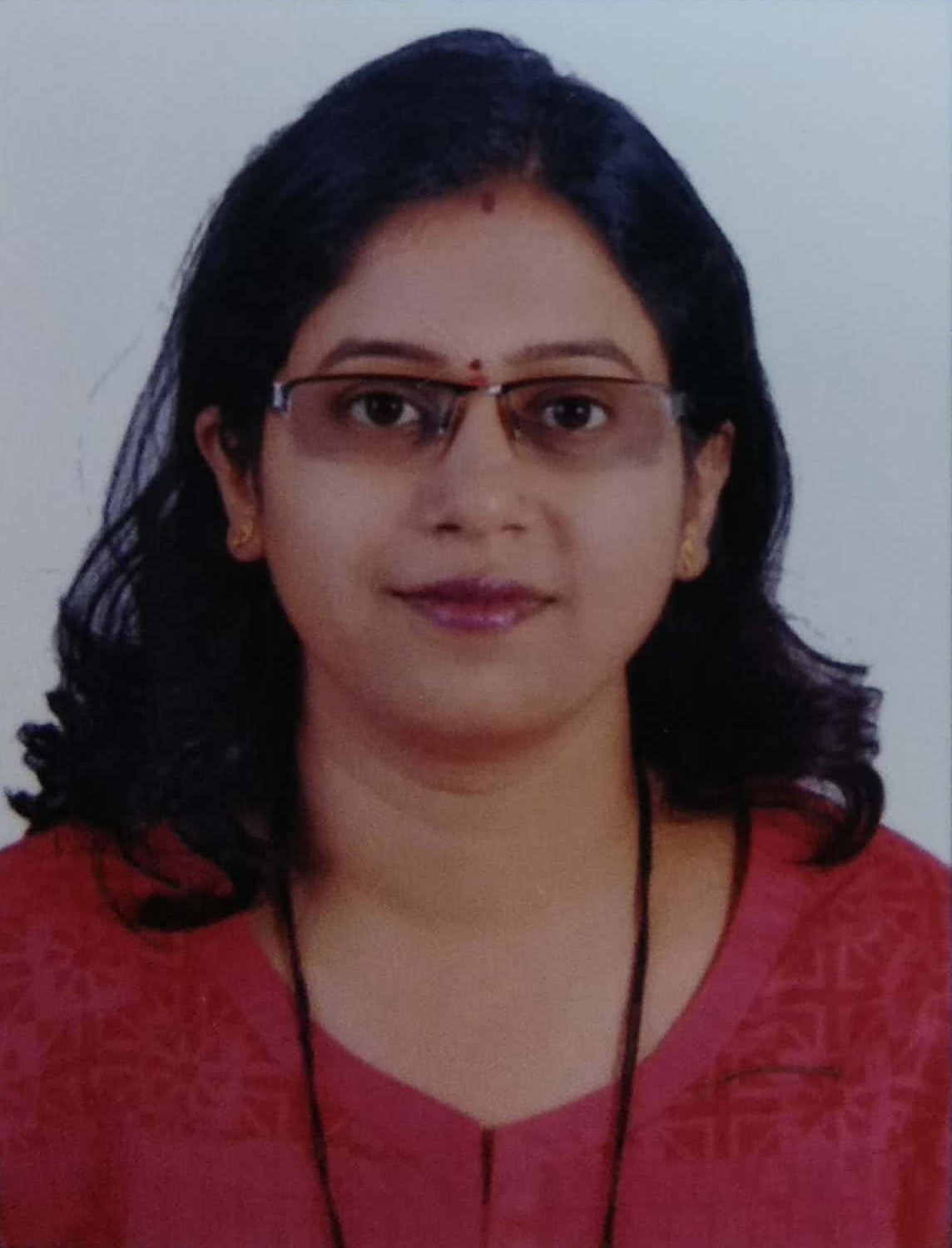 |
| Dr. Aparna Joshi | Assistant Professor | M.Sc.(C.S), B.Ed, SET, Ph.D | 19 Years |  |
| Mrs. Neeta Gatkal | Assistant Professor | M.Sc. (Electronics) NET | 15 years |  |
| Dr Anuradha Ghodke | Assistant Professor | MA MPhil PhD (English) | 16+ years |  |
| Ms. Shivani S Tikone | Assistant Professor | M.Sc(CS) | 2 years |  |
| Mrs. Pallavi Suryawanshi | Assistant Professor | M.Sc(CS) | 8+ years | 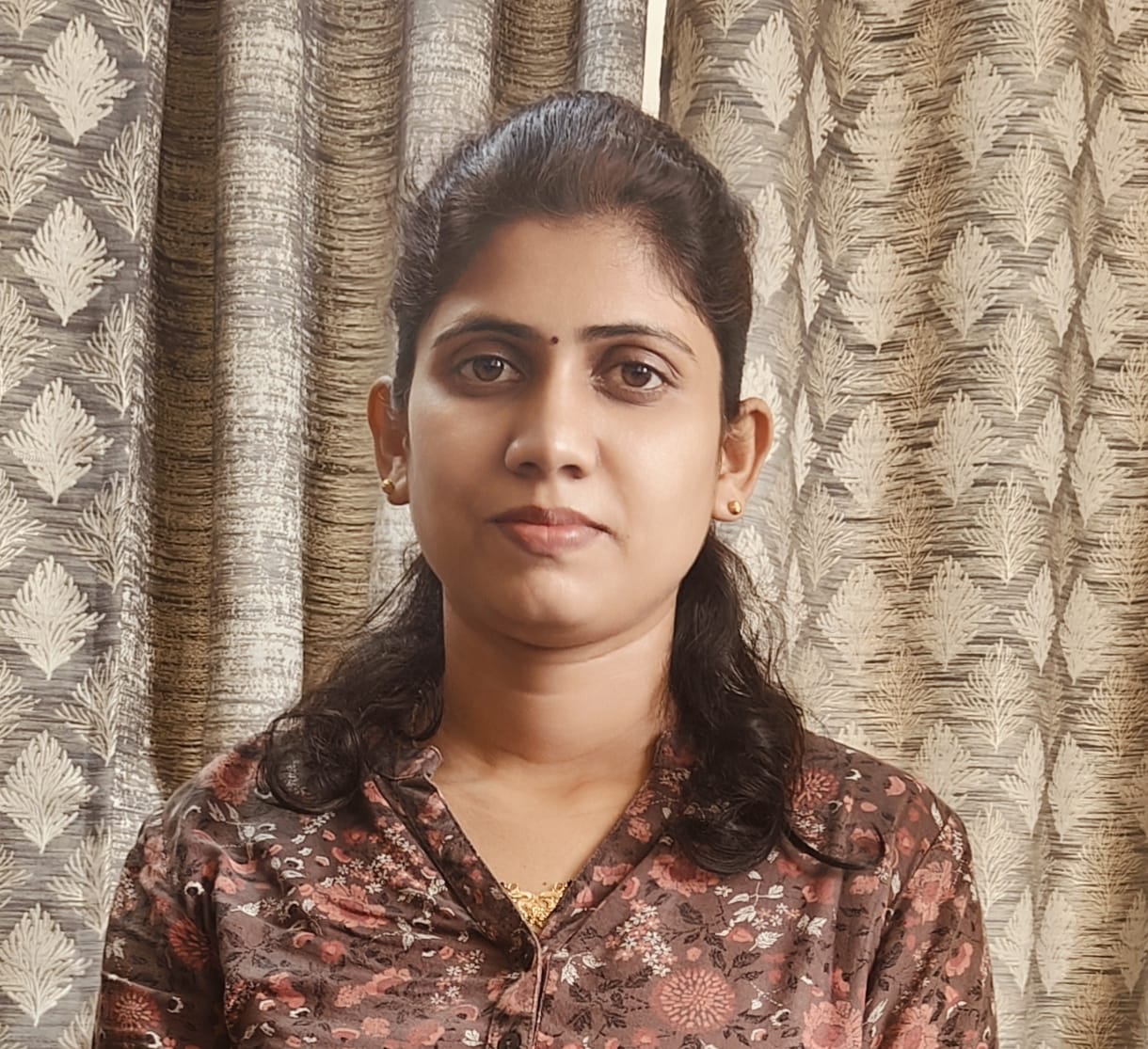 |
| Mrs. Pallavi Patil | Assistant Professor | MCA | 4.5 Years |  |
| Mrs. Prajakta A Yeole | Assistant Professor | MCA | 1 years | 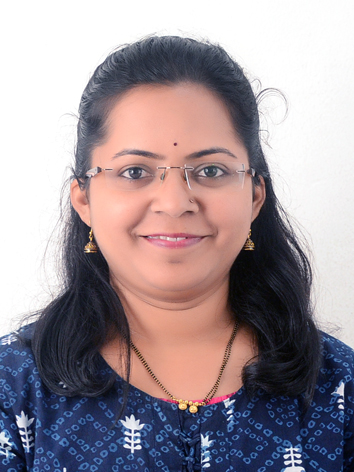 |
| Ms. Kanchan Patil | Assistant Professor | M.Sc(CS) | 1.4 Years |  |
| Mrs. Madhuri Chaudhari | Assistant Professor | MCA, Pursuing Ph.D | 10+ Years | 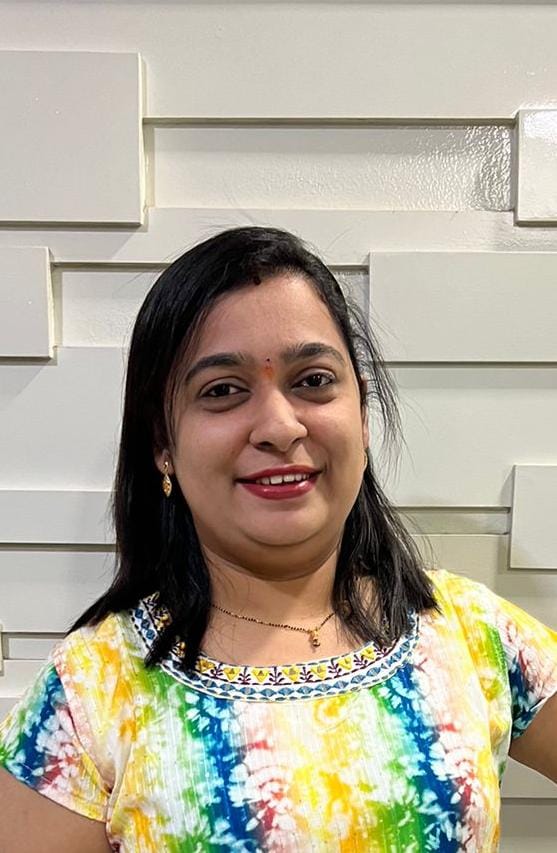 |
| Mrs. Mayura Sawant | Assistant Professor | M.Sc(CS) | 9 Years | 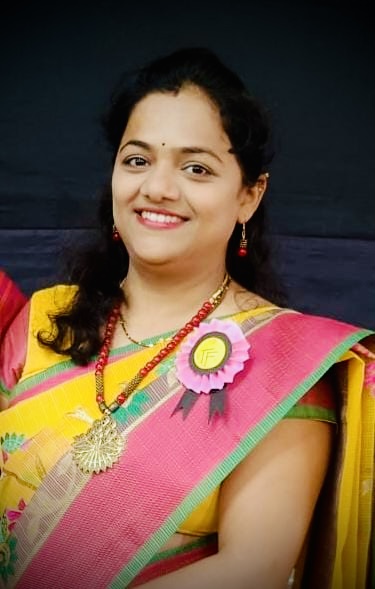 |
IT Resources:
Sr. No. | Name | Total No of License |
01 | Antivirus Software: Quick heal Seqrite for Windows | Admin Console 500/- Copies 2 |
02 | Microsoft | Campus Agreement 3 |
03 | Linux Kali | Open Sources |
Physical Facilities |
1. No. of ICT enabled classrooms: 2 |
2. No. of Laboratories: 3 |
3. Lab 403 (Capacity – 70) |
4. Lab 404 (Capacity – 70) |
5. S4 Lab (Capacity – 40) |
6. Electronic Lab (Capacity – 40) |
Introduction
Programme Description
In today’s tech-driven world, access to vast amounts of information and ways to interpret it have taken priority than ever before. Real time processing of this huge data is also a major requirement in every walk of life. It also means we need more people who can organize and analyze that information – people who can use data to make change and help businesses. Data science employs a variety of instruments, scientific procedures, methods, and algorithms to glean insights from both structured and unstructured data. This Data Science program integrates scientific methods from statistics, computer science and data-based business management to extract knowledge from data and drive decision making. Our curriculum provides students with a rigorous course of study in big data technologies, applications and practices a pathway for student internships and full-time employment. Students are prepared to meet the challenges at the intersection between big data, business analytics, and other emerging fields.
Why Choose an M.Sc. in Data Science?
- High Demand – Skilled data professionals are needed worldwide, with roles often offering remote work flexibility.
- Lucrative Career Opportunities – Students can work as data scientists, machine learning engineers, data analysts, AI specialists, or business intelligence analysts.
- Cross-Disciplinary Applications – Data science is used in everything from disease prediction to stock market analysis, climate modeling to customer behavior prediction, sports to Government and many more.
- Research & Innovation Opportunities – It opens pathways to Ph.D. programs or AI research roles if you’re academically inclined.
- Global Career Mobility – It enhances your credibility in the job market and can fast-track immigration pathways in tech-focused countries.
Career Scope
High Demand Across Industries
Almost every sector needs data professionals. Key industries include:
- Technology & Software
- Finance & Banking
- Healthcare & Pharma
- Retail & E-commerce
- Telecommunications
- Manufacturing & Supply Chain
- Government & Policy Research
- Media & Entertainment
- Education & Ed Tech
Applications of Programme
Finance & Banking: Credit Scoring, Algorithmic Trading, Customer Segmentation, Fraud Detection.
Healthcare: Predictive Diagnostics, Medical Imaging, Drug Discovery, Hospital Management.
Retail & E-commerce: Recommendation Systems, Customer Sentiment Analysis, Inventory Forecasting, Dynamic Pricing
Education: Learning Analytics, Dropout Prediction, Curriculum Optimization
Other features
- On Job Training (OJT) – At DSO, Banks, Industry, Govt. Offices
- Field Visits – NSO, Onion Garlic Research Centre, Vasantdada Sugar Institute and many more
- Projects & Research Work – Student friendly Faculty Members who help in projects and research work.
- Practicals – Practicals are conducted in R, Python and Other Softwares. (One Student – One Desktop)
- Outdoor Management Trip (OMT)
Objectives of M.Sc. Data Science
An M.Sc. in Data Science program generally aims to equip students with the knowledge and skills to analyze complex datasets, extract meaningful insights, and develop data-driven solutions. This involves a combination of theoretical foundations, practical applications, and hands-on experience with industry-standard tools and technologies.
Here’s a more detailed look at the typical objectives:
** Core Objectives:
- Develop a strong foundation in data science principles:
This includes understanding statistical analysis, machine learning algorithms, data mining techniques, and data visualization methods.
- Master programming languages and tools:
Proficiency in languages like Python and R, along with tools for data manipulation, analysis, and visualization (e.g., Pandas, NumPy, Matplotlib, etc.) is crucial.
- Learn to manage and process large datasets:
Understanding data storage, data warehousing, and big data technologies (e.g., Hadoop, Spark) is essential for handling the scale of data encountered in modern applications.
- Gain practical experience through case studies and projects:
Real-world applications and case studies help students apply their knowledge and develop problem-solving skills in various domains.
- Cultivate analytical and critical thinking:
Data science requires the ability to formulate hypotheses, analyze data, and draw logical conclusions, which are emphasized throughout the program.
- Enhance communication and presentation skills:
Data scientists need to effectively communicate their findings to both technical and non-technical audiences, through visualizations and clear reports.
- Foster ethical and responsible data practices:
Understanding the ethical implications of data collection, analysis, and usage is increasingly important in the field.
** Advanced Objectives:
- Specialization in specific areas:
Some programs offer specializations in areas like spatial data analytics, machine learning, or big data engineering.
- Research skills and innovation:
Advanced programs may encourage research and development in data science, preparing students for careers in academia or R&D.
- Interdisciplinary collaboration:
Data science often involves working with experts from various fields, and programs may emphasize interdisciplinary collaboration.
- Entrepreneurial skills:
Some programs aim to foster an entrepreneurial mindset, enabling students to develop data-driven solutions for businesses.
In essence, an M.Sc. in Data Science aims to produce graduates who are not only technically proficient but also possess the critical thinking, problem-solving, and communication skills necessary to thrive in the dynamic field of data science.
Eligibility
Graduate degree in Statistics / Mathematics / Computer Science / Computer Application/ Engineering / Technology or any other discipline with a minimum of two years of learning Mathematics or statistics from a recognized university / institution with an equivalent qualification.
Introduction-
The Bachelor of Science in Artificial Intelligence and Machine Learning (B.Sc. (AI & ML)) and B.Sc. (AI & ML) Honors and Research; program is designed to provide advanced education and training in the field of AI and ML.
Driven by the combination of increased access to data, computational power, and improved algorithms, Artificial Intelligence (AI) technologies are entering the mainstream of technological innovation.
These technologies include search, machine learning, and natural language processing, robotics and computer vision.
This course will also introduce the field of Machine Learning, in particular focusing on the Core concepts of supervised, unsupervised learning and reinforcement learning.
In supervised learning we will discuss algorithms which are trained on input data labeled with a desired output, for instance an image of a face and the name of the person whose face it is, and learn a function mapping from the input to the output.
Unsupervised learning aims to discover latent structure in input data where no output labels are available.
Students will learn the algorithms which underpin many popular Machine Learning techniques, as well as developing an understanding of the theoretical relationships between these algorithms.
Objectives of the Program:
The B.Sc. in Artificial Intelligence and Machine Learning (AI & ML) aims to provide students with a strong foundation in computer science, mathematics, and the theoretical and practical aspects of AI and ML.
The primary objectives of the program are:
- To build a strong foundational knowledge of core concepts in artificial intelligence, machine learning, data science, and computer programming.
- To develop analytical and problem-solving skills necessary to design, develop, and deploy AI/ML models and systems.
- To provide hands-on experience with modern tools, programming languages, and frameworks used in AI and ML through lab sessions, projects, and internships.
- To cultivate innovation and research aptitude in emerging areas of intelligent systems, deep learning, robotics, natural language processing, and more.
- To prepare students for careers in industries such as technology, healthcare, finance, and manufacturing, where AI and ML are transforming operations and decision-making.
Eligibility-
Passed Standard XII (10+2) or equivalent examination with Physics and Mathematics as compulsory subjects along with one of the Chemistry/ Biotechnology/ Biology/ Technical Vocational subject/
Computer Science/ Information Technology/ Informatics Practices/ Agriculture/ Engineering
Graphics/ Business Studies from any recognized Board with a minimum of 50% marks or equivalent grade (45% marks or equivalent grade for Scheduled Caste/ Scheduled Tribes).
 BSc AI/ML Syllabus
Dr. Harshita Vachhani -Head, Dept. of B.Sc. (AI/ML )
Programme Outcomes-
On the successful completion of the program, the following are the expected outcomes.
PO1: Apply basic principles of AI in solutions that require problem solving, inference, perception, knowledge representation, and learning.
PO2: Demonstrate awareness and a fundamental understanding of various applications of AI techniques in intelligent agents, expert systems, artificial neural networks and other machine learning models.
PO3: Identify problems where artificial intelligence techniques are applicable and demonstrate ability to share in discussions of AI, its current scope and limitations, and societal implications.
PO4: Demonstrate proficiency in applying scientific method to models of machine learning.
PO5: Develop an appreciation for what is involved in learning models from data by understanding a wide variety of learning algorithms and by understanding of the strengths and weaknesses of many popular machine learning approaches
PO6: To apply the algorithms to a real-world problem, optimize the models learned and report on the expected accuracy that can be achieved by applying the ML models.
PO7: Consider the pros and cons when choosing ML / AI methods for different applications
PO8: Appreciate the underlying mathematical relationships within and across Machine Learning an AI
PO8: Conduct investigations of complex problems by using research-based knowledge and research methods including design of experiments, analysis and interpretation of data, and synthesis of the information to provide valid conclusions.
PO9: Function effectively as an individual, and as a member or leader in diverse teams, and in multidisciplinary settings
PO10: Communicate effectively on complex engineering activities with then engineering community and with society at large, such as, being able to comprehend and write effective reports and design documentation, make effective presentations, and give clear instructions.
M.Sc. (Computer Science)
M.S.c (Computer Application)
M.Sc (Statistics)
M.Sc (Organic Chemistry)
MSc(Cyber Security)
M.Sc.(Data Science)
M.Sc. (Computer Science)
Course Overview
Introduction about the Course
- Computer Science plays a pivotal role in this era of the digital revolution. Its presence in today’s world is ubiquitous. There is a great demand, both in industry and academia, for computer science graduates who have sound knowledge of the underlying concepts and principles of computer science as well as the ability to apply them to solve real-world problems.
- The Department of Computer Science trains students to achieve these goals, which enables them to excel in their professional careers, whether in academics, research, or industry. The students study the design of digital hardware and software systems. Computer Science encompasses a wide range of topics like operating systems, computer architecture, computer networks, Mobile Computing, artificial intelligence and Software Engineering.
Objective:
- Possess practical and theoretical knowledge of computer science sufficient to earn a living and contribute to the development of the country.
- Be prepared for advanced education in computer science.
- Demonstrate proficiency in the analysis of complex problems and the synthesis of solutions to those problems.
- Advance the state−of−the−art in computer science and software engineering through the achievement of fundamental advances, testing these advances through their application to hard problems.
- Instruct undergraduate and Post -Graduate students in the state−of−the−art scientific and engineering methods pertinent to computer science and software engineering in order to lead students to a point of understanding where they remain inquisitive, serious, ethical, and creative problem solvers.
- Be engaged in local, regional, and state social and economic development for the benefit of both the public and private sectors.
Year of Establishment :2007
Affiliated to Savitribai Phule Pune University
Intake: 240
Eligibility
- H.S.C. (10 + 2) Science stream with Mathematics.
- Three years diploma course after S.S.C. (10th std.) of Board of Technical Education conducted by Government of Maharashtra or its equivalent.
Duration of the Course
4 year as Per NEP 2020
Course Structure
Enrollment Summary
| Year | Term I | Term II | Total |
|---|---|---|---|
| First | 22 | 22 | 44 |
| Second | 22 | 22 | 44 |
| Third | 22 | 22 | 44 |
| Fourth | 22 | 22 | 44 |
Level 4.5 — First Year | Semester I
| Course Type | Course Code | Course Title | TH | PR |
|---|---|---|---|---|
| Subject 1 | CS-101-T | Problem Solving using ‘C’ Programming | 2 | |
| CS-102-P | Lab Course based on CS-101-T | 2 | ||
| Subject 2 | MTC-101-T | Matrix Algebra | 2 | |
| MTC-102-P | Mathematics Practical I | 2 | ||
| Subject 3 | ELC-101-T | Principles of Analog Electronics | 2 | |
| ELC-102-P | Electronics Practical Course I | 2 | ||
| IKS (2) | IKS-100-T | Generic IKS | 2 | |
| GE/OE* (2) | OE-101-CS-T / OE-102-CS-T / OE-103-CS-T / OE-104-CS-T | Office Automation I / Introduction to Computers and Basics of Internet / Introduction to Google Apps I / Fundamentals of Computers I | 2 | |
| SEC (2) | SEC-101-CS | Statistical Methods for Computer Science I | 2 | |
| AEC (2) | AEC-101-ENG | English | 2 | |
| VEC (2) | VEC-101-ENV | EVS-I | 2 | |
| Total Credits: | 14 | 08 | ||
Level 4.5 — First Year | Semester II
| Course Type | Course Code | Course Title | TH | PR |
|---|---|---|---|---|
| Subject 1 | CS-151-T | Advanced C Programming | 2 | |
| CS-152-P | Lab Course Based on CS-151-T | 2 | ||
| Subject 2 | MTC-151-T | Graph Theory | 2 | |
| MTC-152-P | Mathematics Practical II | 2 | ||
| Subject 3 | ELC-151-T | Principles of Digital Electronics | 2 | |
| ELC-152-P | Electronics Practical Course II | 2 | ||
| GE/OE* (2) | OE-151-CS-T / OE-152-CS-T / OE-153-CS-T / OE-154-CS-T / OE-155-CS-T | Office Automation II / Computer Fundamentals / Introduction to Google Apps II / Fundamentals of Computers II / AI Tools for Business | 2 | |
| SEC (2) | SEC-151-CS-P | Statistical Methods for Computer Science II | 2 | |
| AEC (2) | AEC-151-ENG | English | 2 | |
| VEC (2) | VEC-151-ENV | EVS-II | 2 | |
| CC (2) | CC-151-T | From University Basket | 2 | |
| Total Credits: | 12 | 10 | ||
* The subjects offered to other faculty students under OE vertical are OE-151-CS-P / OE-152-CS-T / OE-153-CS-P / OE-154-CS-T. The students of B.Sc. (Computer Science) will opt the subjects offered by other faculty given in University Basket.
Exit option: Award of UG Certificate in Major with 44 credits and an additional 4 credits core as per university guidelines OR Continue with Major and Minor.
Continue option: Student will select one subject among Subject 2 and Subject 3 as minor and Subject 1 will be major subject. In Second Year, Subject 1 (Computer Science) will be Major Subject.
Exit option: Award of UG Certificate in Major with 44 credits and an additional 4 credits core as per university guidelines OR Continue with Major and Minor.
Continue option: Student will select one subject among Subject 2 and Subject 3 as minor and Subject 1 will be major subject. In Second Year, Subject 1 (Computer Science) will be Major Subject.
Level 5.0 — Second Year | Semester III
| Course Type | Course Code | Course Title | TH | PR |
|---|---|---|---|---|
| Major Core (4+2) | CS-201-MJ-T | Data Structure – I | 2 | |
| CS-202-MJ-T | Database Management System I | 2 | ||
| CS-203-MJ-P | Lab Course based on CS-201-MJ-T & CS-202-MJ-T | 2 | ||
| VSC (2) | CS-221-VSC-T | Software Engineering | 2 | |
| IKS | IKS-200-T | Computations in Ancient India | 2 | |
| FP/OJT/CEP (2) | CS-231-FP | Mini Project | 2 | |
| Minor (2+2) | CS-241-MN-T | Mathematics or Electronics | 2 | |
| CS-242-MN-P | Mathematics or Electronics | 2 | ||
| GE/OE (2) | OE-201-CS-T / OE-202-CS-P / OE-203-CS-T | E-Commerce / Web Design / Digital Marketing | 2 | |
| AEC (2) | AEC-201-T | From University Basket | 2 | |
| CC (2) | CC-201-T | From University Basket | 2 | |
| Total Credits: | 16 | 06 | ||
Level 5.0 — Second Year | Semester IV
| Course Type | Course Code | Course Title | TH | PR |
|---|---|---|---|---|
| Major Core (4+2) | CS-251-MJ-T | Data Structure – II | 2 | |
| CS-252-MJ-T | Database Management System II | 2 | ||
| CS-253-MJ-P | Lab Course based on CS-251-MJ-T & CS-252-MJ-T | 2 | ||
| VSC (2) | CS-221-VSC-P | Advanced Python Programming | 2 | |
| FP/OJT/CEP (2) | CS-281-FP | Mini Project | 2 | |
| Minor (2+2) | CS-291-MN-T | Mathematics or Electronics | 2 | |
| CS-292-MN-P | Mathematics or Electronics | 2 | ||
| GE/OE (2) | OE-251-CS-T / OE-252-CS-P / OE-253-CS-T | E-Commerce / Web Design / Digital Marketing | 2 | |
| SEC (2) | SEC-251-CS-P / SEC-252-CS-P | Computer Networks / Statistical Analysis using R Software | 2 | |
| AEC (2) | AEC251 | From University Basket | 2 | |
| CC (2) | CC-251-T | From University Basket | 2 | |
| Total Credits: | 10 | 12 | ||
Exit option: Award of UG Diploma in Major and Minor with 88 credits and an additional 4 credits core as per university guidelines OR Continue with Major and Minor.
Level 5.5 — Third Year | Semester V
| Course Type | Course Code | Course Title | TH | PR |
|---|---|---|---|---|
| Major Core (8+4) | CS-301-MJ-T | Core Java | 2 | |
| CS-302-MJ-T | Operating Systems | 2 | ||
| CS-303-MJ-T | Web Technology-I | 2 | ||
| CS-304-MJ-T | Theory of Computer Science | 2 | ||
| CS-305-MJ-P | Lab Course based on CS-302-MJ-T | 2 | ||
| CS-306-MJ-P | Lab Course based on CS-301-MJ-T & CS-303-MJ-T | 2 | ||
| Major Elective (2+2) | CS-307-MJ-T | Data Science | 2 | |
| CS-308-MJ-P | Lab Course based on CS-307-MJ-T | 2 | ||
| — OR — | ||||
| CS-309-MJ-T | Database Technologies | 2 | ||
| CS-3010-MJ-P | Lab Course on CS-309-MJ-T | 2 | ||
| — OR — | ||||
| CS-3011-MJ-T | Embedded Systems | 2 | ||
| CS-3012-MJ-P | Lab Course on CS-3011-MJ-T | 2 | ||
| VSC (2) | CS-321-VSC-P | Advanced Python Programming | 2 | |
| FP/OJT/CEP (2) | CS-331-FP | Project | 2 | |
| Minor (2) | CS-341-MN-T | Mathematics or Electronics | 2 | |
| Total Credits: | 12 | 10 | ||
Level 5.5 — Third Year | Semester VI
| Course Type | Course Code | Course Title | TH | PR |
|---|---|---|---|---|
| Major Core (8+4) | CS-351-MJ-T | Advanced Java | 2 | |
| CS-352-MJ-T | Design Framework | 2 | ||
| CS-353-MJ-T | Web Technology-II | 2 | ||
| CS-354-MJ-T | Compiler Construction | 2 | ||
| CS-355-MJ-P | Lab Course based on CS-352-MJ-T | 2 | ||
| CS-356-MJ-P | Lab Course based on CS-351-MJ-T & CS-353-MJ-T | 2 | ||
| Major Elective (2+2) | CS-357-MJ-T | Android Programming | 2 | |
| CS-358-MJ-P | Lab Course based on CS-357-MJ-T | 2 | ||
| — OR — | ||||
| CS-359-MJ-T | Software Testing Tools | 2 | ||
| CS-3510-MJ-P | Lab Course based on CS-359-MJ-T | 2 | ||
| — OR — | ||||
| CS-3511-MJ-T | Internet of Things | 2 | ||
| CS-3512-MJ-P | Lab Course based on CS-3511-MJ-T | 2 | ||
| VSC (2) | CS-321-VSC-P | Agile Processes | 2 | |
| FP/OJT/CEP (4) | CS-381-OJT | OJT | 4 | |
| Total Credits: | 10 | 12 | ||
Level 6.0 — Fourth Year | Semester VII (Research)
| Course Type | Course Code | Course Title | TH | PR |
|---|---|---|---|---|
| Major Core (6+4) | CS-401-MJ-T | Advanced Operating System | 2 | |
| CS-402-MJ-T | Artificial Intelligence | 2 | ||
| CS-403-MJ-T | Principles of Programming Language | 2 | ||
| CS-404-MJ-P | Lab Course based on CS-401-MJ-T | 2 | ||
| CS-405-MJ-P | Lab Course based on CS-402-MJ-T | 2 | ||
| Major Elective (2+2) | CS-406-MJ-T | Advance Databases and Web Technologies | 2 | |
| CS-407-MJ-P | Lab Course on CS-406-MJ-T | 2 | ||
| — OR — | ||||
| CS-408-MJ-T | Cloud Computing | 2 | ||
| CS-409-MJ-P | Lab Course on CS-408-MJ-T | 2 | ||
| — OR — | ||||
| CS-410-MJ-T | C# .NET Programming | 2 | ||
| CS-411-MJ-P | Lab Course on CS-410-MJ-T | 2 | ||
| FP/OJT/CEP/RP (4) | CS-431-RP | Research Project | 4 | |
| CS-451-MN | Research Methodology | 4 | ||
| Total Credits: | 12 | 10 | ||
Level 6.0 — Fourth Year | Semester VIII (Research)
| Course Type | Course Code | Course Title | TH | PR |
|---|---|---|---|---|
| Major Core (6+4) | CS-451-MJ-T | Design and Analysis of Algorithms | 2 | |
| CS-452-MJ-T | Mobile App Development Technologies | 2 | ||
| CS-453-MJ-T | Software Project Management | 2 | ||
| CS-454-MJ-P | Lab Course based on CS-451-MJ-T | 2 | ||
| CS-455-MJ-P | Lab Course based on CS-452-MJ-T | 2 | ||
| Major Elective (2+2) | CS-456-MJ-T | Full Stack Development I | 2 | |
| CS-457-MJ-P | Lab Course based on CS-456-MJ-T | 2 | ||
| — OR — | ||||
| CS-458-MJ-T | Web Services | 2 | ||
| CS-459MJ-P | Lab Course based on CS-458-MJ-T | 2 | ||
| — OR — | ||||
| CS-460-MJ-T | ASP DOT Net Programming | 2 | ||
| CS-461-MJ-P | Lab Course based on CS-460-MJ-T | 2 | ||
| FP/OJT/CEP (8) | CS-481-FP | Research Project | 8 | |
| Total Credits: | 08 | 14 | ||
Level 6.0 — Fourth Year | Semester VII (Honours)
| Course Type | Course Code | Course Title | TH | PR |
|---|---|---|---|---|
| Major Core (10+4) | CS-401-MJ-T | Advanced Operating System | 2 | |
| CS-402-MJ-T | Artificial Intelligence | 2 | ||
| CS-403-MJ-T | Principles of Programming Language | 2 | ||
| CS-404-MJ-P | Lab Course based on CS-401-MJ-T | 2 | ||
| CS-405-MJ-P | Lab Course based on CS-402-MJ-T | 2 | ||
| CS-406-MJ-T | Advanced Networking | 2 | ||
| CS-407-MJ-T | Digital Marketing | 2 | ||
| Major Elective (2+2) | CS-408-MJ-T | Advance Databases and Web Technologies | 2 | |
| CS-409-MJ-P | Lab Course on CS-408-MJ-T | 2 | ||
| — OR — | ||||
| CS-410-MJ-T | Cloud Computing | 2 | ||
| CS-411-MJP-T | Lab Course on CS-410-MJ-T | 2 | ||
| — OR — | ||||
| CS-412-MJ-T | C# .NET Programming | 2 | ||
| CS-413-MJ-P | Lab Course on CS-412-MJ-T | 2 | ||
| CS-441-MN-T | Research Methodology | 4 | ||
| Total Credits: | 16 | 06 | ||
Level 6.0 — Fourth Year | Semester VIII (Honours)
| Course Type | Course Code | Course Title | TH | PR |
|---|---|---|---|---|
| Major Core (10+4) | CS-451-MJ-T | Design and Analysis of Algorithms | 2 | |
| CS-452-MJ-T | Mobile App Development Technologies | 2 | ||
| CS-453-MJ-T | Software Project Management | 2 | ||
| CS-454-MJ-P | Lab Course based on CS-451-MJ-T | 2 | ||
| CS-455-MJ-P | Lab Course based on CS-452-MJ-T | 2 | ||
| CS-456-MJ-T | Crypto Currency Technologies | 2 | ||
| CS-457-MJ-T | Cyber Security | 2 | ||
| Major Elective (2+2) | CS-458-MJ-T | Full Stack Development I | 2 | |
| CS-459-MJ-P | Lab Course based on CS-458-MJ-T | 2 | ||
| — OR — | ||||
| CS-460-MJ-T | Web Services | 2 | ||
| CS-461-MJ-P | Lab Course based on CS-460-MJ-T | 2 | ||
| — OR — | ||||
| CS-462-MJ-T | ASP DOT Net Programming | 2 | ||
| CS-463-MJ-P | Lab Course based on CS-462-MJ-T | 2 | ||
| FP/OJT/CEP (4) | CS-481-OJT | OJT | 4 | |
| Total Credits: | 12 | 10 | ||
Career Prospects
CAREEER OPPOURNITIES
- Software Developer
- Web/App Developer
- Data Analyst
- System/Network Administrator
- QA/Software Tester
- Cybersecurity Analyst
- Cloud Support Engineer
HIGHER STUDIES
- M.Sc. Computer Science
- MCA
- MBA
- M.Sc. Data Science / AI / Cybersecurity
Program Outcomes
Program Outcomes — B.Sc. (Computer Science)
After successful completion of B.Sc.(CS) Programme students will be able to:
| PO No. | Outcomes |
|---|---|
| PO 1 | Develop creative skills, critical thinking, analytical skills and research to address the real world problems using computational skills |
| PO 2 | Understand and apply mathematical foundation, computing and domain knowledge and develop computing models for defined problems |
| PO 3 | Understand software project management and computing principles with computing knowledge to manage projects in multidisciplinary environments |
| PO 4 | Illustrate the concepts of systems fundamentals, including architectures and organization, operating systems, networking and communication |
| PO 5 | Understand and apply the concepts of Digital Electronics, Computer Architecture, IoT etc. |
| PO 6 | Recognize the need for and develop the ability to engage in continuous learning as a Computing professional |
| PO 7 | Apply modern computing tools, skills and techniques necessary for innovative software solutions |
| PO 8 | Communicate effectively with the computing community as well as society by being able to comprehend effective documentations and presentations |
| PO 9 | Gain Self Discipline and commit Professional Ethics in global economic environment |
| PO 10 | Individual & Team Work: Ability to work as a member or leader in diverse teams in multidisciplinary environment |
| PO 11 | Identify opportunities, entrepreneurship vision and use innovative ideas to create value and wealth for the betterment of the individual and society |
Course Outcomes — B.Sc. (Computer Science)
Semester I
CS-101-T: Problem Solving Using C Programming (Subject 1) | 2 Credits | 2 Hrs/Week
Course Objectives:
To introduce the foundations of computing, programming and problem-solving using computers.
To develop the ability to analyse a problem and devise an algorithm to solve it.
To formulate algorithms, pseudo codes and flowcharts for arithmetic and logical problems.
To understand structured programming approaches.
To implement algorithms in the ‘C’ language.
To test, debug and execute programs.
Course Outcomes:
CO1: Explore algorithmic approaches to problem solving.
CO2: Control the sequence of the program and give logical outputs.
CO3: Understand and manage Input/Output operations in ‘C’ program.
CO4: Develop modular programs using control structures and arrays in ‘C’.
MTC-101-T: Matrix Algebra (Subject 2) | 2 Credits | 2 Hrs/Week
Course Objectives:
A student should be able to recall basic facts about mathematics and should be able to display knowledge of conventions such as notations, terminology and recognize basic geometrical figures and graphical displays, state important facts resulting from their studies.
A student should get a relational understanding of mathematical concepts and concerned structures, and should be able to follow the patterns involved, mathematical reasoning.
A student should get adequate exposure to global and local concerns that explore them many aspects of Mathematical.
Course Outcomes:
CO1: Work with graphs and identify certain parameters and properties of the given graphs.
CO2: Perform certain algorithms, justify why these algorithms work, and give some estimates of the running times of these algorithms.
CO3: Solve basic exercises of the type: given a graph with properties X, prove that the graph also has property Y.
CO4: Develop an appreciation for the literature on the subject and be able to read and present results from the literature.
CO5: Write cohesive and comprehensive solutions to exercises and be able to defend their arguments.
ELC-101-T: Principles of Analog Electronics (Subject 3) | 2 Credits | 2 Hrs/Week
Course Objectives:
To study various types of semiconductor devices.
To study elementary electronic circuits and systems.
To study Instrumentation System.
To study various blocks of instrumentation System.
To study smart instrumentation system.
Course Outcomes:
CO1: Understand the concept of semiconductor diodes.
CO2: Understand the different applications of FET, BJT and MOSFET.
CO3: Understand working principle of different sensors.
CO4: Use Op-amp for different application.
AEC-101-ENG: English (AEC) | 2 Credits | 2 Hrs/Week
Course Objectives:
To read and understand texts in English.
To enrich and use vocabulary effectively.
To understand and Develop Communicative Competence.
To use body language in different situations.
To acquaint with digital platforms and technology.
To write letters, notices, agenda, minutes, and blog.
Course Outcomes:
CO1: Read and understand texts in English.
CO2: Enrich and use vocabulary effectively.
CO3: Understand and Develop Communicative Competence.
CO4: Use body language in different situations.
CO5: Acquaint with digital platforms and technology.
CO6: Write letter, notice, agenda, minutes and blog.
IKS-100-T: Generic IKS (IKS) | 2 Credits | 2 Hrs/Week
Course Objectives:
To understand the nature of knowledge.
To understand the evolution of the scientific approach in the Indian subcontinent.
To study contributions made by different people to the various branches of knowledge before modernity evolved in India.
Course Outcomes:
CO1: The concept of the ancient intellectual knowledge tradition will be understood.
CO2: Developments in science from ancient times will be introduced.
CO3: Information about human development will be understood.
VEC-101-ENV: EVS-I (VEC) | 2 Credits | 2 Hrs/Week
Course Objectives:
To create awareness about the natural environment and its importance.
To understand the interrelationship between humans and nature.
To provide knowledge on ecosystems, biodiversity, and natural resources.
To encourage environmental ethics and promote sustainable development.
To build a foundation for solving environmental challenges.
Course Outcomes:
CO1: Describe how human activities impact the environment.
CO2: Explain principles of sustainable development and resource management.
CO3: Analyse local, regional, and global environmental issues and their effects.
CO4: Evaluate different strategies for conserving biodiversity and ecosystems.
CO5: Apply relevant environmental policies and ethical considerations to real-world scenarios.
CO6: Design and implement action plans for community-based environmental projects.
Semester II
CS-151-T: Advanced C Programming (Subject 1) | 2 Credits | 2 Hrs/Week
Course Objectives:
To study advanced concepts of programming using the ‘C’ language.
To understand code organization with complex data types and structures.
To work with files and file operations in C.
Course Outcomes:
CO1: Develop modular programs using control structures, functions, pointers, arrays, strings, and structures.
CO2: Design and develop solutions to real-world problems using advanced C programming.
CO3: Understand and repeat the sequence of instructions and access specific memory locations using pointers.
CO4: Identify, analyze, develop, verify, and document software requirements for a computing environment.
MTC-151-T: Graph Theory (Subject 2) | 2 Credits | 2 Hrs/Week
Course Objectives:
A student should be able to recall basic facts about mathematics and display knowledge of conventions.
A student should get a relational understanding of mathematical concepts and concerned structures.
A student should get adequate exposure to global and local concerns in Mathematical aspects.
Course Outcomes:
CO1: Work with graphs and identify certain parameters and properties of the given graphs.
CO2: Perform certain algorithms, justify why these algorithms work, and give estimates of running times.
CO3: Solve basic exercises: given a graph with properties X, prove that the graph also has property Y.
CO4: Develop an appreciation for the literature on the subject and be able to read and present results.
ELC-151-T: Principles of Digital Electronics (Subject 3) | 2 Credits | 2 Hrs/Week
Course Objectives:
To learn different number system and their inter conversion.
To understand logic gates and their applications.
To study rules and laws of Boolean Algebra.
To understand design of combinational circuit and their different types.
Course Outcomes:
CO1: Learn different number system and their inter conversion.
CO2: Understand logic gates and their applications.
CO3: Study rules and laws of Boolean Algebra.
CO4: Understand design of combinational circuit and their different types.
AEC-151-ENG: English (AEC) | 2 Credits | 2 Hrs/Week
Course Outcomes: (Same as Semester I AEC-101)
VEC-151-ENV: EVS-II (VEC) | 2 Credits | 2 Hrs/Week
Course Objectives:
To provide knowledge about environmental issues and concerns.
To understand the importance of natural resources and biodiversity.
To create awareness about sustainable development and environmental ethics.
To study environmental policies, laws, and practices.
To encourage students to adopt eco-friendly behaviour and conservation values.
Course Outcomes:
CO1: Identify various types of environmental pollution and their impacts on health.
CO2: Explain the basic concepts of climate change, including its causes and effects.
CO3: Analyse different strategies for adapting to and mitigating the effects of climate change.
CO4: Evaluate various environmental management practices and their effectiveness.
CO5: Apply the principles of key environmental treaties and legislation to case studies.
CO6: Create action plans that address specific environmental issues based on current policies.
Semester III
CS-201-MJ-T: Data Structure I (Major Core) | 2 Credits | 2 Hrs/Week
Course Objectives:
To analyse the efficiency of algorithm and solve the problem in systematic way.
To understand the different methods of organizing large amount of data.
To design and implement the different data structures.
To implement solutions for the specific problems.
To apply different data structures to solve real life problems.
Course Outcomes:
CO1: Understand basics of data structure and algorithm analysis.
CO2: Apply working strategy for different data Structures to solve related problems.
CO3: Implement Data Structure and its Applications.
CO4: Develop real world application based on data structures like array, link list, stack and queue.
CO5: Design data structure to solve problems using appropriate algorithmic techniques.
CS-202-MJ-T: Database Management System I (Major Core) | 2 Credits | 2 Hrs/Week
Course Objectives:
To learn the fundamental concepts of database using PostgreSQL.
To understand user requirements and frame it in data model.
To Execute Database Queries like creations, manipulation on database.
Course Outcomes:
CO1: Solve real world problems using appropriate set, function, and relational models.
CO2: Design E-R Model for given requirements and convert the same into database tables.
CO3: Design and create relational database systems.
CO4: Evaluate and apply database management operations to use database systems.
CS-221-VSC-T: Software Engineering (VSC) | 2 Credits | 2 Hrs/Week
Course Objectives:
To get knowledge and understanding of software engineering discipline.
To learn analysis and design principles for software project development.
Implement Agile Development Methodologies in real life Software Projects.
Course Outcomes:
CO1: Identify data requirements, analyse and prepare data models.
CO2: Understand basic software engineering concepts and Process models.
CO3: Compare and chose a process model for a software project development.
CO4: Design different UML Diagrams.
CS-201-IKS-T: Indian Knowledge System in Computing (IKS) | 2 Credits | 2 Hrs/Week
Course Objectives:
To introduce Vedic mathematical techniques and their relevance to modern computational methods.
To understand Nyaya’s logical framework and its application in reasoning and AI.
To explore the algorithmic structure of Panini’s grammar and Chandasastra’s binary system in computational linguistics and mathematics.
Course Outcomes:
CO1: Understand foundational principles of Indian Knowledge Systems related to computing.
CO2: Recognize and explain ancient Indian logic and algorithms.
CO3: Relate traditional computing concepts to modern programming and logic structures.
CO4: Apply insights from IKS in innovative computing solutions and interdisciplinary research.
CO5: Demonstrate awareness of India’s intellectual traditions and their relevance to contemporary computer science.
CS-231-FP: Mini Project (FP/OJT/CEP) | 2 Credits | 2 Hrs/Week
Course Outcomes:
CO1: Identify requirements, analyse and prepare models.
CO2: Understand basic SW engineering concepts and Process models.
CO3: Compare and chose a process model for a software project development.
CO4: Design different UML Diagrams.
CS-241-MN: Embedded System with AVR Microcontroller (Minor) | 2 Credits | 2 Hrs/Week
Course Objectives:
To understand the fundamental concepts of embedded systems and microcontrollers.
To explore the architecture and features of the AVR microcontroller family.
To understand the memory organization of AVR microcontroller.
To gain proficiency in programming AVR microcontrollers using the C language.
To understand and implement peripheral interfacing with real-world applications.
To develop embedded solutions using timers, interrupts, serial communication, and protocols like SPI and I2C.
Course Outcomes:
CO1: Explain the basic concepts of embedded systems and compare microcontrollers and microprocessors.
CO2: Describe AVR microcontroller architecture, including memory structure, register file, and development tools.
CO3: Implement AVR microcontroller-based applications using C, including timers, counters, I/O & serial operations.
CO4: Interface AVR microcontrollers with external devices such as LCDs, sensors, motors, and ADC/DAC components.
CO5: Design embedded applications involving serial communication and peripheral interfacing using standard protocols (SPI, I2C).
MTC-231-T: Numerical Techniques (Minor) | 2 Credits | 2 Hrs/Week
Course Objectives:
To develop a clear understanding of basic numerical methods such as root finding, interpolation, numerical differentiation and integration, and solving systems of linear equations.
To equip students with techniques to apply numerical algorithms for approximating solutions to problems arising in science, engineering, and computational applications.
To implement numerical algorithms using programming languages like C/C++ or Python, enhancing computational thinking and programming proficiency.
To study and evaluate the accuracy, convergence, and stability of numerical methods, enabling students to select appropriate techniques based on error analysis.
To foster logical reasoning by analysing the step-by-step approach of numerical algorithms and their limitations in approximating mathematical problems.
Course Outcomes:
CO1: Understand and apply numerical methods to solve algebraic and transcendental equations, including bisection, false position, and Newton-Raphson methods, with an emphasis on error analysis and convergence.
CO2: Develop a strong foundation in finite difference concepts, including forward, backward, central, and other difference operators, and understand their roles in numerical approximation.
CO3: Apply interpolation techniques for estimating intermediate values, using Newton’s Gregory formulas, Lagrange’s interpolation, and divided differences.
CO4: Utilize numerical integration methods such as the trapezoidal rule, Simpson’s one-third rule, and Simpson’s three-eighth rule to approximate definite integrals.
CO5: Solve ordinary differential equations numerically using Euler’s method, Euler’s modified method, and Runge-Kutta methods, understanding their accuracy and applicability.
Semester IV
CSD-232-T: Data Structure – II (Major Core) | 2 Credits | 2 Hrs/Week
Course Objectives:
Understand the fundamental concepts of trees, search trees, graphs, and hash tables to analyse their structure and properties.
Apply appropriate tree and graph traversal techniques to solve real-world computational problems.
Analyse the efficiency of various searching, graph algorithms, and hashing techniques for optimized data retrieval.
Design and implement tree, graph, and hash-based data structures to develop efficient algorithmic solutions.
Course Outcomes:
CO1: Learn traversal algorithms to solve computational problems efficiently.
CO2: Analyse the performance of different data structures.
CO3: Design graph-based solutions using representations techniques.
CO4: Evaluate the efficiency of different strategies of data storage and retrieval.
CSD-234-T: Database Management System – II (Major Core) | 2 Credits | 2 Hrs/Week
Course Objectives:
To teach fundamental concepts of RDBMS (PL/PGSQL).
To teach database management operations.
Be familiar with the basic issues of transaction processing and concurrency control.
To teach data security and its importance.
Course Outcomes:
CO1: Understand PL/PGSQL database techniques and its programming skill.
CO2: Apply and relate the concepts of database transaction management.
CO3: Implement the concurrency control mechanism and recovery techniques in the databases.
CO4: Inculcate concepts of modern databases.
CO5: Apply the database security concepts in real life situation.
CS-271-VSC-P: Advanced Python Programming (VSC) | 2 Credits | 2 Hrs/Week
Course Objectives:
Understand and manipulate operations on data in Python.
Develop the ability to write reusable functions to organize code better and improve efficiency.
Learn to structure their programs using functions and modules to improve readability.
Course Outcomes:
CO1: Read and write data from & to files in Python.
CO2: Express proficiency in the handling of strings and functions.
CO3: Identify the commonly used operations involving file systems and regular expressions.
CO4: Develop application using python.
CS-281-FP: Mini Project (FP/OJT/CEP) | 2 Credits | 2 Hrs/Week
Course Outcomes: (Same as Semester III Mini Project)
Document continues with Semester V & VI courses…
Due to length constraints, remaining semesters follow the same structured format.
Faculty/Staff
Dr. Harshita Vachhani
Program Coordinator
M.Sc.(C.S), MBA,Ph.D.
Dr. Nilambari Kale
Assistant Professor
M.Sc.(C.S),SET
Mrs. Tripti Mahabare
Assistant Professor
M.Sc.(C.S),AMIETE, NET,SET,Ph.D. pursuing
Dr. Charushila Patil
Assistant Professor
MSc(CS),NET,SET
Mrs. Rupali Mote
Assistant Professor
MSc(CS),NET,SET Ph.D (Pursuing)
Mrs. Poonam Kankariya
Assistant Professor
MSc (CS), B.Ed., MBA (Business Analytics), Ph.D. (Pursuing)
Mrs. Supriya Gaikwad
Assistant Professor
M.Sc.(C.S),SET, Ph.D.(Pursuing)
Mrs.Ujwala Falak
Assistant Professor
M.Sc.(C.S),NET, SET, Ph.D.(Pursuing)
Mrs. Poonam Karale
Assistant Professor
M.Sc.(C.S), Ph.D.(Pursuing)
Mrs. Rupali Kothawade
Assistant Professor
M.C.S,NET,SET
Miss.Ritu Gaikwad
Assistant Professor
MCA Specialization: Development
Miss.Snehal Kadam
Assistant Professor
MCA
Mrs. Kshitija Bhagat
Assistant Professor
MCA
Mrs. Shubhangi Suryawanshi
Assistant Professor
Msc CS B.Ed
Mrs. Neeta Ukirade
Assistant Professor
M.Sc. Electronics, NET Ph.D Pursuing
Mrs. Gitanjali Dhore
Assistant Professor
M.Sc. Electronics
Mrs. Jyoti Ingle
Assistant Professor
M.Sc. Electronics, B.Ed
Mrs.Supriya Pachhapure
Assistant Professor
M.Sc. Electronics
Miss. Rutuja Baliram Kobal
Assistant Professor
MSc. Statistics
Miss.Dhanshree Sayaji Khese
Assistant Professor
MSc. statistics
Miss. Varsha Bhosle
Assistant Professor
Qualifications
Miss.Komal Shridhar Bhhaware
Assistant Professor
M.Sc. Mathematics, B.Ed.
Mr. Sourabh Kalyan Dhawale
Assistant Professor
M.Sc. Mathematics, B.Ed.
Departmental Activities
Department Activities — B.Sc. Computer Science
| Sr. No. | Name of Activity | Academic Year |
|---|---|---|
| 1 | Departmental Meeting for planning yearly activities and events | 2024-25 |
| 2 | Pragyan 2.0 Event organized on 6th Feb. 2025 to 7th Feb 2025 | 2024-25 |
| 3 | Guest Lecture for TYBSc(CS) Students On “Career Opportunities on MCA and MBA” 9th Feb 2024 | 2024-25 |
| 4 | Workshop on Frontend Technology: Angular JS, TypeScript, BootStrap on 26th June 2025 | 2024-25 |
| 5 | Signature Activity organized for FYBSc(CS) Students: “Hardware Workshop” from 22th Jan 25 to 27th Jan 2025 | 2024-25 |
| 6 | Parent Teacher Meeting for FYBSc(CS) students on 26th October 2024 | 2024-25 |
| 7 | Farewell Party for Final Year Students on 7th May 2025 | 2024-25 |
| 8 | AI Documentary Competition on the Occasion of National Science Day on 3rd March 2025 | 2024-25 |
| 9 | Departmental Meeting for planning yearly activities and events 16th July 2025 | 2025-2026 |
| 10 | Induction Program for F.Y.B.Sc(CS) 13th July 2025 | 2025-2026 |
| 11 | Departmental Meeting for planning yearly activities and events | 2025-2026 |
| 12 | TECH-FEST Activity Under Computer Science Association 21st August 2025 | 2025-2026 |
| 13 | Activity on Academic Challenges and Interpersonal Issues on 18th August 2025 | 2025-2026 |
| 14 | Guest Lecture on “Testing Introduction with Manual Testing” on 16th July 2025 | 2025-2026 |
| 15 | Alumni talk for T.Y.B.Sc(CS) students On “How to Get Job Ready in the Era of AI” on 23rd August 2025 | 2025-2026 |
| 16 | One Day Workshop on “Java and Mern Stack” on 18th July 2025 | 2025-2026 |
Gallery
M.S.c (Computer Application)
Course Overview
Introduction about the Course
M.Sc. CA is a postgraduate program focused on advanced computer application, software development, and IT skills. It prepares students for professional careers in technology, research, and industry.
Year of Establishment 2022
Affiliated to Savitribai Pune Phule university
Intake: First Year 30
Eligibility
A Bachelor Degree in Science/Technology/Engineering with minimum 45% marks in Mathematics or equivalent for student belonging to Unreserved Category and minimum 45% or equivalent for students belonging to the Reserved Category.
Duration of the Course
2 years as per NEP guidelines
Course Structure
Enrollment Summary
| Year | Term I | Term II | Total |
|---|---|---|---|
| FY MSc(CA) | 22 | 22 | 44 |
| SY MSc(CA) | 22 | 22 | 44 |
FY MSc (CA) Semester I
| Semester | Course Type | Course Name / Course Title | Total Credits |
|---|---|---|---|
| I | Theory | CA 501 MJ Database Systems and SQL | 04 |
| I | Theory | CA 502 MJ Python Programming and Data Structures | 04 |
| I | Theory | CA 503 MJ Operating Systems | 02 |
| I | Practical | CA 504 MJP Lab course Based on CA 501 MJ & CA 503 MJ | 02 |
| I | Practical | CA 505 MJP Lab course based on CA 502 MJ | 02 |
| I | Theory | CA 510A MJ Java Programming | 02 |
| I | Practical | CA 511 MJP Lab Course based on CA 510A | 02 |
| I | Theory | CA 531 RM Research Methodology | 04 |
| Total Credits: | 22 | ||
FY MSc (CA) Semester II
| Semester | Course Type | Course Name / Course Title | Total Credits |
|---|---|---|---|
| II | Theory | CA 551 MJ Web Technologies | 04 |
| II | Theory | CA 552 MJ Introduction to Data Science | 04 |
| II | Theory | CA 553 MJ Computer Networks | 02 |
| II | Practical | CA 554 MJP Lab course based on CA 551 | 02 |
| II | Practical | CA 555 MJP Lab course based on CA 552 | 02 |
| II | Theory | CA 560A MJ Advance Java Programming | 02 |
| II | Practical | CA 561A MJP Lab Course based on CA 560A MJ | 02 |
| II | Practical | CA 581 OJT/FP Industry Internship / Field Project | 04 |
| Total Credits: | 22 | ||
SY MSc (CA) Semester III
| Semester | Course Type | Course Name / Course Title | Total Credits |
|---|---|---|---|
| III | Theory | CA 601 MJ Artificial Intelligence | 04 |
| III | Theory | CA 602 MJ Machine Learning | 04 |
| III | Theory | CA 603 MJ Software Engineering | 02 |
| III | Practical | CA 604 MJP Lab Course based on CA 601 MJ | 02 |
| III | Practical | CA 605 MJP Lab Course based on CA 602 MJ | 02 |
| III | Theory | CA 612B MJ Software Testing | 02 |
| III | Practical | CA 613B MJP Lab Course based on CA 612B MJ | 02 |
| III | Practical | CA 631 RP Research Work – I | 04 |
| Total Credits: | 22 | ||
SY MSc (CA) Semester IV
| Semester | Course Type | Course Name / Course Title | Total Credits |
|---|---|---|---|
| IV | Practical | CA 651 MJP Industrial Training# | 12 |
| IV | Theory | CA 660A MJ Management Information System | 02 |
| IV | Practical | CA 681 RP Research Work – II | 06 |
| IV | Theory | CA 662B MJ ERP | 02 |
| Total Credits: | 22 | ||
Career Prospects
- Software developer or programmer
- Data analyst / Database administrator
- Web and mobile application developer
- System analyst or IT consultant
- Opportunities in research and higher studies
Program Outcomes
Program Outcomes — M.Sc. (C.A.)
After successful completion of M.Sc.(C.A.) Programme students will be able to:
| PO No. | Outcome | Description |
|---|---|---|
| PO 1 | Demonstrate Understanding of Fundamental and Advance Concepts in Emerging Areas | Apply the knowledge of computer science fundamentals, and a specialization to the solution of complex science problems in emerging areas. |
| PO 2 | Design and Develop Innovative Computer Applications | Design solutions for complex computer science applications and design system components or processes that meet specified needs with consideration for public health, safety, societal and environmental factors. |
| PO 3 | Analyze Existing Research Reported in the Literature | Use research-based knowledge and research methods including design of experiments, analysis and interpretation of data, and synthesis of information to provide valid conclusions. |
| PO 4 | Propose Alternate Solutions by Undertaking Research Work | Create concepts of system fundamentals including architectures, organization and operating systems. Analyze research papers and literature review. |
| PO 5 | Create Efficient, Reliable, Readable and Maintainable Code | Understand the impact of professional IT solutions in societal and environmental contexts and demonstrate knowledge of sustainable development. |
| PO 6 | Demonstrate a Deeper Understanding of the Chosen Domain | Demonstrate through live examples and videos for getting deeper knowledge about the selected domain. |
| PO 7 | Select Appropriate Method to Solve the Given Problem | Apply basic understanding of operative systems and working knowledge of problem solving. |
| PO 8 | Demonstrate Ability to Collaborate Effectively with Team Members | Develop hard and soft skills through various tools and case studies. Communicate effectively in writing and orally, listen carefully, and understand roles and responsibilities of the professional. |
| PO 9 | Explain Complex Technical Concepts Clearly and Effectively | Take practice of complex concepts in both written and oral aspects to communicate clearly. |
| PO 10 | Demonstrate Ability to Work with Integrity and Social Responsibility | Acquire knowledge and skills necessary for lifelong learning. Develop technical knowledge for immediate employment and advanced areas of computer science. |
| PO 11 | Demonstrate Self and Life-Long Learning Skills | Identify, analyze, formulate, design and develop real-world requirements by critical thinking for complex problems in IT enabled services. |
| PO 12 | Solve Computational Problems Innovatively | Computational problems can be solved innovatively using different methods and approaches. |
| PO 13 | Apply Knowledge and Critical Thinking to Develop Real-World Applications | Practice critical thinking in areas such as analyzing articles, making decisions at work, planning projects, and managing time effectively. |
Course Outcomes — M.Sc. (C.A.)
F.Y. M.Sc.(C.A.) — Semester I
CA 501 MJ: Database Systems and SQL
| CO No. | Course Outcome |
|---|---|
| CO1 | Enumerate database applications |
| CO2 | Design E-R Model for given requirements and convert the same into database tables |
| CO3 | Apply Normalization techniques for database design |
| CO4 | Formulate database queries using SQL |
| CO5 | Write Embedded and dynamic queries using SQL/PL SQL |
CA 502 MJ: Python Programming and Data Structures
| CO No. | Course Outcome |
|---|---|
| CO1 | Develop logic for problem solving |
| CO2 | Determine the methods to create and develop Python programs by utilizing the data |
| CO3 | Use data structures like lists, dictionaries, tuples and sets |
| CO4 | Be familiar with basic constructs of programming such as data, operations, conditions, loops and functions |
| CO5 | Write Python programs and develop a small application project |
| CO6 | Design and implement data structures and related algorithms |
| CO7 | Understand several ways of solving the same problem |
| CO8 | Use well-organized data structures in solving various problems |
| CO9 | Differentiate the usage of various structures in problem solution |
| CO10 | Implement algorithms to solve problems using appropriate data structures |
CA 503 MJ: Operating Systems
| CO No. | Course Outcome |
|---|---|
| CO1 | Explain basic concepts of operating system |
| CO2 | Describe algorithms for process, memory and disk scheduling |
| CO3 | Apply technique for inter-process communication and Multithreading |
| CO4 | Implement concept of critical-section |
| CO5 | Compare and contrast deadlock avoidance and prevention |
| CO6 | Use functions for file system management |
CA 504 MJP: Lab course Based on CA 501 MJ & CA 503 MJ
| CO No. | Course Outcome |
|---|---|
| CO1 | Create database tables in PostgreSQL |
| CO2 | Write and execute simple and nested queries |
CA 512B MJ: Cloud Computing
| CO No. | Course Outcome |
|---|---|
| CO1 | Understand the different Cloud Computing environments |
| CO2 | Analyze virtualization technology and install virtualization software |
| CO3 | Develop and deploy applications on Cloud |
| CO4 | Use advanced techniques and apply security in Cloud Computing |
CA 513B MJP: Lab course based on CA 512B MJ
| CO No. | Course Outcome |
|---|---|
| CO1 | Understand the different Cloud Computing environments |
| CO2 | Analyze virtualization technology and install virtualization software |
| CO3 | Develop and deploy applications on Cloud |
| CO4 | Use advanced techniques and apply security in Cloud Computing |
CA 531 RM: Research Methodology
| CO No. | Course Outcome |
|---|---|
| CO1 | Understand and comprehend the basics in research methodology |
| CO2 | Formulate research aims and objectives |
| CO3 | Organize and conduct research in a more appropriate manner |
| CO4 | Develop and practice the skills necessary to conduct, review and publish research |
| CO5 | Write a research report and thesis |
F.Y. M.Sc.(C.A.) — Semester II
CA 551 MJ: Web Technologies
| CO No. | Course Outcome |
|---|---|
| CO1 | Develop web based applications using suitable client side and server side web technologies |
| CO2 | Build dynamic websites using server side PHP programming and database connectivity |
| CO3 | Build applications using AJAX and XML |
CA 552 MJ: Introduction to Data Science
| CO No. | Course Outcome |
|---|---|
| CO1 | Perform Exploratory Data Analysis |
| CO2 | Obtain, clean, process and transform data |
| CO3 | Detect and diagnose common data issues such as missing values, outliers and inconsistencies |
| CO4 | Demonstrate proficiency with statistical analysis of data |
| CO5 | Present results using data visualization techniques |
| CO6 | Prepare data for use with a variety of statistical methods and models |
CA 553 MJ: Computer Networks
| CO No. | Course Outcome |
|---|---|
| CO1 | Analyze requirements and select appropriate network architecture, topologies, transmission mediums and technologies |
| CO2 | Analyze data flow between TCP/IP model using Application, Transport and Network Layer Protocols |
| CO3 | Illustrate applications of Computer Network |
| CO4 | Compare and contrast different routing and switching algorithms |
CA 562B MJ: C# and .NET
| CO No. | Course Outcome |
|---|---|
| CO1 | Understand VB.NET, C# and ASP |
| CO2 | Design and develop window based and web based .NET applications |
| CO3 | Design and implement database connectivity using ADO.NET |
CA 581 OJT/FP: Industry Internship / Field Project
| CO No. | Course Outcome |
|---|---|
| CO1 | Make use of tools used in industry |
| CO2 | Solve complex problems |
| CO3 | Effectively communicate and collaborate with team members and mentors |
| CO4 | Demonstrate the ability to prepare documentation needed in the SDLC |
S.Y. M.Sc.(C.A.) — Semester III
CA 601 MJ: Artificial Intelligence
| CO No. | Course Outcome |
|---|---|
| CO1 | Apply suitable algorithms to solve AI problems |
| CO2 | Identify and apply suitable Intelligent agents for various AI applications |
| CO3 | Build smart systems using different informed/uninformed search or heuristic approaches |
| CO4 | Represent complex problems with expressive language of Representation |
CA 602 MJ: Machine Learning
| CO No. | Course Outcome |
|---|---|
| CO1 | Identify the needs and challenges of machine learning for real time applications |
| CO2 | Select and apply appropriately supervised machine learning algorithms for real time applications |
| CO3 | Implement variants of multi-class classifier and measure its performance |
| CO4 | Compare and contrast different clustering algorithms |
| CO5 | Design a neural network for solving engineering problems |
CA 603 MJ: Software Engineering
| CO No. | Course Outcome |
|---|---|
| CO1 | Compare and contrast various Software Engineering models |
| CO2 | Decide on appropriate process model for developing a software project |
| CO3 | Classify software applications and identify unique features of various domains |
| CO4 | Prepare System Requirement Specification (SRS) for a given problem |
| CO5 | Design and analyze Data Flow diagrams |
CA 604 MJP: Artificial Intelligence Laboratory
| CO No. | Course Outcome |
|---|---|
| CO1 | Apply informed/uninformed search or heuristic approaches |
| CO2 | Apply basic principles of AI in solutions that require problem solving, inference, perception and knowledge representation |
| CO3 | Design and develop an interactive AI application |
CA 605 MJP: Machine Learning Laboratory
| CO No. | Course Outcome |
|---|---|
| CO1 | Implement and evaluate linear regression and random forest regression models |
| CO2 | Apply and evaluate classification and clustering techniques |
CA 612B MJ: Software Testing
| CO No. | Course Outcome |
|---|---|
| CO1 | Distinguish between white box and black box testing |
| CO2 | Define Software testing life cycle |
| CO3 | Design test cases |
CA 613B MJP: Software Testing Laboratory
| CO No. | Course Outcome |
|---|---|
| CO1 | Perform white box testing activities |
| CO2 | Apply black box testing concepts |
| CO3 | Enlist features of an automation tool |
CA 631 RP: Research Work – I
| CO No. | Course Outcome |
|---|---|
| CO1 | Apply research methodology to carry out research in a chosen problem domain |
| CO2 | Design and develop a novel methodology / framework |
| CO3 | Conduct experiments and analyze results |
S.Y. M.Sc.(C.A.) — Semester IV
CA 651 MJ: Industrial Training
| CO No. | Course Outcome |
|---|---|
| CO1 | Demonstrate professional competence |
| CO2 | Apply knowledge gained through training to complete academic activities in a professional manner |
| CO3 | Choose appropriate technology and tools to solve a given problem |
| CO4 | Demonstrate abilities of a responsible professional and use ethical practices in day to day life |
| CO5 | Analyze various career opportunities and decide career goals |
CA 681 RP: Research Work – II
| CO No. | Course Outcome |
|---|---|
| CO1 | Apply research methodology to carry out research in a chosen problem domain |
| CO2 | Design and develop a novel methodology / framework |
| CO3 | Conduct experiments and analyze results |
Faculty/Staff
Ms.Suvarna Gogate
Program Co-ordinator
B.Sc.(CS), MCA, Ph.D. pursuing
Ms. Rutuja Chavan
Assistant Professor
B.Sc, MCA, MCM, Ph.D.Pursuing
Ms. Jayshree Kamble
Assistant Professor
B.Sc.(CS), M.Sc.(C.S.), Ph.D. pursuing
Ms. Madhuri Gandhi
Asst.Professor
BCA, MCA,Ph.D. pursuing
Ms. Varsha Thakare
Asst.Professor
B.Sc.(CS), M.Sc.(C.S.)
Ms. Nikita Bhamare
Asst.Professor
B.Sc.(CS), M.Sc.(C.S.)
Ms. Snehal Mohite
Asst.Professor
B.E(Comp Sci), MBA Pursuing
Ms. Priti Karajkhede
Asst.Professor
BCA, MCA, SET
Miss. Mokshada Yadav
Assistant Professor
BSc.(CS), MCA
Mr.Rahul Rathod
Assistant Professor
BSc.(CS) and MCA
Miss. Harsha Harkut
Assistant Professor
BCA, MCA
Ms. Trupti Ganorkar
Assistant Professor
B.Sc.(CS), MCA
Mrs. Dipali More
Assistant Professor
BSc(CS), MSc(CS)
Miss. Kanyakumari Waghmare
Assistant Professor
BSc(CS), MSc(CS)
Syllabus
Departmental Activities
Academic Year 2025-26
| Sr. No. | Name of Activity | Academic Year |
|---|---|---|
| 1 | CSR Activity under Pratibha Finishing School | 2025-26 |
| 2 | Day Celebration on Birth anniversary of Sir John McCarthy(Father of AI): Prompt Challenge Competition to create AI generated Videos | 2025-26 |
| 3 | Guest Lecture : (A) :- Career Guidance for Database Developer by Mr.Shahid Sayyed(Sr.specialist at Synechron) : (B) :- Hands on Training on Machine Learning Concept by Mr. Piyush Pundpal(Data Scientist at One Network Enterprises) : (C) Java + MERN Stack Live hands on training workshop by Trainer : Pankaj Arora | 2025-26 |
| 4 | Screening Test for Entry level Students (FY BSc (CA)): A short screening to evaluate foundational knowledge and prepare you for upcoming subjects. | 2025-26 |
| 5 | SEBI Lecture by Mr.Amol Marekar (SEBI-Securities Market Trainer, NISM Certified, Investment Education Advocate): An insightful session introducing students to SEBI’s role in ensuring fair and transparent financial markets. | 2025-26 |
| 6 | Ticket to IT Activity(Rapid chain Story , Talk show, Open Mike, Tech Charades: Damm Sheras, memory Stack, Introduce Yourself: Confidence Grooming) : A dynamic ice-breaking activity series aimed at enhancing communication, memory, and personality development for IT beginners. | 2025-26 |
| 7 | Outdoor Management Training : Industrial Visit for PG Students to khandi (Explored outdoor activities & gained the adventurous knowledge by Mr.Rajesh kapade) | 2025-26 |
Academic Year 2024-25
| Sr. No. | Name of Activity | Academic Year |
|---|---|---|
| 1 | Seminar: Current Trends in Computer Technologies: “Agile and DevOps” by Mr. Manjul Solanke (Lead DevOps Engineer) & Mr. Rajesh Patankar (Automation Lead & Scrum Master (Agile Coach)) | 2024-25 |
| 2 | F.Y. B.Sc.(Computer Application) Orientation Program Induction Program for U.G and P.G. Students (A structured induction to help students understand the course, campus culture, and opportunities ahead.) | 2024-25 |
| 3 | Alumini Lecture : (A):- “Career Guidance” by Mr. Akash Murhe(Web developer at Applot Solution Private Ltd.) (B):- Alumni Lecture on “HyperAutomation” by Nikita Jain (Sr. consultant at Protiviti Global Consulting firm) | 2024-25 |
| 4 | Guest Lecture : (A) “Data Structures : Understanding the Algorithmic Power” by Mr.Sandesh Dumbre(Sr.Software Eng.at Telstra) : (B) “Career Awareness about Study Abroad” by Mr.Aman Sayyed (Eyebright Global Services) : (C) Career counselling session on Career after under graduation. By Manish Patankar (Program Coordinator of MCA at PIBM) : (D) Career in Startups by Mr.Rahul Bankar | 2024-25 |
| 5 | Parent Teacher’s Meet Regarding Student’s progress. A collaborative meeting to discuss students’ academic progress and overall development. | 2024-25 |
| 6 | Builders of Modern Society Celebration: (A) :- Birth anniversary of Sir C. D. Deshmukh.(First Indian Governor of RBI & Ex. Fianance Minister) (B) :- Birth Anniversary of Mr. Osamu Suzuki(Padma Vibhushan Awardee) | 2024-25 |
| 7 | Signature Activity: – 1: General Aptitude Test (“A quick test designed to measure core aptitude and analytical thinking.”) | 2024-25 |
| 8 | Signature Activity :- 2 (A) :- Workshop on Python & Angular JS by Mr.Akash Gole (Lead Frontend Developer at Dynasty Gaming and Media) (B) :- Workshop on “Dive in Web Technology via Frameworks (Python, Tkinter, and Databases)” by Ms.Asmita Gorse (Technical Trainer at GTT barclays,Pune) | 2024-25 |
| 9 | Outdoor Management Training : Industrial Visit to Khandi for PG Students(Explored outdoor activities) | 2024-25 |
| 10 | Pragyan 2.0 : Pulse Pixel Competition: Pulse Pixel Video Making Competition | 2024-25 |
| 11 | Pragyan 2.0 : Groove on The Go Competition: E- Flyer Making Competition | 2024-25 |
| 12 | Pragyan 2.0 : Play with Clay Competition: Model Making Competition | 2024-25 |
| 13 | Pragyan 2.0 : Freeze The Moment Competition: Freeze The Moment Quiz Competition | 2024-25 |
| 14 | Vigyaan – 2.0 Competition: Animation Movie Making Competition | 2024-25 |
Academic Year 2023-24
| Sr. No. | Name of Activity | Academic Year |
|---|---|---|
| 1 | Industrial Visit: (A):- ISRO (“Our students had the opportunity to visit ISRO’s main laboratory, gaining inspiring exposure to India’s premier space research facility.”) (B):- Barclays: IT MNC(Educational Visit to give students major exposure to real working environment for women) | 2023-24 |
| 2 | Day Celebration Activity: (A):- Ramdhari Singh Dinkar Birthday Celebration(Padma Bhushan and Sahitya Akademi Awardee) (B) :- Tribute to Mr. Karpoori Thakur (Bihar’s 11th Chief Minister , BharatRatana Awardee) (C):- Bihar Diwas : Yuva Shakti Bihar ki Pragati.(one minute talk activity) | 2023-24 |
| 3 | Guest Lecture: (A):-Domains in Computer Networking and Ethical Hacking by Mr.Tejas Palaspagar(Testing Expert at Jetking Education Skill Institute) (B):- Java Database Connectivity by Mr.Hitesh Wankhede(Prof. at CJC Classes,Akurdi) | 2023-24 |
| 4 | Alumni Lecture: Knowledge Impart Program on DevOps by Mr.Kiran Pyati(Project Manager at Infobeans Technologies) | 2023-24 |
| 5 | Add On Course: Add on Course on Mobile Application Development. (An add-on course designed to build practical skills in Mobile Application Development for real-world use.) | 2023-24 |
| 6 | Pragyan: Pulse Pixel Competition: Pulse Pixel Video Making Competition | 2023-24 |
| 7 | Pragyan: Groove on The Go Competition: E- Flyer Making Competition | 2023-24 |
| 8 | Pragyan : Play with Clay Competition: Model Making Competition | 2023-24 |
| 9 | Vigyaan Competition: Rangoli Making Competition | 2023-24 |
Gallery
M.Sc (Statistics)
Course Overview
Introduction about the Course
The Bachelor of Science (B.Sc) in Data Science under Statistics is a newly established program launched in 2025 to meet the rapidly growing demand for datadriven decision-making across industries. The program is designed to integrate statistical theory, mathematical foundations, and modern data-science tools, preparing students to analyze complex data and solve real-world problems.
The course aims to produce graduates who are competent in statistical reasoning, computational thinking, and analytical skills, allowing them to thrive in emerging roles such as Data Analysts, Junior Data Scientists, Statisticians, and Business Intelligence professionals.
Established: 2025
Program: B.Sc Data Science (Under Statistics)
Intake: 80 Students
Outcome: Graduates equipped with strong statistical knowledge, programming ability, machine-learning skills, and analytical thinking to excel in modern datacentric roles
Course Intake – 52 Students (2025)
For the academic year 2025, the program admits a maximum of 52 students. This limited intake ensures:
- Personalized attention to each learner
- Better faculty–student interaction
- Hands-on lab sessions and project-based learning
- Strong guidance and mentoring for research and career development
Eligibility
Higher secondary school certificate (10+2) or its equivalent examination with English & Mathematics & with any three science subjects such as Physics, Chemistry, Biology, Geography, Geology etc. A minimum of 50% aggregate marks (or as per institutional norms) is required.
Duration of the Course
3/ 4 years
- 1 Year (2 Semesters): Certificate
- 2 Years (4 Semesters): Diploma
- 3 Years (6 Semesters): Bachelor’s Degree
- 4 Years (8 Semesters): Bachelor’s Degree with Honours / Honours with Research
Course Structure
M.Sc. (Statistics) — Course Structure
| Year | Term I | Term II | Total |
|---|---|---|---|
| First | 22 | 22 | 44 |
| Second | 22 | 22 | 44 |
Semester I
| Semester | Course Type | Course Name / Course Title | Total Credits |
|---|---|---|---|
| I | Major Core | Fundamentals of Analysis and Calculus | 2T |
| Major Core | Linear Algebra | 4T | |
| Major Core | Probability Distributions | 4T | |
| Major Core | Data Analytics using R (Practical) | 4P | |
| Major Elective | Statistical Quality Control | 2T+2P | |
| Research Methodology | Research Methodology | 4T | |
| Total Credits: | 22 | ||
Semester II
| Semester | Course Type | Course Name / Course Title | Total Credits |
|---|---|---|---|
| II | Major Core | Modern Statistical Inference | 2T |
| Major Core | Regression Analysis and Applications | 4T | |
| Major Core | Multivariate Analysis and Applications | 4T | |
| Major Core | Data Analytics using R and/or Python (Practical) | 4P | |
| Major Elective | Discrete Data Analysis | 2T+2P | |
| OJT / FP | Six weeks internship in the industry with a minimum of 25 days working | 4P | |
| Total Credits: | 22 | ||
Semester III
| Semester | Course Type | Course Name / Course Title | Total Credits |
|---|---|---|---|
| III | Major Core | Probability Theory | 2T |
| Major Core | Stochastic Processes | 4T | |
| Major Core | Design and Analysis of Experiments | 4T | |
| Major Core | Advanced Data Analytics using R and/or Python-I (Practical) | 4P | |
| Major Elective | Machine Learning | 2T+2P | |
| Research Project | Research Project – I | 4P | |
| Total Credits: | 22 | ||
Semester IV
| Semester | Course Type | Course Name / Course Title | Total Credits |
|---|---|---|---|
| IV | Major Core | Time Series Analysis | 4T |
| Major Core | Sampling Theory and Applications | 4T | |
| Major Core | Advanced Data Analytics using R and/or Python-II (Practical) | 4P | |
| Core Elective | Design and Analysis of Clinical Trials | 2T+2P | |
| Research Project | Research Project – II | 6P | |
| Total Credits: | 22 | ||
Career Prospects
After completing the B.Sc Data Science under Statistics program, students can pursue diverse and high-growth roles in data-driven industries. Possible career paths include: 📊 Data & Analytics Careers
- Data Analyst
- Junior Data Scientist
- Business/Data Intelligence Analyst
- Operations Analyst
- Marketing/Financial Analyst
- Quantitative Analyst (Entry Level)
📈 Statistical & Research Careers
- Statistician
- Research Assistant / Research Analyst
- Survey/Data Collection Specialist Risk & Actuarial Assistant
💻 Technology & Computing Careers
- Machine Learning Assistant / ML Technician
- Database Manager / SQL Analyst Data Visualization Specialist
- Big Data Technician (entry-level)
Program Outcomes
Program Outcomes — M.Sc. (Statistics)
After successful completion of M.Sc.(Statistics) Programme students will be able to:
| PO No. | Outcomes |
|---|---|
| PO 1 | Making students well equipped with statistical tools and techniques. |
| PO 2 | Making them competent to get a job as a statistical officer and research officer in government organizations. |
| PO 3 | To train students to handle large data sets and carry out data analysis using software and programming language |
| PO 4 | To teach a wide range of statistical skills, including problem-solving, project work and presentation so as to enable students to take prominent roles in a wide spectrum of employment and research. |
| PO 5 | The programme covers the necessary statistical methodology which becomes useful to make career as a statistical officer in different government sectors. |
Course Outcomes — M.Sc. (Statistics)
Semester I
STS-501-MJ: Fundamentals of Analysis and Calculus | Theory | 2 Credits | 2 Hours/Week
Course Objectives:
| 1 | To help students understand the basic ideas of mathematical analysis in a simple and clear way. |
| 2 | To help students understand limits and convergence of sequences and series and solve related problems. |
| 3 | To help students understand limits and continuity of functions and solve related problems. |
| 4 | To enable students to solve problems using univariate differential calculus. |
| 5 | To enable students to solve problems using multivariate differential calculus. |
| 6 | To help students apply methods to find the optimum values of functions. |
Course Outcomes:
| CO-1 | Understand the concepts of mathematical analysis. |
| CO-2 | Understand the concepts of limits and convergence of sequences and series and solve related problems. |
| CO-3 | Understand the concepts of limits and continuity of functions and solve problems related to these concepts. |
| CO-4 | Solve the problems related to univariate differential calculus. |
| CO-5 | Solve the problems related to multivariate differential calculus |
| CO-6 | Apply the techniques for finding the optimum of functions. |
STS-502-MJ: Linear Algebra | Theory | 4 Credits | 4 Hours/Week
Course Objectives:
| 1 | To introduce the structure and properties of vector spaces through problem-solving. |
| 2 | To develop skills in working with matrices and linear transformations. |
| 3 | To build the ability to analyze and solve systems of linear equations. |
| 4 | To explain eigenvalue concepts and their applications in matrix problems. |
| 5 | To familiarize students with quadratic forms and their applications. |
| 6 | To provide a basic understanding of derivatives involving matrices. |
| 7 | To train students in using matrix decomposition methods for simplification and analysis. |
Course Outcomes:
| CO-1 | Solve the problems related to vector spaces. |
| CO-2 | Solve the problems related to matrix algebra and linear transformations. |
| CO-3 | Solve problems related to system of linear equations. |
| CO-4 | Understand the concepts of eigenvalue theory and solve problems related to eigenvalues of a matrix. |
| CO-5 | Understand the concepts of quadratic forms and solve problems related to these topics. |
| CO-6 | Understand the concepts of matrix derivatives. |
| CO-7 | Apply the concept of decomposition of a matrix. |
STS-503-MJ: Probability Distributions | Theory | 4 Credits | 4 Hours/Week
Course Objectives:
| 1 | To introduce different classes of sets used in probability and their applications. |
| 2 | To explain random variables and random vectors using a measure-theoretic approach. |
| 3 | To develop the ability to work with and analyze distribution functions. |
| 4 | To help students understand and use quantile functions in problem solving. |
| 5 | To familiarize students with advanced distribution concepts such as truncation, symmetry, and convolution. |
| 6 | To build skills in analyzing relationships using multiple and partial correlation methods. |
| 7 | To provide an understanding of sampling distributions and their applications. |
| 8 | To explain linear and quadratic functions involving normal random vectors. |
| 9 | To develop an understanding of order statistics and their distributions. |
Course Outcomes:
| CO-1 | Understand the concepts related to class of sets such as fields, sigma fields, Borel fields and solve related problems |
| CO-2 | Understand the measure theoretic definition of a random variable Understand and random vector and solve problems related to their distributions. |
| CO-3 | Solve the problems related to distribution function. |
| CO-4 | Solve problems related to quantile function. |
| CO-5 | Understand the concepts such as truncation, symmetry, convolution mixture, compound etc. and solve related problems. |
| CO-6 | Solve problems related to multiple and partial correlations. |
| CO-7 | Understand the concepts related to sampling distributions and solve problems related to them. |
| CO-8 | Understand the theory related to linear and quadratic functions Understand involving normal random vectors and solve related problems. |
| CO-9 | Understand the concepts related to order statistics and solve problems related to the distributions of order statistics. |
STS-504-MJP: Data Analytics Using R (Practical) | Practical | 4 Credits | 3 Hours/Week
Course Objectives:
| 1 | To introduce the use of R software for basic and advanced statistical computations. |
| 2 | To explain random number generation methods and their practical implementation. |
| 3 | To apply and explore different search algorithms. |
| 4 | To understand how to work with real data sets and perform analysis using R. |
| 5 | To write and implement programs in R for analyzing data. |
Course Outcomes:
| CO-1 | Use R for various statistical computations. |
| CO-2 | Understand the theory of random number generation using and various methods and apply them to generate random numbers. |
| CO-3 | Apply different search algorithms. |
| CO-4 | Use real data sets and perform analysis using R. |
| CO-5 | Write programs using R for analyzing data. |
STS-511-MJ: Statistical Quality Control | Theory | 2 Credits | 2 Hours/Week
Course Objectives:
| 1 | To understand CUSUM and EWMA charts and evaluate their key measures. |
| 2 | To design cost-effective control charts. |
| 3 | To carry out and interpret process capability analysis. |
| 4 | To construct control charts for vector-valued quality characteristics. |
| 5 | To design and apply sampling plans effectively. |
Course Outcomes:
| CO-1 | Understand the concepts related to CUSUM and EWMA charts Understand and evaluate measures associated with these charts Evaluate. |
| CO-2 | Make economic design of control charts Evaluate. |
| CO-3 | Carry out process capability analysis Evaluate. |
| CO-4 | Construct control charts for vector-valued quality characteristics Evaluate. |
| CO-5 | Design sampling plans. |
STS-541-RM: Research Methodology | Theory | 4 Credits | 4 Hours/Week
Course Objectives:
| 1 | To understand the purpose and scope of scientific research. |
| 2 | To develop logical and analytical thinking skills. |
| 3 | To understand and apply computational algorithms and tools for statistical inference. |
| 4 | To use various graphical methods for data visualization and analysis. |
Course Outcomes:
| CO-1 | Understand the meaning and scope of doing scientific research. |
| CO-2 | Able to think logically. |
| CO-3 | Would be able to use some of the computational algorithms and tools used in modern statistical inference problems. |
| CO-4 | Would be able to apply several visualization graphical methods. |
Semester II
STS-551-MJ: Modern Statistical Inference | Theory | 2 Credits | 2 Hours/Week
Course Objectives:
| 1 | To develop a clear understanding of the principles and conditions underlying minimum variance unbiased estimators. |
| 2 | To enable students to compute and assess statistically optimal estimators based on given samples and distributional assumptions. |
| 3 | To equip students with the ability to construct hypothesis tests and confidence intervals possessing optimal statistical properties. |
| 4 | To help students understand and analyze the theoretical properties and behavior of maximum likelihood estimators. |
Course Outcomes:
| CO-1 | Demonstrate the conceptual understanding of minimum variance unbiased estimation. |
| CO-2 | Evaluate estimates with optimal properties from a given sample with appropriate distributional assumptions. |
| CO-3 | Obtain tests and confidence intervals with some with optimal property |
| CO-4 | Understand the properties of MLE. |
STS-552-MJ: Regression Analysis and Applications | Theory | 4 Credits | 4 Hours/Week
Course Objectives:
| 1 | To enable students to solve practical problems using simple and multiple linear regression techniques. |
| 2 | To develop the ability to perform and interpret regression analysis based on real-world data. |
| 3 | To equip students with skills to apply binary and multiple logistic regression models for categorical response data. |
| 4 | To help students analyze non-normal response data using generalized linear models. |
| 5 | To provide an understanding of semiparametric and nonparametric regression methods, including generalized additive models. |
Course Outcomes:
| CO-1 | Solve problems involving simple and multiple linear regression. |
| CO-2 | Carry out regression analysis given the data. |
| CO-3 | Carry out binary and multiple logistic regression. |
| CO-4 | Analyze non-normal data using GLM. |
| CO-5 | Understand the concepts of semi parametric and nonparametric regression models including GAM. |
STS-553-MJ: Multivariate Analysis and Applications | Theory | 4 Credits | 4 Hours/Week
Course Objectives:
| 1 | To develop the ability to perform comprehensive exploratory analysis of multivariate data. |
| 2 | To equip students with skills to apply and interpret clustering techniques for multivariate datasets. |
| 3 | To enable students to solve problems based on the multivariate normal distribution. |
| 4 | To help students conduct statistical inference using data from multivariate normal distributions. |
| 5 | To develop the ability to classify multivariate data using appropriate statistical methods. |
Course Outcomes:
| CO-1 | Carry out an extensive exploratory multivariate analysis for a given multivariate data. |
| CO-2 | Carry out cluster analysis of given multivariate data. |
| CO-3 | Solve problems involving multivariate normal distribution. |
| CO-4 | Carry out statistical inference procedures using the data from a multivariate normal distribution. |
| CO-5 | Carry out classification of given multivariate data. |
STS-554-MJP: Data Analytics using R and/or Python | Practical | 4 Credits | 3 Hours/Week
Course Objectives:
| 1 | To develop the ability to perform regression analysis using real data in R and Python. |
| 2 | To equip students with skills to implement and interpret binary and multiple logistic regression using R and Python. |
| 3 | To enable students to analyze non-normal data using generalized linear models such as Poisson and negative binomial models. |
| 4 | To help students analyze multivariate data using dimension reduction and scaling techniques like PCA, FA, and MDS |
| 5 | To develop the ability to apply clustering and classification techniques to multivariate datasets. |
| 6 | To equip students with skills to perform statistical inference for multivariate normal data, including estimation, hypothesis testing, and confidence intervals. |
Course Outcomes:
| CO-1 | Carry out regression analysis given the data using R and Python. |
| CO-2 | Carry out binary and multiple logistic regression using R & Python. |
| CO-3 | Analyze non-normal data using GLM (Poisson, NB etc.). |
| CO-4 | Analyze multivariate data which uses PCA, FA, MDS etc. |
| CO-5 | Carry out clustering/classification given multivariate data. |
| CO-6 | Carry out statistical inference related to multivariate normal data (estimation, testing, and confidence interval). |
STS-562-MJ: Discrete Data Analysis | Theory | 2 Credits | 2 Hours/Week
Course Objectives:
| 1 | To develop a critical approach to the analysis of contingency tables. |
| 2 | To understand the basic concepts and methods of generalized linear models. |
| 3 | To relate logit and log-linear methods within the framework of generalized linear models. |
| 4 | To develop fundamental skills in the analysis of discrete data. |
Course Outcomes:
| CO-1 | Able to develop a critical approach to the analysis of Analyze contingency tables. |
| CO-2 | Understand the basic ideas and methods of Understand generalized linear models. |
| CO-3 | Able to link logit and log-linear methods with generalized Understand linear models. |
| CO-4 | To develop basic facility in the analysis of discrete data. |
Semester III
STS-601-MJ: Probability Theory | Theory | 2 Credits | 2 Hours/Week
Course Objectives:
| 1 | To develop an understanding of the measure-theoretic foundations of probability. |
| 2 | To enable students to solve problems involving probability measures and distribution functions. |
| 3 | To equip students with skills to compute and analyze expectations of random variables. |
| 4 | To help students examine and interpret different modes of convergence of sequences of random variables. |
Course Outcomes:
| CO-1 | Understand the basics of measure-theoretic approach to probability. |
| CO-2 | Solve problems related to probability measure and distribution function. |
| CO-3 | Solve problems involving expectations of random variables. |
| CO-4 | Examine the convergence of a sequence of random variables. |
STS-602-MJ: Stochastic Processes | Theory | 4 Credits | 4 Hours/Week
Course Objectives:
| 1 | To understand the fundamentals of Markov chains and solve problems based on Markov chain models. |
| 2 | To understand the concepts of branching processes and solve problems related to branching process models. |
| 3 | To develop understanding of birth–death processes and their underlying assumptions. |
| 4 | To familiarize students with Poisson, renewal, and related stochastic processes. |
| 5 | To introduce Gaussian and related stochastic processes and their key properties. |
Course Outcomes:
| CO-1 | Understand the concepts related to the Markov chain and solve Understand problems related to the Markov chain model. |
| CO-2 | Understand the concepts related to Branching processes and solve Understand problems related to branching process models. |
| CO-3 | Understand the concepts related to birth-death processes Understand solve problems related to these models. |
| CO-4 | Understand the concepts related to Poisson processes, Renewal Understand processes etc. and solve problems related to these models. |
| CO-5 | Understand the concepts related to Gaussian and related processes Understand and solve problems related to these models. |
STS-603-MJ: Design and Analysis of Experiments | Theory | 4 Credits | 4 Hours/Week
Course Objectives:
| 1 | To introduce the concepts and principles of Balanced Incomplete Block Designs (BIBD). |
| 2 | To explain the fundamentals of different factorial designs and their applications. |
| 3 | To provide understanding of various advanced experimental designs and their basic properties. |
| 4 | To familiarize students with the principles of response surface methodology. |
| 5 | To introduce the concepts and purpose of Taguchi methods in experimental design. |
| 6 | To develop basic skills in analyzing experimental data using the designs discussed in the course. |
Course Outcomes:
| CO-1 | Understand the concepts related to different designs including BIBD and solve problems related to them. |
| CO-2 | Understand the concepts related to different factorial designs solve problems related to them. |
| CO-3 | Understand the concepts related various advanced designs Understand and solve problems related them. |
| CO-4 | Understand the concepts related to response surface methodology and solve problems related to them. |
| CO-5 | Understand the concepts related to Taguchi methods and solve problems related to them. |
| CO-6 | Analyze the data using all the designs discussed in the course. |
STS-604-MJP: Advanced Data Analytics using R and/or Python-I | Practical | 4 Credits | 3 Hours/Week
Course Objectives:
| 1 | To introduce the techniques for simulating various stochastic models and visualizing their behaviour. |
| 2 | To develop basic skills in analyzing data using the experimental designs covered in STS-603-MJ. |
Course Outcomes:
| CO-1 | Simulate various stochastic models discussed in STS-602-MJ Visualize. |
| CO-2 | Carry out data analysis related to all the designs in STS-603-MJ. |
STS-612-MJ: Machine Learning | Theory | 2 Credits | 2 Hours/Week
Course Objectives:
| 1 | To introduce the basic concepts of supervised and unsupervised learning methods. |
| 2 | To explain the principles of feature selection and feature extraction techniques. |
| 3 | To familiarize students with regression trees, random forests, bagging, and boosting techniques. |
| 4 | To provide an understanding of support vector machines, neural networks, and their applications in data analysis. |
| 5 | To introduce the concepts and methods used in text mining for various applications. |
| 6 | To develop basic skills in applying clustering algorithms and related methods for data analysis. |
Course Outcomes:
| CO-1 | Understand the concepts related to supervised and unsupervised Understand learning methods and apply them for different data. |
| CO-2 | Understand the concepts of feature selection and feature Understand and extraction. |
| CO-3 | Understand and apply the concepts of Regression Trees, Understand and Random Forests, Bagging and boosting. |
| CO-4 | Understand the concepts related to SVM, Neural Networks, etc. Understand and apply them for analyzing data. |
| CO-5 | Understand the concepts related to text mining and understand and apply them in various contexts. |
| CO-6 | Apply clustering algorithms and related methods. |
STS-631-RP: Research Project I | Practical | 4 Credits | 3 Hours/Week
Course Objectives:
| 1 | To develop familiarity with reading and understanding research literature in statistics. |
| 2 | To introduce the process of designing and conducting a statistical data analysis project, including data collection, coding, and analysis. |
| 3 | To provide basic skills in preparing project reports and presentations using LaTeX. |
Course Outcomes:
| CO-1 | Read research papers. |
| CO-2 | Formulate a statistical data analysis project involving, collection, coding, analysis (using elementary as well as advance statistical methods), and interpretation of results. |
| CO-3 | Prepare presentation and report of a project using LaTeX. |
Semester IV
STS-651-MJ: Time Series Analysis | Theory | 4 Credits | 4 Hours/Week
Course Objectives:
| 1 | To introduce basic techniques for exploring and visualizing time series data. |
| 2 | To explain the concepts of stationarity and its importance in time series analysis. |
| 3 | To familiarize students with methods for testing stationarity in time series data. |
| 4 | To provide understanding of linear time series models and their applications. |
| 5 | To introduce estimation and forecasting techniques using time series models. |
| 6 | To explain the concepts and applications of ARCH and GARCH models for volatility analysis. |
| 7 | To familiarize students with information criteria for selecting appropriate time series models. |
| 8 | To introduce INAR models and their use in analyzing count time series data. |
Course Outcomes:
| CO-1 | Carry out an exploratory analysis of time series |
| CO-2 | Understand the concepts of stationarity of a time series and solve related problems |
| CO-3 | Test the stationarity of a time series |
| CO-4 | Understand the theory related to linear time series models and fit an appropriate linear time series model for the data |
| CO-5 | Understand the theory related to estimation and forecasting using a time series model and apply them for a time series data |
| CO-6 | Understand the theory related to ARCH/ GARCH models and analyze data using ARCH/GARCH models |
| CO-7 | Use information criteria for the selection of models |
| CO-8 | Understand the theory of INAR models and analyze count data using Poisson INAR models |
STS-652-MJ: Sampling Theory and Applications | Theory | 4 Credits | 4 Hours/Week
Course Objectives:
| 1 | To introduce fundamental concepts and principles of standard sampling designs. |
| 2 | To explain the structure and rationale behind cluster, double, and multi-stage sampling methods. |
| 3 | To familiarize students with various techniques for imputing missing data in surveys. |
| 4 | To provide understanding of the super population model and its applications in survey sampling. |
| 5 | To introduce the concepts and applications of network and adaptive sampling methods. |
| 6 | To develop basic skills in designing surveys and analyzing survey data using appropriate sampling methods. |
Course Outcomes:
| CO-1 | Understand the concepts related various standard sampling designs and solve problems related to them. |
| CO-2 | Understand the concepts related to cluster, double and Understand and multi-stage sampling and solve problems related to them. |
| CO-3 | Understand the concepts related various methods of Understand and imputing the missing data and solve related problems. |
| CO-4 | Understand the concept of super population model and understand and solve related problems |
| CO-5 | Understand the concepts of network and adaptive sampling Understand and solve related problems. |
| CO-6 | Design an appropriate survey and provide the related analysis. |
STS-653-MJP: Advanced Data Analytics using R and/or Python-II | Practical | 4 Credits | 3 Hours/Week
Course Objectives:
| 1 | To introduce basic techniques for exploring, visualizing, and understanding patterns in time series data. |
| 2 | To familiarize students with various sampling methods and their practical application in data collection and analysis. |
Course Outcomes:
| CO-1 | Analyze the time series data |
| CO-2 | Application of different Sampling methods |
STS-661-MJ: Design and Analysis of Clinical Trials | Theory | 2 Credits | 2 Hours/Week
Course Objectives:
| 1 | To introduce students to the different phases and key concepts of clinical trials. |
| 2 | To explain the principles and practices of data management in clinical trials. |
| 3 | To familiarize students with various aspects of clinical trial design, including crossover and Balaam’s designs. |
| 4 | To provide basic understanding of statistical procedures for testing bioequivalence, drug interactions, and dose proportionality. |
Course Outcomes:
| CO-1 | Understand different phases of clinical trials. |
| CO-2 | Understand data management in clinical trials. |
| CO-3 | Understand various aspects associated with designing, Understand and clinical trials (cross-over design, Balaam’s design etc.). |
| CO-4 | Apply different statistical procedures useful in testing Apply Bioequivalence of more than two drugs 5. Carry out drug interaction, dose proportionality etc. |
STS-681-MJ: Research Project II | Practical | 6 Credits
Course Objectives:
| 1 | To introduce students to the process of identifying and formulating a statistical research problem. |
| 2 | To familiarize students with the steps involved in writing and publishing research papers in indexed journals. |
| 3 | To develop basic skills in preparing presentations and project reports for research work. |
| 4 | To provide guidance on structuring and drafting research papers for academic publication. |
Course Outcomes:
| CO-1 | Formulate a statistical research problem and solve it. |
| CO-2 | Write One/Two Research papers and publish them in a Scopus Research/Publish Indexed Journal. |
| CO-3 | Prepare presentation and project report |
| CO-4 | Prepare Research Papers. |
Faculty/Staff
Dr.Jayashree Muley
Program Co-ordinator
B.Sc. (Data Science) & M.Sc. (Statistics), IQAC- Coordinator Ph.D., MSc. Statistics, MBA Finance
Mr. Suklal Arjun Kumbhar
Assistant Professor
M. Sc. (Statistics) SET, Ph.D(Pursuing)
Suruchi Somwanshi
Assistant Professor
M.Sc. Statistics, M.Sc. Mathematics Ph.D(Pursuing)
Ragini Chavan
Assistant Professor
M.Sc. Statistics
Manisha Sakhare
Assistant Professor
M.Sc. Statistics
Rutuja Kobal
Assistant Professor
M.Sc. Statistics
Dhanashree Khese
Assistant Professor
M.Sc. Statistics

Sejal Fegade
Assistant Professor
M. Sc. Statistics
Samruddhi Bilaskar
Assistant Professor
M.Sc., SET Statistics
Syllabus
Departmental Activities
Academic Year 2025-26
| Sr. No. | Name of Activity | Academic Year |
|---|---|---|
| 1 | Minitab workshop on 10th September 2025 | 2025-26 |
Gallery
M.Sc (Organic Chemistry)
Course Overview
Introduction about the Course
The Bachelor of Science (B.Sc) in Data Science under Statistics is a newly established program launched in 2025 to meet the rapidly growing demand for datadriven decision-making across industries. The program is designed to integrate statistical theory, mathematical foundations, and modern data-science tools, preparing students to analyze complex data and solve real-world problems.
The course aims to produce graduates who are competent in statistical reasoning, computational thinking, and analytical skills, allowing them to thrive in emerging roles such as Data Analysts, Junior Data Scientists, Statisticians, and Business Intelligence professionals.
Established: 2025
Program: B.Sc Data Science (Under Statistics)
Intake: 80 Students
Outcome: Graduates equipped with strong statistical knowledge, programming ability, machine-learning skills, and analytical thinking to excel in modern datacentric roles
Course Intake – 52 Students (2025)
For the academic year 2025, the program admits a maximum of 52 students. This limited intake ensures:
- Personalized attention to each learner
- Better faculty–student interaction
- Hands-on lab sessions and project-based learning
- Strong guidance and mentoring for research and career development
Eligibility
Higher secondary school certificate (10+2) or its equivalent examination with English & Mathematics & with any three science subjects such as Physics, Chemistry, Biology, Geography, Geology etc. A minimum of 50% aggregate marks (or as per institutional norms) is required.
Duration of the Course
3/ 4 years
- 1 Year (2 Semesters): Certificate
- 2 Years (4 Semesters): Diploma
- 3 Years (6 Semesters): Bachelor’s Degree
- 4 Years (8 Semesters): Bachelor’s Degree with Honours / Honours with Research
Course Structure
| Year | Term I | Term II | Total |
|---|---|---|---|
| First | 22 | 22 | 44 |
| Second | 22 | 22 | 44 |
Semester I
| Semester | Course Type | Course Name / Course Title | Total Credits |
|---|---|---|---|
| I | Theory | Physical Chemistry-I | 4 |
| Theory | Analytical Chemistry | 2 | |
| Theory | Inorganic Chemistry-I | 2 | |
| Theory | Research Methodology | 4 | |
| Theory | Organic Chemistry-I | 4 | |
| Practical | Physical Chemistry Practical-I | 2 | |
| Practical | Inorganic Chemistry Practical-I | 2 | |
| Practical | Organic Chemistry Practical-I | 2 | |
| Total Credits: | 22 | ||
Semester II
| Semester | Course Type | Course Name / Course Title | Total Credits |
|---|---|---|---|
| II | Theory | Physical Chemistry-II | 2 |
| Theory | Inorganic Chemistry-II | 4 | |
| Theory | Organic Chemistry-II | 4 | |
| Theory | Green Chemistry | 2 | |
| Theory | On-Job Training / Internship | 4 | |
| Practical | Physical Chemistry Practical-II | 2 | |
| Practical | Inorganic Chemistry Practical-II | 2 | |
| Practical | Organic Chemistry Practical-II | 2 | |
| Total Credits: | 22 | ||
Semester III
| Semester | Course Type | Course Name / Course Title | Total Credits |
|---|---|---|---|
| III | Theory | Organic Reaction Mechanism and Stereochemistry | 4 |
| Theory | Advanced Spectroscopic Methods in Structure | 4 | |
| Theory | Heterocyclic Chemistry | 2 | |
| Practical | Organic Synthesis Experiments | 2 | |
| Practical | Ternary Mixture Separation | 2 | |
| Theory | Synthetic Methods in Organic Chemistry | 2 | |
| Theory | Medicinal Chemistry | 2 | |
| Practical | Research Project | 4 | |
| Total Credits: | 22 | ||
Semester IV
| Semester | Course Type | Course Name / Course Title | Total Credits |
|---|---|---|---|
| IV | Theory | Chemistry of Natural Products | 4 |
| Theory | Advanced Synthetic Organic Chemistry | 4 | |
| Practical | Convergent and Divergent Organic Synthesis | 2 | |
| Practical | Green Chemistry Experiments | 2 | |
| Theory | Applied Organic Chemistry | 2 | |
| Theory | Industrial Organic Chemistry | 2 | |
| Practical | Research Project (RP) | 6 | |
| Total Credits: | 22 | ||
Career Prospects
After completing the B.Sc Data Science under Statistics program, students can pursue diverse and high-growth roles in data-driven industries. Possible career paths include: 📊 Data & Analytics Careers
- Data Analyst
- Junior Data Scientist
- Business/Data Intelligence Analyst
- Operations Analyst
- Marketing/Financial Analyst
- Quantitative Analyst (Entry Level)
📈 Statistical & Research Careers
- Statistician
- Research Assistant / Research Analyst
- Survey/Data Collection Specialist Risk & Actuarial Assistant
💻 Technology & Computing Careers
- Machine Learning Assistant / ML Technician
- Database Manager / SQL Analyst Data Visualization Specialist
- Big Data Technician (entry-level)
Program Outcomes
Program Outcomes — M.Sc. (Chemistry)
| Program Outcomes | |
| After successful completion of M.Sc. Programme students will be able to: | |
| PO No | Outcomes |
| PO 1 | Learn the terms, theories, assumptions, methods, principles, theorem statements and classification. |
| PO 2 | Fix out the problem and resolve it using theories and practical knowledge. |
| PO 3 | Inculcate knowledge for carrying projects and advanced research related skills. |
| PO 4 | Actively participate in team on case studies and field-based situations. |
| PO 5 | Analyze and interpret ideas, evidences and experiences with learned scientific reasoning. |
| PO 6 | Aware and implement the subject facts that can be applied for the personal and social development. |
| PO 7 | Use digital literacy to retrieve and evaluate subject related information. |
| PO 8 | Get moral and ethical values for society as well as in research. |
| PO 9 | Give analytical reasoning to interpret research data. |
| PO 10 | Improve their managerial skills and abilities in subject related activities. |
| PO 11 | Inculcate continuous learning habit through all available resources. |
Course Outcomes
Semester I
| SEMESTER I | ||||||
| Semester No | Course Code | Type of Course | Course Title | Credits | Hours/Week | |
| I | CHE501 | Theory | Physical Chemistry I | 4 | 4 | |
| Course Objective: | ||||||
| 1 | Introduce students to the fundamental concepts of thermodynamic parameters, quantum mechanical postulates, rate laws of chemical reactions, and the computation of macroscopic properties of matter. | |||||
| 2 | Develop an understanding of core principles such as state and path functions, the Schrödinger wave equation, kinetics of fast reactions, partition functions, and statistical ensembles. | |||||
| 3 | Build a conceptual understanding of the relationship between thermodynamics and quantum mechanics in explaining the macroscopic behavior of matter. | |||||
| Course Outcomes: | ||||||
| CO-1 | Students should be able to remember the concepts of thermodynamic parameters, quantum mechanical postulates, rate laws of chemical reactions and computation of macroscopic properties of matter. | |||||
| CO-2 | Students should understand the basics like state function and path function, Schrödinger wave equation, kinetics of fast reactions, partition functions and ensembles. | |||||
| CO-3 | Students should be able to apply the knowledge of various quantum mechanical methods to determine the different molecular properties and built the concept of the relation between thermodynamics and quantum mechanics. | |||||
| CO-4 | Students should be able to analyze the rates of various chemical reactions both theoretically and experimentally and also observe the effect of catalyst and determine energies of activation of such reactions. | |||||
| CO-5 | Students should be able to evaluate variation of thermodynamic parameters for multi component systems and their variation with other extensive properties, Schrödinger wave equation and its application to hydrogen and hydrogen like atoms. | |||||
| CO-6 | Students should be able to create the solutions to avoid excess use of energy in chemical reactions by applying their knowledge of thermodynamics and chemical kinetics. | |||||
| SEMESTER I | ||||||
| Semester No | Course Code | Type of Course | Course Title | Credits | Hours/Week | |
| I | CHEOD-502 | Theory | Inorganic Chemistry-I | 2 | 2 | |
| Course Objective: | ||||||
| 1 | Define symmetry elements, symmetry operations, classes, properties of a group, and group multiplication tables. | |||||
| 2 | Classify symmetry elements, point groups, groups, sub-groups, and classes of molecular symmetry. | |||||
| 3 | Solve numerical and conceptual problems related to point groups, matrix representations, and character tables. | |||||
| 4 | Analyze molecular bonding by identifying symmetry-adapted linear combinations (SALCs) and justifying orbital participation in bonding based on the point group of molecules. | |||||
| Course Outcomes: | ||||||
| CO-1 | Define symmetry elements and symmetry operations, classes, properties of a group, group multiplication table, etc. | |||||
| CO-2 | Classify symmetry elements, point group, Group, sub-group and classes. | |||||
| CO-3 | Use wave function as basis for determination of irreducible representations and the Great Orthogonality theorem and its consequence. | |||||
| CO-4 | Solve problem based on point group, matrix representation and character table. | |||||
| CO-5 | Construct character table of various point group. | |||||
| CO-6 | Justify which can take part in bonding on the basis of SALCs and point group of molecules. | |||||
| SEMESTER I | ||||||
| Semester No | Course Code | Type of Course | Course Title | Credits | Hours/Week | |
| I | CHE-503 | Theory | Organic Chemistry-I | 4 | 4 | |
| Course Objective: | ||||||
| 1 | Develop an understanding of the fundamental concepts of chemical bonding, structural effects, acids and bases, reaction intermediates, and aromaticity in organic chemistry. | |||||
| 2 | Introduce and strengthen the concepts of stereochemistry, including configurational and conformational analysis. | |||||
| Course Outcomes: | ||||||
| CO-1 | Understand the concepts of chemical bonding, various structural effects, acids and bases, intermediates and aromaticity. | |||||
| CO-2 | Learn the concepts of stereochemistry. | |||||
| CO-3 | Understand and identify the types of organic reactions. | |||||
| CO-4 | Advanced knowledge of various stereochemical aspects. | |||||
| CO-5 | Establish mechanistic knowledge of aliphatic and aromatic substitutions, and oxidation-reduction reactions. | |||||
| CO-6 | Develop problem solving ability of the students. | |||||
| SEMESTER I | ||||||
| Semester No | Course Code | Type of Course | Course Title | Credits | Hours/Week | |
| I | CHE-504 | Practical | Physical Chemistry Practical I | 2 | 4 | |
| Course Objective: | ||||||
| 1 | Enable students to understand the concept of reaction rate and its significance in chemical kinetics and train students to analyze experimental data to determine rate laws and calculate rate constants. | |||||
| 2 | Familiarize students with the fundamental principles of colorimetry and spectrophotometry, including Beer’s law, Lambert–Beer’s law, and the relationship between absorbance and concentration. | |||||
| Course Outcomes: | ||||||
| CO-1 | Students will grasp the concept of reaction rate and its significance in Chemical Kinetics. | |||||
| CO-2 | Students will learn how to use experimental data to deduce rate laws and rate constants. | |||||
| CO-3 | Students will be familiar with the fundamental principles of colorimetry and spectrophotometry including Beer’s law, Lambert-Beer’s law and the relationship between absorbance and concentration. | |||||
| CO-4 | Students will be able to operate the instruments like spectrophotometer and colorimeter. | |||||
| CO-5 | Students will be able to determine the densities of the solutions and can calculate molar volumes. | |||||
| SEMESTER I | ||||||
| Semester No | Course Code | Type of Course | Course Title | Credits | Hours/Week | |
| I | CHE-505 | Practical | Inorganic Chemistry Practical I | 2 | 4 | |
| Course Objective: | ||||||
| 1 | Train students to prepare solutions of required concentrations and handle laboratory equipment safely and correctly. | |||||
| 2 | Encourage the application of knowledge to (a) design experiments for a given aim or modify existing experiments to improve results, and (b) identify lacunae and sources of error in experimental procedures. | |||||
| Course Outcomes: | ||||||
| CO-1 | Prepare solution of required conc. and handle laboratory equipment properly. | |||||
| CO-2 | Perform experiment accurately and able to perform calculation. | |||||
| CO-3 | Explain experiment and principal of experiment in detail. | |||||
| CO-4 | Perform calculations and discuss results and write conclusions of the experiment. | |||||
| CO-5 | Apply knowledge to (a) design experiment for given aim or modify experiment to enhance results, (b) to find out lacuna in experimental procedure. | |||||
| CO-6 | Solve problem / numerical depending on given experimental data / information. | |||||
| SEMESTER I | ||||||
| Semester No | Course Code | Type of Course | Course Title | Credits | Hours/Week | |
| I | 506 | Practical | Organic Chemistry Practical-I | 2 | 4 | |
| Course Objective: | ||||||
| 1 | Develop an understanding of the theoretical principles underlying the separation, purification, and synthesis of organic compounds. | |||||
| 2 | Equip students with experimental skills required for the separation, purification, identification, and synthesis of organic compounds. | |||||
| 3 | Train students to monitor the progress of organic reactions using suitable analytical and observational techniques. | |||||
| Course Outcomes: | ||||||
| CO-1 | Understand the theoretical aspects behind separation, purification and synthesis of organic compounds. | |||||
| CO-2 | Acquire the experimental skills for separation, purification, identification and synthesis of organic compounds. | |||||
| CO-3 | Design experimental set up for performing the organic reactions. | |||||
| CO-4 | Monitor the organic reactions. | |||||
| CO-5 | Describe the mechanistic aspects of organic reactions. | |||||
| CO-6 | Develop problem solving ability. | |||||
| SEMESTER I | ||||||
| Semester No | Course Code | Type of Course | Course Title | Credits | Hours/Week | |
| I | CHE-507(C) | Theory | Analytical Chemistry | 2 | 2 | |
| Course Objective: | ||||||
| 1 | Define and recall fundamental concepts related to Good Laboratory Practices (GLP), laboratory safety, and quality assurance. | |||||
| 2 | Apply knowledge of quality assurance and laboratory safety to prepare quality assurance reports and manage laboratory emergencies effectively. | |||||
| 3 | Explain concepts related to quality assurance systems, laboratory accreditation, laboratory emergencies, and different ionization techniques used in analytical techniques. | |||||
| Course Outcomes: | ||||||
| CO-1 | Define / memorize GLP, Lab Safety, Quality assurance. | |||||
| CO-2 | Discuss good laboratory practices, laboratory emergencies, and mass spectrometry. | |||||
| CO-3 | Apply their knowledge to prepare quality assurance reports, emergencies in the laboratory. | |||||
| CO-4 | Differentiate between different ionization technique, compare hazardous and non-hazardous material handling. | |||||
| CO-5 | Explain the Quality Assurance, Laboratory Accreditation, Laboratory Emergencies, different ionization technique. | |||||
| CO-6 | Applications of GLP, Lab Safety, mass spectrometry. | |||||
| SEMESTER I | ||||||
| Semester No | Course Code | Type of Course | Course Title | Credits | Hours/Week | |
| I | CHE-508 | Theory | Research Methodology | 4 | 4 | |
| Course Objective: | ||||||
| 1 | Cultivate critical thinking and analytical skills required for identifying research problems and formulating meaningful research questions. | |||||
| 2 | Provide practical experience in designing research studies, collecting and analyzing data, and interpreting research findings. | |||||
| 3 | Foster effective communication skills for presenting research outcomes clearly and coherently in both oral and written forms. | |||||
| Course Outcomes: | ||||||
| CO-1 | Develop a comprehensive understanding of different research methodologies and their applications in mathematics. | |||||
| CO-2 | Cultivate critical thinking and analytical skills necessary for identifying research problems and formulating research questions. | |||||
| CO-3 | Provide practical experience in designing experiments, collecting and analyzing data, and interpreting research results. | |||||
| CO-4 | Foster effective communication skills for presenting research findings orally and in written form. | |||||
| CO-5 | Promote ethical research practices and awareness of responsible conduct in mathematical research. | |||||
| CO-6 | Develop problem solving ability. | |||||
Semester II
| SEMESTER II | ||||||
| Semester No | Course Code | Type of Course | Course Title | Credits | Hours/Week | |
| II | CHEOD-551 | Theory | Molecular Spectroscopy | 2 | 2 | |
| Course Objective: | ||||||
| 1 | Recall the basic concepts of molecular spectroscopy, including selection rules, intensity of spectral lines, and the width of spectral transitions. | |||||
| 2 | Develop an understanding of the principles and applications of rotational, vibrational, Raman, electronic, and Mössbauer spectroscopy. | |||||
| Course Outcomes: | ||||||
| CO-1 | Remember basic concepts of molecular spectroscopy, selection rules, intensity of spectral lines and width of spectral transition. | |||||
| CO-2 | Understand principles and applications of rotational, vibrational, Raman, electronic and Mössbauer spectroscopy. | |||||
| CO-3 | Apply various spectroscopic techniques for gaining insights into molecular structure. | |||||
| CO-4 | Analyse vibrating diatomic molecule, simple harmonic and anharmonic oscillator, Scattering of light and Raman Spectrum. | |||||
| CO-5 | Evaluate bond length, vibrational frequency, force constant and dissociation energy using spectral data. | |||||
| CO-6 | Create awareness about rotational fine structure, vibrational coarse structure, Quadrupole effects. | |||||
| SEMESTER II | ||||||
| Semester No | Course Code | Type of Course | Course Title | Credits | Hours/Week | |
| II | CHE-552 | Theory | Inorganic Chemistry-II | 4 | 4 | |
| Course Objective: | ||||||
| 1 | Define fundamental terms related to electronic structure and magnetism, including R–S terms, electronic configurations, microstates, paramagnetism, diamagnetism, ferromagnetism, antiferromagnetism, and Curie and Néel temperatures. | |||||
| 2 | Identify complex ions exhibiting identical R–S terms, determine ground-state term degeneracies of metal ions, and evaluate spin multiplicities for different electronic configurations. | |||||
| 3 | Calculate absorption frequencies, crystal field splitting parameter (10Dq), Racah parameters, nepholauxetic parameter, and magnetic moments of coordination complexes. | |||||
| Course Outcomes: | ||||||
| CO-1 | Define R. S. term, configuration, microstate, paramagnetic, diamagnetic, ferromagnetic, antiferromagnetic, Curie and Neel temperature. | |||||
| CO-2 | Identify complex ions showing same R.S. terms, degeneracy of ground state terms of metal ions, and spin multiplicities of different configurations. | |||||
| CO-3 | Interpret electronic spectra for spin allowed Oh and Td complexes using Orgel diagram, Magnetic properties of A, E and T ground terms in complexes and selection rules. | |||||
| CO-4 | Calculate frequencies of absorption spectrum, 10Dq, Racah and nepholauxetic parameter for a complex, and magnetic moments of complexes. | |||||
| CO-5 | Construct microstate table for various configuration and prepare correlations diagram and Tanabe-Sugano diagram for various configurations in Td and Oh ligand field. | |||||
| CO-6 | Assess appropriate full spectroscopic terms for various configuration / ion / term. | |||||
| SEMESTER II | ||||||
| Semester No | Course Code | Type of Course | Course Title | Credits | Hours/Week | |
| II | CHE-553 | Theory | Organic Chemistry-II | 4 | 4 | |
| Course Objective: | ||||||
| 1 | Develop an understanding of the fundamental concepts of pericyclic reactions, photochemical reactions, and molecular rearrangements. | |||||
| 2 | Enable students to identify and classify different types of pericyclic and photochemical reactions. | |||||
| 3 | Develop the ability to deduce organic molecular structures from spectral data and justify the interpretations logically. | |||||
| Course Outcomes: | ||||||
| CO-1 | Understand the concepts of pericyclic and photochemical reactions, and molecular rearrangements. | |||||
| CO-2 | Learn concepts of Organic Spectroscopy. | |||||
| CO-3 | Identify the type of pericyclic and photochemical reactions. | |||||
| CO-4 | Solve the problems based on pericyclic and photochemical reactions and molecular rearrangements. | |||||
| CO-5 | Deduce the structure from the spectral data and justify the findings. | |||||
| CO-6 | Develop problem solving ability of the students. | |||||
| SEMESTER II | ||||||
| Semester No | Course Code | Type of Course | Course Title | Credits | Hours/Week | |
| II | CHE-557 | Theory | Green Chemistry | 2 | 2 | |
| Course Objective: | ||||||
| 1 | Apply the principles of green chemistry to design and optimize chemical processes. | |||||
| 2 | Utilize green chemistry concepts to reduce the cost and environmental impact of chemical processes. | |||||
| 3 | Analyze chemical data to select safer, renewable, and environmentally friendly raw materials for chemical processes. | |||||
| Course Outcomes: | ||||||
| CO-1 | Apply the principles of green chemistry to chemical processes. | |||||
| CO-2 | Apply the principles of green chemistry to reduce the cost of chemical processes. | |||||
| CO-3 | Develop economical synthetic route involving principles of green chemistry. | |||||
| CO-4 | Analyze chemical data and choose safer and renewable raw materials for chemical processes. | |||||
| CO-5 | Develop processes in accordance with Sustainable Development Goals. | |||||
| SEMESTER II | ||||||
| Semester No | Course Code | Type of Course | Course Title | Credits | Hours/Week | |
| II | CHE-554 | Practical | Physical Chemistry Practical II | 2 | 4 | |
| Course Objective: | ||||||
| 1 | Enable students to understand the fundamental principles of conductometry, polarography, potentiometry, and pH-metry. | |||||
| 2 | Develop an understanding of the concepts of conductance and resistance, and train students to calculate and interpret these parameters. | |||||
| Course Outcomes: | ||||||
| CO-1 | Students will grasp the fundamental principles of Conductometry, Polarography, Potentiometry and pH metry. | |||||
| CO-2 | Students will be familiar with the operation of Conductometer, Polarimeter, Potentiometer and pH meter. | |||||
| CO-3 | Students will understand the concepts of conductance, resistance and learn how to calculate and interpret these values. | |||||
| CO-4 | Students will learn to interpret polarographic waves and understand their significance in identifying electroactive species and determining their concentration. | |||||
| CO-5 | Students will explore the applications of Potentiometry in various fields such as acid-base titrations, determination of pH and analysis of ionic concentration. | |||||
| SEMESTER II | ||||||
| Semester No | Course Code | Type of Course | Course Title | Credits | Hours/Week | |
| II | CHE-555 | Practical | Inorganic Chemistry Practical II | 2 | 4 | |
| Course Objective: | ||||||
| 1 | Define key terms related to coordination and analytical chemistry, such as coordination complexes, cell constant, resistance, specific conductance, equilibrium constant, absorbance, Beer’s law, solubility product, and chromatography. | |||||
| 2 | Discuss the photochemistry of potassium trioxalatoferrate(III) complex, the kinetics of formation of Cr(III)–EDTA complex, and the determination of Cu(II) and Fe(II) using solvent extraction techniques. | |||||
| Course Outcomes: | ||||||
| CO-1 | Define coordination complex, cell constant, resistance, specific conductance, equilibrium constant, absorbance, Beer’s law, solubility product, chromatography, etc. | |||||
| CO-2 | Discuss photochemistry of potassium trioxalatoferrate complex, kinetics of formation of Cr(III)-EDTA, Determination of Cu(II) and Fe(II) by solvent extraction technique. | |||||
| CO-3 | Outline the flow-chart for synthesis of [Mn(acac)₃], Chloropentaamminecobalt(III) chloride, Nitro pentaamminecobalt(III) chloride, Bis[Tris]Cu(I)thiourea complexes. | |||||
| CO-4 | Estimate purity of the [Mn(acac)₃], Chloropentaamminecobalt(III) chloride, Nitro pentaamminecobalt(III) chloride, Bis[Tris]Cu(I)thiourea complexes. | |||||
| CO-5 | Determine equilibrium constant of M–L systems Fe(III)–Sulphosalicylic acid, magnetic susceptibility (χg and χm) of mercury tetracyanato cobalt or Fe(acac) and magnetic susceptibility (χg and χm) of mercury tetracyanato cobalt or Fe(acac). | |||||
| CO-6 | Calculate the quantity from observation of the experiments and Interpret the result obtained from respective experiments. | |||||
| SEMESTER II | ||||||
| Semester No | Course Code | Type of Course | Course Title | Credits | Hours/Week | |
| II | CHE-556 | Practical | Organic Chemistry Practical II | 2 | 4 | |
| Course Objective: | ||||||
| 1 | Develop an understanding of the theoretical principles underlying organic synthesis. | |||||
| 2 | Acquire experimental skills for the separation, purification, identification, and synthesis of organic compounds. | |||||
| Course Outcomes: | ||||||
| CO-1 | Understand the theoretical concepts behind organic synthesis. | |||||
| CO-2 | Acquire the experimental skills for separation, purification, identification and synthesis of organic compounds. | |||||
| CO-3 | Design experimental set up for performing the organic reactions. | |||||
| CO-4 | Monitor the organic reactions and analyse the products using spectral results. | |||||
| CO-5 | Describe the mechanistic aspects of organic reactions. | |||||
| CO-6 | Develop problem solving ability. | |||||
Semester III
| SEMESTER III | ||||||
| Semester No | Course Code | Type of Course | Course Title | Credits | Hours/Week | |
| III | CHO601 | Theory | Organic Reaction Mechanism and Stereochemistry | 4 | 4 | |
| Course Objective: | ||||||
| 1 | To apply concepts of reaction mechanisms and stereochemistry. | |||||
| 2 | To design Synthetic Routes and Strategies for different organic reactions. | |||||
| Course Outcomes: | ||||||
| CO-1 | Acquire familiarity with fundamental organic reaction mechanisms and stereochemistry principles. | |||||
| CO-2 | Gain a comprehensive understanding of Theoretical Concepts to Predict Reactivity and Selectivity. | |||||
| CO-3 | Apply concepts of reaction mechanisms and stereochemistry. | |||||
| CO-4 | Design Synthetic Routes and Strategies. | |||||
| CO-5 | Analyze the products of different organic reactions. | |||||
| CO-6 | Solve Complex Organic Chemistry Problems based on Organic Reaction Mechanism and Stereochemistry. | |||||
| SEMESTER III | ||||||
| Semester No | Course Code | Type of Course | Course Title | Credits | Hours/Week | |
| III | CHO-602 | Theory | Advanced Spectroscopic Methods in Structure Determination | 4 | 4 | |
| Course Objective: | ||||||
| 1 | To learn knowledge of spectroscopic techniques like ¹H NMR, ¹³C NMR, ¹⁹F NMR and Mass Spectral study. | |||||
| 2 | Discuss and interpret different types of spectra. | |||||
| Course Outcomes: | ||||||
| CO-1 | Learn the fundamental knowledge of ¹H NMR, ¹³C NMR, ¹⁹F NMR and Mass Spectral techniques. | |||||
| CO-2 | Acquire advanced knowledge of ¹H NMR, ¹³C NMR, ¹⁹F NMR and Mass Spectral techniques. | |||||
| CO-3 | Apply the knowledge of ¹H NMR, ¹³C NMR, ¹⁹F NMR and Mass Spectral techniques for structure determination. | |||||
| CO-4 | Discuss probable spectral signals. | |||||
| CO-5 | Interpret different types of spectra. | |||||
| CO-6 | Deduce the structure of the unknown compound using ¹H NMR, ¹³C NMR and Mass Spectra. | |||||
| SEMESTER III | ||||||
| Semester No | Course Code | Type of Course | Course Title | Credits | Hours/Week | |
| III | CHO-603 | Theory | Heterocyclic Chemistry | 2 | 2 | |
| Course Objective: | ||||||
| 1 | To learn the structures, nomenclature rules, and classifications of heterocyclic compounds. | |||||
| 2 | Understand the synthetic methodologies to design and execute the synthesis of various heterocyclic compounds. | |||||
| Course Outcomes: | ||||||
| CO-1 | Learn the structures, nomenclature rules, and classifications of heterocyclic compounds. | |||||
| CO-2 | Understand advanced synthetic methodologies to design and execute the synthesis of various heterocyclic compounds. | |||||
| CO-3 | Predict the molecular properties, electronic structures, and the reactivity of heterocyclic systems. | |||||
| CO-4 | Distinguish the reactivity of heterocycles, elucidating reaction mechanisms and their pathways. | |||||
| CO-5 | Evaluate the heterocyclic compounds with other organic compounds. | |||||
| CO-6 | Summarize the significance and applications of heterocyclic chemistry. | |||||
| SEMESTER III | ||||||
| Semester No | Course Code | Type of Course | Course Title | Credits | Hours/Week | |
| III | CHO-604 | Practical | Organic Synthesis Experiments | 2 | 4 | |
| Course Objective: | ||||||
| 1 | To apply knowledge of functional group transformations to troubleshoot and optimize reaction conditions. | |||||
| 2 | To examine synthetic routes for heterocyclic compound synthesis. | |||||
| Course Outcomes: | ||||||
| CO-1 | Recall the sequential steps involved in the preparation of target compounds from given starting materials in single-stage, and double-stage preparations. | |||||
| CO-2 | Recognize the mechanisms of organic preparations and their relevance to product formation. | |||||
| CO-3 | Apply knowledge of functional group transformations to troubleshoot and optimize reaction conditions. | |||||
| CO-4 | Assess the synthetic pathways for the efficient production of target compounds. | |||||
| CO-5 | Examine the structure and reactivity of starting materials to propose viable synthetic routes for heterocyclic compound synthesis. | |||||
| CO-6 | Design multistep synthetic strategies for the construction of complex heterocyclic scaffolds from simple starting materials in heterocyclic compound synthesis. | |||||
| SEMESTER III | ||||||
| Semester No | Course Code | Type of Course | Course Title | Credits | Hours/Week | |
| III | CHO-605 | Practical | Ternary Mixture Separation | 2 | 4 | |
| Course Objective: | ||||||
| 1 | To understand the concept of type determination and apply separation techniques. | |||||
| 2 | To analyze microscale chemical elemental analysis. | |||||
| Course Outcomes: | ||||||
| CO-1 | Understand the concept of type determination and apply separation techniques. | |||||
| CO-2 | Comprehend different purification techniques. | |||||
| CO-3 | Accurately record and report physical constants. | |||||
| CO-4 | Analyze microscale chemical elemental analysis. | |||||
| CO-5 | Evaluate and execute qualitative estimation of functional groups. | |||||
| CO-6 | Create a report on ternary mixture separation. | |||||
| SEMESTER III | ||||||
| Semester No | Course Code | Type of Course | Course Title | Credits | Hours/Week | |
| III | CHO-610 | Theory | Synthetic Methods in Organic Chemistry | 2 | 2 | |
| Course Objective: | ||||||
| 1 | To analyse the product by different synthetic methods. | |||||
| 2 | To learn the synthetic applications of Organo-Boron, Organo-Tin and Organo Silicon. | |||||
| Course Outcomes: | ||||||
| CO-1 | Know the concepts of ring formation mechanism and will apply in organic synthesis. | |||||
| CO-2 | Learn the synthetic applications of Organo-Boron, Organo-Tin and Organo Silicon. | |||||
| CO-3 | Predict the reaction conditions of organic reactions. | |||||
| CO-4 | Analyze the products obtained from the synthetic methods. | |||||
| CO-5 | Relate the reaction mechanism and its products. | |||||
| CO-6 | Create a summary of synthetic methods in organic chemistry. | |||||
| SEMESTER III | ||||||
| Semester No | Course Code | Type of Course | Course Title | Credits | Hours/Week | |
| III | CHO-610C | Theory | Medicinal Chemistry | 2 | 2 | |
| Course Objective: | ||||||
| 1 | To identify drug and learn different stages of drug design and development. | |||||
| 2 | To understand the difference between infectious and non-infectious diseases. | |||||
| Course Outcomes: | ||||||
| CO-1 | Identify drug and learn different stages of drug design and development. | |||||
| CO-2 | Know the application of computers in drug design. | |||||
| CO-3 | Categorize various stages of Drug action and analyze various factors affecting drug action. | |||||
| CO-4 | Distinguish between infectious and non-infectious diseases. | |||||
| CO-5 | Relate the infectious diseases and causative agents. | |||||
| CO-6 | Summarize the overall significance, development and applications of various drugs. | |||||
| SEMESTER III | ||||||
| Semester No | Course Code | Type of Course | Course Title | Credits | Hours/Week | |
| III | CHO-631RP | RP | Research Project | 4 | 4 | |
| Course Objective: | ||||||
| 1 | To understand the concepts of research methodology. | |||||
| 2 | To evaluate and design research project. | |||||
| Course Outcomes: | ||||||
| CO-1 | Understand key concepts and principles relevant to the research topic. | |||||
| CO-2 | Learn diverse research methodologies proficiently. | |||||
| CO-3 | Write and communicate research findings persuasively through various mediums in the form of project report. | |||||
| CO-4 | Analyze and synthesize scholarly literature effectively. | |||||
| CO-5 | Evaluate research findings and methodologies critically. | |||||
| CO-6 | Design and execute original research projects independently. | |||||
Semester IV
| SEMESTER IV | ||||||
| Semester No | Course Code | Type of Course | Course Title | Credits | Hours/Week | |
| IV | CHO-651 | Theory | Chemistry of Natural Products | 4 | 4 | |
| Course Objective: | ||||||
| 1 | To learn the fundamental aspects and knowledge of natural products. | |||||
| 2 | To know the different pathways and biogenesis of natural products. | |||||
| Course Outcomes: | ||||||
| CO-1 | Learn the fundamental aspects and knowledge of natural products. | |||||
| CO-2 | Know the different pathways and biogenesis of natural products. | |||||
| CO-3 | Apply the gained knowledge in the synthesis of natural products. | |||||
| CO-4 | Categorize the organic functional group transformations in their synthesis. | |||||
| CO-5 | Interpret the logical retrosynthetic analysis. | |||||
| CO-6 | Design the mechanism and stereochemistry of Natural products. | |||||
| SEMESTER IV | ||||||
| Semester No | Course Code | Type of Course | Course Title | Credits | Hours/Week | |
| IV | CHO-652 | Theory | Advanced Synthetic Organic Chemistry | 4 | 4 | |
| Course Objective: | ||||||
| 1 | To understand the fundamental concepts of organometallic reactions and their bonding, reactivity, and mechanism. | |||||
| 2 | Analyse synthetic organic reactions using advanced synthetic reagents. | |||||
| Course Outcomes: | ||||||
| CO-1 | Learn the fundamental concepts of organometallic reactions and their bonding, reactivity, and mechanism. | |||||
| CO-2 | Understand the significance of advanced organometallic reagents in organic chemistry. | |||||
| CO-3 | Employ synthetic methodologies for cross-coupling reactions, enabling the formation of C-C, C-N, and other bonds. | |||||
| CO-4 | Analyze the products of synthetic organic reactions. | |||||
| CO-5 | Relate the products of the retrosynthetic transformations with the Target Molecules. | |||||
| CO-6 | Design the summary of advanced synthetic reagents, their reactions and the products. | |||||
| SEMESTER IV | ||||||
| Semester No | Course Code | Type of Course | Course Title | Credits | Hours/Week | |
| IV | CHO-653 | Practical | Convergent and Divergent Organic Synthesis | 2 | 4 | |
| Course Objective: | ||||||
| 1 | To learn new synthetic methodologies for the selective modification of starting materials. | |||||
| 2 | Analyze reaction mechanism and create novel synthesis routes. | |||||
| Course Outcomes: | ||||||
| CO-1 | Learn new synthetic methodologies for the selective modification of starting materials. | |||||
| CO-2 | Recognize the reactivity of starting materials towards different reagents and reaction conditions. | |||||
| CO-3 | Apply multi-step synthesis strategies to construct complex molecules from simple starting materials. | |||||
| CO-4 | Analyze reaction mechanisms and intermediates to understand the synthesis pathways. | |||||
| CO-5 | Evaluate the efficiency and practicality of different synthetic routes based on yield and selectivity. | |||||
| CO-6 | Create novel synthesis routes based on the principles of organic chemistry and reactivity patterns. | |||||
| SEMESTER IV | ||||||
| Semester No | Course Code | Type of Course | Course Title | Credits | Hours/Week | |
| IV | CHO-654 | Practical | Green Chemistry Experiments | 2 | 4 | |
| Course Objective: | ||||||
| 1 | To know the principles of green chemistry and the importance of sustainability in chemical processes. | |||||
| 2 | To analyse the reactions through green Chemistry principles. | |||||
| Course Outcomes: | ||||||
| CO-1 | Know the principles of green chemistry and the importance of sustainability in chemical processes. | |||||
| CO-2 | Identify solvent-free reactions using appropriate techniques and equipment. | |||||
| CO-3 | Optimize green chemistry reactions in the laboratory. | |||||
| CO-4 | Analyze the advantages and disadvantages of solvent-free reactions, green catalysts, and green solvents in comparison to traditional chemical methodologies. | |||||
| CO-5 | Assess the role of green catalysts in promoting the desired reactions while minimizing waste and environmental impact. | |||||
| CO-6 | Communicate experimental procedures, results, and conclusions effectively through written reports and oral presentations. | |||||
| SEMESTER IV | ||||||
| Semester No | Course Code | Type of Course | Course Title | Credits | Hours/Week | |
| IV | CHO-660 | Theory | Applied Organic Chemistry | 2 | 2 | |
| Course Objective: | ||||||
| 1 | Classify functional dyes, polymers, and metal-organic frameworks and impurities found in drugs. | |||||
| 2 | To understand techniques for removal of impurities in drug and dye. | |||||
| Course Outcomes: | ||||||
| CO-1 | Gain a comprehensive understanding of impurities in organic drugs, functional dyes, polymers, and metal-organic frameworks. | |||||
| CO-2 | Demonstrate comprehension of the principles, structures, and mechanisms underlying each concept. | |||||
| CO-3 | Identify functional dyes, polymers, metal-organic frameworks and impurities present in organic drugs. | |||||
| CO-4 | Classify functional dyes, polymers, and metal-organic frameworks and impurities found in drugs according to relevant criteria. | |||||
| CO-5 | Compare functional dyes, polymers, metal-organic frameworks, and the impurities in drugs. | |||||
| CO-6 | Develop a strategic plan or workflow for the removal of impurities in organic drugs, identification of functional dyes and their properties, polymers properties and their synthesis, and metal-organic framework synthesis. | |||||
| SEMESTER IV | ||||||
| Semester No | Course Code | Type of Course | Course Title | Credits | Hours/Week | |
| IV | CHO-681 | RP | Research Project (RP) | 6 | 6 | |
| Course Objective: | ||||||
| 1 | To learn and write research findings and communicate. | |||||
| 2 | Evaluate research findings and design in the form of project. | |||||
| Course Outcomes: | ||||||
| CO-1 | Understand key concepts and principles relevant to the research topic. | |||||
| CO-2 | Learn diverse research methodologies proficiently. | |||||
| CO-3 | Write and communicate research findings persuasively through various mediums in the form of project report. | |||||
| CO-4 | Analyze and synthesize scholarly literature effectively. | |||||
| CO-5 | Evaluate research findings and methodologies critically. | |||||
| CO-6 | Design and execute original research projects independently. | |||||
Faculty/Staff
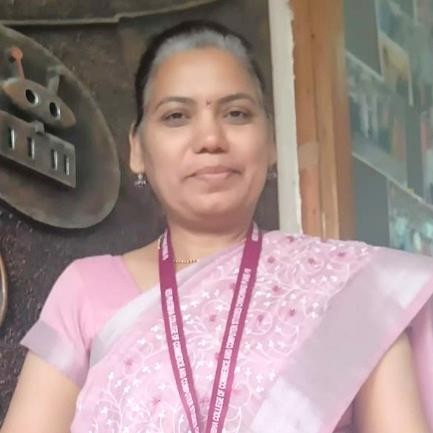
Dr. Surekha Jogdand
Assistant Professor
M.Sc. Ph.D Chemistry
Dr. Yogesh Jorapur
Assistant Professor
MSc. GATE, Ph.D. Chemistry, Postdoc. (Japan/S. Korea)
Dr. Seema Patil
Assistant Professor
MSc. Ph.D. Chemistry
Syllabus
Departmental Activities
Academic Year 2025-26
| Sr. No. | Name of Activity | Academic Year |
|---|---|---|
| 1 | CSR Activity under Pratibha Finishing School | 2025-26 |
| 2 | Day Celebration on Birth anniversary of Sir John McCarthy(Father of AI): Prompt Challenge Competition to create AI generated Videos | 2025-26 |
| 3 | Guest Lecture : (A) :- Career Guidance for Database Developer by Mr.Shahid Sayyed(Sr.specialist at Synechron) : (B) :- Hands on Training on Machine Learning Concept by Mr. Piyush Pundpal(Data Scientist at One Network Enterprises) : (C) Java + MERN Stack Live hands on training workshop by Trainer : Pankaj Arora | 2025-26 |
| 4 | Screening Test for Entry level Students (FY BSc (CA)): A short screening to evaluate foundational knowledge and prepare you for upcoming subjects. | 2025-26 |
| 5 | SEBI Lecture by Mr.Amol Marekar (SEBI-Securities Market Trainer, NISM Certified, Investment Education Advocate): An insightful session introducing students to SEBI’s role in ensuring fair and transparent financial markets. | 2025-26 |
| 6 | Ticket to IT Activity(Rapid chain Story , Talk show, Open Mike, Tech Charades: Damm Sheras, memory Stack, Introduce Yourself: Confidence Grooming) : A dynamic ice-breaking activity series aimed at enhancing communication, memory, and personality development for IT beginners. | 2025-26 |
| 7 | Outdoor Management Training : Industrial Visit for PG Students to khandi (Explored outdoor activities & gained the adventurous knowledge by Mr.Rajesh kapade) | 2025-26 |
Academic Year 2024-25
| Sr. No. | Name of Activity | Academic Year |
|---|---|---|
| 1 | Seminar: Current Trends in Computer Technologies: “Agile and DevOps” by Mr. Manjul Solanke (Lead DevOps Engineer) & Mr. Rajesh Patankar (Automation Lead & Scrum Master (Agile Coach)) | 2024-25 |
| 2 | F.Y. B.Sc.(Computer Application) Orientation Program Induction Program for U.G and P.G. Students (A structured induction to help students understand the course, campus culture, and opportunities ahead.) | 2024-25 |
| 3 | Alumini Lecture : (A):- “Career Guidance” by Mr. Akash Murhe(Web developer at Applot Solution Private Ltd.) (B):- Alumni Lecture on “HyperAutomation” by Nikita Jain (Sr. consultant at Protiviti Global Consulting firm) | 2024-25 |
| 4 | Guest Lecture : (A) “Data Structures : Understanding the Algorithmic Power” by Mr.Sandesh Dumbre(Sr.Software Eng.at Telstra) : (B) “Career Awareness about Study Abroad” by Mr.Aman Sayyed (Eyebright Global Services) : (C) Career counselling session on Career after under graduation. By Manish Patankar (Program Coordinator of MCA at PIBM) : (D) Career in Startups by Mr.Rahul Bankar | 2024-25 |
| 5 | Parent Teacher’s Meet Regarding Student’s progress. A collaborative meeting to discuss students’ academic progress and overall development. | 2024-25 |
| 6 | Builders of Modern Society Celebration: (A) :- Birth anniversary of Sir C. D. Deshmukh.(First Indian Governor of RBI & Ex. Fianance Minister) (B) :- Birth Anniversary of Mr. Osamu Suzuki(Padma Vibhushan Awardee) | 2024-25 |
| 7 | Signature Activity: – 1: General Aptitude Test (“A quick test designed to measure core aptitude and analytical thinking.”) | 2024-25 |
| 8 | Signature Activity :- 2 (A) :- Workshop on Python & Angular JS by Mr.Akash Gole (Lead Frontend Developer at Dynasty Gaming and Media) (B) :- Workshop on “Dive in Web Technology via Frameworks (Python, Tkinter, and Databases)” by Ms.Asmita Gorse (Technical Trainer at GTT barclays,Pune) | 2024-25 |
| 9 | Outdoor Management Training : Industrial Visit to Khandi for PG Students(Explored outdoor activities) | 2024-25 |
| 10 | Pragyan 2.0 : Pulse Pixel Competition: Pulse Pixel Video Making Competition | 2024-25 |
| 11 | Pragyan 2.0 : Groove on The Go Competition: E- Flyer Making Competition | 2024-25 |
| 12 | Pragyan 2.0 : Play with Clay Competition: Model Making Competition | 2024-25 |
| 13 | Pragyan 2.0 : Freeze The Moment Competition: Freeze The Moment Quiz Competition | 2024-25 |
| 14 | Vigyaan – 2.0 Competition: Animation Movie Making Competition | 2024-25 |
Academic Year 2023-24
| Sr. No. | Name of Activity | Academic Year |
|---|---|---|
| 1 | Industrial Visit: (A):- ISRO (“Our students had the opportunity to visit ISRO’s main laboratory, gaining inspiring exposure to India’s premier space research facility.”) (B):- Barclays: IT MNC(Educational Visit to give students major exposure to real working environment for women) | 2023-24 |
| 2 | Day Celebration Activity: (A):- Ramdhari Singh Dinkar Birthday Celebration(Padma Bhushan and Sahitya Akademi Awardee) (B) :- Tribute to Mr. Karpoori Thakur (Bihar’s 11th Chief Minister , BharatRatana Awardee) (C):- Bihar Diwas : Yuva Shakti Bihar ki Pragati.(one minute talk activity) | 2023-24 |
| 3 | Guest Lecture: (A):-Domains in Computer Networking and Ethical Hacking by Mr.Tejas Palaspagar(Testing Expert at Jetking Education Skill Institute) (B):- Java Database Connectivity by Mr.Hitesh Wankhede(Prof. at CJC Classes,Akurdi) | 2023-24 |
| 4 | Alumni Lecture: Knowledge Impart Program on DevOps by Mr.Kiran Pyati(Project Manager at Infobeans Technologies) | 2023-24 |
| 5 | Add On Course: Add on Course on Mobile Application Development. (An add-on course designed to build practical skills in Mobile Application Development for real-world use.) | 2023-24 |
| 6 | Pragyan: Pulse Pixel Competition: Pulse Pixel Video Making Competition | 2023-24 |
| 7 | Pragyan: Groove on The Go Competition: E- Flyer Making Competition | 2023-24 |
| 8 | Pragyan : Play with Clay Competition: Model Making Competition | 2023-24 |
| 9 | Vigyaan Competition: Rangoli Making Competition | 2023-24 |
Gallery
MSc(Cyber Security)
Course Overview
Introduction about the Course
- The Master of Science in Cyber Security (M.Sc. Cyber Security) program is designed to provide advanced education and training in the field of Cyber Security.
- This comprehensive program aims to equip students with a profound understanding of theoretical concepts, practical skills, and cutting-edge technologies relevant to the rapidly evolving world of computing.
- With a strong emphasis on academic excellence and research-driven learning, the M.Sc. Cyber
- Security program seeks to nurture a community of skilled Cyber security professionals capable of addressing complex challenges across various industries.
- By fostering a stimulating and innovative learning environment, we strive to empower our students to become leaders, innovators, and agents of positive change in the field of Computer Science.
Year of Establishment: 2025
Affiliated to Savitribai Phule Pune University, Pune
Intake: 24
Eligibility
- B.Sc. (Cyber and Digital Science) OR
- B.Sc. (Cyber Security) OR
- Bachelor of Computer Science (B.C.S.) OR
- B.Sc. (Computer Science) OR
- B.C.A. (Science) OR
- B.Sc. (Information Technology) OR
- B.Sc. (Cloud Computing) OR
- Bachelor of Engineering (BE) in Computer Science/Information Technology/Electronics and
- Telecommunication/AI and Data Science/AI and Machine Learning/ equivalent OR
- B.Voc. in Software Development/ Information Technology OR
- B.Sc. with Computer Science as Principal Subject OR
- General B.Sc. with Computer Science as one of the subject at TYBSc level OR
- Graduate degree from a recognized university / institution with an equivalent qualification.
Duration of the Course
Two Year Post graduation Degree Course, M.Sc. (Cyber Security) introduced in from A.Y. 2025-26
Course Structure
Course Structure — M.Sc. Cyber Security
| Year | Term I | Term II | Total |
|---|---|---|---|
| Total Credit | Total Credit | Term I + Term II | |
| First | 22 | 22 | 44 |
| Second | 22 | 22 | 44 |
Semester I
| Semester | Course Type | Course Code | Course Name/Title | TH | PR |
|---|---|---|---|---|---|
| I | Major Core (10+4) | MCS-501-MJ | Malware Analysis II | 2 | |
| I | Major Core | MCS-502-MJ | Intrusion Detection and Prevention System | 2 | |
| I | Major Core | MCS-503-MJ | Digital Image Processing | 2 | |
| I | Major Core Practical | MCS-504-MJP | Practical Based on MCS501MJ | 2 | |
| I | Major Core Practical | MCS-505-MJP | Practical Based on MCS502MJ | 2 | |
| I | Major Elective (2+2) | MCS-510-MJ | Digital Payments and Its Security | 2 | |
| I | Major Elective Practical | MCS-511-MJP | Practical Based on MCS510MJ | 2 | |
| OR | |||||
| I | Major Elective | MCS-512-MJ | Wireless Security | 2 | |
| I | Major Elective Practical | MCS-513-MJP | Practical Based on MCS512MJ | 2 | |
| OR | |||||
| I | Major Elective | MCS-514-MJ | IT Act 2000 in Cyberspace | 2 | |
| I | Major Elective Practical | MCS-515-MJP | Practical Based on MCS514MJ | 2 | |
| I | Minor (4) | MCS-531-RM | Research Methodology | 4 | |
| Total Credits | 16 | 6 | |||
Semester II
| Semester | Course Type | Course Code | Course Name | TH | PR |
|---|---|---|---|---|---|
| II | Major Core (10+4) | MCS-551-MJ | Mobile Application and Services | 2 | |
| II | Major Core | MCS-552-MJ | Incident Handling | 2 | |
| II | Major Core | MCS-553-MJ | Cyber Security Architecture | 2 | |
| II | Major Core Practical | MCS-554-MJP | Practical Based on MCS551MJ | 2 | |
| II | Major Core Practical | MCS-555-MJP | Practical Based on MCS552MJ | 2 | |
| II | Major Elective (2+2) | MCS-560-MJ | Dark web and Cyber warfare | 2 | |
| II | Major Elective Practical | MCS-561-MJP | Practical Based on MCS560MJ | 2 | |
| OR | |||||
| II | Major Elective | MCS-562-MJ | Dev Sec Ops | 2 | |
| II | Major Elective Practical | MCS-563-MJP | Practical Based on MCS562MJ | 2 | |
| OR | |||||
| II | Major Elective | MCS-564-MJ | Tools and Technology for Cyber Security | 2 | |
| II | Major Elective Practical | MCS-565-MJP | Practical Based on MCS-563-MJ | 2 | |
| II | FP/OJT/CEP (4) | MCS-581-OJT | OJT | 4 | |
| Total Credits | 12 | 10 | |||
Semester III
| Semester | Course Type | Course Code | Course Name | TH | PR |
|---|---|---|---|---|---|
| III | Major Core | MCS-601-MJ | Cloud Security and Services | 4 | — |
| III | Major Core | MCS-602-MJ | Virtualization & Forensics | 4 | — |
| III | Major Core | MCS-603-MJ | Security Audit | 2 | — |
| III | Major Core Practical | MCS-604-MJP | Lab course on MCS-601-MJ and 603 | — | 2 |
| III | Major Core Practical | MCS-605-MJP | Lab course MCS-602-MJ | — | 2 |
| III | Major Elective | MCS-610-MJ | Penetration Testing | 2 | — |
| III | Major Elective Practical | MCS-611-MJP | Lab Course on MCS-610-MJ | — | 2 |
| OR | |||||
| III | Major Elective | MCS-612-MJ | DevOps Fundamentals | 2 | — |
| III | Major Elective Practical | MCS-613-MJP | Lab Course on MCS-612-MJ | — | 2 |
| OR | |||||
| III | Major Elective | MCS-614-MJ | Mobile forensic | 2 | — |
| III | Major Elective Practical | MCS-615-MJP | Practical on MCS-614-MJ | — | 2 |
| III | Research Project | MCS-631-RP | Research Project Work (120 Hrs) | — | 4 |
| Total Credits | 12 | 10 | |||
Semester IV
| Semester | Course Type | Course Code | Course Name | TH | PR |
|---|---|---|---|---|---|
| IV | Major Core | MCS-651-MJP | Full Time Industrial Training (IT) | — | 12 |
| IV | Major Elective | MCS-652-MJ | Online/MOOC (Elective Courses List) | 4 | — |
| IV | Research Project | MCS-681-RP | Research Project Work (180 hrs.) | — | 6 |
| Total | 4 | 18 | |||
Abbreviations
| MCS | MSc Cyber Security | MJ | Major Theory |
| RM | Research Methodology | MJP | Major Practical |
| OJT | On Job Training | RP | Research Project |
| TH | Theory | PR | Practical |
| CE | Continuous Evaluation | EE | End semester Evaluation |
| MOOC | Massive Open Online Course |
Career Prospects
- Cyber Security Analyst / Information Security Analyst
- Penetration Tester (Ethical Hacker)
- Security Engineer / Security Architect
- Network Security Engineer
- Cyber Threat Intelligence Analyst
- Malware Analyst / Reverse Engineer
- Digital Forensics Investigator
- Cloud Security Engineer
- DevSecOps Engineer
- Security Operations Center (SOC) Analyst (L1/L2/L3)
- Information Security Manager / Officer
- Compliance Specialist
Program Outcomes
Program Outcomes — MSc (Cyber Security)
After successful completion of M.Sc.(Cyber Security) Programme students will be able to:
| PO No. | Program Outcome |
|---|---|
| PO 1 | In today’s IT environment, recognize and apply wireless security. |
| PO 2 | Protect and defend computer systems and networks from Cybersecurity threats. |
| PO 3 | Learn innovative abilities to tackle modern cyber security tasks like Vulnerability assessment and penetration testing. |
| PO 4 | Understand advanced malware analysis, IT laws, digital payments, and Security concepts. |
| PO 5 | Students are able to present information security solutions to both technical and non-technical decision-makers both orally and in writing. |
| PO 6 | Students are able to recognize and evaluate the dangers, threats, and weaknesses related to technological devices. |
| PO 7 | Understand new tools and technologies which are trending. |
| PO 8 | Understand the working of Virtualization & Security Audit. |
| PO 9 | Students can create reports summarizing their research and providing Concept proof. |
| PO 10 | Students can understand cloud services, applications, and security. |
Course Outcomes — MSc Cyber Security
Semester I
MCS501MJ: Malware Analysis II
Major | 2 Credits | 2 Hours/Week
Course Objectives:
- Learn to analyze various malicious file types.
- Apply various tools to Identify the vulnerabilities and to perform Malware analysis.
- Apply malware classification and functionality & anti-reverse engineering techniques.
Course Outcomes:
| CO No. | Course Outcome |
|---|---|
| CO-1 | Learn to analyze various malicious file types. |
| CO-2 | Apply various tools to Identify the vulnerabilities and to perform Malware analysis. |
| CO-3 | Apply malware classification and functionality & anti-reverse engineering techniques. |
MCS502MJ: Intrusion Detection and Prevention System
Major | 2 Credits | 2 Hours/Week
Course Objectives:
- Understand when, where, how, and why to apply Intrusion Detection tools and techniques in order to improve the security posture of an enterprise.
- Analyze intrusion detection alerts and logs to distinguish attack types from false alarms.
Course Outcomes:
| CO No. | Course Outcome |
|---|---|
| CO-1 | Use various protocol analyzers and Network Intrusion Detection Systems as security tools to detect network attacks and troubleshoot network problems. |
| CO-2 | Explain the fundamental concepts of Network Protocol Analysis and demonstrate the skill to capture and analyze network packets. |
MCS503MJ: Digital Image Processing
Major | 2 Credits | 2 Hours/Week
Course Objectives:
- To learn and understand various image compression and Segmentation used in digital image processing.
- To learn and understand various image enhancement technique used in digital image processing.
Course Outcomes:
| CO No. | Course Outcome |
|---|---|
| CO-1 | Develop and implement algorithms for digital image processing. |
| CO-2 | Apply image processing algorithms for practical object recognition applications. |
MCS-504MJP: Practical Based on MCS501MJ
Major Practical | 2 Credits | 4 Hours/Week
Course Objectives:
- Static and Dynamic Analysis of Malwares.
- Study of windows malwares in depth.
- Study of linux malwares, Mac malwares, Android malware in brief.
Course Outcomes:
| CO No. | Course Outcome |
|---|---|
| CO-1 | Classify the malwares and analyze them. |
| CO-2 | Use the tools for analysis of any type of malware. |
| CO-3 | Write own tools/programs for analyzing the malware. |
MCS-505MJP: Practical Based on MCS502MJ
Major Practical | 2 Credits | 4 Hours/Week
Course Objectives:
- Apply knowledge of the fundamentals and history of Intrusion Detection in order to avoid common pitfalls in the creation and evaluation of new Intrusion Detection Systems.
- Analyze intrusion detection alerts and logs to distinguish attack types from false alarms.
Course Outcomes:
| CO No. | Course Outcome |
|---|---|
| CO-1 | Understand the fundamental concepts of Network Protocol Analysis and demonstrate the skill to capture and analyze network packets. |
| CO-2 | Use various protocol analyzers and Network Intrusion Detection Systems as security tools to detect network attacks and troubleshoot network problems. |
MCS-510-MJ: Digital Payments & Security
Major Elective | 2 Credits | 2 Hours/Week
Course Objectives:
- To provide adequate knowledge and understanding about Digital Payments with the security to the students.
- The technologies facilitating Digital Payments and different platforms.
Course Outcomes:
| CO No. | Course Outcome |
|---|---|
| CO-1 | To Analyze the impact of Digital Payments and its security on business models and strategy. |
| CO-2 | Explain the process that should be followed while making online payments. |
MCS-511-MJP: Practical Based on MCS510MJ
Major Practical | 2 Credits | 4 Hours/Week
Course Objectives:
- To develop skills in students that can help them plan, implement, and monitor cyber security mechanisms to ensure the protection of information technology assets.
Course Outcomes:
| CO No. | Course Outcome |
|---|---|
| CO-1 | Develop a digital payment solution customized to the needs of their constituents. |
MCS-512-MJ: Wireless Security
Major Elective | 2 Credits | 2 Hours/Week
Course Objectives:
- This skill oriented course equips the system Administrators with the skills required to protect & recover the computer systems & networks from various security threats.
Course Outcomes:
| CO No. | Course Outcome |
|---|---|
| CO-1 | Familiarize with the issues and technologies involved in designing a wireless system that is robust against various attacks. |
| CO-2 | Gain knowledge and understanding of the various ways in which wireless networks can be attacked and trade offs in protecting networks. |
MCS-513-MJP: Practical Based on MCS512MJ
Major Elective Practical | 2 Credits | 4 Hours/Week
Course Objectives:
- Implementation and management of network security.
- Ethical implications of wireless networks.
Course Outcomes:
| CO No. | Course Outcome |
|---|---|
| CO-1 | Test and evaluate various wireless networks performance. |
| CO-2 | Apply and evaluate wireless network security techniques with consideration of ethical implications. |
MCS-514-MJ: IT Act.2000 in Cyber Space
Major Elective | 2 Credits | 2 Hours/Week
Course Objectives:
- The course will provide knowledge regarding Issues of Internet Governance and International Organizations and their Roles to the students so that students do not face any difficulty while handling practical cases in future as an advocate.
- Knowledge of cyber Laws.
Course Outcomes:
| CO No. | Course Outcome |
|---|---|
| CO-1 | To understand Intellectual Property issues in IT Act. |
| CO-2 | To understand various aspects of cyber crimes. |
MCS-515-MJP: Practical Based on MCS 514MJ IT Act.2000
Major Elective Practical | 2 Credits | 4 Hours/Week
Course Objectives:
- The course will provide knowledge regarding Issues of Internet Governance and International Organizations and their Roles to the students so that students do not face any difficulty while handling practical cases in future as an advocate.
- Knowledge of cyber Laws.
Course Outcomes:
| CO No. | Course Outcome |
|---|---|
| CO-1 | To understand Intellectual Property issues in IT Act. |
| CO-2 | To understand various aspects of cyber crimes. |
MCS-531-RM: Research Methodology
Minor | 4 Credits | 4 Hours/Week
Course Objectives:
- Research Methodology course are designed to equip students with the necessary knowledge, skills, and understanding of various research techniques and methodologies.
- Students should be familiar with various data collection techniques, such as surveys, interviews, observations, and experiments, and understand their strengths and limitations.
- Students should be aware of ethical considerations in research, including issues related to participant consent, privacy, confidentiality, and avoiding plagiarism.
- Its aim is to enable students to conduct research effectively, critically evaluate existing research, and contribute to the advancement of knowledge in their respective fields.
Course Outcomes:
| CO No. | Course Outcome |
|---|---|
| CO-1 | Understand of the fundamental concepts of research, including the research process, research questions, hypotheses, and variables. |
| CO-2 | Conduct a comprehensive literature review to identify relevant studies, synthesize existing knowledge, and identify research gaps. |
| CO-3 | Identify research problems, formulate research questions, and design appropriate methodologies to address these problems. |
| CO-4 | Identify and select appropriate research designs, such as experimental, observational, survey. |
Semester II
MCS-551-MJ: Mobile Application and Services
Major Core | 2 Credits | 2 Hours/Week
Course Objectives:
- Creating robust mobile applications and learn how to integrate them with other services.
- Creating intuitive, reliable mobile apps using the android services and components.
Course Outcomes:
| CO No. | Course Outcome |
|---|---|
| CO-1 | Explain and use key Android programming concepts. |
| CO-2 | Understand both the basic and advanced concepts Android Programming Platforms. |
MCS-552-MJ: Incident Handling
Major Core | 2 Credits | 2 Hours/Week
Course Objectives:
- An understanding of internet services and protocols.
- Experience with various types of computer security attacks, response strategies, incident handling tools.
Course Outcomes:
| CO No. | Course Outcome |
|---|---|
| CO-1 | Have an understanding of the fundamentals of computer forensics and forensic readiness. |
| CO-2 | Apply the right techniques to different types of cyber security incidents in a systematic manner (malware incidents, email security incidents, network security incidents, web application security incidents, cloud security incidents, and insider threat-related incidents). |
| CO-3 | Master all incident handling and response best practices, standards, cyber security. |
MCS-553-MJ: Cyber Security Architecture
Major Core | 2 Credits | 2 Hours/Week
Course Objectives:
- To prepare students with the technical knowledge and skills needed to protect and defend computer systems and networks.
- To develop graduates that can plan, implement, and monitor cyber security mechanisms to help ensure the protection of information technology assets.
Course Outcomes:
| CO No. | Course Outcome |
|---|---|
| CO-1 | Be able to use cyber security, information assurance, and cyber/computer forensics software/tools. |
| CO-2 | Design and develop a security architecture for an organization. |
| CO-3 | Design operational and strategic cyber security strategies and policies. |
MCS-554-MJP: Practical Based on MCS 551MJ
Practical | 2 Credits | 4 Hours/Week
Course Objectives:
- Create a seamless user interface that works with different mobile screens.
- To help students to gain a basic understanding of Android application development.
Course Outcomes:
| CO No. | Course Outcome |
|---|---|
| CO-1 | Program mobile applications for the Android operating system that use basic and advanced phone features. |
| CO-2 | Identify various concepts of mobile programming that make it unique from programming for other platforms. |
MCS-555-MJP: Practical Based on MCS 552MJ
Practical | 2 Credits | 4 Hours/Week
Course Objectives:
- Decode the various steps involved in planning incident handling and response program (Planning, Recording and Assignment, Triage, Notification, Containment, Evidence Gathering and Forensic Analysis, Eradication, Recovery, and Post-Incident Activities).
- Apply the right techniques to different types of cyber security incidents in a systematic manner (malware incidents, email security incidents, network security incidents, web application security incidents, cloud security incidents, and insider threat-related incidents).
Course Outcomes:
| CO No. | Course Outcome |
|---|---|
| CO-1 | Investigate incidents by executing the system event log analysis. |
| CO-2 | Perform basic network forensic analysis. |
MCS-560-MJ: Dark Web & Cyber Warfare
Major Elective | 2 Credits | 2 Hours/Week
Course Objectives:
- To gain knowledge on the working of Dark Web.
- To understand the operational procedures of cyber war and to have clarity on defense mechanism.
- To identify the security aspects of dark net.
Course Outcomes:
| CO No. | Course Outcome |
|---|---|
| CO-1 | Able to work in Law enforcement for cybercrime investigation w.r.t to dark web and warfare. |
| CO-2 | Able to understand the deep / dark web attacks. |
| CO-3 | Able to use the deep web operating system and apply the security measures. |
MCS-561-MJP: Practical Based on MCS 560MJ
Practical | 2 Credits | 4 Hours/Week
Course Objectives:
- To understand the dark web security trends and measures in mobile and wireless devices.
- To understand different tools and methods used in Dark Web.
Course Outcomes:
| CO No. | Course Outcome |
|---|---|
| CO-1 | Understand different attacks in Dark Web. |
| CO-2 | Expose to tools and methods used in Dark Web. |
MCS-562-MJ: DevSecOps
Major Elective | 2 Credits | 2 Hours/Week
Course Objectives:
- Contrast the options used to build a DevSecOps infrastructure through Platform as a Service, Server-less construction, and event-driven mediums.
- Identify future trends that may affect DevSecOps.
- Distinguish between the technical elements used across DevSecOps practices.
Course Outcomes:
| CO No. | Course Outcome |
|---|---|
| CO-1 | Students will be able to Explain goals for a DevSecOps toolchain approach. |
MCS-563-MJP: Practical Based on MCS 562MJ
Practical | 2 Credits | 4 Hours/Week
Course Objectives:
- Develop cyber security strategies and policies.
- Understand principles of web security and to guarantee a secure network by monitoring and analyzing the nature of attacks through cyber/computer forensics software/tools.
Course Outcomes:
| CO No. | Course Outcome |
|---|---|
| CO-1 | The purpose, benefits, concepts and vocabulary of DevSecOps. |
| CO-2 | Business-driven security strategies and Best Practices. |
MCS-564-MJ: Tools & Technology for Cyber Security
Major Elective | 2 Credits | 2 Hours/Week
Course Objectives:
- Understand principles of web security and to guarantee a secure network by monitoring and analyzing the nature of attacks through cyber/computer forensics software/tools.
- Understand key terms and concepts in Cryptography, Governance and Compliance.
- Exhibit knowledge to secure corrupted systems, protect personal data, and secure computer networks in an Organization.
Course Outcomes:
| CO No. | Course Outcome |
|---|---|
| CO-1 | Comprehend and execute risk management processes, risk treatment methods, and key risk and performance indicators. |
| CO-2 | Implement cyber security solutions and use of cyber security, information assurance, and cyber/computer forensics software/tools. |
MCS-565-MJP: Practical Based on MCS 564MJ
Practical | 2 Credits | 4 Hours/Week
Course Objectives:
- Make familiar with basic and advanced tools to provide sufficient information to respond appropriately to a network.
Course Outcomes:
| CO No. | Course Outcome |
|---|---|
| CO-1 | Understand the types of malware, including rootkits, Trojans, and viruses. |
| CO-2 | Understand the different tools. |
Faculty/Staff
Mrs. Dipali L. Mahajan
Program Coordinator
M.Sc. (C.S.) SET, Pursuing P.hd
Dr. Aparna A. Joshi
Assistant Professor
M.Sc. (C.S.), B.Ed., SET
Mrs.Prajakta A.Yeole
Assistant Professor
MCA(Computer Science)
Mrs. Mayura Sawant
Assistant Professor
M.Sc. (C.S.)
Mrs. Jyoti Kawale
Assistant Professor
M.Sc. (C.S.)
Syllabus
Departmental Activities
Department Activities
| SN | Name of Activity |
|---|---|
| 2024-2025 | |
| 1 | Cyber Crypt Pragyaan 2.0 |
| 2 | Public Eye Pragyaan 2.0 |
| 3 | Art Fraction Pragyaan 2.0 |
| 4 | Runtime Terror Pragyaan 2.0 |
| 5 | Model Making Vigyaan 2.0 |
| 6 | Builders of Modern Society Day celebration – Pandit Bhimasen Joshi |
| 7 | Aluminia Talk: Mr.Sagar Sonar (Advance Networking) |
| 8 | Bridge Course |
| 9 | Workshop on Think in objects: C++ way |
| 10 | PTA Meeting |
| 2025-2026 | |
| 1 | Bridge Course |
| 2 | Induction Program |
| 3 | Live Seminar on “Web Development with MERN Stack with live API integration with Javascript” |
| 4 | Workshop on Unlocking opportunities: “Internship Awareness Drive” |
| 5 | FY BSC Cyber Security and FY BSc CDS Activity and FY IT “Trace the Output” on C programming language Under Club of Cyber Gems |
| 6 | FY IT Screening Test-2025-26 |
Summary
Academic Year 2024-2025: 10 Activities
Academic Year 2025-2026: 6 Activities
Total Activities: 16
Gallery
M.Sc.(Data Science)
Course Overview
Introduction about the Course
The Bachelor of Science (B.Sc) in Data Science under Statistics is a newly established program launched in 2025 to meet the rapidly growing demand for datadriven decision-making across industries. The program is designed to integrate statistical theory, mathematical foundations, and modern data-science tools, preparing students to analyze complex data and solve real-world problems.
The course aims to produce graduates who are competent in statistical reasoning, computational thinking, and analytical skills, allowing them to thrive in emerging roles such as Data Analysts, Junior Data Scientists, Statisticians, and Business Intelligence professionals.
Established: 2025
Program: B.Sc Data Science (Under Statistics)
Intake: 80 Students
Outcome: Graduates equipped with strong statistical knowledge, programming ability, machine-learning skills, and analytical thinking to excel in modern datacentric roles
Course Intake – 52 Students (2025)
For the academic year 2025, the program admits a maximum of 52 students. This limited intake ensures:
- Personalized attention to each learner
- Better faculty–student interaction
- Hands-on lab sessions and project-based learning
- Strong guidance and mentoring for research and career development
Eligibility
Higher secondary school certificate (10+2) or its equivalent examination with English & Mathematics & with any three science subjects such as Physics, Chemistry, Biology, Geography, Geology etc. A minimum of 50% aggregate marks (or as per institutional norms) is required.
Duration of the Course
3/ 4 years
- 1 Year (2 Semesters): Certificate
- 2 Years (4 Semesters): Diploma
- 3 Years (6 Semesters): Bachelor’s Degree
- 4 Years (8 Semesters): Bachelor’s Degree with Honours / Honours with Research
Course Structure
Credit Summary
| Year | Term I | Term II | Total |
|---|---|---|---|
| First | 28 | 30 | 58 |
| Second | 28 | 30 | 58 |
| Third | 32 | 30 | 62 |
| Fourth | 28 | 28 | 56 |
Semester I
| Semester | Course Type | Course Name / Course Title | Total Credits |
|---|---|---|---|
| 1 | Subject-1 | Problem Solving and Python Programming | 2T + 4P = 6 |
| Subject-2 | Descriptive Statistics | 2T + 4P = 6 | |
| Subject-3 | Computational Mathematics | 2T + 4P = 6 | |
| OE | Financial Literacy-1 | 2T = 2 | |
| SEC | Computer Organization | 2T = 2 | |
| IKS | Generic IKS | 2T = 2 | |
| AEC | English | 2T = 2 | |
| VEC | EVS-I | 2T = 2 | |
| Total Credits: | 28 | ||
Semester II
| Semester | Course Type | Course Name / Course Title | Total Credits |
|---|---|---|---|
| 2 | Subject-1 | Advanced Python Programming | 2T + 4P = 6 |
| Subject-2 | Discrete Probability and Probability Distributions | 2T + 4P = 6 | |
| Subject-3 | Graph Theory | 2T + 4P = 6 | |
| OE | Financial Literacy-2 | 2T = 2 | |
| SEC | Lab Course on Excel and Advanced Excel | 4P = 4 | |
| AEC | English | 2T = 2 | |
| VEC | EVS-II | 2T = 2 | |
| CC | Physical Education | 2T = 2 | |
| Total Credits: | 30 | ||
Semester III
| Semester | Course Type | Course Name / Course Title | Total Credits |
|---|---|---|---|
| 3 | Major Core | Database Management System | 2T = 2 |
| Major Core | Data Structure-I | 2T = 2 | |
| Major Core | Lab Course on Database Management System and Data Structure-I | 4P = 4 | |
| VSC | Foundations of Data Science | 2T = 2 | |
| FP | Mini Project | 4P = 4 | |
| Minor | Probability Distribution and Modelling | 2T + 4P = 6 | |
| OE | Marketing-I | 2T = 2 | |
| IKS | Indian Knowledge System in Computing | 2T = 2 | |
| AEC | Marathi | 2T = 2 | |
| CC | CC-201-T | 2T = 2 | |
| Total Credits: | 28 | ||
Semester IV
| Semester | Course Type | Course Name / Course Title | Total Credits |
|---|---|---|---|
| 4 | Major Core | Relational Database Management System | 2T = 2 |
| Major Core | Data Structure-II | 2T = 2 | |
| Major Core | Lab Course on Relational Database Management System and Data Structure-II | 4P = 4 | |
| VSC | Data Analytics | 4P = 4 | |
| FP | Mini Project | 4P = 4 | |
| Minor | Testing of Hypothesis and Sampling Distributions | 2T + 4P = 6 | |
| OE | Marketing-II | 2T = 2 | |
| SEC | Software Engineering | 2T = 2 | |
| AEC | Marathi | 2T = 2 | |
| Total Credits: | 30 | ||
Semester V
| Semester | Course Type | Course Name / Course Title | Total Credits |
|---|---|---|---|
| 5 | Major Core | NoSQL Databases | 4T + 4P = 8 |
| Major Core | R Programming | 2T + 4P = 6 | |
| Major Core | Foundations of Artificial Intelligence | 2T = 2 | |
| Major Elective | Business Analytics | 2T + 4P = 6 | |
| VSC | Lab Course on MATLAB | 4P = 4 | |
| FP | Project | 4P = 4 | |
| Minor | Categorical and Multivariate Data Analysis | 2T = 2 | |
| Total Credits: | 32 | ||
Semester VI
| Semester | Course Type | Course Name / Course Title | Total Credits |
|---|---|---|---|
| 6 | Major Core | Data Visualization and Modelling | 4T + 4P = 8 |
| Major Core | Artificial Intelligence in Data Science | 2T + 4P = 6 | |
| Major Core | Data Security and Privacy | 2T = 2 | |
| Major Elective | HR / Financial Analytics | 2T + 4P = 6 | |
| VSC | Advance Data Science Tools | 4T = 4 | |
| OJT | On Job Training | 4T = 4 | |
| Total Credits: | 30 | ||
Semester VII
| Semester | Course Type | Course Name / Course Title | Total Credits |
|---|---|---|---|
| 7 | Major Core | Machine Learning | 4T + 4P = 8 |
| Major Core | Basics of Cloud Computing | 2T + 4P = 6 | |
| Major Elective | Supply Chain & Logistics Analytics | 2T + 4P = 6 | |
| RP | Research Project | 4P = 4 | |
| RM | Research Methodology | 4T = 4 | |
| Total Credits: | 28 | ||
Semester VIII
| Semester | Course Type | Course Name / Course Title | Total Credits |
|---|---|---|---|
| 8 | Major Core | Data Mining and Warehousing | 4T + 4P = 8 |
| Major Core | Deep Learning | 2T + 4P = 6 | |
| Major Core | Natural Language Processing | 4T = 4 | |
| Major Elective | Geospatial Technology / E-Commerce | 2T + 4P = 6 | |
| OJT | On Job Training | 4P = 4 | |
| Total Credits: | 28 | ||
Career Prospects
After completing the B.Sc Data Science under Statistics program, students can pursue diverse and high-growth roles in data-driven industries. Possible career paths include: 📊 Data & Analytics Careers
- Data Analyst
- Junior Data Scientist
- Business/Data Intelligence Analyst
- Operations Analyst
- Marketing/Financial Analyst
- Quantitative Analyst (Entry Level)
📈 Statistical & Research Careers
- Statistician
- Research Assistant / Research Analyst
- Survey/Data Collection Specialist Risk & Actuarial Assistant
💻 Technology & Computing Careers
- Machine Learning Assistant / ML Technician
- Database Manager / SQL Analyst Data Visualization Specialist
- Big Data Technician (entry-level)
Program Outcomes
Program Outcomes — B.Sc. (Data Science)
After successful completion of B.Sc.(DS) Programme students will be able to:
| PO No. | Outcomes |
|---|---|
| PO 1 | The programme seeks to develop strong foundation in Mathematics, Statistics and Computer Science that demonstrate proficiency in basic programming languages and tools. |
| PO 2 | The programme aims to understand the principles of data storage and retrieval by acquiring knowledge of data type structures and basic data manipulation techniques. |
| PO 3 | The programme helps to learn database management techniques with design and management of databases as well as executing SQL queries for data retrieval and manipulation. |
| PO 4 | By applying advanced statistical methods and machine learning techniques, the students can analyze complex datasets, interpret and communicate findings effectively. |
| PO 5 | The programme also aims to understand and work with big data technologies and apply these technologies to process and analyze large-scale datasets. |
| PO 6 | The students can create clear and effective data visualizations using various tools and communicate complex findings through visual representations. |
| PO 7 | The programme also seeks to develop comprehensive projects by applying data science techniques to solve real-world problems that will improve the ability of learner to integrate knowledge and skills acquired throughout the programme. |
| PO 8 | Through hands-on projects, practical assignments, and exposure to state-of-the-art tools and technologies, programme aim to develop the technical proficiency and problem-solving skills necessary for success in the professional world. |
| PO 9 | Depending on the chosen track, students can develop expertise in data analytics with areas such as Business, Social Media, HR, Financial, Healthcare, Supply Chain & Logistics and Big Data etc. |
| PO 10 | The program include On Job Training, internships and research work that provides learners with practical experience, applying their knowledge to real-world challenges. |
| PO 11 | Graduates will be adept at presenting complex technical concepts clearly and effectively, both in written and oral forms, to various audiences. |
| PO 12 | The programme places a strong emphasis on ethical considerations, responsible use of technology, and awareness of the societal impact of data science and computing solutions. |
| PO 13 | The programme aim to produce graduates who approach their work with integrity and a sense of social responsibility. |
| PO 14 | Acknowledging the dynamic nature of computer science, the programme aim to inspire students for continuous learning and professional development, empowering them to adapt and thrive in the face of technological advancements; prepared them to adapt to new technologies and methodologies throughout their careers. |
| PO 15 | The students will be encouraged to think creatively and innovatively, exploring new ideas and approaches to solve data science related problems and advance the state of the art in the field. |
Course Outcomes — B.Sc. (Data Science)
Semester I
| Semester | Course Code | Course Type | Course Title | Credits | Hours/Week |
|---|---|---|---|---|---|
| I | DS-101-T | Subject I | Problem Solving and Python Programming | 02 | 02 |
| Course Objectives: | |||||
| 1 | To teach students systematic and efficient problem-solving methods, including problem analysis, algorithm design, and solution implementation. | ||||
| 2 | To provide a solid understanding of the Python programming language, including its syntax, data types, control structures, and functions. | ||||
| 3 | To instill good programming habits, including code readability, commenting, and documentation. | ||||
| 4 | To nurture the ability to think algorithmically and express solutions as step-by-step processes using Python programs. | ||||
| 5 | To learn and understand Object Oriented Programming. | ||||
| 6 | To improve debugging techniques and error identification and correction in Python programs. | ||||
| Course Outcomes: | |||||
| CO 1 | Create clear and efficient algorithms for solving a variety of problems. | ||||
| CO 2 | Write Python programs to implement algorithms and solve problems. | ||||
| CO 3 | Identify and correct errors in Python programs using systematic debugging techniques. | ||||
| CO 4 | Understand Object Oriented Concepts in Python. | ||||
| CO 5 | Learn and understand modules and packages in Python. | ||||
| CO 6 | Define and demonstrate the use of built-in data structures “lists” and “dictionary”. | ||||
| Semester | Course Code | Course Type | Course Title | Credits | Hours/Week |
|---|---|---|---|---|---|
| I | DS-102-P | Subject 1 | Lab Course on DS-101-T (Python Programming) | 02 | 04 |
| Course Objectives: | |||||
| 1 | Learn Programming fundamentals using Python. | ||||
| 2 | Understand the concepts and usage data types, variables and other basic elements. | ||||
| 3 | Learn about using operators and control statements in Python. | ||||
| 4 | Learn about using arrays and strings in Python. | ||||
| 5 | Learn Object Oriented concepts in Python. | ||||
| 6 | Learn how to use modules in packages in Python Programming. | ||||
| Course Outcomes: | |||||
| CO 1 | Implement the use of built-in data structures “lists”, “dictionary”, “Tuples” and “Sets”. | ||||
| CO 2 | Implement programs on Arrays and Strings. | ||||
| CO 3 | Implement programs on Object Oriented concepts in Python. | ||||
| CO 4 | Implement programs by importing modules and packages in Python. | ||||
| Semester | Course Code | Course Type | Course Title | Credits | Hours/Week |
|---|---|---|---|---|---|
| I | DS-103-T | Theory | Descriptive Statistics | 02 | 02 |
| Course Objectives: | |||||
| 1 | To acquaint students with some basic concepts in Statistics. | ||||
| 2 | To introduce to some elementary statistical methods of analysis of data. | ||||
| 3 | To identify the nature and type of data. | ||||
| 4 | To apply statistical tools to numerical and categorical data. | ||||
| Course Outcomes: | |||||
| CO 1 | Identify the different types of variables and data. | ||||
| CO 2 | Compute various measures of central tendency, dispersion. | ||||
| CO 3 | Compute various measures of skewness and kurtosis. | ||||
| CO 4 | Find correlation coefficient between numerical variables. | ||||
| CO 5 | Fit linear regression lines. | ||||
| CO 6 | Fit non-linear regression lines. | ||||
| Semester | Course Code | Course Type | Course Title | Credits | Hours/Week |
|---|---|---|---|---|---|
| I | DS-104-P | Practical | Lab Course on DS-103-T (Descriptive Statistics) | 02 | 04 |
| Course Objectives: | |||||
| 1 | To acquaint students with some basic concepts in Statistics. | ||||
| 2 | To introduce to some elementary statistical methods of analysis of data. | ||||
| 3 | To identify the nature and type of data. | ||||
| 4 | To apply statistical tools to numerical and categorical data. | ||||
| Course Outcomes: | |||||
| CO 1 | Identify the different types of variables and data. | ||||
| CO 2 | Compute various measures of central tendency, dispersion. | ||||
| CO 3 | Compute various measures of skewness and kurtosis. | ||||
| CO 4 | Find correlation coefficient between numerical variables. | ||||
| CO 5 | Fit linear regression lines. | ||||
| CO 6 | Fit non-linear regression lines. | ||||
| Semester | Course Code | Course Type | Course Title | Credits | Hours/Week |
|---|---|---|---|---|---|
| I | DS-105-T | Subject I | Computational Mathematics | 02 | 02 |
| Course Objectives: | |||||
| 1 | To understand the basic arithmetic operations on vectors and matrices, including determinants, using technology where appropriate. | ||||
| 2 | To solve systems of linear equations, using technology to facilitate row reduction. | ||||
| 3 | To understand the basic terminology of linear algebra in Euclidean spaces, including linear independence, spanning, basis, rank, nullity, subspace, and linear transformation. | ||||
| 4 | To abstract notions of vector space and inner product space. | ||||
| 5 | To understand and find the eigenvalues and eigenvectors of a matrix or a linear transformation, and using them to diagonalize a matrix. | ||||
| 6 | Enables to find projections and orthogonality among Euclidean vectors, including the Gram-Schmidt ortho normalization process and orthogonal matrices. | ||||
| Course Outcomes: | |||||
| CO 1 | Solve systems of linear equations using methods by Gaussian elimination. | ||||
| CO 2 | Demonstrate understanding of the concepts of vector space, linear independence and basis. | ||||
| CO 3 | Determine eigenvalues and eigenvectors and solve eigenvalue problems. | ||||
| CO 4 | Demonstrate understanding the use of truth tables and laws of identity, distributive, commutative, and domination. | ||||
| CO 5 | Simplify and prove Boolean expressions, Compute sum of products and product of sum expansions. | ||||
| Semester | Course Code | Course Type | Course Title | Credits | Hours/Week |
|---|---|---|---|---|---|
| I | DS-106-P | Subject I | Lab Course on DS-105-T (Computational Mathematics) | 02 | 04 |
| Course Objectives: | |||||
| 1 | To understand the basic arithmetic operations on vectors and matrices, including determinants, using technology where appropriate. | ||||
| 2 | To solve systems of linear equations, using software to facilitate row reduction. | ||||
| 3 | To understand the basic terminology of linear algebra in Euclidean spaces, including linear independence, spanning, basis. | ||||
| 4 | To abstract notions of vector space and inner product space. | ||||
| 5 | To understand and find the eigenvalues and eigenvectors of a matrix and using them to diagonalize a matrix. | ||||
| 6 | Enables to Simplify and prove Boolean expressions. Compute sum of products and product of sum expansions. | ||||
| 7 | To know how to use maxima software. | ||||
| Course Outcomes: | |||||
| CO 1 | Understand the systems of linear equations using methods by Gaussian elimination. | ||||
| CO 2 | Demonstrate understanding of the concepts of vector space, linear independence and basis. | ||||
| CO 3 | Compute eigenvalues and eigenvectors problems. | ||||
| CO 4 | Demonstrate the use of truth tables and laws of identity, distributive, commutative, and domination. | ||||
| CO 5 | Simplify and prove Boolean expressions, Compute sum of products and product of sum expansions. | ||||
| CO 6 | Students can solve the problem based on theory by using maxima software. | ||||
| Semester | Course Code | Course Type | Course Title | Credits | Hours/Week |
|---|---|---|---|---|---|
| I | IKS-101-HIS | Subject I | Indian Knowledge System | 02 | 02 |
| Course Objectives: | |||||
| 1 | To understand the nature of knowledge. | ||||
| 2 | To understand the evolution of the scientific approach in the Indian subcontinent. | ||||
| 3 | To study contributions made by different people to the various branches of knowledge before modernity evolved in India. | ||||
| Course Outcomes: | |||||
| CO 1 | Students are able to understand the nature and philosophy of knowledge in the Indian context. | ||||
| CO 2 | Students are able to analyze traditional Indian knowledge systems and their methodologies. | ||||
| CO 3 | Students are able to identify key contributors to various branches of knowledge in pre-modern India. | ||||
| CO 4 | Students are able to relate ancient Indian knowledge traditions to modern scientific thought. | ||||
| Semester | Course Code | Course Type | Course Title | Credits | Hours/Week |
|---|---|---|---|---|---|
| I | AEC 101 | Theory | Professional Communication Skills | 02 | 30 |
| Course Objectives: | |||||
| 1 | To read and understand texts in English. | ||||
| 2 | To enrich and use vocabulary effectively. | ||||
| 3 | To understand and develop Communicative Competence. | ||||
| 4 | To use body language in different situations. | ||||
| 5 | To acquaint with digital platforms and technology. | ||||
| 6 | To understand and write letter, notice, agenda, minutes and blog. | ||||
| Course Outcomes: | |||||
| CO 1 | Read and understand texts in English. | ||||
| CO 2 | Enrich and use vocabulary effectively. | ||||
| CO 3 | Understand and develop Communicative Competence. | ||||
| CO 4 | Use body language in different situations. | ||||
| CO 5 | Acquaint with digital platforms and technology. | ||||
| CO 6 | Write letter, notice, agenda, minutes and blog. | ||||
| Semester | Course Code | Course Type | Course Title | Credits | Hours/Week |
|---|---|---|---|---|---|
| I | VEC-101-T | Theory | Environment Education – I | 02 | 02 |
| Course Objectives: | |||||
| 1 | To develop foundational knowledge of environmental science and human–environment interactions. | ||||
| 2 | To enable students to understand environmental challenges at local, regional, and global levels. | ||||
| 3 | To cultivate sustainable thinking and responsible resource management skills, empowering students to adopt and promote sustainable development practices in society. | ||||
| 4 | To enhance analytical and problem-solving abilities required to evaluate environmental issues, biodiversity conservation strategies, and policy frameworks. | ||||
| Course Outcomes: | |||||
| CO 1 | Describe how human activities impact the environment. | ||||
| CO 2 | Explain principles of sustainable development and resource management. | ||||
| CO 3 | Analyze local, regional, and global environmental issues and their effects. | ||||
| CO 4 | Evaluate different strategies for conserving biodiversity and ecosystems. | ||||
| CO 5 | Apply relevant environmental policies and ethical considerations to real-world scenarios. | ||||
| CO 6 | Design and implement action plans for community-based environmental projects. | ||||
| Semester | Course Code | Course Type | Course Title | Credits | Hours/Week |
|---|---|---|---|---|---|
| I | OE108COM-T | GE / OE | Financial Literacy, Paper-I | 02 | 02 |
| Course Objectives: | |||||
| 1 | To understand the importance, principles and concept of Financial Literacy. | ||||
| 2 | To familiarize students with different aspects of financial literacy such as savings, investment rules. | ||||
| 3 | To help students understand the relevance and process of financial planning, digital payments and its types. | ||||
| 4 | To promote understanding of financial well-being and role of modern digital payment system. | ||||
| Course Outcomes: | |||||
| CO 1 | Understand the importance, types, principles and concept of financial literacy. | ||||
| CO 2 | Develop proficiency for personal and family financial planning. | ||||
| CO 3 | Understand the importance and types of financial planning, digital payments and its types. | ||||
| CO 4 | Understand the financial well-being and role of modern digital payment system. | ||||
Semester II
| Semester | Course Code | Course Type | Course Title | Credits | Hours/Week |
|---|---|---|---|---|---|
| II | DS-153-T | Theory | Discrete Probability and Probability Distributions | 02 | 02 |
| Course Objectives: | |||||
| 1 | To revise the basic concepts of probability, axiomatic theory of probability. | ||||
| 2 | To understand the concept of random variable. | ||||
| 3 | To study probability distribution (univariate and bivariate) discrete random variables, expectation and moments of probability distribution. | ||||
| 4 | To find marginal distribution and conditional distribution of bivariate frequency distribution. | ||||
| 5 | To find conditional mean of bivariate frequency distribution. | ||||
| 6 | To find variance, covariance and correlation of bivariate frequency distribution. | ||||
| Course Outcomes: | |||||
| CO 1 | Find the probabilities of events and its expectation, mean, variance, etc. | ||||
| CO 2 | Distinguish between random and non-random experiments. | ||||
| CO 3 | Identify the nature of distribution. | ||||
| CO 4 | Find marginal distribution and conditional distribution. | ||||
| CO 5 | Find mean of marginal distribution and conditional mean of bivariate frequency distribution. | ||||
| CO 6 | Find correlation of bivariate frequency distribution. | ||||
| Semester | Course Code | Course Type | Course Title | Credits | Hours/Week |
|---|---|---|---|---|---|
| II | DS-154-P | Practical | Lab Course on DS-153-T (Discrete Probability and Probability Distributions) | 02 | 04 |
| Course Objectives: | |||||
| 1 | To understand the concept of random variable. | ||||
| 2 | To study probability distribution (univariate and bivariate) discrete random variables, expectation and moments of probability distribution. | ||||
| 3 | To find marginal distribution and conditional distribution of bivariate frequency distribution. | ||||
| 4 | To find conditional mean of bivariate frequency distribution. | ||||
| 5 | To find variance, covariance and correlation of bivariate frequency distribution. | ||||
| Course Outcomes: | |||||
| CO 1 | Find the probabilities of events and its expectation, mean, variance, etc. | ||||
| CO 2 | Distinguish between random and non-random experiments. | ||||
| CO 3 | Identify the nature of distribution. | ||||
| CO 4 | Find marginal distribution and conditional distribution. | ||||
| CO 5 | Find mean of marginal distribution and conditional mean of bivariate frequency distribution. | ||||
| CO 6 | Find correlation of bivariate frequency distribution. | ||||
| Semester | Course Code | Course Type | Course Title | Credits | Hours/Week |
|---|---|---|---|---|---|
| II | AEC 151 | Theory | Professional Communication Skills | 02 | 30 |
| Course Objectives: | |||||
| 1 | To read and understand texts in English. | ||||
| 2 | To enrich and use vocabulary effectively. | ||||
| 3 | To understand and develop Communicative Competence. | ||||
| 4 | To use body language in different situations. | ||||
| 5 | To acquaint with digital platforms and technology. | ||||
| 6 | To understand and write letter, notice, agenda, minutes and blog. | ||||
| Course Outcomes: | |||||
| CO 1 | Read and understand texts in English. | ||||
| CO 2 | Enrich and use vocabulary effectively. | ||||
| CO 3 | Understand and develop Communicative Competence. | ||||
| CO 4 | Use body language in different situations. | ||||
| CO 5 | Acquaint with digital platforms and technology. | ||||
| CO 6 | Write letter, notice, agenda, minutes and blog. | ||||
| Semester | Course Code | Course Type | Course Title | Credits | Hours/Week |
|---|---|---|---|---|---|
| II | SEC-151-DS | Practical | Lab Course on Excel and Advanced Excel | 02 | 04 |
| Course Objectives: | |||||
| 1 | To familiarize the student in introducing and exploring MS Excel. | ||||
| 2 | To provide different ways of representation and exploratory data analysis in Excel. | ||||
| 3 | To prepare the students to use Excel in their project works. | ||||
| 4 | Analyze data like a professional. | ||||
| Course Outcomes: | |||||
| CO 1 | Implement fundamental concept of Microsoft Excel. | ||||
| CO 2 | Perform calculations in Excel and apply Excel functions. | ||||
| CO 3 | Represent data using charts and diagrams. | ||||
| CO 4 | Design advanced graphic presentations on stored data. | ||||
| CO 5 | Perform various advanced data tools and data analytics. | ||||
Faculty/Staff
Dr.Jayashree Muley
Program Co-ordinator
B.Sc. (Data
Science) & M.Sc. (Statistics),
IQAC- Coordinator
Ph.D., MSc. Statistics, MBA Finance
Sejal Fegade
Assistant Professor
MSc Statistics
Dr. Priti Kolhe
Assistant Professor
Ph.D., M.Sc. Environmental Science
Ms. Rutuja Kobal
Asst.Professor
MSc Statistics
Akshata Gawde
Asst.Professor
MSc Statistics
Dr. Anuradha Ghodke
Asst.Professor
M.A., M.Phil. Ph.D. (English), M.B.A. (HR), D.Ed.
Mrs. Anita Vishwakarma
Asst.Professor
M.Com (Costing, A/c & Taxation) M.B.A. (HRM , Financial Management), Pursuing Ph.d
Mr. Sourabh Dhaware
Asst.Professor
MSc Mathematics
Mrs.Ragini Chavan
Assistant Professor
MSc Statistics
Mr. Dinesh Sonawane
Assistant Professor
MSC Electronics
Syllabus
Departmental Activities
Academic Year 2025-26
| SN | Name of Activity | Academic Year |
|---|---|---|
| 1. | CSR Activity under Pratibha Finishing School | 2025-26 |
| 2. | Day Celebration on Birth anniversary of Sir John McCarthy (Father of AI): Prompt Challenge Competition to create AI generated Videos | |
| 3. | Guest Lecture: (A) Career Guidance for Database Developer by Mr. Shahid Sayyed (Sr. Specialist at Synechron) (B) Hands on Training on Machine Learning Concept by Mr. Piyush Pundpal (Data Scientist at One Network Enterprises) (C) Java + MERN Stack Live hands on training workshop by Trainer: Pankaj Arora | |
| 4. | Screening Test for Entry level Students (FY BSc (CA)): A short screening to evaluate foundational knowledge and prepare you for upcoming subjects. | |
| 5. | SEBI Lecture by Mr. Amol Marekar (SEBI-Securities Market Trainer, NISM Certified, Investment Education Advocate): An insightful session introducing students to SEBI’s role in ensuring fair and transparent financial markets. | |
| 6. | Ticket to IT Activity (Rapid Chain Story, Talk Show, Open Mike, Tech Charades: Damm Sheras, Memory Stack, Introduce Yourself: Confidence Grooming): A dynamic ice-breaking activity series aimed at enhancing communication, memory, and personality development for IT beginners. | |
| 7. | Outdoor Management Training: Industrial Visit for PG Students to Khandi (Explored outdoor activities & gained the adventurous knowledge by Mr. Rajesh Kapade) |
Academic Year 2024-25
| SN | Name of Activity | Academic Year |
|---|---|---|
| 1. | Seminar: Current Trends in Computer Technologies: “Agile and DevOps” by Mr. Manjul Solanke (Lead DevOps Engineer) & Mr. Rajesh Patankar (Automation Lead & Scrum Master (Agile Coach)) | 2024-25 |
| 2. | F.Y. B.Sc.(Computer Application) Orientation Program — Induction Program for U.G and P.G. Students (A structured induction to help students understand the course, campus culture, and opportunities ahead.) | |
| 3. | Alumni Lecture: (A) “Career Guidance” by Mr. Akash Murhe (Web Developer at Applot Solution Private Ltd.) (B) Alumni Lecture on “HyperAutomation” by Nikita Jain (Sr. Consultant at Protiviti Global Consulting Firm) | |
| 4. | Guest Lecture: (A) “Data Structures: Understanding the Algorithmic Power” by Mr. Sandesh Dumbre (Sr. Software Eng. at Telstra) (B) “Career Awareness about Study Abroad” by Mr. Aman Sayyed (Eyebright Global Services) (C) Career counselling session on Career after under graduation by Manish Patankar (Program Coordinator of MCA at PIBM) (D) Career in Startups by Mr. Rahul Bankar | |
| 5. | Parent Teacher’s Meet Regarding Student’s Progress — A collaborative meeting to discuss students’ academic progress and overall development. | |
| 6. | Builders of Modern Society Celebration: (A) Birth Anniversary of Sir C. D. Deshmukh (First Indian Governor of RBI & Ex. Finance Minister) (B) Birth Anniversary of Mr. Osamu Suzuki (Padma Vibhushan Awardee) | |
| 7. | Signature Activity 1: General Aptitude Test (“A quick test designed to measure core aptitude and analytical thinking.”) | |
| 8. | Signature Activity 2: (A) Workshop on Python & Angular JS by Mr. Akash Gole (Lead Frontend Developer at Dynasty Gaming and Media) (B) Workshop on “Dive in Web Technology via Frameworks (Python, Tkinter, and Databases)” by Ms. Asmita Gorse (Technical Trainer at GTT Barclays, Pune) | |
| 9. | Outdoor Management Training: Industrial Visit to Khandi for PG Students (Explored outdoor activities) | |
| 10. | Pragyan 2.0 — Pulse Pixel Competition: Pulse Pixel Video Making Competition | |
| 11. | Pragyan 2.0 — Groove on The Go Competition: E-Flyer Making Competition | |
| 12. | Pragyan 2.0 — Play with Clay Competition: Model Making Competition | |
| 13. | Pragyan 2.0 — Freeze The Moment Competition: Freeze The Moment Quiz Competition | |
| 14. | Vigyaan 2.0 Competition: Animation Movie Making Competition |
Academic Year 2023-24
| SN | Name of Activity | Academic Year |
|---|---|---|
| 1. | Industrial Visit: (A) ISRO (“Our students had the opportunity to visit ISRO’s main laboratory, gaining inspiring exposure to India’s premier space research facility.”) (B) Barclays IT MNC (Educational Visit to give students major exposure to real working environment for women) | |
| 2. | Day Celebration Activity: (A) Ramdhari Singh Dinkar Birthday Celebration (Padma Bhushan and Sahitya Akademi Awardee) (B) Tribute to Mr. Karpoori Thakur (Bihar’s 11th Chief Minister, Bharat Ratna Awardee) (C) Bihar Diwas: Yuva Shakti Bihar ki Pragati (one minute talk activity) | 2023-24 |
| 3. | Guest Lecture: (A) Domains in Computer Networking and Ethical Hacking by Mr. Tejas Palaspagar (Testing Expert at Jetking Education Skill Institute) (B) Java Database Connectivity by Mr. Hitesh Wankhede (Prof. at CJC Classes, Akurdi) | |
| 4. | Alumni Lecture: Knowledge Impart Program on DevOps by Mr. Kiran Pyati (Project Manager at Infobeans Technologies) | |
| 5. | Add On Course: Add on Course on Mobile Application Development (“An add-on course designed to build practical skills in Mobile Application Development for real-world use.”) | |
| 6. | Pragyan — Pulse Pixel Competition: Pulse Pixel Video Making Competition | |
| 7. | Pragyan — Groove on The Go Competition: E-Flyer Making Competition | |
| 8. | Pragyan — Play with Clay Competition: Model Making Competition | |
| 9. | Vigyaan Competition: Rangoli Making Competition |
Gallery